Andy Burnham: Britain's Prime Minister Haunted by the Legacy of the Iraq War as Gaza and Iran Put Him to the Test
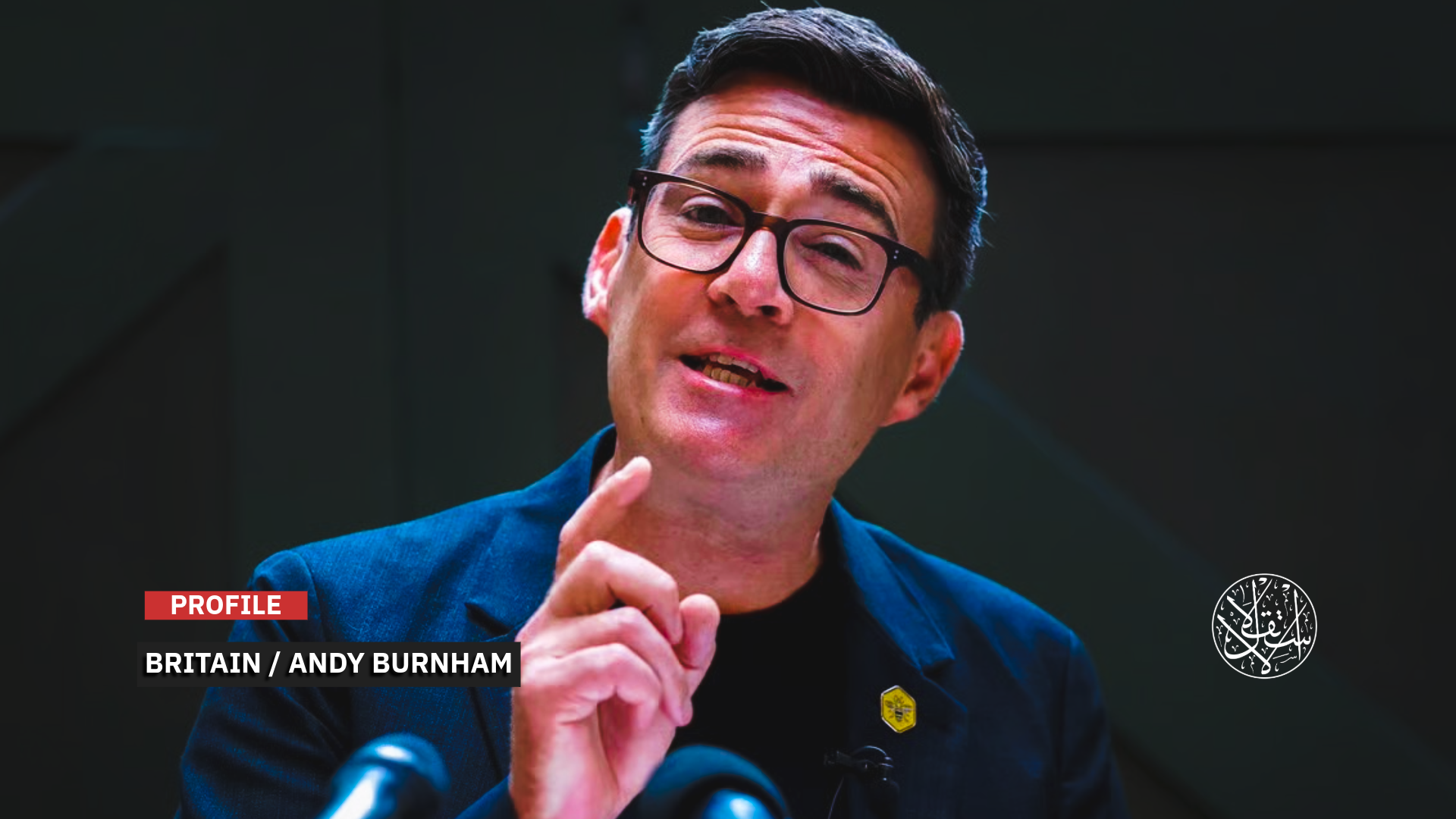
Andy Burnham voted in support of the motion that cleared the way for the UK to join the invasion of Iraq.
Andy Burnham brings to the British premiership a political legacy that is difficult to separate from the harm Britain inflicted on the Middle East over the past two decades.
Burnham became prime minister on July 20, 2026, after returning to Parliament as the MP for Makerfield and being elected leader of the Labour Party, in a transfer of power within the existing parliamentary majority and without a new general election.
He arrived at Downing Street with extensive experience in domestic politics and local government but limited foreign policy experience. He immediately faced Gaza, Iran, the Gulf, and relations with the administration of U.S. President Donald Trump as the first tests of the credibility of his political shift.
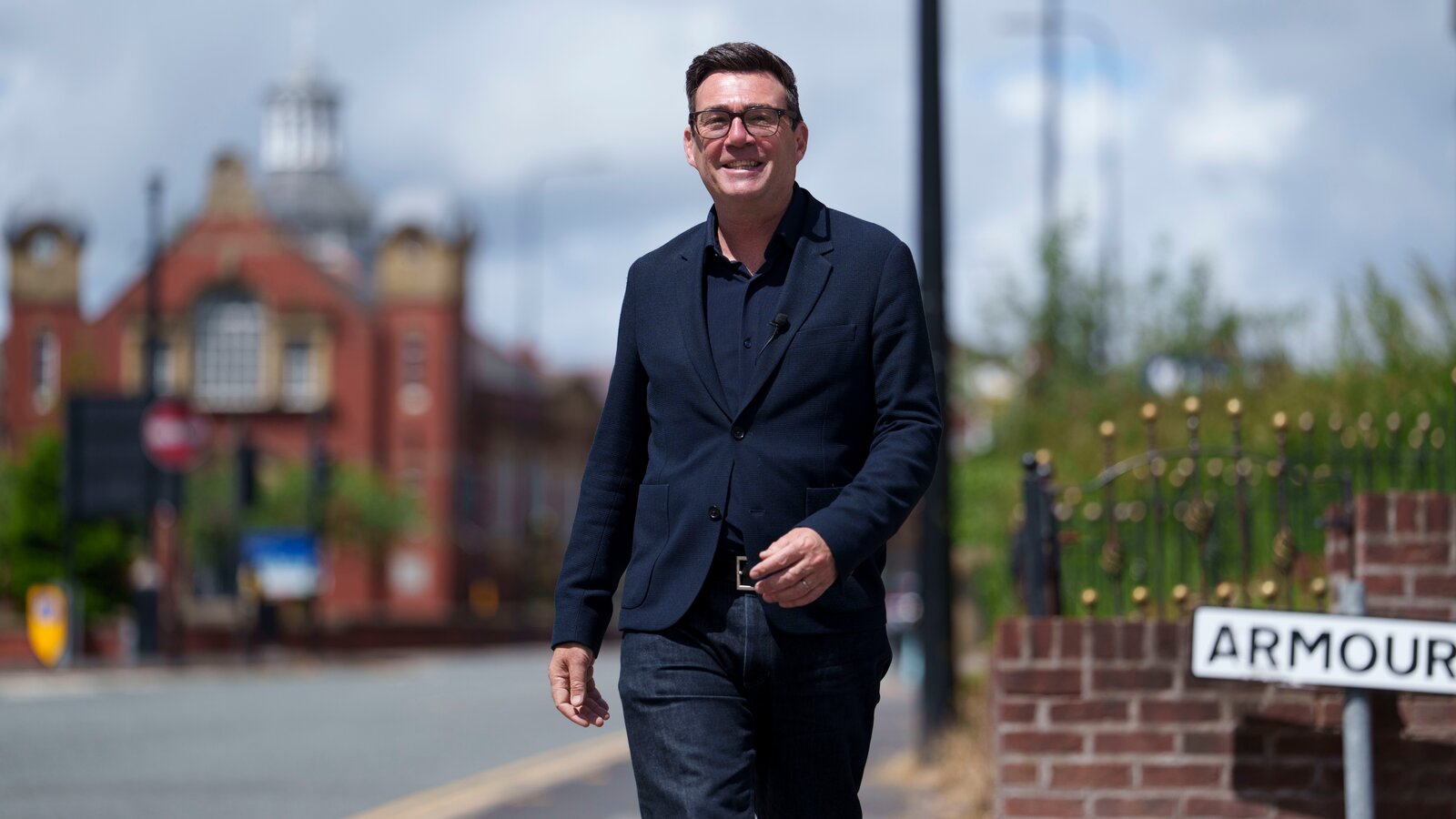
King of the North
Andrew Murray Burnham was born on January 7, 1970, and grew up in a working-class Catholic family in northwest England, between Liverpool and Manchester.
His father was an engineer at British Telecom, while his mother worked as a receptionist. Burnham and his siblings became the first generation in their family to attend university.
He studied English literature at the University of Cambridge, where he met Marie-France van Heel, who later became his wife. He then worked briefly in trade journalism before moving into politics as a researcher and adviser to Labour politicians.
This trajectory shaped his image as a son of northern England who reached the heart of the political establishment, even though his career was rooted from an early stage in the networks of the Labour Party and Westminster.
Burnham was elected MP for Leigh in 2001 and rose through the governments of Tony Blair and Gordon Brown, serving as Chief Secretary to the Treasury, Secretary of State for Culture, Media and Sport, and Secretary of State for Health. In opposition, he also held the shadow portfolios for health, education, and home affairs.
During this period, he became fully integrated into the very establishment whose centralization he now criticizes. He also shared responsibility for its domestic and foreign policy decisions, most notably the Iraq War.
The defining turning point in Burnham's public image came with the Hillsborough disaster, in which 97 Liverpool supporters were killed in 1989 as a result of overcrowding and a crush during the stadium exit. Their families then endured years of official misinformation and cover-up.
Burnham joined the families' campaign for a new inquiry, the correction of the official account, and accountability for those responsible. He later drew a connection between Hillsborough and the way state institutions use their power to protect themselves rather than serve citizens.
In an interview published by the British magazine Tribune on May 10, 2024, Burnham said that Hillsborough had transformed his view of Westminster and that working with the victims' families had led him to move away from the culture of personal advancement within the Labour Party.
That reassessment, however, came only after a long career in senior government positions. It became part of the political narrative through which he reinvented himself after losing two Labour leadership contests, in 2010 and 2015.
In 2017, Burnham became Mayor of Greater Manchester, turning local government into a national platform and presenting himself as a champion of the cities and towns neglected by London.
His most notable achievement as mayor was bringing Greater Manchester's bus network back under public control as part of a model combining public and private investment in transport, housing, and infrastructure.
His popularity surged during the COVID-19 pandemic when he confronted Boris Johnson's government over restrictions imposed on Greater Manchester and the level of financial support offered to residents and businesses, earning him the nickname "King of the North."
The confrontation reinforced his image as a politician willing to stand up to the central government, paving the way for his return to Parliament and eventual rise to the premiership.
Burnham's record in Manchester also includes unfulfilled promises, most notably his pledge to end rough sleeping by 2020. His administration launched housing and support programs that helped some homeless people, but the number of people sleeping rough rose again during the final years of his mayoralty.
He also faced criticism for scaling back some environmental and housing initiatives and for being more successful at promoting the Manchester model than delivering results on the ground.
Burnham returned to Parliament in June 2026 after winning the by-election in Makerfield. He then secured the backing of 379 Labour MPs and 23 affiliated organizations, and the party announced his election as leader on July 17, 2026.
Labour MPs viewed him as their best chance to challenge Nigel Farage's right-wing Reform UK party and regain support in working-class constituencies, although his detailed policy platform remained less defined than his public image.
Burnham became prime minister following Keir Starmer's resignation, relying on the Labour majority elected in 2024. He now faces the challenge of proving he can govern the very state whose shortcomings he built much of his political popularity criticizing.
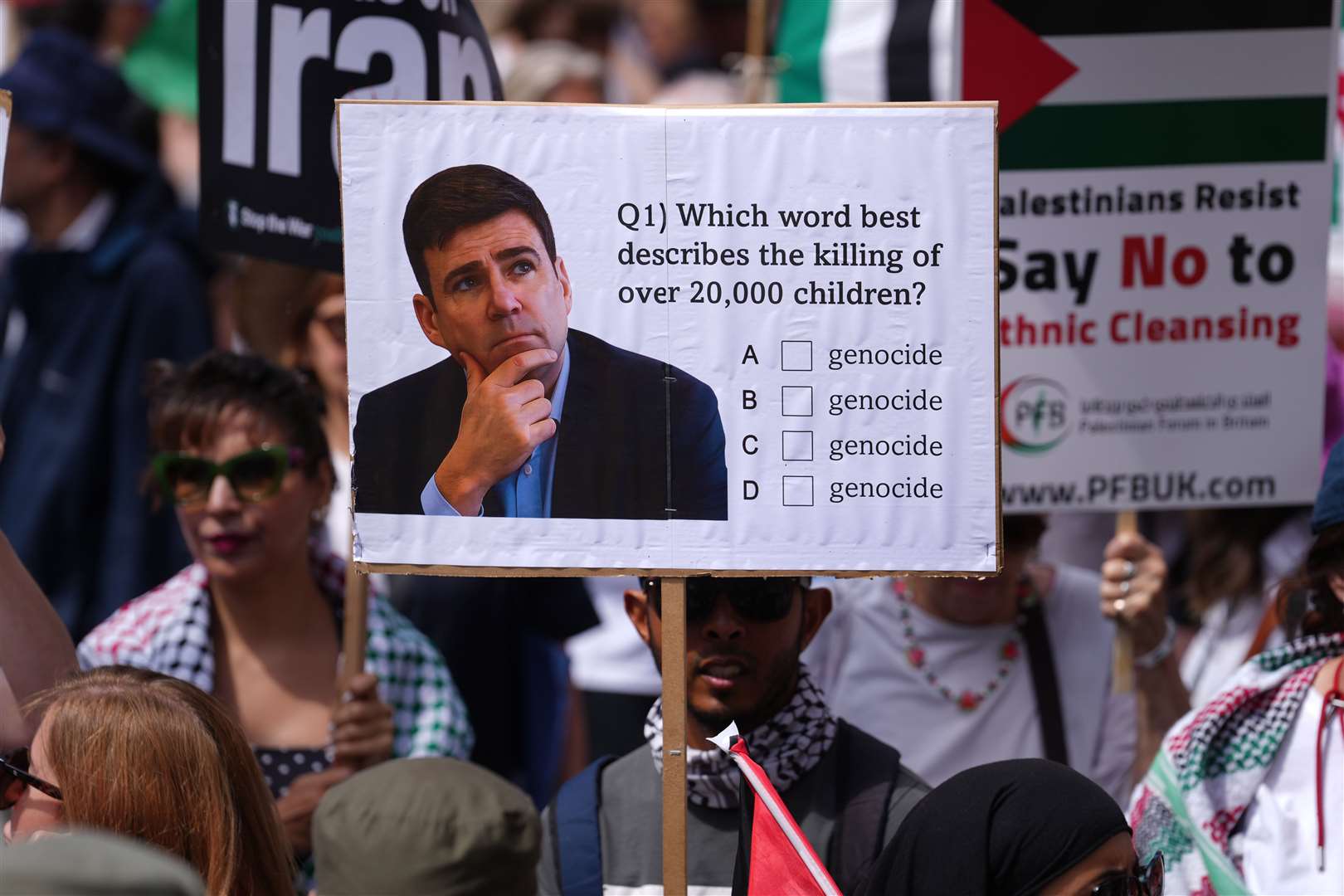
From Iraq to Gaza
On March 18, 2003, Andy Burnham voted in favor of the motion that paved the way for Britain’s participation in the invasion of Iraq.
At the time, he was a rising Labour MP within a party that imposed strict discipline on its parliamentary ranks. He reaffirmed his position in the House of Commons on May 17, 2004, when he said he had supported the deployment of troops in that “historic vote.”
That decision placed him among the British political class that gave Tony Blair the backing required for an invasion built on claims about weapons of mass destruction.
The war ended with the occupation of Iraq, the dismantling of its institutions, and the spread of violence and instability whose consequences Iraqis endured for years.
It took Burnham more than 20 years to state a clear position on his vote. In an interview with Tribune, he said he would have voted differently if he could go back in time, linking his reassessment to the lack of a plan for the period after the removal of the late Iraqi President Saddam Hussein and to the way the decision for war was reduced to a simplistic party choice.
He also attributed part of the responsibility to the system of party discipline, explaining that the threat of losing positions or being removed from the parliamentary group influences MPs’ decisions. His remarks amounted to a direct acknowledgment of error, but they came two decades after the disaster, after Blair’s influence had declined and the Iraq War had become a heavy burden for the Labour Party.
During the same period in which he supported the war, Burnham’s institutional relationship with Israel began. The House of Commons Register of Members’ Financial Interests records a trip he made from January 18 to 23, 2004, to Israel and the West Bank.
The travel and accommodation costs were covered by Labour Friends of “Israel” and the Israeli Foreign Ministry. The visit included meetings with Israeli and Palestinian officials under the theme of supporting the peace process, at a time when Burnham was part of a Labour generation closely aligned with the American and Israeli alliances strengthened under Blair.
His engagement with the Palestinian issue developed further after a visit to the West Bank in September 2012 as part of a delegation accompanied by Chris Doyle, director of the Council for Arab-British Understanding, a British organization that works to develop relations with the Arab world and advocate for Palestinian rights.
Doyle wrote on June 30, 2026, that Burnham expressed shock during the tour at the checkpoints, the separation wall, the settlements, and military installations, and asked during the visit where a second Palestinian state could realistically be established.
This episode provides an early basis for his criticism of settlements, while he remained within the framework of the two-state solution adopted by successive British governments without providing mechanisms capable of forcing Israel to halt actions undermining that possibility.
The outlines of his position became clearer in a response published by the Palestine Solidarity Campaign, a British organization that advocates for Palestinian rights, on July 21, 2015.
Burnham described a Palestinian state as a right that should be recognized and supported ending the occupation and settlements, which he described as illegal and immoral.
However, he considered boycotting “Israel” the wrong response, instead proposing the labeling of settlement products and a coordinated European approach toward them.
His position at the time combined recognition of Palestinian rights with the preservation of normal economic and political relations with “Israel”, placing him close to the traditional centrist position within the Labour Party.
After October 7, 2023, Burnham began condemning Hamas’s Operation al-Aqsa Flood and emphasizing what he called “the security of the Jewish community” in Manchester. By the end of the same month, he joined leaders of local councils in Greater Manchester in calling for a ceasefire in Gaza.
The statement was issued by the Greater Manchester Combined Authority, the regional body he chaired, and came ahead of Labour leader Keir Starmer’s position, which at that stage supported limited humanitarian pauses rather than a full ceasefire.
The stance gave him greater support among critics of Labour’s policy, while his rhetoric continued to allow “Israel” room for what he described as limited military operations conducted within international law.
By July 2026, Burnham had adopted a stronger tone. He apologized for Labour’s position at the start of the war, said Britain had been too slow to call for a ceasefire, and called for greater pressure on the Israeli government through additional sanctions and measures banning trade in goods originating from settlements.
He also referred to growing evidence of war crimes and criticized settlement expansion, “settler violence,” and attempts to eliminate the possibility of a Palestinian state, representing a significant shift from his 2015 position, particularly in his acceptance of sanctions and trade measures as tools of pressure.
Burnham referred the question of genocide to international courts. In June 2026, he said that his position as Mayor of Manchester did not allow him to make a judgment on an issue of such magnitude, and he later reiterated that determining legal responsibility was a matter for the courts.
He also stopped short of supporting a complete ban on arms exports, including British components used in F-35 fighter aircraft.
This led the Campaign Against Arms Trade, a British organization that monitors arms exports, to argue that his apology had little practical value as long as such supplies continued.
The Regional Test
Iran became the first regional issue in which Burnham used his reassessment of Iraq as the foundation for a current position, amid the continuation of U.S. strikes on the Islamic Republic.
During the U.S.-Israeli war against Iran in 2026, he warned against assuming that removing a country’s leadership would automatically lead its population to support political change. He described such thinking as simplistic and questioned what would happen to the country in the absence of a plan for the day after.
The U.S. magazine Time quoted his remarks on June 24, 2026, linking the risks of becoming entangled in Iran to the Iraq experience. However, he did not present a detailed position on Iran’s nuclear program, sanctions, or the conditions for a diplomatic settlement.
His warnings about war were accompanied by an explicit call for expanding British military power. Writing in The Times in July 2026, he argued that Britain needed to rebuild its “hard power,” increase the capabilities of its armed forces and defense industry, and link military spending to domestic reindustrialization.
He cited the war in Iran as evidence that the world had entered a more dangerous phase and called for stronger defense cooperation with France and Germany while reducing reliance on imported military equipment.
Burnham’s stated objection is focused on wars launched without a plan for what comes afterward, while at the same time he advocates expanding Britain’s military capabilities and capacity for intervention.
The same tension appears in his relationship with the United States. He had previously criticized U.S. President Donald Trump for contributing to instability and polarization, arguing that a strong relationship with Washington should give London the ability to disagree with American decisions.
Hours after becoming prime minister, he held a call with Trump in which he reaffirmed Britain’s commitment to defending the UK and its allies and to maritime security in the Strait of Hormuz.
This early approach reflects an attempt to manage disagreements from within the U.S.-led alliance, while questions over the use of British bases in attacks on Iran remained without a detailed public position before he entered government.
On Saudi Arabia, Burnham has a previous record of taking a more critical stance regarding security cooperation. The records of British parliamentary debates show that during a session on June 8, 2016, he called for ending a contract supporting Saudi police and forensic services because of concerns that it could contribute to the tracking of individuals who might face torture and human rights abuses.
During the same session, the Labour opposition at the time argued that there was sufficient evidence of a serious risk that British weapons were being used in violations of international humanitarian law during the war in Yemen.
As for his relations with the United Arab Emirates, Qatar, and Turkiye, they were largely focused during his time as Mayor of Greater Manchester on investment, trade, and local diplomacy.
Manchester authorities identified the UAE and Qatar as target markets for attracting capital, while Burnham engaged with the Turkish consular presence in the city as part of plans to expand its international economic networks.
During those years, he did not set out a broad public position on these countries’ regional policies, and his record remained limited on issues such as Syria, Lebanon, and Yemen beyond the Saudi arms issue.
This gap highlights the profile of a prime minister who rose primarily through domestic British politics, at a time when the Middle East is forcing him to make decisions that extend beyond the experience he built in Manchester.
Sources
- Iraq — Declaration of War — 18 Mar 2003 at 22:00
- ‘King of the North’ Andy Burnham Went from Manchester Mayor to Britain’s New Leader
- A New Model Britain
- Burnham Pledges to End Rough Sleeping in England in First Speech as Prime Minister
- Andy Burnham Elected Leader of the Labour Party
- Andy Burnham, ‘King of the North’, Becomes Britain’s Prime Minister
- What Has Andy Burnham, Britain’s Likely Next Prime Minister, Said About Trump?
- Human Rights and Arms Sales to Saudi Arabia