Political Gains: Why the UAE Denied Netanyahu’s Visit to Abu Dhabi
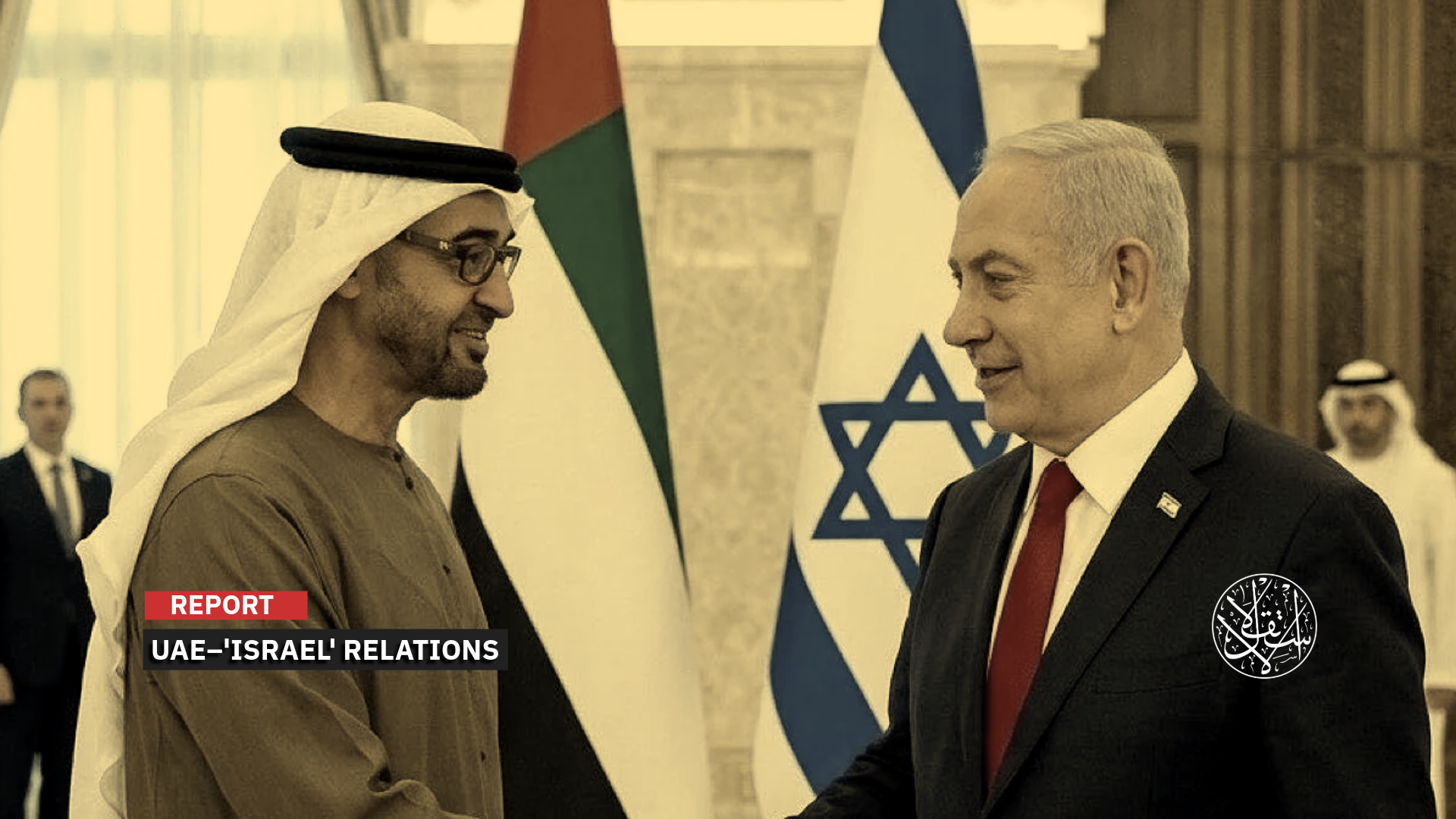
“Netanyahu confirmed that he secretly visited the UAE and met with its president.”
It was a striking irony that the UAE officially denied what the office of Israeli Prime Minister Benjamin Netanyahu had also officially announced regarding his visit to Abu Dhabi, accompanied by leaders from his army and intelligence services, to coordinate a war against Iran.
The Emirati denial served as a disavowal of the Israeli announcement, especially since Abu Dhabi had previously avoided receiving Netanyahu for fear of public backlash, despite having hosted former Israeli Prime Ministers Naftali Bennett and Yair Lapid in visits described as secret, even though they were revealed through flight tracking websites.
Netanyahu, who initially admitted the visit was secret, later announced it publicly, a move believed to be aimed at bolstering his military alliance in the Middle East against Iran, or perhaps for domestic electoral purposes given the early Knesset elections and his desire to gain political capital.
The sequence of events—from the Israeli statement, to the Emirati denial, to Iranian Foreign Minister Abbas Araqchi's warning that those cooperating with Israel to sow discord will be held accountable and that collusion with "Israel" is unforgivable—reveals two key points:
First: Abu Dhabi's unease with Iranian threats and the potential for escalating attacks, especially since the visit, according to Israeli and American reports, was linked to military coordination against Iran.
Second: a fear of escalating internal anger and widening tensions within the UAE, given the repercussions of Abu Dhabi's normalization policies, particularly after the Gaza war and the accompanying public criticism, coinciding with rumors of internal tensions within the federation.
Emirati Denial
The scene of confirming the visit and then denying it was politically unusual, bordering on diplomatic confusion.
It is not customary for a country to confirm an official visit by its head of government to another country, only for the host country to then issue a statement denying the visit entirely.
The statement issued by the Israeli Prime Minister's Office on May 13, 2026, was clear, confirming that Benjamin Netanyahu had secretly visited the UAE and met its president, Sheikh Mohammed bin Zayed.
The statement linked the visit to the context of the US-Israeli war against Iran, noting that it represented a historic breakthrough in relations between the two sides, a reference believed to reflect the level of security and political coordination between them during the war, particularly regarding intelligence sharing and countering Iranian attacks.
According to media reports, including Bloomberg and the Wall Street Journal on May 13, 2026, the visit addressed defense coordination, including intelligence sharing, countering Iranian attacks, and strengthening air defense systems, including the deployment of Iron Dome batteries in the UAE.
It is noteworthy that the Israeli statement simultaneously described the visit as secret and announced it officially, raising questions about the implications of this contradiction and the objectives of revealing it later. This was interpreted as one of the reasons for the UAE's denial.
As confirmed by Netanyahu's former spokesman and current office director, Ziv Agmon, the details of the visit were described as royal, with the UAE welcoming the Israeli prime minister.
He noted that bin Zayed personally escorted him from the airport to the palace and that he met with several members of the ruling family during the visit.
In contrast, the UAE issued a similarly firm denial. The Ministry of Foreign Affairs refuted the reports circulating about a visit by Israeli Prime Minister Benjamin Netanyahu to the country or the reception of any Israeli military delegation.
It emphasized that relations between the two countries are public and not based on secrecy or clandestine arrangements, and that any claims of unannounced visits or arrangements are baseless unless issued by the relevant official authorities.
Thus, it appeared that the UAE not only denied the visit but also focused on denying any military or secret nature of the coordination, a move understood as an attempt to avoid interpretations linking the relationship with Israel to military matters related to Iran.
In the same vein, Dr. Abdulkhaleq Abdulla, an advisor to Mohammed bin Zayed, attempted to deny the visit from a political perspective, suggesting that Netanyahu frequently spreads falsehoods for electoral purposes.
Conversely, the Israeli newspaper Yedioth Ahronoth quoted a senior Emirati official as saying that Netanyahu had violated the agreement, explaining that there was a mutual commitment between the two sides to maintain the confidentiality of the meeting.
The diplomatic correspondent for the Israeli channel i24News also noted that the UAE had lodged a formal protest with the Israeli side, through the Emirati ambassador in Tel Aviv, regarding the leak of details of the visit, expressing Abu Dhabi's displeasure at the repeated leaks of sensitive information from Netanyahu's office.
Israeli sources added that the UAE was angered by the leak of information concerning advanced security cooperation between the two sides, including defense systems and frequent visits by high-ranking Israeli security officials.
Reports in The Times of Israel, Yediot Aharonot, Channel 13, Bloomberg, The Wall Street Journal, and CNBC confirmed that Netanyahu did indeed make secret visits to the UAE during the war on Iran, meeting with high-ranking Emirati officials as part of security coordination related to managing the confrontation with Tehran.
According to The Wall Street Journal, Spy chief David Barnea visited the UAE at least twice during the war for unannounced meetings with Emirati officials, focusing on security coordination and the exchange of information regarding military developments.
These findings indicate an advanced level of undeclared cooperation between the two sides during the war, particularly concerning intelligence gathering and defense coordination.
In contrast, the Emirati denial came after sharp Iranian reactions. Iranian Foreign Minister Abbas Araghchi, speaking on X, threatened that any party cooperating with "Israel" to incite division would be held accountable, and deemed secret cooperation with "Israel" unforgivable.
In the same vein, Araghchi accused the UAE, during a BRICS foreign ministers' meeting in India on May 14, of not being a neutral party in the war, but rather involved in one way or another alongside the U.S. and "Israel".
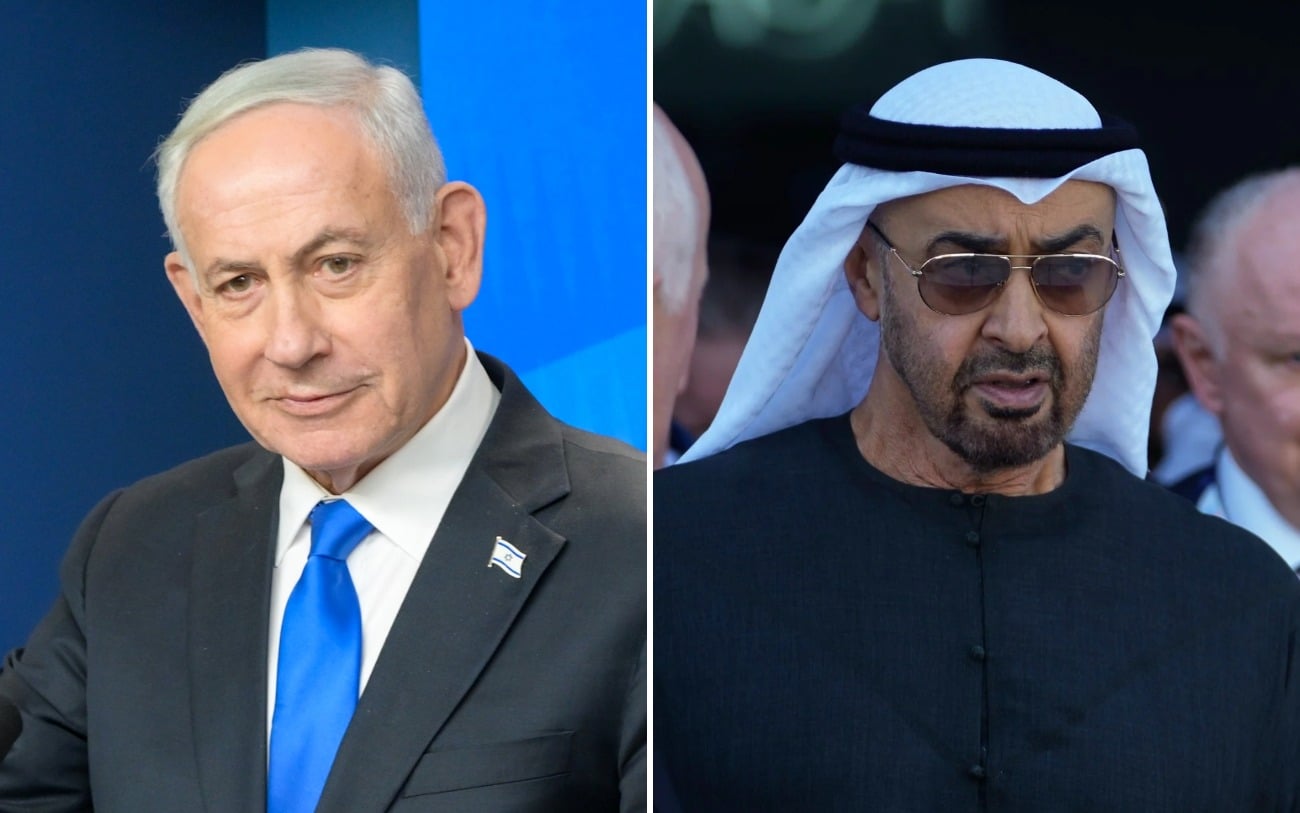
Military Arrangements
While Abu Dhabi sought to deny what it considered inaccurate leaks regarding Benjamin Netanyahu's visit, and given what observers perceived as Israel's desire to exploit the issue politically and in the media, the debate did not stop at confirmation and denial, but expanded to include new narratives about a wider range of security and military visits.
In addition to discussions about the Israeli Prime Minister's visit, Israeli media outlets and press reports circulated claims that senior security and military officials from Tel Aviv, including Shin Bet chief David Zini, Spy chief David Barnea, and Chief of the General Staff Eyal Zamir visited the UAE during the period of the war on Iran, as part of security coordination related to the escalating confrontation.
The diplomatic correspondent for i24News cited these reports, noting that the visits were not limited to the political level but also included high-ranking security and military leaders. This was corroborated by other Israeli reports, including those published in Yedioth Ahronoth and the Israeli Broadcasting Corporation (Kan) on May 15.
According to Yossi Yehoshua, the military affairs analyst for Yedioth Ahronoth, the list of visitors, according to these accounts, included the head of the Mossad, the head of the Shin Bet, and the Chief of Staff, along with meetings with high-ranking Emirati officials, including the UAE President, Sheikh Mohammed bin Zayed, in the context of security coordination related to the war.
These reports add that these moves are part of a broader series of unannounced security visits and contacts between the two sides during the escalation period, including those related to air defense systems and dealing with missile and drone attacks.
In contrast, there has been no official Emirati confirmation of these claims, while Abu Dhabi repeatedly denies the existence of any military arrangements or unannounced visits of this kind, asserting that its relations with Israel are conducted within a declared and official framework.
Analysts believe that this discrepancy between Israeli leaks and Emirati denials reflects a state of overlap between security, political, and media assessments, especially given the escalating tensions with Iran and the increasing sensitivity of regional relations in the area.
While Israeli media outlets continue to highlight the level of security coordination with some countries in the region, this information remains a subject of political and media debate, in the absence of detailed official statements confirming or denying all that is published about the nature of these visits.

Political Embarrassment
According to political and media assessments, the UAE's denial of the announcement by Israeli Prime Minister Benjamin Netanyahu's office regarding his visit to Abu Dhabi and his meeting with UAE President Sheikh Mohammed bin Zayed, as well as the controversy surrounding the reception of Israeli military delegations, stemmed from a number of interconnected considerations:
First:
The denial, according to these assessments, is linked to avoiding escalation with Iran, given repeated Iranian threats that any cooperation with Israel in the context of the confrontation would provoke repercussions.
This coincides with Western reports suggesting that the visit, if it had taken place, was related to security and military coordination against Tehran.
Second:
The assessments relate to local and Arab public opinion. Despite the normalization of relations between the UAE and "Israel" under the Abraham Accords in 2020, Netanyahu's personality continues to provoke widespread rejection in the Arab world, especially in light of the war on Gaza and its humanitarian and political repercussions.
The Wall Street Journal noted on May 14 that the controversy surrounding the visit revealed the limits of the rapprochement between the two sides and the complexities of dealing with a divisive Israeli leadership in the region.
Third:
The denial is also linked to the nature of the visit's description as secret. The Israeli announcement of the visit placed Abu Dhabi in an awkward position, given that Gulf diplomacy on security matters relies heavily on discretion.
According to Israel Hayom on May 14, the UAE's unease stemmed not from the mere leak of the visit's concept, but from its official announcement, which caused political embarrassment and forced a public denial.
Fourth:
The denial also comes within a broader context related to the development of the Abraham Accords.
Foreign Affairs indicated on May 4 that the shift in relations between "Israel" and the UAE has transcended the political dimension to encompass more complex security and military levels, particularly in light of escalating regional tensions with Iran.
According to this view, any talk of direct security coordination during the war reflects a shift in the relationship to a more sensitive operational phase, raising questions about the nature and limits of this cooperation.
Some analysts have also linked this development to what they describe as attempts to build a new regional alliance in the region, in which the UAE plays a pivotal role, amidst the reshaping of alliances after the war.
Fifth:
Some analysts believe that Israel's disclosure of the visit may have additional political dimensions related to regional pressure, whether on Saudi Arabia or Egypt, in light of the redrawing of influence maps and security coordination in the region.
In this context, it is worth noting reports that have discussed regional military arrangements and the exchange of defensive roles among some countries.
Some analyses have also linked these developments to Saudi and regional moves aimed at managing tensions with Iran, at a time when the region is witnessing a broad political and security repositioning.

Security Threat
The revelation of Israeli Prime Minister Benjamin Netanyahu's visit to the UAE, and the accompanying reports of potential military and intelligence coordination against Iran, sparked controversy and heightened tensions, especially after the visit was linked to sensitive security issues in the region.
According to Israeli and Western media reports, the visit's objectives extended beyond political matters to include discussions on joint security and military arrangements in light of escalating tensions with Iran and the possibility of renewed military confrontation.
Israeli media outlets, including Channel 13, indicated that the meeting took place within the context of Israeli security assessments suggesting a likely resumption of hostilities against Iran, prompting a move to strengthen coordination with regional partners, including the UAE.
The Israeli Broadcasting Corporation (Kan 11) also reported that Shin Bet chief David Zini and Spy chief David Barnea, along with other military officials, had visited the UAE recently for security meetings described as focusing on intelligence sharing and operational coordination.
In the same context, the Wall Street Journal reported that the head of Mossad visited the UAE more than once during the war and met with Emirati officials as part of what it described as security coordination related to developments in the confrontation with Iran.
Other reports, including The Jerusalem Post, indicated that these meetings coincided with a period of escalating regional tensions and reciprocal military operations, and were part of broader security arrangements linked to the regional landscape.
These reports state that security cooperation between the two sides has developed in recent years to include the exchange of intelligence and coordination on complex regional issues, particularly those related to Iran.
Sources
- Dispute Over Secret Visit Shows Limits of UAE-Israel Embrace
- Exclusive | Mossad Chief Visited UAE. During Iran Bombing Campaign to Help Coordinate War
- Mossad chief, Shin Bet head visited UAE to coordinate during Operation Roaring Lion - report
- Benjamin Netanyahu says he made secret trip to UAE at height of Iran war
- Netanyahu says he secretly visited UAE during Iran war; UAE denies it
- IDF chief revealed as latest top Israeli official to visit UAE during war