Al-Karama Border–Crossing: How Israeli Occupation Turned It Into a Trap for West Bank Palestinians
For West Bank Palestinians, the ordeal of travel begins long before they reach the crossing.
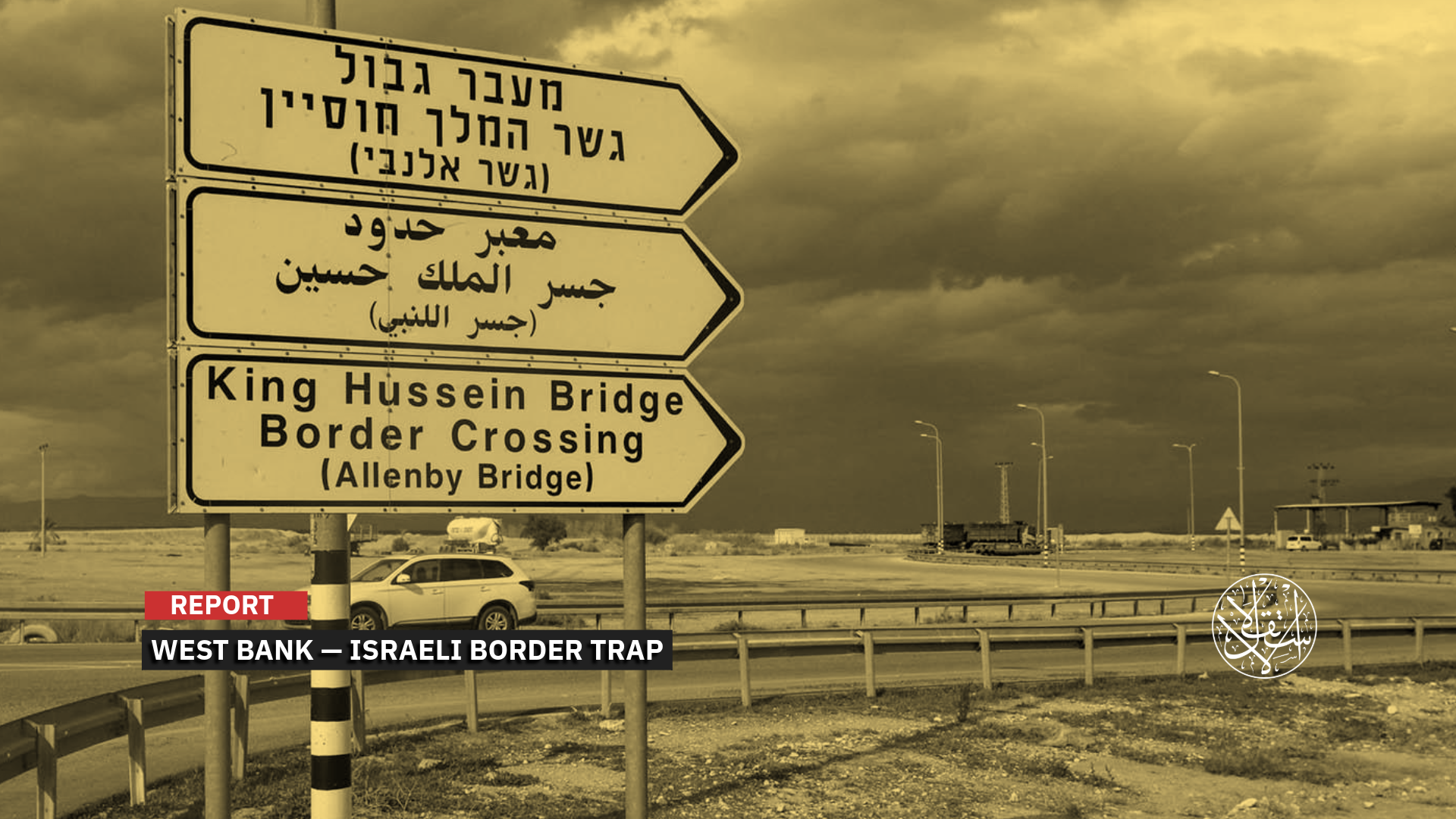
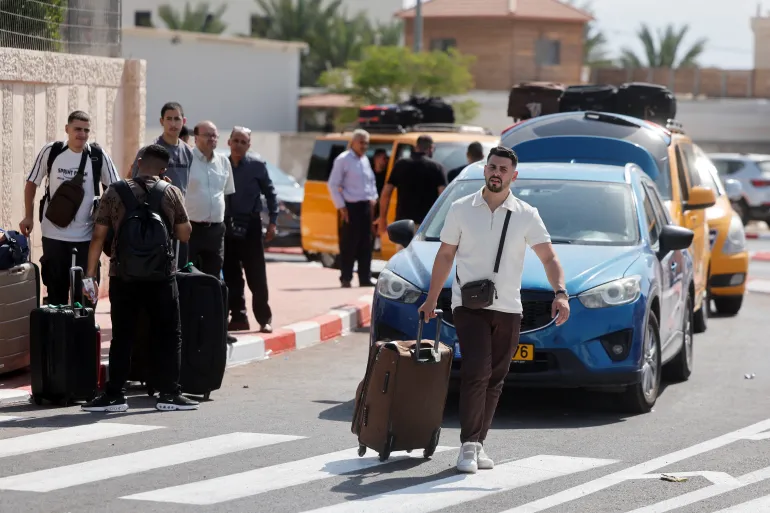
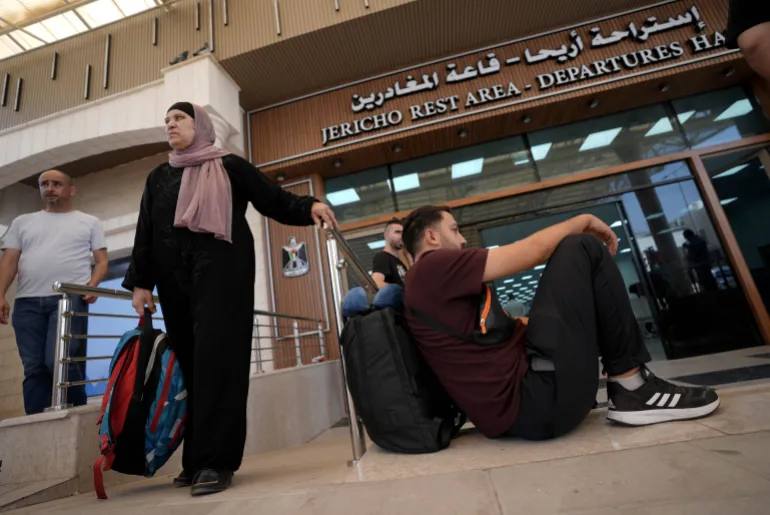
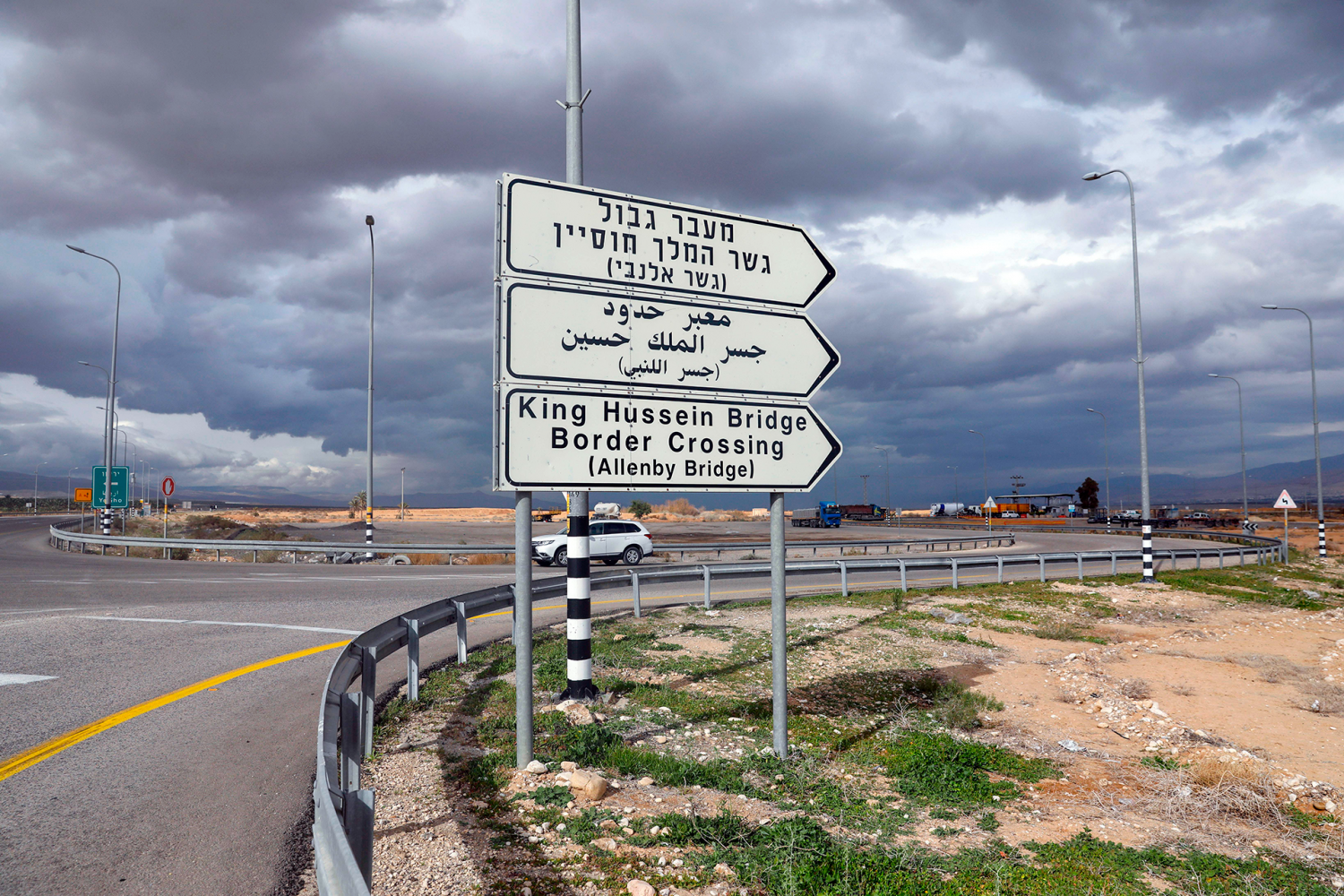
In the early hours of a May morning in 2026, Mohammad Khaled dragged his luggage toward the Jericho rest stop, the Palestinian assembly point before the Karama Crossing (known officially in Jordan as the King Hussein Bridge), clutching a bus ticket and a departure tax receipt, fully aware that his journey abroad could end before it even began.
The line stretched beyond the hall. Women tried to calm restless children. Sick travelers carried hospital appointment papers for clinics in the Jordanian capital, Amman. Students studying overseas feared losing an academic semester.
That was how Khaled, a pseudonym for a young man from Hebron in the southern West Bank, described his experience traveling through the crossing in an interview with Al-Estiklal.
When the bus finally arrived, exhausted passengers boarded and headed into an area controlled by the Israeli Occupation authorities. There, the cycle began: security inspections, luggage transfers, and long waits inside the Israeli terminal.
Khaled waited for his turn until he heard the sentence that upended his plans entirely: “You are banned from travel for security reasons.”
He was then referred to the Palestinian Civil Affairs Authority in an attempt to find out why he had been banned or to file an appeal, even though the decision itself had been made by the Israeli Occupation authorities.
The Burden of Crossing
For Palestinians in the West Bank, the ordeal of travel begins long before they reach the crossing. First, they must make their way to the city of Jericho, where the rest stop operated by the Palestinian Authority is located.
In this cramped space, travelers pay departure fees, bus fares, and luggage transfer costs before entering a wait that can stretch for hours. Under Israeli rates in effect since mid-April 2026, crossing fees at al-Karama stand at 182 shekels ($63) for holders of Palestinian passports.
Crowding at the terminal intensifies during the Umrah and Hajj seasons, as is the case these days. Some passengers sleep on the floor, while others stand in the summer heat waiting for the next bus.
During periods of crisis, local reports have spoken of Israeli authorities allowing only a limited number of buses through, as happened after the September 2025 closure.
Following an attack on Israeli Occupation soldiers at the time, the crossing was shut for several days, leaving more than 2,500 travelers stranded, including children and sick passengers, and effectively turning the West Bank into a giant prison.
Once the bus departs for the Israeli side, travelers are funneled into a long inspection line. Soldiers empty bags, pass them through X-ray machines, and subject some passengers to individual interrogations.
Mohammad Khaled, who declined to reveal his real name for fear of further complicating his case, described Israeli soldiers shouting at passengers, deliberately obstructing movement, and complicating crossing procedures, at times turning a travel permit into an open-ended security screening.
After finally receiving approval, the traveler’s passport is stamped before they board an Israeli bus to a point above the Jordan River, where they then cross to the Jordanian side. There, entry procedures continue, and additional fees are paid, amid repeated complaints over poor organization and lost luggage.
A journey spanning only a few geographical kilometers can take anywhere between five and 13 hours, placing a heavy financial burden on Palestinians. Many miss flights or medical appointments because of delays at the crossing or sudden closures.
Limited operating hours only deepen the hardship. Before October 2023, the crossing remained open until 9 p.m. and sometimes operated around the clock during the summer.
After Operation al-Aqsa Flood, however, the Israeli Occupation Airports Authority announced that the crossing would operate, until further notice, from Sunday to Thursday until 5 p.m. and on Fridays until 3:30 p.m., while remaining closed on Saturdays. Palestinian reports in March 2026, however, spoke of even shorter operating hours on the ground.
Even the VIP service, once used to speed up procedures, has been reduced to just 200 people a day, while only 2,500 passengers are allowed to use the daily buses despite demand reaching as many as 5,000 travelers.
A Gateway With No Alternative
Behind this daily suffering lies a deeper political reality: West Bank Palestinians have no sovereign gateway to the outside world.
At the Jericho rest stop, Palestinian authorities manage the first stage of procedures, organizing queues, buses, and passenger services. But decisions over whether the crossing opens, its operating hours, and who is allowed to pass remain in Israeli hands, as they control the al-Karama terminal before travelers reach the Jordanian side.
The crossing sits roughly five kilometers east of Jericho. According to the Israeli Occupation Airports Authority, it primarily serves West Bank Palestinians and some tourists and is operated in coordination between the Israeli Occupation, the Palestinian Authority, and Jordan.
But this “coordination” does not amount to Palestinian sovereignty over the border. The crossing is part of “Israel’s” land border system, with separate halls for Palestinian departures and arrivals.
There is no functioning Palestinian airport in the West Bank, and Palestinians there cannot use Israeli airports for international travel. That leaves Queen Alia International Airport in Amman as the nearest air gateway, yet reaching it first requires passing through al-Karama Crossing—a gate they do not control.
This arrangement gives the Israeli Occupation significant control over the movement of around 3.4 million Palestinians in the West Bank. Every traveler abroad, whether student, patient, or businessperson, must pass through a checkpoint governed by Israeli military authority.
In the first week of the U.S.-Israeli War on Iran, only around 9,000 citizens and visitors crossed the al-Karama Crossing, including 4,249 departures and 4,954 arrivals, a flow described by Palestinian police as “light.”
The reason was not only the closure of the crossing itself, but also the surrounding lockdowns in Jericho and the temporary closure of Jordanian airspace, highlighting how any regional crisis can further constrict the only available gateway.
In 2025, the Palestinian General Administration of Borders and Crossings (GABC) recorded more than 1.5 million crossings of Palestinians and visitors through the terminal, including 787,237 departures and 769,346 arrivals.
Yet those figures do not reflect the deeper crisis. The problem emerges during peak days, reduced working hours, and sudden closures, when the only gateway turns into a long queue that can end with travelers being sent back to the Jericho rest stop rather than reaching Amman.
A Silent Punishment
The Israeli Occupation has not only controlled Palestinian movement since the occupation of the West Bank in 1967 but has also built a system of unofficial travel ban lists, turning the crossing into a tool of punishment.
The ban is an administrative decision issued by the Shin Bet or the Israeli Occupation army, placing a person’s name in a database that prevents them from leaving the West Bank without a court order or indictment.
The stated reasons are often vague “security considerations,” “secret files,” or family ties to detainees or martyrs as well as involvement in human rights or journalistic activities.
Most of those affected only discover they are on the list when they reach the passport counter at the crossing, where intelligence officers inform them they are banned from travel and send them back to the rest stop.
In other cases, individuals are summoned for questioning by the Shin Bet or required to sign pledges not to engage in “hostile activity.” The duration of the ban is not disclosed, nor is the authority behind it, and appeals are often met with the response that the file is “classified.”
Mohammad Khaled, who was recently banned, said he had completed a master’s degree abroad and returned normally after years, adding, “Now, when I tried to travel, I was surprised to find myself banned.”
He said he had sought follow-up through the Palestinian Civil Affairs Authority but had received no response or explanation so far, adding that if no progress is made, he will be forced to hire a lawyer inside “Israel” to try to have his name removed from the ban lists.
He added that he later learned from multiple testimonies that those who remain abroad for long periods are often banned, as the Israeli Occupation examines details of their travel history, the country they lived in, and their reasons for staying outside the West Bank, among other classified details.
Data obtained by the Israeli rights group HaMoked from the Israeli Occupation military shows the scope of this policy. In January 2017, 13,937 West Bank Palestinians were listed as banned from travel for security reasons, a figure that fell to 10,594 by early 2021.
Subsequent data shows that the Israeli army approved lifting the ban in around 42 to 49 percent of requests between 2019 and 2021, suggesting that many of the reasons are not necessarily “security-related.”
But success rates do not make the system easier to navigate. Applications must be submitted eight weeks before travel, and if rejected, appeals can only be filed after six weeks, stretching the process over months.
Humanitarian cases highlight how the system is used as a form of punishment. Amnesty International staffer Laith Abu Zeyad was prevented from traveling in October 2019 to attend his uncle’s funeral without explanation and was previously barred from visiting his sick mother.
Shawan Jabarin, director of the human rights organization al-Haq, was barred from traveling from March 2006 for more than five years on the grounds of a “secret file.”
Lawyer Diala Ayesh discovered in March 2025 that she was banned from travel while on her way to attend a rights conference, despite no court order having been issued.
Activist Bassem Tamimi was detained at the crossing in October 2023 and transferred to Ofer Prison without being informed of the charges.
“Some are asked to cooperate with intelligence services in exchange for lifting the travel ban, as part of well-known blackmail tactics,” said Mohammad Khaled.
Sources
- Israel bars thousands of Palestinians from traveling abroad; many other don’t even bother to make the attempt
- Israel bars thousands of Palestinians from traveling abroad; many other don’t even bother to make the attempt
- New Procedures at King Hussein Bridge Slowing the Crossing Process for Palestinians
- Travelling Abroad from the West Bank and the Gaza Strip
- COVID-19 Emergency Situation Report 29 | March 2021
- Israel barred more than 10,000 Palestinians from travelling abroad in 2021
- Around 9,000 Travelers Crossed the Karama Crossing in the First Week of the War [Arabic]