Strategic Pressure: How the Course of the Conflict in Mali Changed
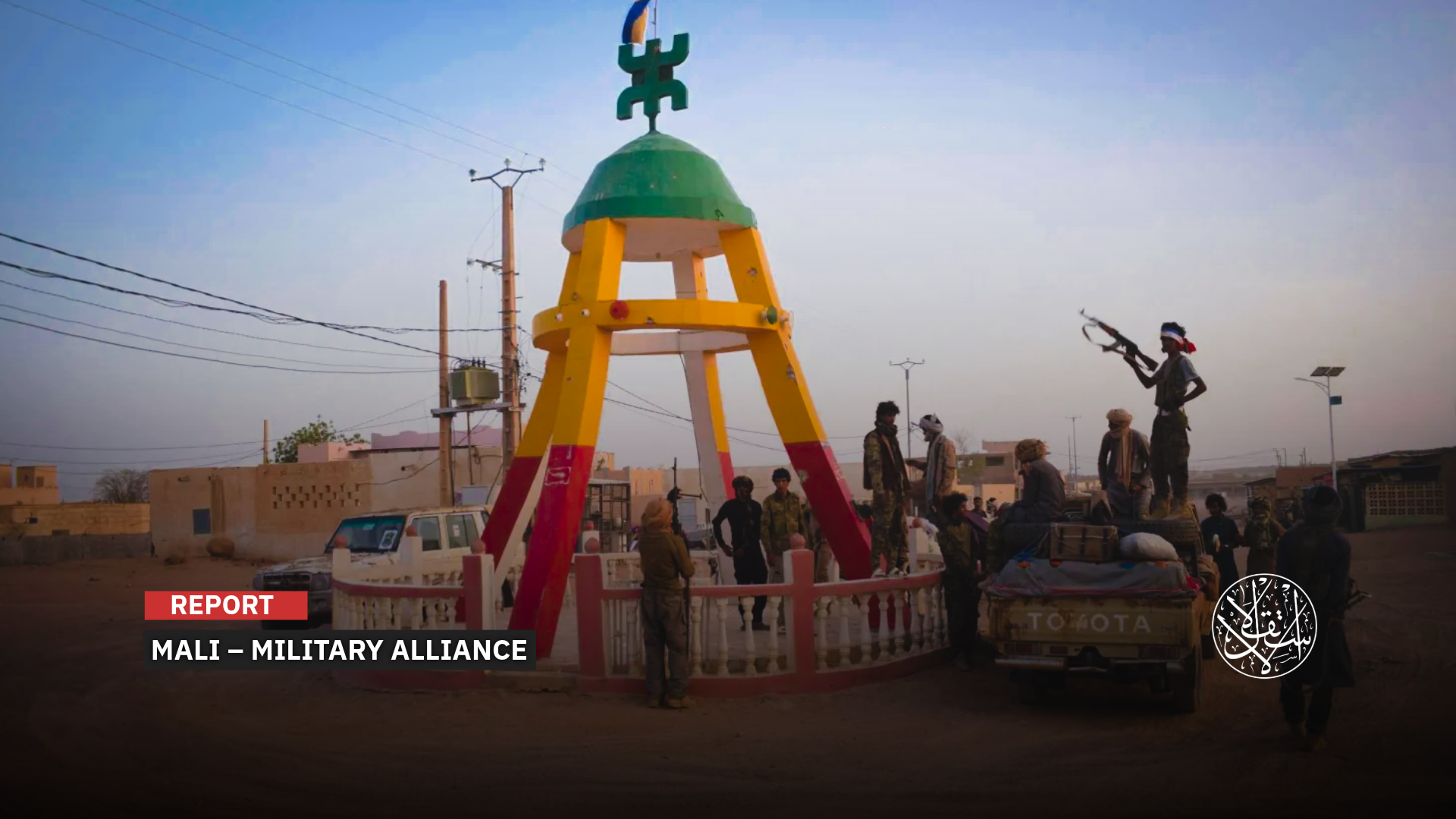
“Mali has been beset by security crises since at least 2012.”
The attack that targeted Mali’s capital, Bamako, just days ago was not merely a fleeting military operation within the city; rather, it served as a revealing moment marking a new phase in the conflict in Mali.
Although this attack failed to bring down the capital or completely paralyze state institutions, it exposed that Mali now faces a structural crisis regarding its monopoly on the use of force and its management of the security landscape.
Since the military coup in 2020, Mali has recalibrated its international alignment, gradually distancing itself from France and its Western allies while pivoting toward a closer security partnership with Russia.
However, this engagement has failed to yield the results upon which Bamako had pinned its hopes; despite receiving such support, the army has been unable to eradicate the insurgency or fully reassert control over the northern regions.
On the contrary, mounting assessments suggest that reliance on Russian mercenaries has contributed to complicating the landscape—particularly amidst recurring accusations of violations committed against civilians.
These violations have not only eroded trust between the population and the authorities but have also fostered a fertile environment for fueling local resentment.
This situation has been exploited by jihadist groups to bolster their presence and expand their recruitment base—creating a cycle that perpetuates violence rather than containing it.
Military Presence
Mali has faced a severe security crisis since an offensive launched on April 25 by jihadist organizations linked to al-Qaeda, alongside Tuareg separatist movements.
Experts view this unfolding scenario as a realignment of spheres of influence between Russia and the West.
Today, the al-Qaida-linked group Jama’at Nusrat al-Islam wal-Muslimin, or JNIM is considered the most dangerous jihadist organization in West Africa.
Since its inception in 2017—formed through the merger of several factions—the group has eschewed traditional patterns of direct confrontation with the state.
Instead, it has opted for a more sophisticated strategy centered on prolonged attrition and the gradual dismantling of state authority, rather than pursuing a swift, decisive victory for which it may lack the necessary means.
Within just a few years, the group successfully entrenched its presence across central and northern Mali before expanding the scope of its operations into neighboring states—particularly Niger and Burkina Faso—thereby establishing itself as a transnational network rather than a merely localized organization.
This expansion was not solely military in nature; rather, it was accompanied by the cultivation of social influence through alliances with tribal factions and a reliance on a parallel economy rooted in smuggling and illicit taxation.
However, the defining feature of the current phase is a qualitative shift in operational performance—moving from a stage of mere territorial dispersion to one of strategic pressure.
Recent attacks do not merely reflect an escalation in frequency or audacity; they reveal a high level of coordination and planning, coupled with the capability to strike sensitive targets.
Alongside jihadist groups, the Azawad Liberation Front (MNLA) has emerged as a significant player on the scene.
It is a newly formed Tuareg separatist movement, established on November 30, 2024, seeks to revive the project for the independence of northern Mali.
The emergence of this front not only signals a resurgence of separatist aspirations but also points to a reorganization of Tuareg groups into a more agile and flexible structure, following years of decline and internal fragmentation.
Just days ago, a climate of intense anticipation gripped Mali following the assassination of Defense Minister General Sadio Camara—the second-in-command of the ruling military junta and the architect behind both the French withdrawal from Mali and the subsequent Russian entry—in a car bomb attack targeting his residence.
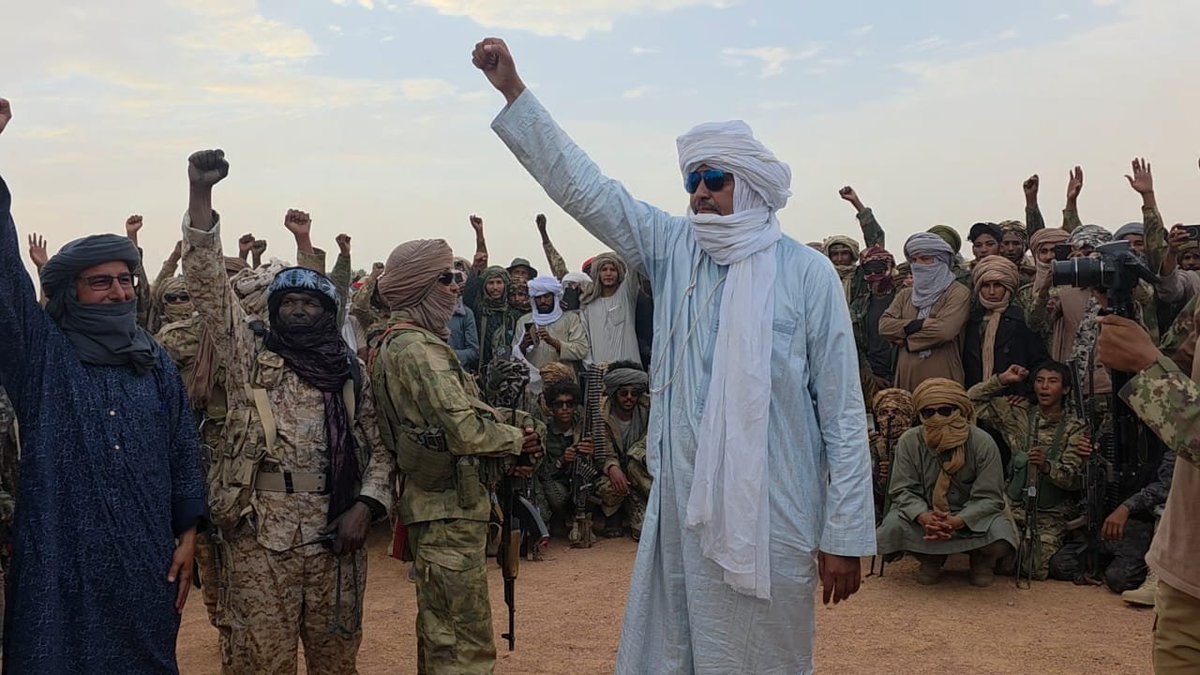
At a time when Mali junta chief Assimi Goita had disappeared for two days following the attack—amid conflicting reports regarding his fate— MNLA leader Bilal Ag Acherif appeared alongside commander Alghabass Ag Intalla in a video, standing amidst fighters in the strategic city of Kidal following its recapture.
Subsequently, these groups also seized control of the military base in Tessalit, following the withdrawal of the Malian Army and the Africa Corps—a paramilitary force under the control of the Kremlin.
These coordinated attacks are the largest in the country in nearly 15 years, and fierce fighting in several areas, including around the capital Bamako, has left at least 23 people dead.
A MNLA spokesman vowed to continue fighting to control the north of the country, predicting the downfall of the military junta that seized power.
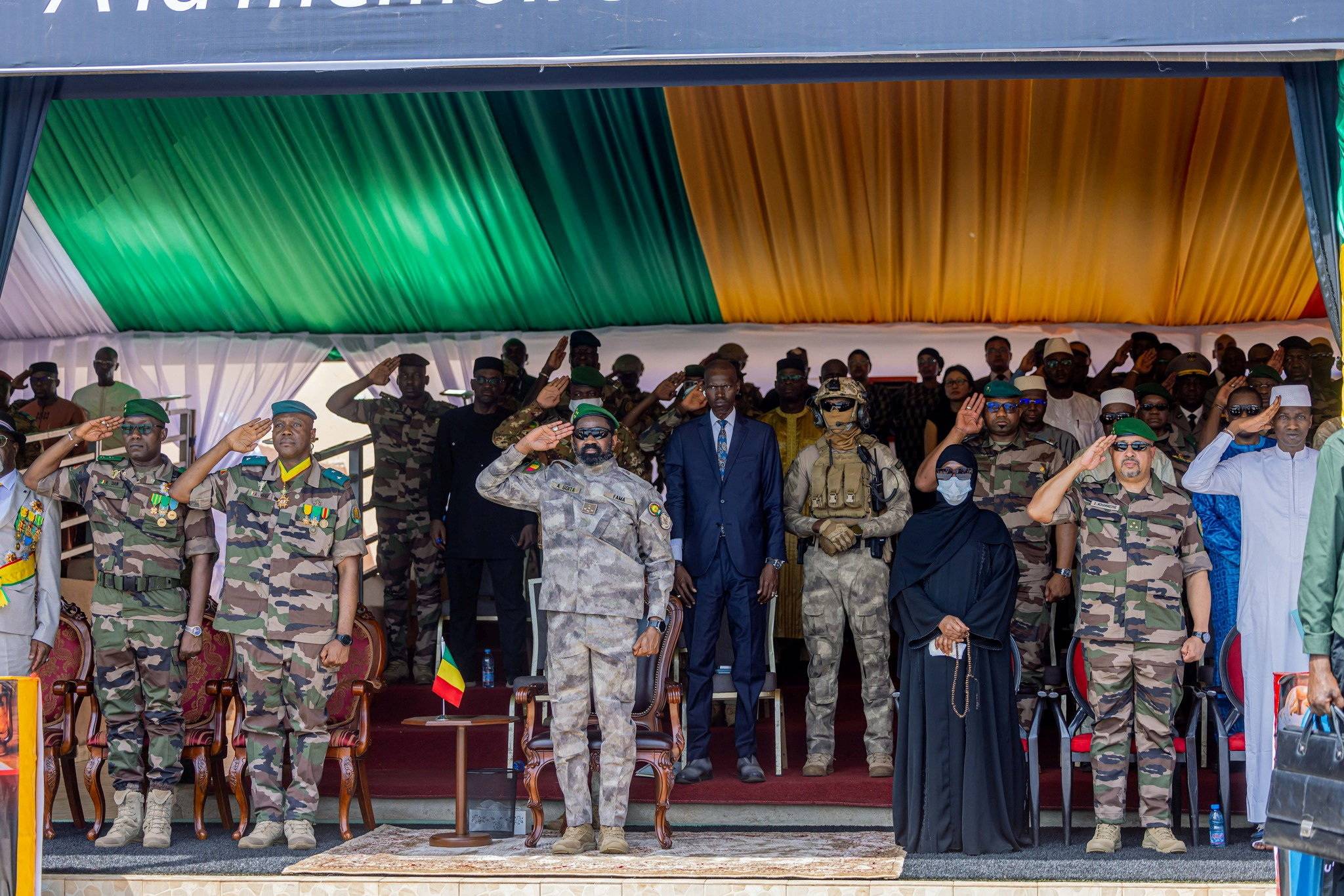
In a decree issued by the transitional presidency in Mali, interim President General Assimi Goita will assume the duties of Minister of Defense and Veterans Affairs, while General Oumar Diarra, the former Chief of Staff of the Armed Forces, has been appointed Minister Delegate to the Minister of Defense.
With this decision, Goita consolidates his grip on power in Mali, placing all military and security decision-making power in his hands.
Experts have suggested that Goita's assumption of the country's two most important positions may mask divisions within the military and a loss of confidence in its Russian allies following recent military setbacks.
They warned of the growing authoritarianism of General Goita, who has ruled Mali since 2020 without holding any elections, and the absence of any plan to return to constitutional order, especially after the dissolution of all political parties and the paralysis of all aspects of political life.
Temporary Rapprochement
The recent escalation in Mali cannot be understood in isolation from a set of overlapping factors that have reshaped the country's security landscape in recent years.
Foremost among these factors is the weakness of the central government. The military junta faces mounting internal and external challenges, ranging from political and economic pressures to relative isolation on the international stage, which limits its ability to exert effective control outside urban centers.
The French withdrawal, particularly the end of Operation Barkhane, also left a clear security vacuum that neither the state nor its new allies were able to fill effectively.
This vacuum allowed armed groups to redeploy and even advance in some areas that had previously been under pressure from international military operations.
In turn, the MNLA rejected being labeled a terrorist movement, asserting that it was the ruling authorities in Mali who had perpetrated terrorism against the people.
In a statement, it categorically rejected being labeled a terrorist organization, emphasizing its unwavering commitment to the principle of legitimate self-defense and its full commitment to protecting civilians in the context of the conflict.
The MNLA concluded that it considers the actions committed by the Bamako authorities and their allies over the past three years to be acts of terrorism directed against civilians.
Regional Repercussions
What is happening in Mali is not an internal matter that can be contained within the country's borders. Rather, it has become an open regional threat, with repercussions extending beyond Mali's borders to encompass the entire Sahel and West Africa, according to observers.
Research institutions warned that the repercussions of Mali's collapse will not be limited to West Africa but will extend to North Africa and Europe, threatening the stability of the entire Mediterranean basin.
With the decline in border control and the widening security vacuum, the movement of armed groups between countries has become almost commonplace, leading to the spread of violence into Niger and Burkina Faso, transforming them into parallel battlegrounds.
Libya's southern border also represents the most dangerous transition point between the collapse of the Sahel region and the destabilization of North Africa.
This expansion has not stopped at the Sahel countries but has begun to exert pressure on coastal West African countries, such as Benin and Togo, which until recently were considered relatively immune to this type of threat.
The Atlantic Council, a Washington-based think tank, warned that the continued deterioration in Mali could push the country toward further institutional and security fragmentation, creating a fertile ground for the expansion of extremist groups and transnational criminal networks.
Libya is not far removed from the new tensions in this Sahel country, as the MNLA views southern Libya and Niger as a natural extension of its sphere of influence. Meanwhile, Iyad Ag Ghali, the leader of al-Qaeda's branch in Mali, is a Tuareg from the Ifoghas tribe.
The National Interest linked the instability in Mali to the worsening flow of illegal migration from the Sahel region to Europe via Libya.
Mali lies at the heart of established networks that smuggle migrants north to Libya and from there to Europe, and Europe will therefore feel the brunt of the ongoing chaos there.
Meanwhile, international competition for influence in the region is intensifying.
Russia is bolstering its presence through security partnerships and military support, while Western influence is relatively waning, turning the Sahel into an open arena for redrawing geopolitical balances.
On the ground, the humanitarian crisis is worsening alarmingly, with hundreds of thousands displaced, economic conditions deteriorating, and basic services gradually collapsing, further weakening local communities and fueling the cycle of violence.

For his part, military analyst Omar Melhem explained in a statement to Al-Estiklal that, despite the fundamental divergence between the two projects—the transnational jihadist one and the geographically rooted Tuareg nationalist one—field developments have compelled both parties into what resembles a temporary, necessary alliance.
"Their common enemy—represented by the central authority in Bamako—has created a space for convergence, albeit a temporary and pragmatic one, that transcends ideological differences," he added.
He further noted that this rapprochement was not merely symbolic; rather, it was practically reflected on the ground. It granted the jihadists greater geographic depth for maneuver and expansion—particularly in the ethnically sensitive northern regions—while the Tuaregs gained access to specialized military support and accumulated combat expertise.
He pointed out that this scenario calls to mind the events of 2012, when the interests of the jihadists and the Tuaregs converged at a pivotal moment that fundamentally altered the contours of the conflict in northern Mali.
However, he emphasized that what distinguishes current developments is a context that is far more complex and intertwined.
He noted that the regime in Mali appears increasingly fragile amidst the escalating direct Russian presence, alongside jihadist organizations that have become more experienced, widespread, and capable of adapting to shifting realities on the ground.
Sources
- Al Qaeda-Linked Militants Launch Major Attacks on Cities Across Mali
- Lessons for the United States in the Militant Attacks that Killed Mali’s Defense Minister
- Mali’s junta leader takes over defense ministry after the minister was killed in militant attacks
- Mali crisis: Who are the key leaders to know about?
- Lessons for the United States in the Militant Attacks that Killed Mali’s Defense Minister