UN Resolution Enables Libya To Pursue Recovery of Its Frozen Assets After 15 Years: What’s the Story?
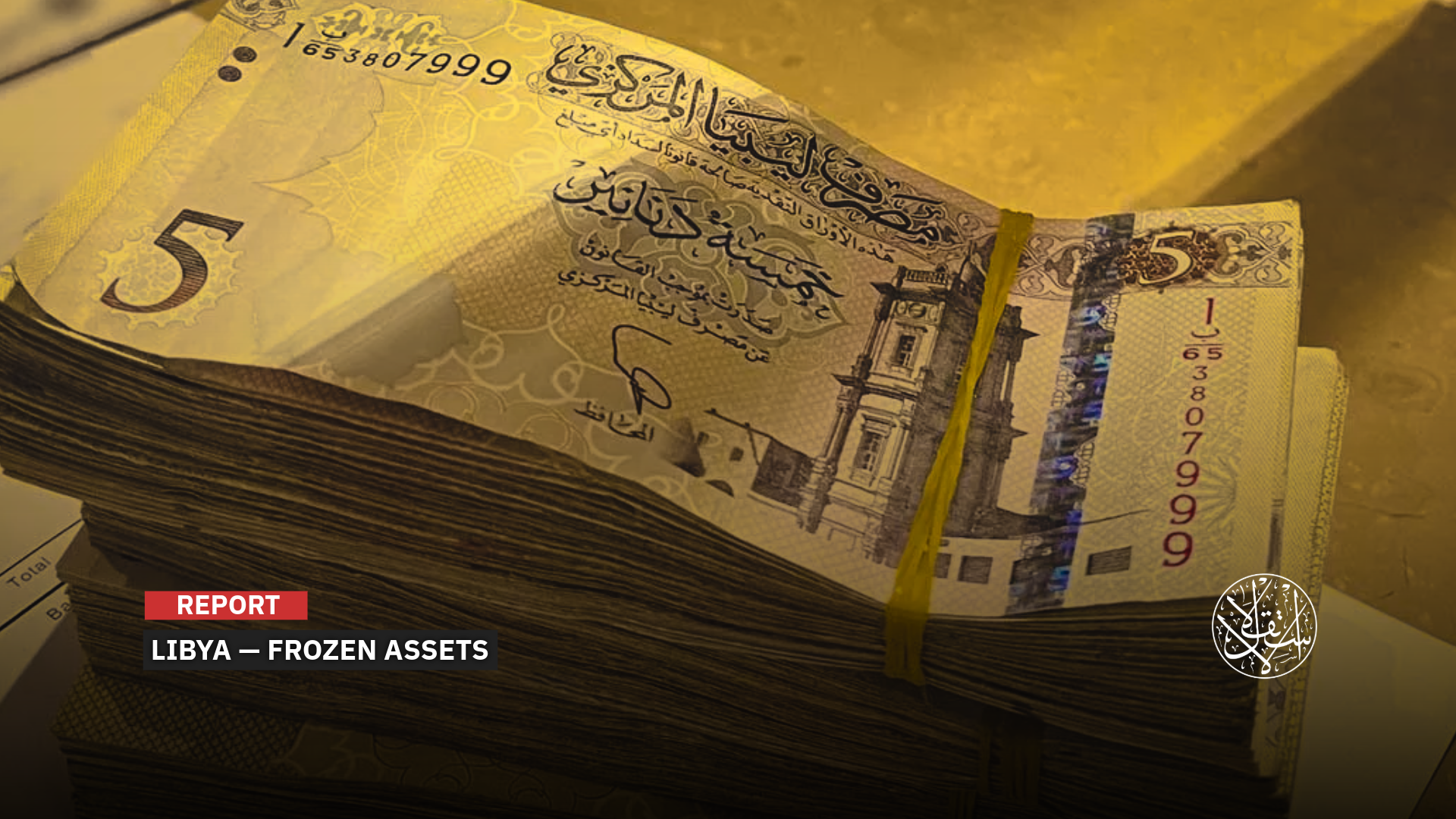
The value of these funds is estimated to range between $150 and $200 billion.
After years of waiting, a new UN resolution has been issued regarding Libya’s frozen assets abroad, reviving hopes that they could be recovered and protected from erosion.
The decision, issued on April 14, 2026, grants the Libyan side, for the first time in nearly 15 years since sanctions were imposed in 2011, the authority to monitor and follow up on these assets.
The resolution aims to safeguard these funds, which are estimated to be worth between $150 and $200 billion, according to preliminary and potentially changeable estimates, at a time when Libya is facing a fiscal deficit of around $9 billion.
Although these assets remain outside the scope of direct use for public spending or development projects, their management helps preserve their value and strengthen international confidence in the efficiency of Libyan institutions.
The resolution also allows for a comprehensive review of these assets, through the appointment of an independent international auditing firm to verify the integrity of their management and detect any potential irregularities by the entities responsible for their custody.
For the Libyan People
In this context, the Libyan Investment Authority (LIA) welcomed the provisions included in the unanimously adopted UN resolution, particularly those relating to matters concerning the authority.
It described the decision as the culmination of its efforts and a support for its ongoing work to protect its assets and preserve their value.
In a statement issued on April 15, the authority added that the resolution allows for the reinvestment of frozen cash balances, while they remain subject to freezing measures.
It further stated that the decision enables the LIA to strengthen its capacity to review, audit, and monitor its entire portfolio in accordance with the highest international standards and best practices, enhancing efficiency, governance, and sustainability.
The authority said the resolution reflects the confidence of the UN Security Council and the international community in its ability to reinvest its assets with maximum efficiency, transparency, and professionalism, in a way that preserves and grows their value.
It also expressed appreciation for Prime Minister of the Government of National Unity and Head of the Investment Authority’s Board of Trustees, Abdul Hamid Dbeibah, for his continued support and guidance in safeguarding the authority’s assets, reaffirming its “firm and steadfast commitment” to protecting these assets for the benefit of the Libyan people.
On its part, the Committee for Verifying Libya’s Frozen Funds Abroad, affiliated with the House of Representatives, welcomed UN Security Council Resolution No. 2819 of 2026. The resolution calls for a comprehensive financial audit of Libya’s frozen assets abroad, which have been held since 2011, with the aim of enhancing transparency, accountability, and ensuring the protection of the country’s sovereign wealth.
In a statement, the committee explained that the resolution includes the appointment of an independent, internationally recognized auditing firm to conduct a full review of all frozen assets. This would include verifying any suspicions of misuse or potential violations by banks or financial institutions holding these funds.
The committee stressed that this step represents an important milestone in strengthening financial integrity and sovereign asset management, emphasizing that the frozen funds are the exclusive property of the Libyan people and cannot be disposed of outside legal frameworks.
It also noted that it will continue to coordinate with relevant international parties to follow up on the implementation of the resolution according to the highest standards of transparency and accuracy, in order to fully safeguard Libya’s sovereign rights and protect its frozen assets abroad.
A Step in a Gradual Process
In its analysis of the development, the local website Libya 24 reported on April 20 that the move regarding Libya’s frozen assets abroad is seen as part of a gradual process concerning the file.
It added that this process is tied to the need for clear guarantees that strengthen confidence in governance and management mechanisms within the state. However, progress on the issue remains dependent on the ability of Libyan institutions to present a disciplined and transparent administrative model that aligns with international standards.
Over the past years, the source continued, Libyan governments have sought to regain control over these funds, amid earlier estimates suggesting annual losses of up to $1 billion due to inefficient management.
The website noted that the UN resolution carries mixed implications. On one hand, it could help limit the erosion of asset value through active management, while on the other, it raises concerns related to political division and weak oversight.
It also pointed out that these assets are not limited to cash deposits, but include investments, securities, and equity stakes in companies, which further complicates their valuation and management.
Despite Libya generating around $22 billion in oil revenues in 2025, an increase of more than 15 percent, the economy still faces a foreign currency deficit estimated at $9 billion. This reflects the continued heavy reliance on oil, which accounts for about 96 percent of exports and 98 percent of state revenues.
Ending Political Division
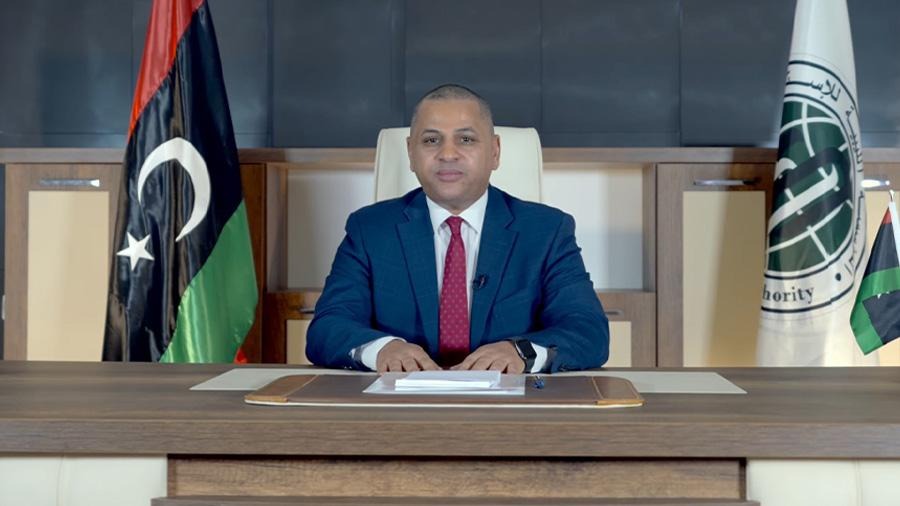
Libya’s Permanent Representative to the United Nations, Taher el-Sonni, has stressed the need to protect Libya’s frozen assets abroad and to prevent any manipulation of them.
According to remarks reported by Ean Libya on April 23, el-Sonni emphasized that any international support for Libya should be coordinated with official state institutions, in a way that strengthens stability and safeguards national wealth.
He also argued that the extension of sanctions on Libya does not constitute an achievement, but rather reflects the continuation of the crisis. He called for unified international positions to bring an end to the crisis and support the will of the Libyan people.
Regarding the broader situation in Libya, the Libyan diplomat stressed that ending political division in the country is the essential entry point to addressing its wider challenges. He warned that continued political deadlock and declining hopes could lead to a return to armed conflict and an escalation of proxy wars.
El-Sonni noted that Libyans are still waiting for practical and effective solutions to end the prolonged crisis, pointing out that recent years have revealed a clear divide in international positions, which has negatively affected prospects for real progress in the political process.
He explained that the core of the crisis is not the absence of solutions, but rather conflicting international approaches and multiple uncoordinated tracks, which have weakened the possibility of reaching a comprehensive and sustainable settlement.
This situation, he added, has created a vicious cycle that deepens mistrust between Libyan parties, while also contributing to a growing trust deficit with the international community, turning Libya at times into an arena for intersecting international interests and rivalries.
El-Sonni called for a comprehensive review of previous approaches that failed to yield tangible results, stressing the need for practical solutions with clear and implementable mechanisms, and the inclusion of all relevant actors in the political process.
He reaffirmed that national aspirations focus on reaching a consensual constitutional framework that would pave the way for general elections, aiming to end transitional phases and renew the legitimacy of institutions through the ballot box.
He also urged that international initiatives be directed toward this path within a defined timeline, while emphasizing respect for national ownership of the solution, strengthening coordination with the United Nations, and adherence to relevant UN Security Council resolutions.
Red Line
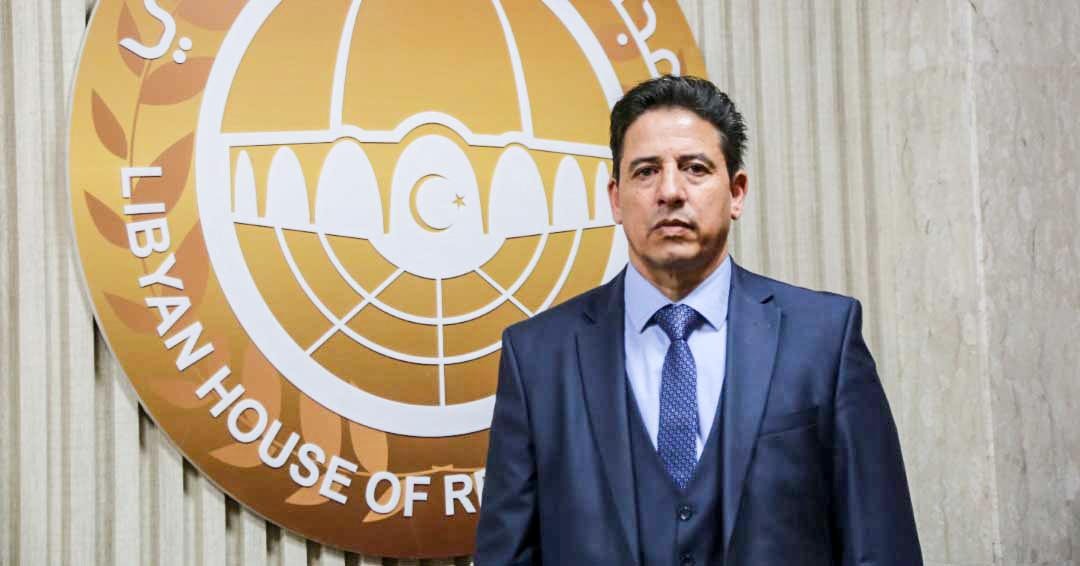
The issue of Libya’s frozen assets continues to generate domestic controversy. In this regard, the head of the National Work Group, Khaled al-Turjman, stated that the file is a “red line” that cannot be addressed before achieving national unity and holding free and fair elections under a mutually agreed constitutional framework.
In televised remarks, al-Turjman explained that Libya’s frozen funds belong to the entire Libyan people, and no interim or transitional government has the right to dispose of them in any form.
He stressed that the file is non-negotiable and cannot be touched before state institutions are unified and presidential and parliamentary elections are held on clear constitutional foundations.
Al-Turjman also reviewed the history of the frozen assets file, which dates back to the period of the National Transitional Council. He recalled, during his time as secretary of the council, the circumstances surrounding the appointment of the current governor of the Central Bank of Libya.
He revealed that the appointment was made based on a recommendation from the British ambassador in Benghazi at the time, on the grounds that the candidate had international connections that could be useful in tracking smuggled funds and dealing with frozen assets.
He added that the transitional council had promised, at the time, a share ranging between 30 and 35 percent of recovered funds to whoever succeeded in retrieving them. However, he said these efforts later turned into a source of profiteering by Libyan and foreign companies and individuals, without achieving any tangible results.
Al-Turjman noted that the National Congress continued on the same path, with companies and projects claiming the ability to recover the funds, all of which ultimately failed due to the absence of state institutions and weak oversight.
He praised the clear positions of several Arab countries, particularly Kuwait, Egypt, and Tunisia, which refused any interference in Libya’s frozen assets, considering them a right of future generations that no transitional government can claim or use.
He also referred to the scale of Libyan assets in South Africa, stating that their value exceeds $12.5 billion, and noting that Libyan aircraft had previously transported large amounts of cash, gold, and diamonds during the former regime.
He added that unofficial estimates suggest these assets could reach up to $120 billion, including deposits, real estate, and precious stones, stressing that South African authorities consider them the property of the Libyan people and refuse to hand them over to any transitional authority.
Al-Turjman warned that some foreign companies, including Egyptian and Arab firms, are demanding billions of dollars in compensation for unimplemented projects, describing this as a serious threat to Libya’s frozen assets.
He called for first unifying state institutions and building a capable, transparent state that can manage its wealth properly, warning that otherwise these assets could become a source of external pressure or internal conflict.
A Sensitive Phase
The European Center for Political and Strategic Studies previously issued a report in 2025 stating that Libya is going through a sensitive phase of political and economic reconstruction, and that its frozen assets represent a key pillar in any future development plan.
The center added that depriving the Libyan people of these assets, or manipulating them under political pretexts, constitutes a denial of fundamental rights and delays efforts toward national stability.
It further emphasized that these funds are not merely bank balances, but a reserve of sovereign rights that no party is entitled to tamper with.
The report also noted that Libya, as a full member state of the United Nations, has the right to demand the unconditional recovery of these funds, and that the international community should support this legitimate demand.
The European Center for Political and Strategic Studies called on the United Nations, the African Union, and the Arab League to adopt a unified stance on the issue and to exert real pressure on the Western countries concerned to release Libya’s frozen assets immediately and unconditionally.
It concluded that continued delays in addressing this crisis could open the door to further violations of peoples’ rights to control their national wealth.