Despite the Army’s Need for Balance: Why Do Shia Groups in Iraq Reject the Conscription Law?
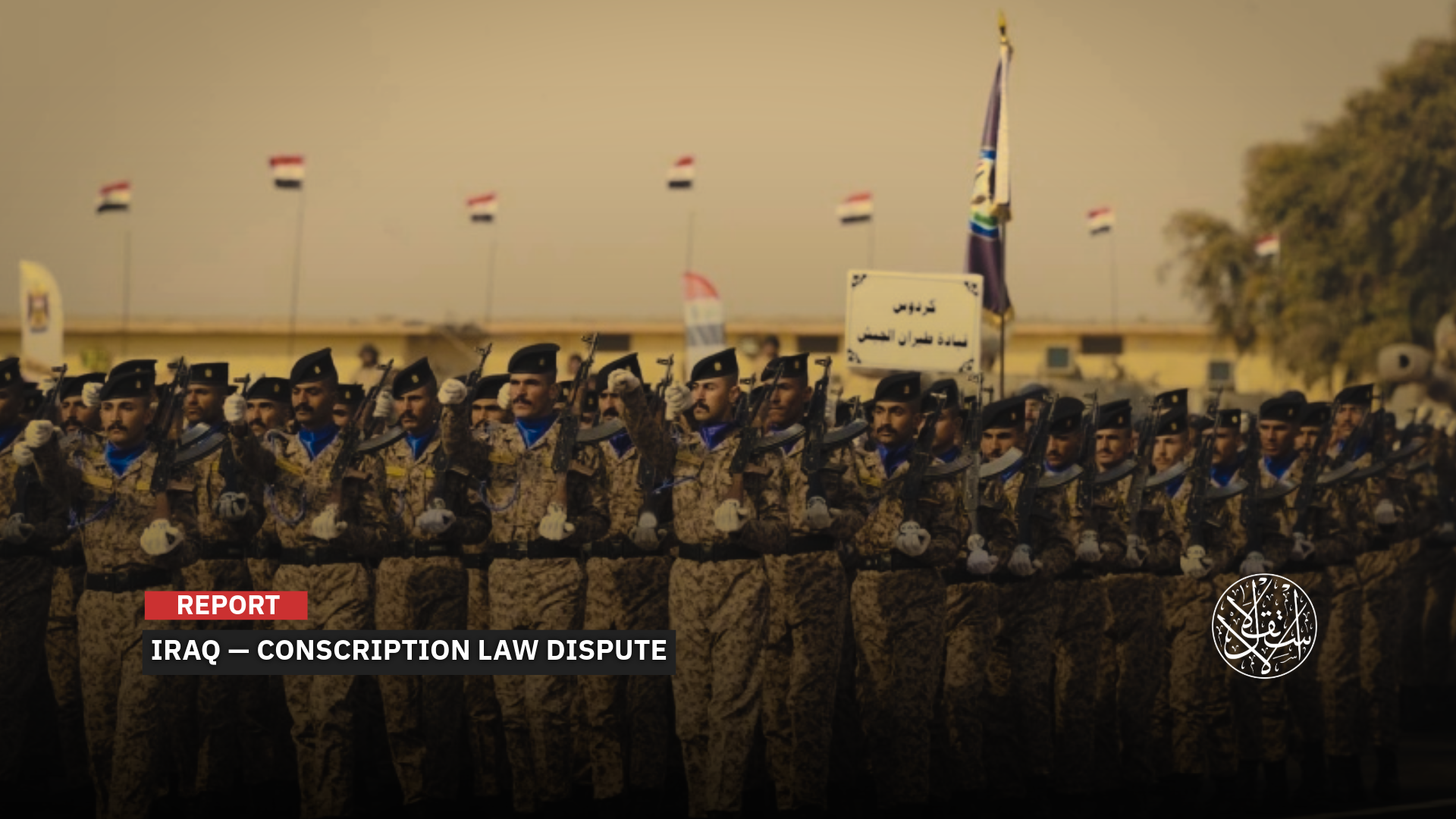
Prominent Shia leaders rejected the law, citing economic concerns.
Iraq’s entire Shia political spectrum has come out firmly against a proposed conscription law, rejecting legislation now moving through parliament that would reintroduce mandatory military service for young men, with terms ranging from up to 18 months to as little as three for PhD holders.
The opposition has been framed around familiar arguments: economic strain, poor timing, and doubts over the value of drafting large numbers at a moment many see as strategically unclear. But the pushback has also raised deeper questions about motive, especially as the Iraqi army faces a sharp shortfall in volunteers and calls grow louder to restructure or even dismantle the Popular Mobilization Forces (PMF).
The debate unfolds against the backdrop of Iraq’s post-2003 transformation, when U.S. administrator Paul Bremer disbanded the army and scrapped compulsory service altogether, ending decades of mandatory enlistment for young men at 18, including university graduates.
‘A Pressing National Necessity’
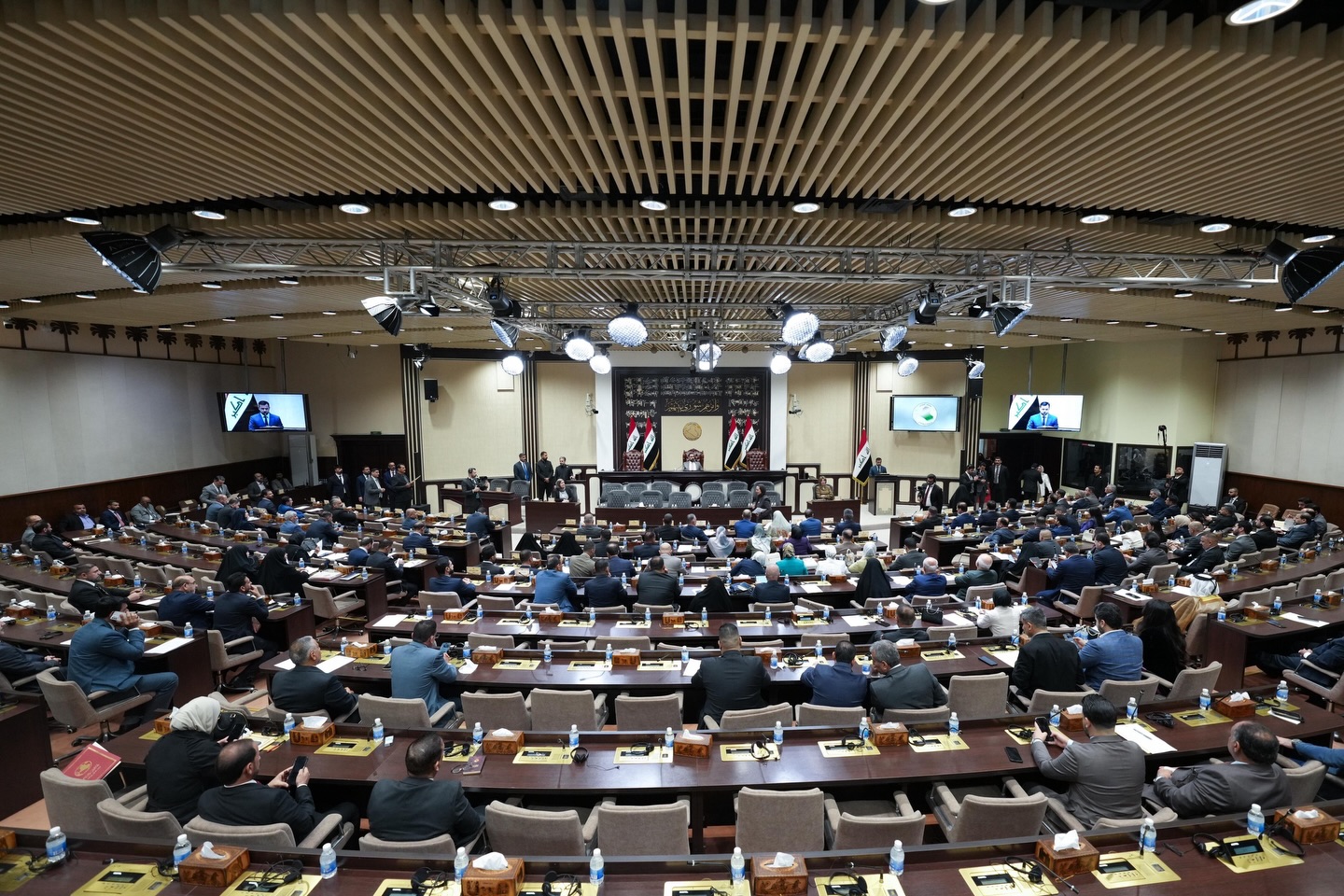
On April 19, 2026, Iraq’s parliament moved a proposed conscription law through its first reading, a procedural step that opens the door to broader debate in the coming sessions. The draft, submitted by the parliamentary Security and Defense Committee, spans 66 articles and lays out a framework for reinstating mandatory military service.
Parliament Speaker Haibat al-Halbousi pushed back against labeling the measure as compulsory conscription, framing it instead as a tool for national cohesion.
“We do not want to militarize society; rather, we want young people to feel a sense of belonging to their homeland,” he said in an official statement.
Al-Halbousi called on the Security and Defense Committee to take its time reviewing the bill, seeking input from the defense, planning, and finance ministries, as well as the army’s general command, to address technical concerns before moving forward.
According to the Iraqi News Agency (INA), the proposal aims to strengthen the army’s capabilities while allowing male citizens to serve, with provisions covering service length, medical checks, deferments, and exemptions.
For some lawmakers, the timing is anything but accidental. Khalid al-Obeidi, a member of the parliamentary Security and Defense Committee, described the bill as a “pressing national necessity,” arguing that it could help address a growing manpower gap within the armed forces.
He said the draft outlines service terms, salaries, and implementation mechanisms, adding that further discussions with the Ministry of Defense are expected to refine its provisions. The proposed age range spans 18 to 45, though there are suggestions to narrow it to 30 or 35 to focus on younger recruits. Salaries, he noted, would be calibrated to the defense budget, potentially allowing the state to absorb more conscripts than volunteers.
Supporters argue the law could also help tackle unemployment, instill discipline, and foster social cohesion across Iraq’s provinces, with the draft’s preamble framing it as a “pressing national necessity.”
The proposal follows years of stalled attempts to revive conscription, repeatedly introduced and withdrawn amid political disagreements. This time, it has also drawn backing from several Sunni lawmakers of the Sunni National Political Council (SNPC), who say it could promote equality and strengthen national identity.
The SNPC, which holds roughly 75 seats in parliament, includes groups such as Takadum, led by al-Halboosi; the al-Siyada (Sovereignty) Alliance, led by Khamis al-Khanjar; and the Azem Alliance, headed by Muthanna al-Samarrai, as well as the Hasm and Aljamahir Alwatanya blocs.
Shia’s Pushback
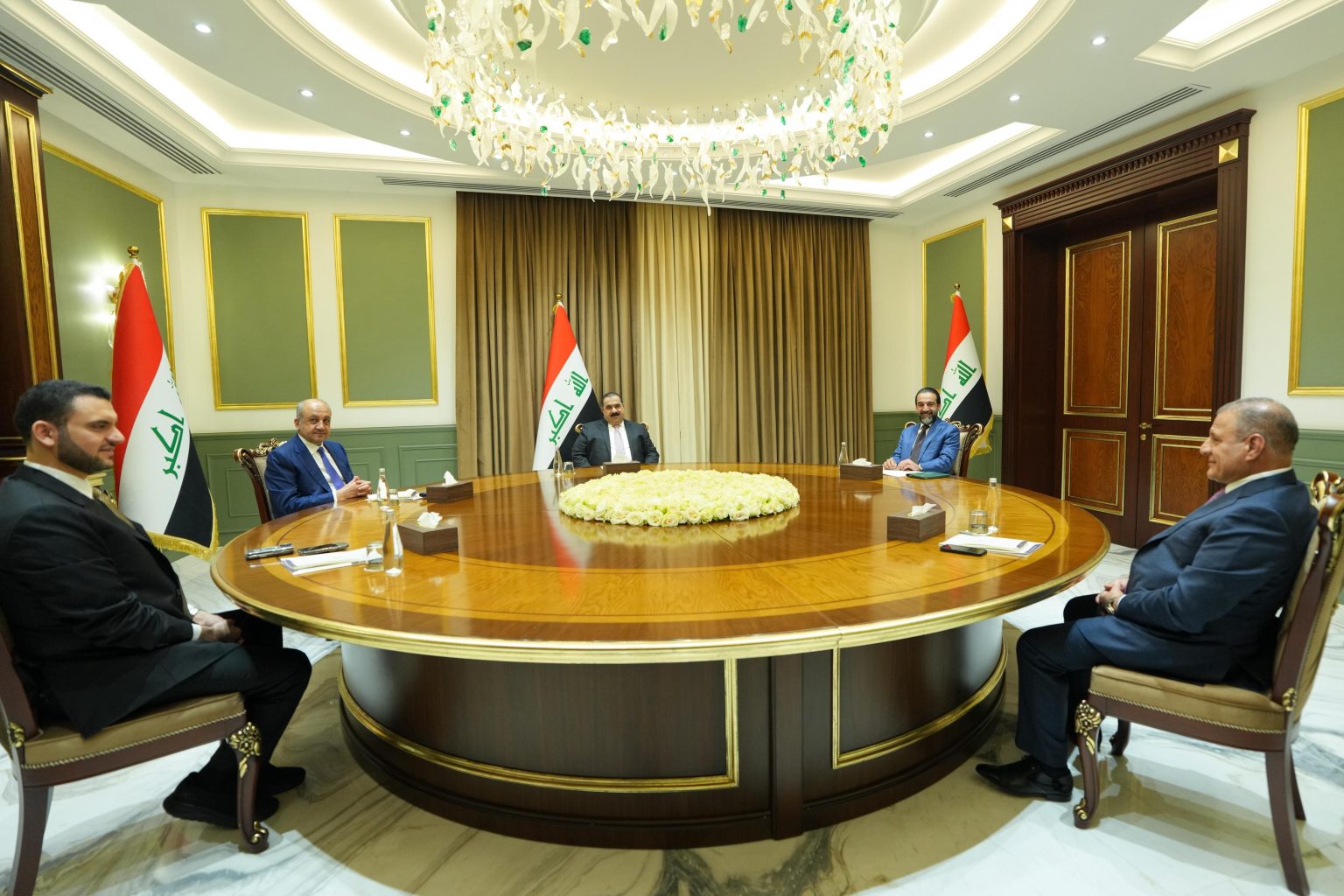
On the other side of the debate, most Shia factions aligned with the Coordination Framework (CF) have firmly rejected the proposed conscription law, arguing that implementing it would impose heavy financial burdens at a time when Iraq is facing economic strain that calls for austerity.
Leading the opposition is former prime minister Nouri al-Maliki, head of the State of Law Coalition, who dismissed the revival of mandatory service as “an idea whose time has passed” in a post on X on April 22.
Modern warfare, he argued, no longer hinges on large troop numbers but on drones and advanced technology. Expanding recruitment, he said, would saddle the state with high costs without clear need, urging parliament to slow down and instead direct resources toward building a smaller, more capable military force.
Ammar al-Hakim, leader of the al-Hikma National Movement, struck a more measured tone, saying there is a general need to shape Iraqi youth around national values, while stressing concerns over timing, implementation, and the need for careful review of the proposal.
Others took a harder line. The Alnahj Alliance rejected the bill outright, with its leader Hassan al-Asadi saying at a press conference on April 22 that shifting security threats and the move toward cyber and media warfare have made conscription outdated and ill-suited to today’s realities.
Saud al-Saadi, a lawmaker from the Huqooq bloc affiliated with Kata’ib Hezbollah, voiced similar objections the same day, calling instead for prioritizing air defenses and pushing for legislation related to the PMF as a more immediate need.
The debate comes as Iraq’s military faces real structural strain. In March 2025, former defense minister Thabet al-Abbasi said the army needed around 60,000 additional troops to bolster its capabilities, pointing to declining recruitment since 2014, a growing personnel gap, and an aging force.
Shia’ Muslims make up roughly 80 percent of the post-2003 army, which has relied on voluntary enlistment, while participation from Sunni communities has declined over time.
Yet even as Shia’ factions reject conscription, they continue to back the PMF, a network of mostly Shia’ armed groups formed in 2014, despite earlier objections from Sunni political blocs when its law was passed in 2016.
The force now includes around 240,000 members and is funded through Iraq’s budget at roughly $2.9 billion annually, amid ongoing political disputes over alleged ghost employees and the diversion of salaries to faction leaders.
The United States, which views the group as an extension of Iranian influence, has pushed for its dismantling and warned in October 2025 of possible sanctions on Iraq if legislation to restructure it moves forward.
Holding the Balance of Power
For some analysts, the Shia’s rejection of the conscription law is less about economics and more about control. Bahaa al-Din al-Barzanji, a researcher in Iraqi political affairs, argues that blocking the bill is a way to maintain dominance over the army and security institutions in all their branches.
“The rejection of this law under multiple pretexts is not surprising,” he told Al-Estiklal. “The economic argument is a new justification aimed at winning public sympathy, but the fact that the law has been stalled since the first parliament in 2005 shows these reasons are not serious.”
Al-Barzanji points to a deeper imbalance. Sunni political forces, he says, have long sought to create a more representative military structure, as the majority of volunteers come from Shia communities, leaving the army short of reflecting Iraq’s full social makeup.
He noted that Parliament Speaker Haibat al-Halbousi emphasized that the law is not intended to impose compulsory service, but rather to give young people the opportunity to join the military institution and strengthen their sense of national responsibility.
A similar critique came from Iraqi political analyst Nofal Aljmyly, who said in an interview on April 23 that every government formation deal includes clear commitments, yet Sunni factions are repeatedly left disappointed when those promises go unfulfilled, with their demands sidelined by the CF.
Prime ministers, he argued, have failed to follow through on those agreements, reinforcing weak Sunni representation within the security apparatus compared with Shia and Kurdish counterparts.
For many Sunnis, the issue runs deeper than policy. “They refuse to be treated as second-class citizens, especially within security institutions,” Aljmyly said, pointing to what he described as discrimination that can be seen even in small details, such as the regional backgrounds of personnel.
In his view, passing a conscription law could help rebalance the system, ensuring fairer representation across Iraq’s diverse communities and reinforcing the principle of equal citizenship.
He added that signs of dominance remain deeply embedded in the structure of the Iraqi state, with most key security decision-making positions concentrated in Shia’s hands, including the prime minister’s office as commander in chief, the army’s general command, the interior ministry, national security bodies, counterterrorism leadership, the PMF, the national security advisory, intelligence services, and the federal police.
Sources
- Parliamentary push to bring back conscription ignites debate in Iraq
- MP Calls for Withdrawal of Conscription Bill, Says Iraqi Army Does Not Need Additional Forces [Arabic]
- Conscription Back in the Spotlight: Can Parliament Revive Mandatory Service More Than Two Decades After Its Abolition? [Arabic]
- Dozens of Parliamentary Signatures Oppose Conscription Bill [Arabic]
- After First Reading in Parliament: Details of Iraq’s Military Conscription Bill [Arabic]
- After First Reading in Parliament: Details of Iraq’s Military Conscription Bill [Arabic]
- Al-Hakim Speaks About the Next Prime Minister Candidate and the Conscription Law [Arabic]
- Iraq: Rising Numbers in the Popular Mobilization Forces [Arabic]