Trump’s Erratic Policies: How the Republican Loss in Virginia Will Affect the 2026 Election
“The party in control of the White House usually loses seats in the midterms.”
The tables have turned on Donald Trump. After criticizing the electoral redistricting as biased toward the Democratic Party, the results of the Virginia vote have put him in a difficult position, giving Democrats a decisive 9-1 lead.
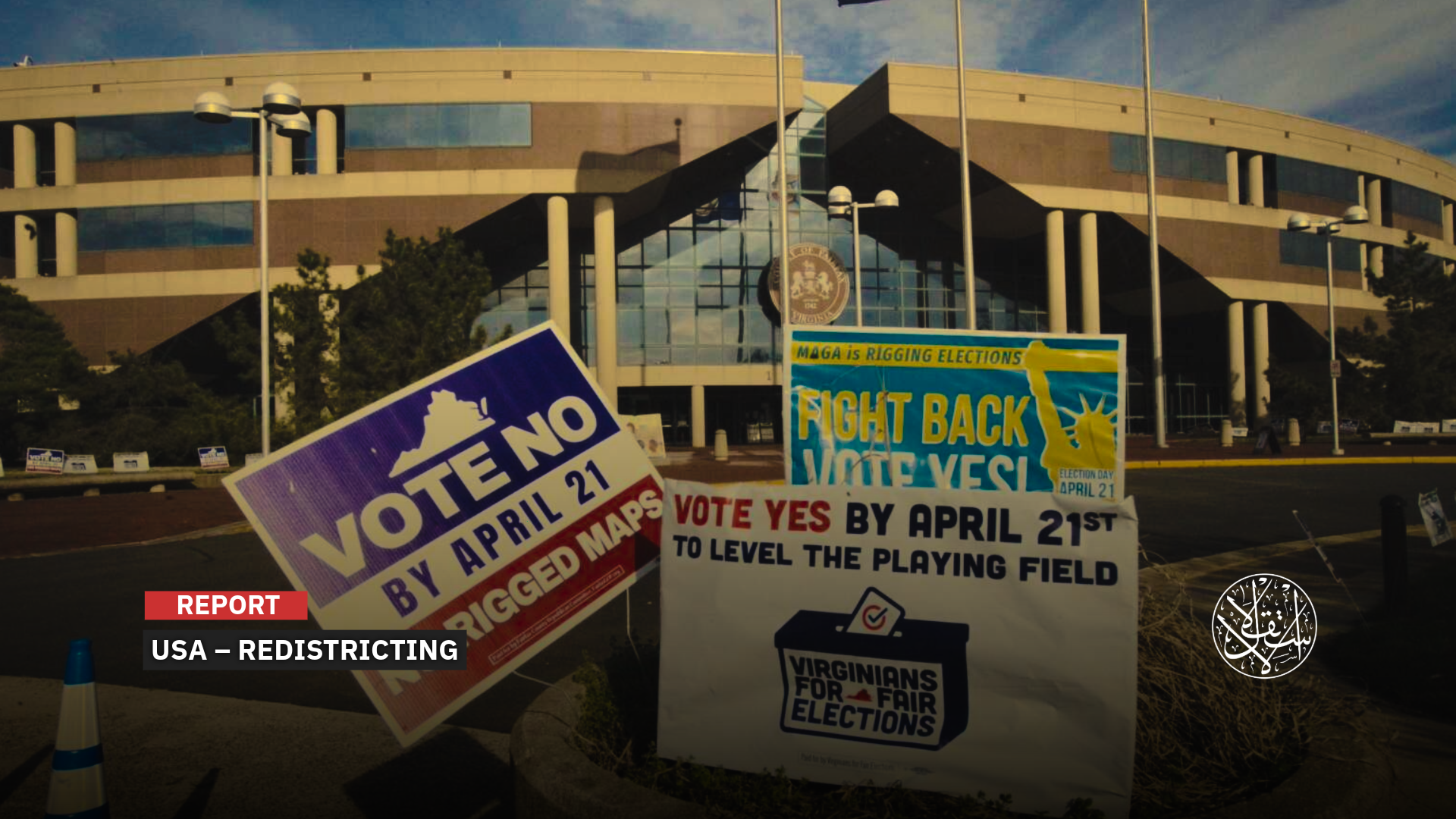
On April 21, voters in the state approved a new electoral map that redistricts in a way that gives Democrats a clear advantage.
After holding 6 of the 11 seats in the House of Representatives, the new map opens the door for them to win up to 10 seats compared to just one for the Republicans, according to The New York Times.
Thus, the vote—which came amid a broader debate over redistricting—turned the tide in favor of the Democrats, giving them a significant boost in the national redistricting battle and potentially strengthening their chances of regaining a majority in the US House of Representatives in the November 2026 elections.
Constitutional Amendment
Donald Trump has long criticized the US electoral system, attributing his defeat in the 2020 election and the decline of Republicans in Congress to it.
He has repeatedly stated that gerrymandering favors Democrats, arguing that unfair redistricting has marginalized his conservative supporters or diminished their representation.
However, he has not proposed a comprehensive plan to address this issue, instead treating it as part of the ongoing political struggle.
In several US states, this issue has not been resolved by Trump or the federal government, but rather through popular referendums or local constitutional amendments aimed at establishing independent commissions to oversee redistricting, thereby reducing political party interference in the process.
For example, in 2020, Virginia voters approved a constitutional amendment establishing a joint commission of politicians and independents to draw electoral districts, instead of leaving this task solely to the legislature. Other states, such as Michigan and California, have taken similar steps in this direction.
American analysts believe these changes represent a loss for Trump and his party because they reduce the ability of parties—including Republicans—to manipulate electoral districts to their advantage, especially during Trump's presidency and his appointments to influential positions.
They pointed out that removing this tool from the hands of political parties weakens traditional means of political influence and makes election results more competitive and less predictable, which contradicts Trump's desire to redistrict to align with his political agenda.
This trend came as a shock to Trump, as despite his constant criticism of what he called gerrymandering, the general trend in some states has been to remove this tool from the hands of politicians altogether, thus reducing the ability of any party—especially Trump—to use it to their advantage.
The results in Virginia only intensified the shock. Trump had criticized the previous seat allocation, which gave Democrats six seats to Republicans' five, calling it unfair.
However, the new results—without any direct intervention from either side—gave Republicans only one seat out of 11, while Democrats maintained near-total control of the remaining seats.
These results are likely to provide a significant boost to the Democratic Party, which was considered a strong contender to regain a majority in the US House of Representatives in the November 2026 elections.
They also effectively undermine the advantage Republicans had gained through their previous efforts to redraw electoral districts.
Texas was the first state to redistrict for 2026. Its Republican-majority legislature heeded Trump's warnings and adopted electoral maps that gave Republicans five additional seats.
Republican legislatures in other states, including Ohio, North Carolina, and Missouri, followed suit.
Florida Governor Ron DeSantis called for an extraordinary session of the legislature this April to redraw electoral districts.
Meanwhile, Democrats in some states have turned to voters to redraw electoral maps within their sphere of influence.
Californians voted in November 2025 in favor of a ballot initiative that would give Democrats five additional seats in the House of Representatives, a move later mirrored in Virginia.
However, CNBC reported on April 22, that supporters of Virginia's actions view them as a necessary evil to counter what they describe as the anti-democratic tendencies of the Trump administration.
At the same time, the move puts the Democratic Party in a difficult position, given its previous stance against partisan manipulation of electoral districts.

New Electoral Map
The redistricting process in several states, which resulted in Virginia Democrats gaining four additional seats in the House of Representatives, increasing their representation from six to ten compared to just one for the Republicans, has sounded a significant political alarm.
The new map reversed the balance of power in the state's congressional representation from six to five in favor of the Democrats to ten to one, placing the Democrats in a strong position to regain a majority in the House of Representatives during the midterm elections scheduled for November 2026.
A repeat of this scenario in other states could be enough to decide the outcome of the upcoming elections in favor of the Democrats through redistricting, even though general indicators, including polls and primaries, already suggest they are making significant gains in the House, which could hinder President Donald Trump's agenda.
In this context, American experts and polls indicate that the war on Iran has inflicted significant political damage on the Republicans.
According to estimates, whether Trump reaches a comprehensive agreement with Iran before the midterm elections or decides to postpone it until afterward, the Republicans will bear the political cost of this war.
A striking paradox emerges in this scenario: Trump himself ignited what is described as a redrawing of electoral districts, pushing states like Texas to redraw their electoral maps to bolster Republican gains. However, this move backfired, as described by American media reports.
In Virginia, the new electoral map was drawn at the initiative of Democratic legislators and approved by Democratic Governor Abigail Spanberger.
Under this map, three seats previously held by Republicans were eliminated by redistributing the population density in the suburbs of predominantly Democratic Arlington and Fairfax counties across five electoral districts.
Spanberger stated that “the voters of our state have spoken clearly and approved a temporary measure to counter a president who is demanding more Republican seats in Congress.”
California Governor Gavin Newsom, a leading potential presidential candidate, commented on the Virginia results, saying: “The Republicans are losing at their own game. They're on the defensive and they're scared.”
“We will deliver a crushing blow to the Trump administration by taking back control of both the House and the Senate,” he added.
Democratic Victory
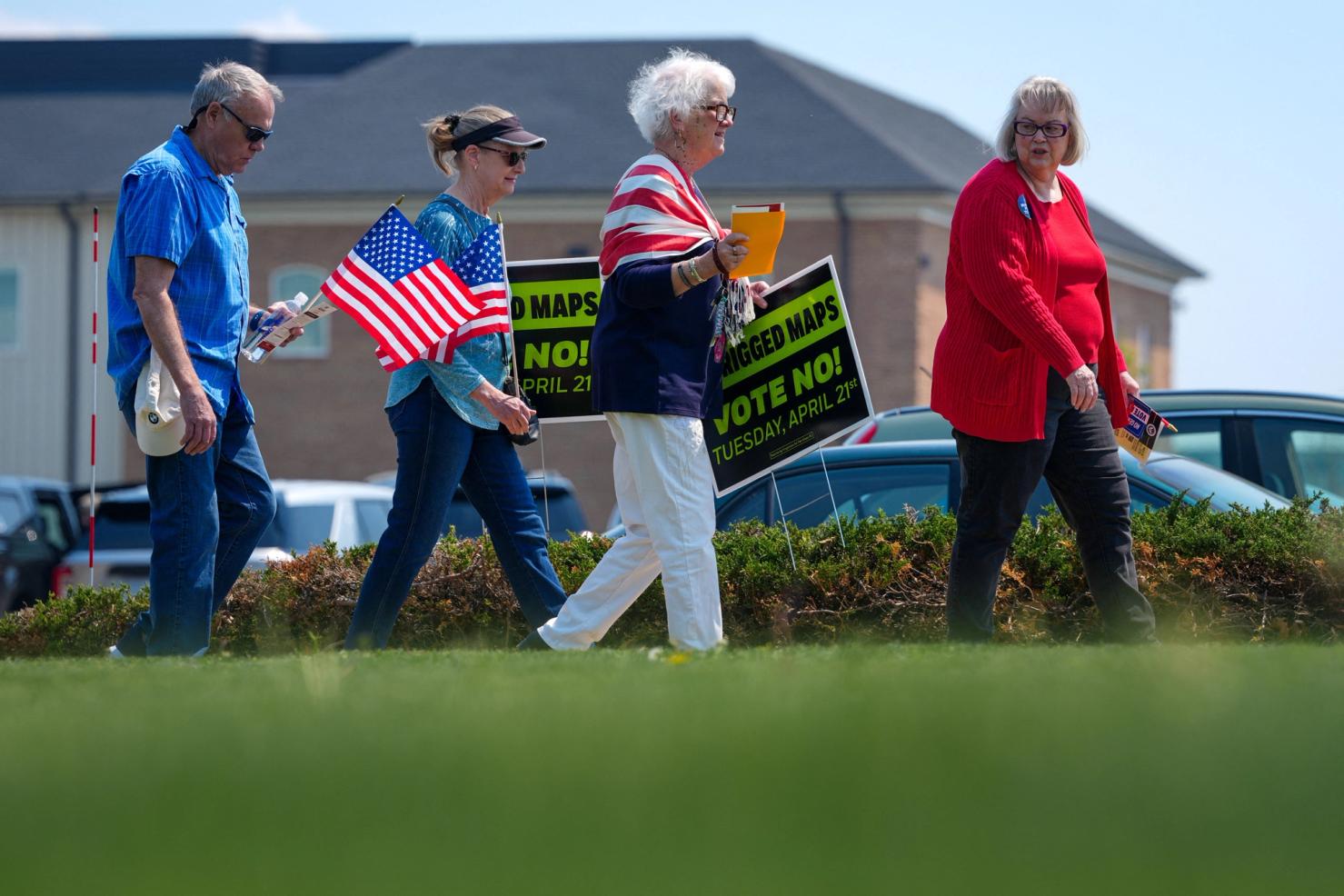
Immediately after the results of this referendum were announced, with a turnout of approximately 48% and nearly 3 million voters supporting the amendment—effectively turning the state blue—US President Donald Trump and Speaker of the House Mike Johnson rushed to attack the new measures.
Besides claiming that the Democratic Party poured millions of dollars and mobilized voters to achieve these results, they argued that the congressional seat allocation chosen by the voters was unfair and scandalous, as it gives Democrats 10 seats compared to only one for Republicans.
They argued that this reality means over 90% of Virginia's population will be represented by Democrats, depriving a large segment of the state's residents of fair representation.
They called on the courts to overturn this decision and urged the Republicans to take decisive action in the battle to redraw the electoral districts.
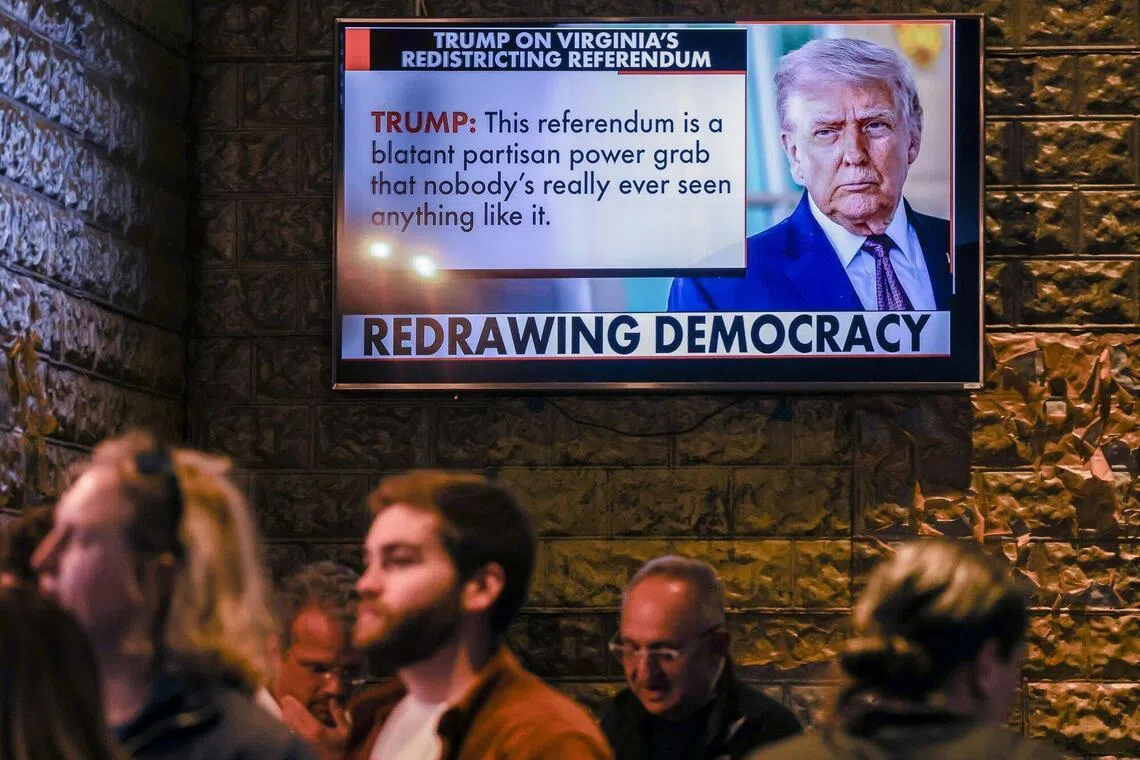
Trump, commenting on the results, wrote, “A rigged election took place in the great state of Virginia!”
He reiterated his claims from after the 2020 election, saying: “All day the Republicans were winning, spirits were incredibly high, and then suddenly there was a massive influx of mail-in ballots at the end.”
“We've heard this before, and the Democrats stole another victory,” he added.
However, former Republican Rep. Marjorie Taylor Green sharply criticized Trump, asserting that he is the reason this state, once considered a Republican stronghold, has become one of the most Democratic-leaning states.
She argued that voters no longer want to support Republicans under the current policies.
She added that Trump's abandonment of his campaign slogans, particularly ‘America First’, would have dire consequences in the midterm elections.
She emphasized that Trump's policies, especially the wars, had strained the economy and increased the cost of living, leading voters to turn away from him and his party.
In turn, Johnson escalated his rhetoric, saying: “The Democrats have once again shown how far they are willing to go to break the law, wage war on the rules of the democratic game, and disenfranchise millions of voters in order to impose their radical agenda.”
Opponents countered these accusations by pointing out that some of the districts Johnson won were among the most controversially redrawn, where Republicans were accused of concentrating minority voters, particularly Black voters, in just two Louisiana districts to ensure they easily won the remaining seats.
In a notable development, Trump’s call for judicial intervention to overturn the results—despite them being the product of a popular vote—appeared to have found an immediate echo.
Judge Jack Hurley, a Republican appointee to the Tazewell County Circuit Court, ruled that the constitutional amendment regarding redistricting was invalid and blocked its implementation.
The ruling also invalidated all votes cast in the April 21, election and permanently barred the state from using or implementing the new maps.
However, Attorney General Jay Jones quickly rejected the ruling, announcing his intention to file an immediate appeal to overturn it.
He asserted that Democrats would fight the legal battle to the end, starting with the Virginia Supreme Court and reaching the U.S. Supreme Court, in defense of what he called fair maps and to stop what he considered a clear politicization of the judicial process.
Critics argue that the ruling raises suspicions of political favoritism, given that it was issued by a judge appointed by Republicans.
They contend that he lacks the authority to overturn the will of millions of voters, prompting political platforms like Occupy Democrats to describe the decision as reeking of judicial cronyism.
Potential Defeat
The Virginia election results show that Trump and his party have suffered a significant political blow, as the results thwarted his plan to exploit redistricting to his party's advantage.
This also represents the second time Democrats have made significant gains in congressional seats, boosting their chances in the November 2026 midterm elections. This has led some American newspapers to describe the situation as a setback for Trump.
In this context, The Guardian, on April 22, wrote an article commenting on the redrawing of electoral districts in Virginia, asked: “Was Trump’s gerrymandering war all for nothing?”
The article suggested that the Democratic counterattack against Republican efforts to redraw electoral maps paves the way for Republican losses in the midterm elections.
The newspaper explained that, months into his second term, Trump had gambled on breaking the historical trend of incumbent parties losing seats in midterm elections by having Republican-controlled states redraw electoral districts to displace Democrats.
However, this gamble appears to be failing, or at best, will result in a tie, after Democrats countered with their own redistricting efforts, most notably in Virginia, which significantly reduced Republican representation.
According to The Guardian, the new map in Virginia sharply reduced Republican representation, reflecting a broad political shift that could alter the balance of power in the House of Representatives.
The newspaper noted that these developments, coupled with growing voter dissatisfaction with Trump's policies, could pave the way for significant losses for the Republican Party in the upcoming November elections.
The US News bulletin of April 22, also indicated that what it described as Trump's manipulation led to a stalemate in the process of redrawing US House districts after the vote in Virginia.
It suggested that the conflict between the two parties is heading toward a relative stalemate after the recent Democratic gains, although the possibility of change remains before the crucial elections.
On April 23, The Economist addressed what it described as America vulnerable to election sabotage, warning not only of a potential Republican defeat but also of the possibility that Trump might challenge the election results if they go against him, similar to what happened in the 2020 election.
The magazine suggested that the Republicans might face a potential loss of the House of Representatives, and perhaps even the Senate, which it considered a potential political disaster for Trump.
It pointed out that losing Congress would not only mean a partisan setback but also complete legislative paralysis, the disruption of the White House agenda, and the opening of the door to investigations and inquiries that could touch on sensitive matters within the US administration.
It added that if the Republicans lose control of both houses, the Trump administration will enter a phase of open internal conflict, with eroding political influence and a decline in the United States' standing both domestically and internationally.
The magazine also warned of how Trump might deal with any election defeat in November, asking: “Could Trump try to steal the midterm elections?”
It noted the possibility that he might resort to preemptively questioning the integrity of the vote, putting pressure on swing states, using the judiciary and executive institutions to disrupt the results, as well as inciting the public to reject any potential loss, as happened in the aftermath of the 2020 election.
In the same context, the American website News One reported on April 23, that Trump was reviving old narratives that only resulted in riots at the Capitol, noting his continued claims of election fraud, particularly regarding mail-in voting, without providing any credible evidence.
It added that Trump and his supporters continue to promote what it called the big lie about the 2020 election, asserting that this narrative is being reused today in any election that does not go his way.
The Economist believes that talk of fraud is not mere political exaggeration, but rather stems from real precedents, most notably Trump's refusal to concede the results of the 2020 election, which culminated in the storming of the Capitol building—one of the most serious political crises the U.S. has ever witnessed.
It asserts that current events reveal a crisis far deeper than mere partisan competition, as the U.S. faces a genuine test of its democratic model under a political leader who may only accept the results of democracy if they bring him to power.
In concluding its analysis, the magazine poses the question circulating within the U.S.: “If Trump loses, will he accept defeat quietly, or will the U.S. enter a new chapter of constitutional chaos under his leadership?”
Sources
- Here’s What the New Virginia House Map Looks Like
- Virginia judge blocks redistricting referendum result that boosted Democrats’ election hopes
- Trump Baselessly Claimed The Virginia Election Was ‘RIGGED,’ And We Have Got To Stop Normalizing His Propaganda
- Virginia voters approve a map giving Democrats a chance at four more House seats
- Trump’s 'dummymandering' leaves US House remap in stalemate after Virginia vote
- America is vulnerable to electoral vandalism