Despite Israeli Cover: How the Palestinian Resistance Succeeded in Capturing the Occupation’s Agents in Gaza
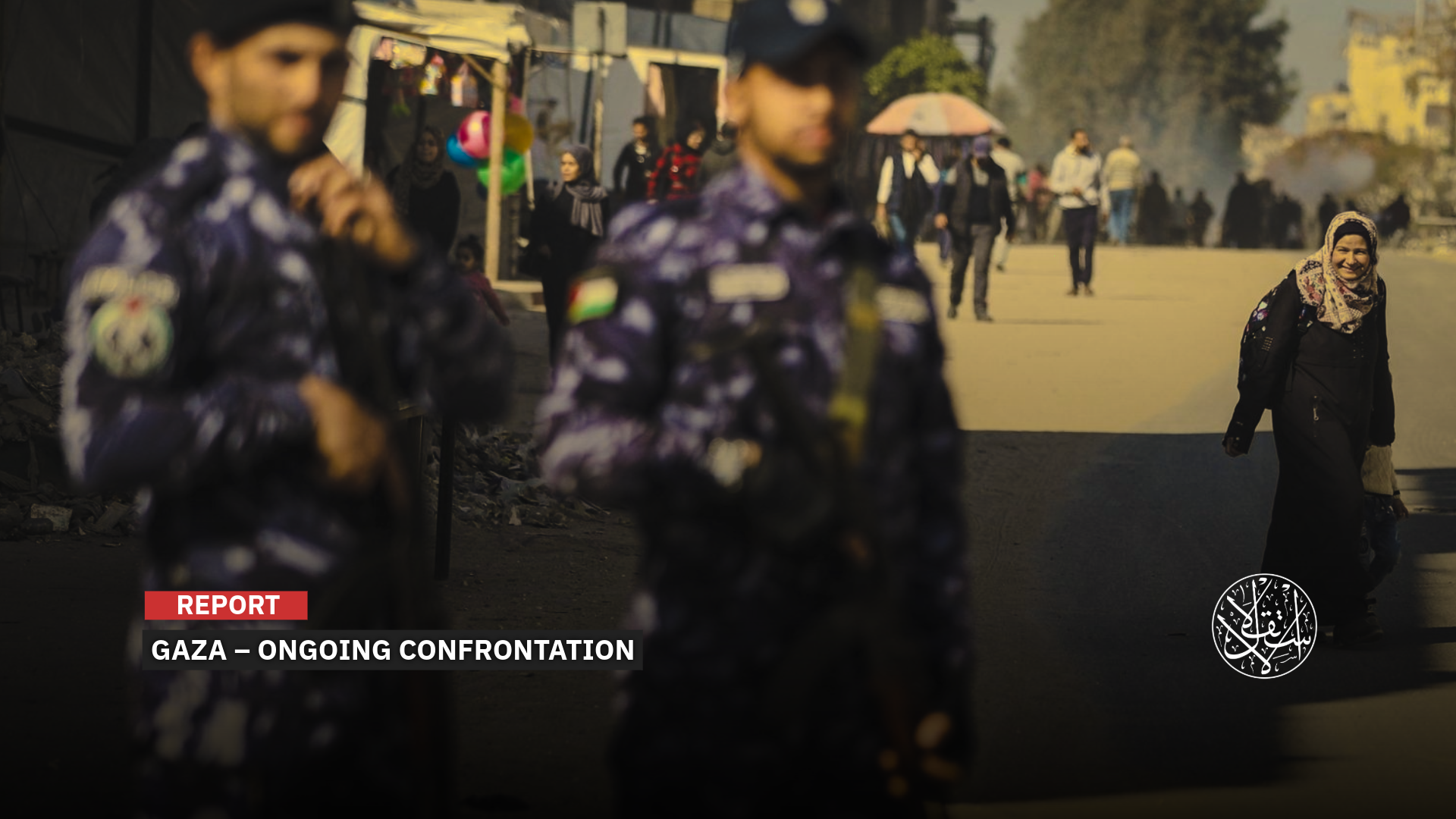
“Since the start of its war on Gaza, the Israeli occupation has assassinated nearly 2,800 security personnel.”
The Gaza Strip is witnessing a bloody escalation characterized by continuous attacks carried out by Israeli occupation forces against the internal security apparatus, primarily the police, internal security, and resistance security.
These attacks are part of daily and repeated violations of the ceasefire agreement between the Israeli occupation and Palestinian resistance factions, which came into effect in October 2025.
This escalation appears to be targeting the security infrastructure in Gaza as part of a multifaceted campaign that includes airstrikes, along with operations carried out by pro-“Israel” militias.
Dozens of checkpoints, patrols, and police stations in various parts of the Strip were directly targeted by airstrikes, resulting in casualties among officers and security personnel, both dead and wounded.
Daily Violations
The targeted checkpoints and centers performed civilian functions, including regulating traffic, securing markets, and escorting humanitarian aid convoys, in addition to maintaining internal security in the sector, which had been plagued by lawlessness during two and a half years of genocide.
Approximately 10,000 members of the Palestinian Authority's police force operate in Gaza. Since the start of the war, the Israeli occupation has assassinated nearly 2,800 security personnel, a number that is likely to rise due to the daily attacks.
Through these airstrikes, the Israeli occupation has deliberately targeted leadership. The airstrikes have focused on assassinating police station directors and commanders of intervention and public order forces, as well as destroying headquarters by bombing most police stations and security headquarters.
These attacks coincide with suspicious movements by pro-“Israel” armed militias on the ground.
The above indicates a coordinated effort aimed at increasing civilian casualties from airstrikes, luring police patrols into bombing zones, or opening roads and disabling police checkpoints to facilitate militia infiltration.
It has been observed that, in parallel with the high frequency of attacks targeting security forces in the Gaza Strip, the occupation has begun activating its proxy militias.
For several months, these militias have been carrying out assassinations inside the Gaza Strip under the direct orders of the Israeli Security Agency (Shin Bet), though most of these attempts have failed.
One group succeeded in targeting Colonel Ahmed Zamzam, 49, in al-Maghazi refugee camp on December 14, 2025, resulting in his martyrdom.
One of the perpetrators was arrested immediately while attempting to flee the scene of the assassination, leading to the disclosure of sensitive information about the militias' operational methods and the identities of other agents.
These militias include: the Abu Shabab militia, the first of the treacherous gangs formed by the occupation in April 2024 east of Rafah, currently led by the collaborator Ghassan al-Duhine after the killing of Yasser Abu Shabab on December 4, 2025.
There are also other groups, including the Mansi group, which calls itself the Popular Army in the northern Gaza Strip, led by Ashraf al-Mansi.
In addition, there is the Astal group east of Khan Younis, led by Hussam al-Astal, nicknamed Abu Safan, who was convicted of collaborating with the occupation's intelligence services.
A small group also emerged in the Shuja'iyya neighborhood, led by Rami Helles, as well as the Ahmed Jundiya militia in eastern Gaza.
The last of these groups is the Shawqi Abu Nasira group, led by an officer in the Ramallah-based Palestinian Authority. Its formation was announced in November 2025, and it operates in the eastern part of the central Gaza Strip and Khan Younis.
This militia carried out an attack east of al-Maghazi refugee camp in the central Gaza Strip on April 6, luring a group of resistance fighters into an ambush by the Israeli occupation forces. Ten Palestinians were killed, including five Qassam Brigades fighters.
Among them was Youssef Bashiti, a member of the elite Qassam Brigades who carried out an ambush targeting an Israeli engineering unit on January 22, 2024, east of al-Maghazi camp, in which 21 soldiers were killed.
A Well-Deliberate Plan
For its part, a security source told Al-Estiklal that the Israeli occupation forces began an organized security campaign several months ago, relying on targeted assassinations by air, targeting members of the Palestinian police and security services.
He explained that this campaign has escalated recently, taking on a more brutal character, as it now targets all branches of the police without exception, including traffic police, intervention and public order forces, criminal investigations, anti-narcotics, and the internal security apparatus.
He added that any police officer on duty in the field is now at risk of being bombed and directly targeted.
The source indicated that the Israeli occupation sought during the war to dismantle and eradicate the security services in the Gaza Strip, noting that it carried out hundreds of attacks in this context, resulting in the deaths of thousands of police and security personnel.
He explained that the Israeli occupation was surprised the day after the war ended to find the police and security forces resuming their duties and regaining control of the situation in the Strip, considering this an indication of the failure of one of the Israeli declared objectives of its war on Gaza.
He noted that the occupation has returned to adopting a bloody strategy, which is represented in targeting police stations, patrols, gatherings and checkpoints, and this has even extended to targeting police officers in their homes, linking this escalation to the activity of those groups that are agents of the occupation.
“Despite the crimes and massacres that have resulted in the martyrdom of dozens of police officers in the Gaza Strip in recent months, the work of the police forces has not stopped and has not been significantly affected by these attacks,” he added.
He explained that the police have reorganized their operational mechanisms and adopted different methods to ensure the continuity of their duties, while adhering to strict precautionary measures.
He pointed out that the police forces have thwarted several infiltration attempts into Gaza in recent times, which were aimed at carrying out missions linked to the occupation.
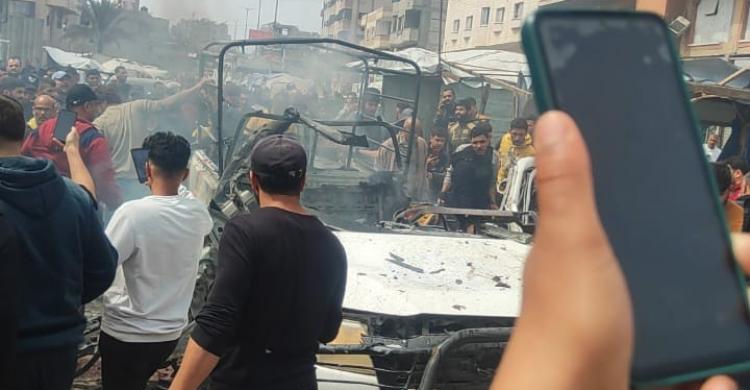
It is worth noting that on March 15, the Israeli occupation targeted a police vehicle at the entrance to the al-Zawayda area, resulting in the martyrdom of eight Palestinian police officers.
On March 29, an assassination attempt targeting a high-ranking officer in the Palestinian security services was carried out by members of militias loyal to the occupation. The attempt failed due to a clash between security forces and the attackers.
A reporter from Al-Estiklal visited several locations in the central Gaza Strip that have witnessed repeated attacks on police patrols and checkpoints by the occupation forces, specifically in the areas between the village of al-Zawayda and the city of Deir al-Balah. He interviewed a number of people present and eyewitnesses.
Saeed al-Bashayreh, who has witnessed a series of security incidents in the area, said that armed groups have recently become more active and are approaching Salah al-Din Street, the main thoroughfare in the central Gaza Strip.
He explained that some residents recognize these movements by the white Toyota Hilux pickup trucks, adding that these vehicles travel at high speed from eastern Deir al-Balah towards other areas in eastern Khan Younis.
Al-Bashayreh told Al-Estiklal, “I personally witnessed the four-wheel-drive vehicles arriving from the direction of Abu Miri roundabout, east of Deir al-Balah, after the evening prayer. They proceeded towards Salah al-Din Street, and then gunfire was heard in the area.”
He said that the vehicles later withdrew towards the areas separating Deir al-Balah and Khan Younis, where other armed groups are active. He noted that these incidents have been repeated more than once, using the same tactics.
He added that the area has witnessed three direct attacks targeting police forces, specifically checkpoints and security barriers in the surrounding area.
He explained that in two of these incidents, police officers were directly targeted, resulting in fatalities. He also mentioned a third incident in March 2026, in which a police caravan was targeted, but it was empty of security personnel.
For his part, political analyst Zakaria al-Salasa said in an interview with Al-Estiklal that the systematic targeting of various levels of the police and security forces in the Gaza Strip is part of a broader plan that could escalate into something even more bloody.
He explained that this plan aims to eliminate the police presence and undermine the control of the Palestinian security forces, paving the way for armed groups collaborating with the occupation to fill the void.
He added that “the cessation of hostilities in Iran and the de-escalation in Lebanon might prompt the occupation army to refocus its efforts on the Gaza Strip.”
He pointed out that Hamas still controls the Strip, while Israeli reports indicate it is rebuilding its military capabilities, which could open the door to more complex scenarios.
He emphasized that “Israel” will not recognize Hamas's rule, nor will it empower any technocratic committee or grant the Palestinian Authority control over the Strip, leaving the option of relying on militias loyal to the occupation as the only remaining choice for the occupation.
He pointed out that the model the occupation seeks to generalize is exemplified by what is happening in Rafah, through the creation of what is known as ‘New Rafah’, which is under the control of a local militia, adding that the Israeli occupation plans to apply this model to wider areas of the Gaza Strip.
He believes that “the chances of success for these changes do not appear high given the current circumstances. However, indicators suggest that the Israeli occupation will continue its attempts, with the aim of removing Hamas and strengthening the influence of the militias cooperating with it.”

Ambushes and Clashes
In response, the Ministry of Interior and the resistance security forces in Gaza did not stand idly by in the face of the movements of the militias allied with the Israeli occupation.
Instead, they continued to target these groups, as the past few months have witnessed a significant escalation in the pace of attacks carried out by resistance factions and security forces in the Gaza Strip against groups collaborating with the occupation.
Security campaigns have begun to pursue these militias on the ground through ambushes and direct clashes, particularly in the eastern areas, resulting in the killing and arrest of dozens of their members.
The most recent of these was a well-executed ambush by the resistance against the militia of the collaborator Husam al-Astal.
Three military jeeps belonging to the militia advanced east of Khan Younis, near Abu Hamid roundabout, where they were met by resistance groups who attacked them with explosive devices, anti-tank missiles, and gunfire.
One of the militia members, who was wounded in a resistance attack on April 20, told Israel's Channel 12 that the military operation that took place that morning was coordinated and planned weeks in advance in cooperation with the Israeli army's area commander.
He explained that the force advanced towards the area before being subjected to what he described as a field surprise, after Hamas elements succeeded in misleading the movement and targeting one of the vehicles, which led to the death of two members and the injury of about eight others by bullets and shrapnel.
He expressed frustration within their ranks following the failure of the first phase of an operation dubbed ‘Deterrence of Aggression’, which began two days prior.

The confrontation was not limited to the battlefield; it also included other dismantling tactics, most notably offering members of these groups an amnesty to repent.
This aimed to dismantle the groups from within and reduce the cost of the confrontation, resulting in a number of them surrendering.
The social and tribal factors also played a significant role. Families and community leaders pressured members of these groups to surrender and withdrew their social support, making them more vulnerable to security forces and restricting their freedom of movement.