A Grassroots Shield Against Settlers: Why Is Mahmoud Abbas Pursuing the ‘Village Guards’ in Nablus?
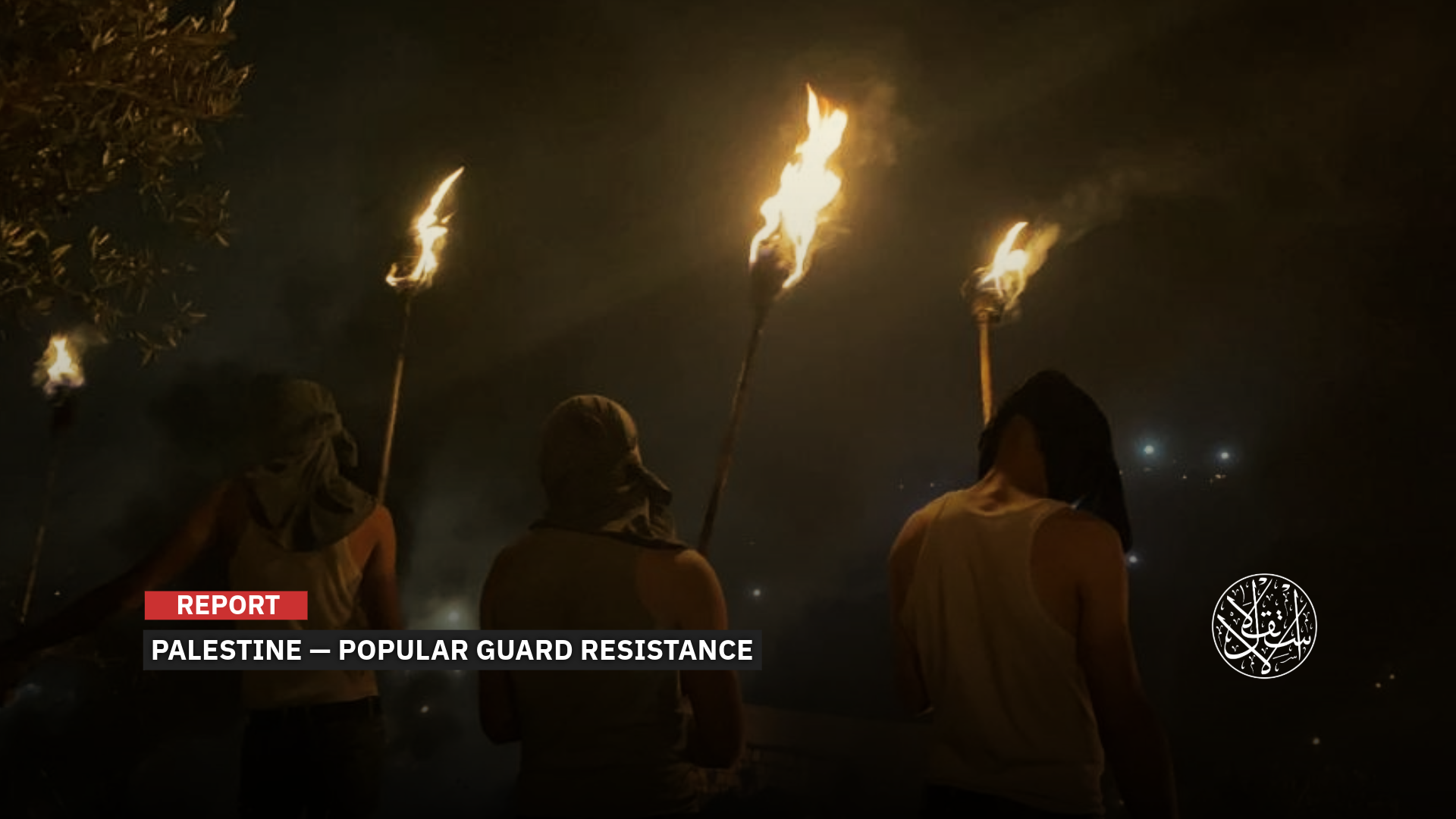
Popular guard committees are community-based networks created by Palestinians to protect their villages.
With the escalation of crimes and violations by Israeli settlers, Palestinian youths have reactivated popular guard committees in eastern Nablus, in the northern West Bank.
These are local networks that had recently faded due to being pursued by both the Israeli occupation and the Palestinian Authority.
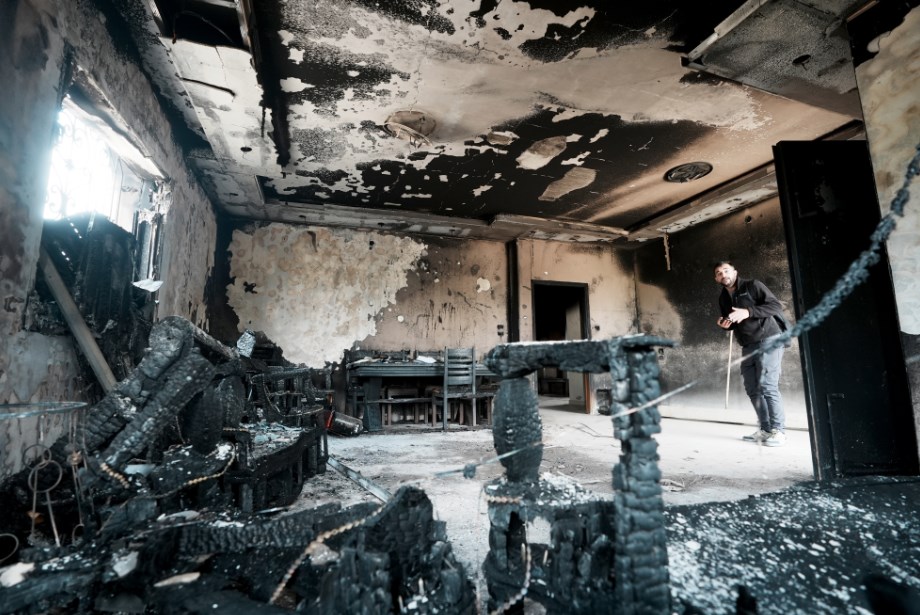
Following a settler attack on villages east of Nablus in March 2026, young men from the villages of Deir al-Hatab, Salem, and Azmut formed popular guard committees to protect their communities, amid fears of repeated assaults that had resulted in homes and vehicles being burned and several residents injured.
So what is the story behind these committees, where did they disappear to, and how important are they today in light of ongoing settler attacks? And how did the Palestinian Authority, led by Mahmoud Abbas, contribute to undermining them?
The Nature of the Popular Guard Committees
Popular guard committees are local networks formed by Palestinian communities to protect villages from settler attacks or incursions by the Israeli army.
Their roots go back to the 1936 Arab Revolt, when British authorities prohibited Palestinians from carrying weapons. In response, residents organized night patrols to guard village entrances, ringing church bells or broadcasting calls from mosque minarets when danger approached.
During the First Intifada (1987–1994), some villages adopted this model by guarding roads and sounding alarms. However, the peak of these committees’ resurgence came after settlers burned the Dawabsheh family home in the village of Duma, south of Nablus, in 2015, killing an entire family, with only one child surviving.
At that time, committees were formed in towns such as Qusra, east of Nablus. Young men set up observation points at village entrances and used mosque loudspeakers and phones to mobilize collective defense.
In 2014, Qusra had already witnessed one of the most notable confrontations, when its guards ambushed a group of armed settlers and detained them until Israeli Occupation Forces arrived to retrieve them, leading to a significant drop in attacks for a long period.
The way these committees operate is simple but effective. Dozens of volunteers divide into groups that conduct night patrols at entrances or in fields near settlements.
They use flashlights, whistles, and sometimes loudspeakers for alerts, organizing themselves through schedules and rotating shifts.
In the town of al-Mughayyir, north of Ramallah, for example, a few young men sometimes patrol the area. If settlers are spotted, one of them sends a notification via a messaging app or through mosque announcements, prompting residents to respond immediately and rush to the scene.
These committees rely on young people living near threatened areas, and they do not carry firearms, as that would expose them to direct gunfire from Israeli Occupation Forces. Instead, they rely on sticks, stones, and basic protective gear.
These simple tools are both a strength and a weakness: they enable broad popular mobilization, but they also reflect a lack of resources and training needed to confront large groups of settlers.
In their most recent effort, residents of villages east of Nablus formed a group of about twenty volunteers who take turns guarding homes located near settler roads.
Ahmad Hussein, an activist involved in the defense committee of the village of Deir al-Hatab, said the group uses basic surveillance cameras and alarm whistles connected to messaging apps.
He explained that they are reviving the 2015 model, but with greater caution due to changes in settlers’ tactics.
He added, in remarks to Al-Estiklal, that the committee’s return is not a passing development, but rather evidence of a security vacuum in these areas.
He noted that while these committees previously succeeded in deterring settlers, they were forced to stop due to multiple pressures.
Occupation and Authority Repression
Despite their success in reducing attacks, popular guard committees have gradually declined in recent years, with repression by the Israeli army being one of the main reasons.
In Qusra, a young man was killed and others were injured during a night patrol in 2017 after Israeli soldiers opened fire on them.
Israeli pursuit, along with pressure from the Palestinian Authority, discouraged many from participating. It became common for committee members to face arrest or live fire during nighttime patrols.
Ahmad Hussein says that exhaustion, work commitments, and daily life pressures made it difficult to sustain these efforts, especially in the absence of financial support or field training to confront settlers.
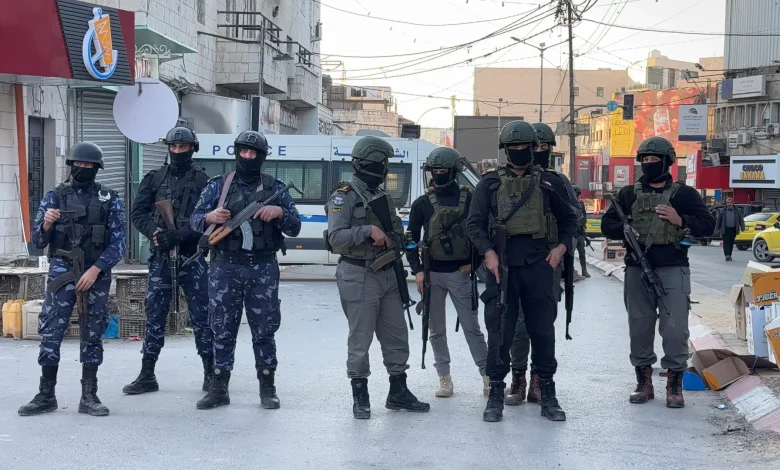
However, the biggest challenge came from within the Palestinian political system itself. According to testimonies from activists, Palestinian security forces summoned some committee members and asked them to stop, considering these groups “out of control,” as reported by the local Al-Shahid website.
Hussein declined to comment on the Palestinian Authority’s actions, stating only that the Israeli occupation was the primary factor pushing young men to withdraw after several were killed during night patrols.
However, many activists recounted being summoned by the Palestinian Preventive Security Service, which eventually led them to stop participating, particularly in light of the ongoing security coordination between “Israel” and the Palestinian Authority.
The Authority rejects any grassroots formations not under its control, even though leaders from governorates, the Fatah movement, and the government have on several occasions called for the formation of protection committees.
In 2023, Fatah officially announced plans to reactivate protection committees and stated that they were operating in villages near settlements.
Some local leaders even acknowledged attempts to contain these groups and transform them into organized party-affiliated bodies rather than leaving them as independent community initiatives. However, support on the ground remained limited.
At times, the Palestinian Authority has tried to capitalize on the committees’ popularity in its political discourse without providing them with real resources.
In the town of Huwara, for example, young men formed a volunteer committee of around 200 members that succeeded in repelling a group of seventy settlers. They later appealed to the Authority to deploy members of the National Security Forces to guard villages instead of remaining passive observers.
Meanwhile, the government’s stance has largely been limited to rhetorical support, while security agencies remain focused on maintaining “security coordination” with “Israel”.
This contradiction has led many activists and intellectuals, including Birzeit University academic Sameh Abu Awwad, to publicly call for dismantling the security apparatus and redirecting its budget toward forming armed committees to protect villages.
Activist Bashar al-Qaryouti agreed, stating that settler attacks aim to displace village residents, and that the response lies in organizing young people to defend their land, according to the Palestinian Press Network.
Urgent Need
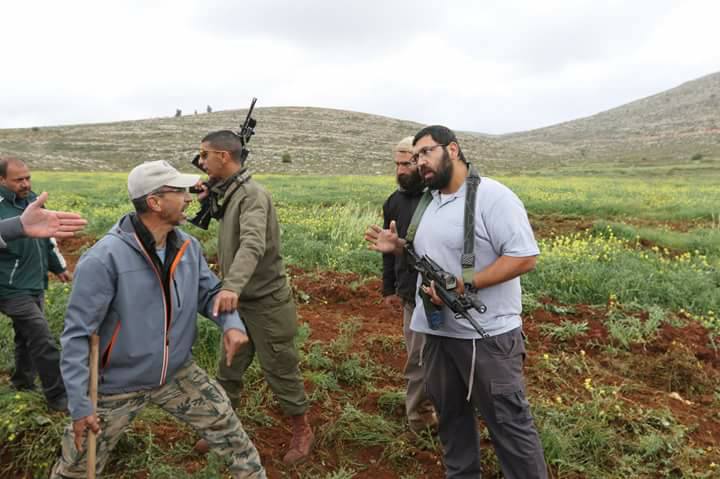
The rising pace of crimes and violations by Israeli settlers in recent years has made the need for grassroots protection initiatives more urgent.
A United Nations report noted that March 2026 recorded the highest number of Palestinian injuries from settler attacks in 20 years, including the burning of homes in Deir al-Hatab and Funduqomiya, and the destruction of water lines in Turmus Ayya.
Within a single week, the UN mission documented 47 settler attacks across 36 Palestinian communities, resulting in 36 injuries and damage to homes and infrastructure.
According to the United Nations Office for the Coordination of Humanitarian Affairs, the West Bank witnessed more than 580 settler attacks from the beginning of 2023 through April 6, 2026, causing injuries or property damage and displacing around 5,700 Palestinians.
Another report by the same office indicated that 1,697 Palestinians were displaced during the first three months of 2026 due to “settler violence” and restrictions on Palestinian movement.
These figures highlight that the attacks are no longer isolated incidents, but rather a systematic pattern escalating with the backing of right-wing Israeli ministers.
The attacks have also become more organized. In the assault on the villages of Deir al-Hatab and Funduqomiya in March 2026, settlers burned three homes and cut water lines, leaving families homeless. Similar attacks also occurred in Turmus Ayya and areas around Ramallah and Nablus.
In light of this reality, residents are calling for the activation of guard committees or the creation of alternatives. Young men in eastern Nablus who reactivated their committee say it has temporarily pushed settlers back, but needs greater support to expand to other villages.
Some activists believe the committees should remain grassroots initiatives to preserve public trust and avoid repression by the Palestinian Authority, while others call for arming them with licensed weapons and transferring personnel from the security forces to join them.
The governor of Nablus, Ghassan Daghlas, who inspected the damage in Deir al-Hatab, said, “The settlers’ message is burning and killing, while our message is steadfastness and resistance.”
In 2023, Abdallah Abu Rahma, Director General of the Popular Action Department at the Wall and Settlement Resistance Commission, stated that the commission encourages the formation of such committees but lacks sufficient staff to cover all areas.
Nevertheless, the return of these committees is not yet a widespread movement. Rather, they are local efforts that emerge during times of crisis and then fade, as limited funding, lack of legal support, and fear of arrest constrain their expansion.
Still, their reemergence carries political significance: it reflects the Palestinian Authority’s inability to provide effective protection for villages, and a growing public awareness that self-reliance may be the only option to confront settler attacks.
Sources
- Humanitarian Situation Report | March 27, 2026 [Arabic]
- Popular Guard Committees: A Grassroots Tool to Confront Settler Crimes [Arabic]
- Victim of Security Coordination: Why the Authority Suppressed Guard Committees in the West Bank [Arabic]
- Sharp Criticism of the Authority in the West Bank and Calls to Dissolve the Security Forces [Arabic]