From the Shadows to the Frontline: How UK Bases in Cyprus Became Direct Players in the War on Iran
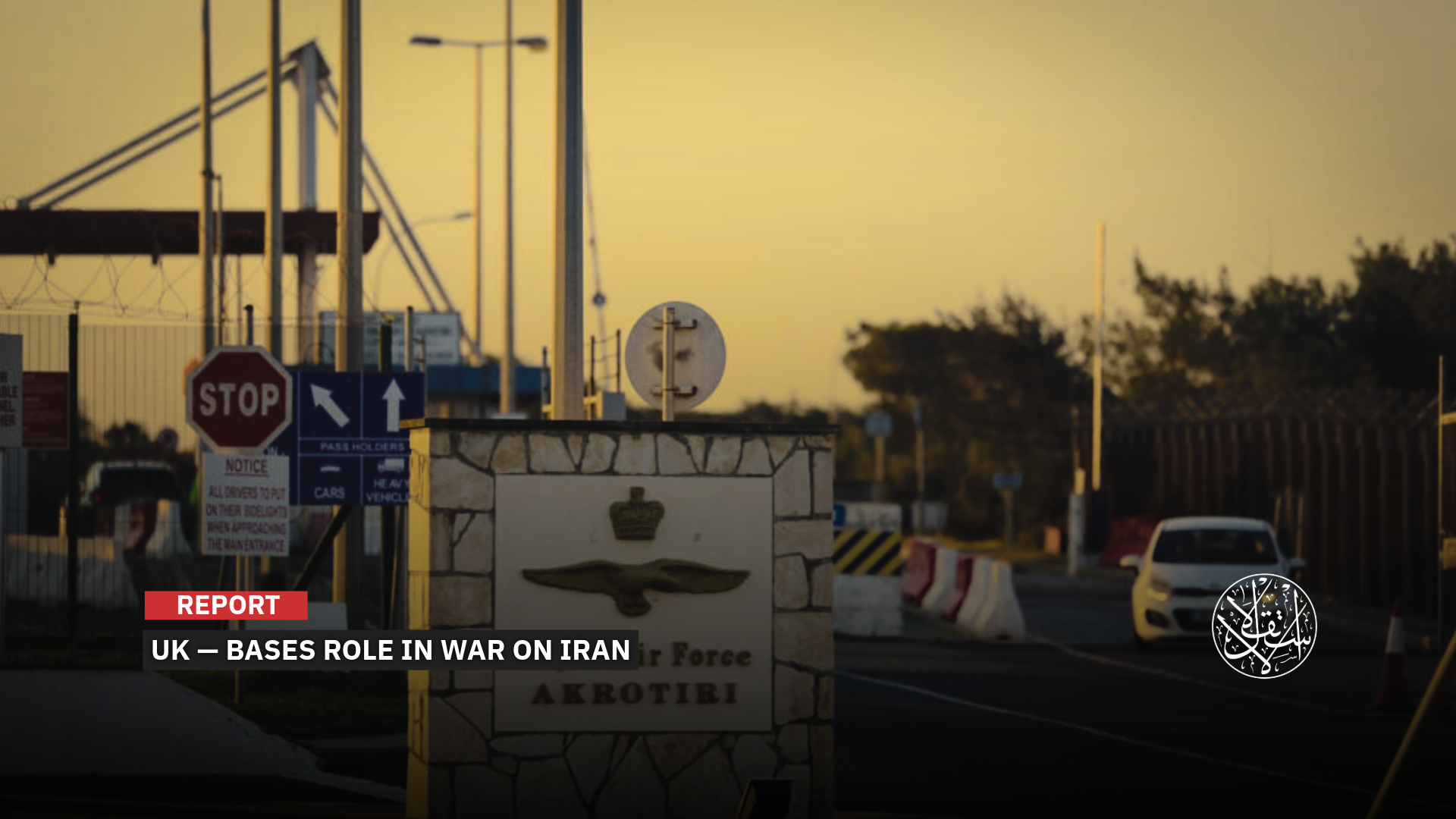
The British base in Cyprus is now supporting the operational framework of a multi-front war.
The downing of a drone suspected to be Iranian over the British base at Akrotiri in southern Cyprus in the early hours of April 2, 2026, was not a routine security incident. It marked a turning point—one that quietly but decisively redefined the role of these bases in the Middle East’s widening conflicts.
At a moment when tensions between the United States and the Israeli Occupation on one side and Iran on the other were spilling into a multi-front confrontation, Britain’s installations on the island appeared to move from the margins of the battlefield to its center.
The incident came after weeks of unprecedented military escalation, casting fresh light on facilities that have long operated beyond meaningful public scrutiny—only for war to expose them as integral to the West’s operational architecture in the region.
A briefing issued by the UK House of Commons Library on March 3, 2026, had already flagged Akrotiri as among the sites facing direct threats amid rising tensions with Iran, underscoring its growing strategic sensitivity.
This shift did not emerge overnight. Rather, it reflects a role that has steadily expanded since the outbreak of the Israeli Occupation’s war on Gaza in October 2023.
From the earliest days of the aggression, British aircraft began flying surveillance missions from Cyprus over the enclave, in what London described as efforts to support captive rescue operations.
That explanation, however, has faced mounting skepticism, particularly as Western reporting suggested the scope of those missions may have extended beyond their stated purpose.
On August 7, 2025, The Guardian reported that the surveillance flights had raised serious questions over whether the intelligence gathered was being used to support “Israeli military operations,” including those targeting Palestinian civilians, despite government assurances that it retains control over how shared data is used.
Similarly, a January 3, 2025 report by Middle East Eye (MEE) pointed to British spy aircraft operating out of Cyprus as part of a broader effort to locate Israeli captives—placing the bases within a complex and overlapping operational network that appears to reach well beyond the humanitarian role publicly outlined.
A Role in Iran
As the center of gravity in U.S. and Israeli military strategy shifted toward Iran in late February 2026, that role deepened in ways that were difficult to ignore.
An analysis published by the Financial Times described the eastern Mediterranean as a critical hub for Western surveillance and coordination, with growing reliance on bases such as Akrotiri to manage aerial and intelligence operations.
The paper suggested that the function of the British base had evolved beyond intelligence-gathering, extending into direct support for the operational architecture of a multi-front war.
This overlap between logistical backing and active military coordination places Britain’s bases in Cyprus within a transnational web of operations—linking theaters of conflict from Gaza to the Gulf.
In that context, the downing of the drone over Akrotiri no longer appears as an isolated incident but rather as a signal of a deeper shift in the nature of the conflict—one in which such bases are increasingly treated as potential targets, not insulated rear positions.
That reality raises complex legal questions about the scope of Britain’s involvement and the limits of its responsibility.
According to Western reports citing Michael Lynk, the use of British bases in Cyprus to support Israeli attacks could trigger serious concerns over potential UK complicity—particularly in light of its obligations under the Genocide Convention.
The debate has also intensified within Britain itself. On June 10, 2025, more than 300 officials within the UK Foreign Office reportedly voiced concerns that government policy risked placing the country in a position of complicity in war crimes in Gaza.
Calls for accountability have followed. Politicians and human rights advocates have called for an independent inquiry, with Jeremy Corbyn writing on June 3, 2025, that understanding the extent of Britain’s support for “Israel’s” war had become essential for public accountability.
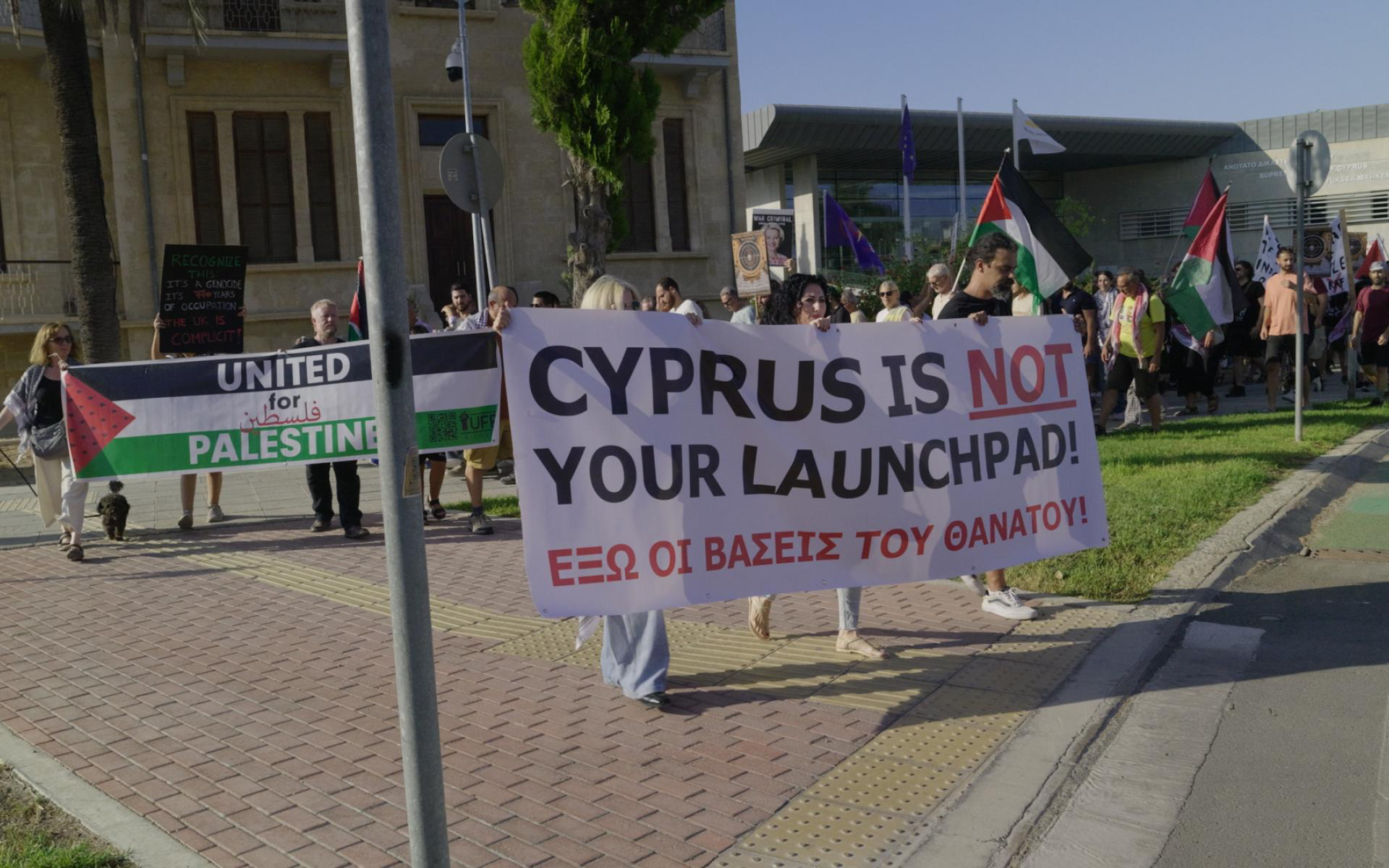
Meanwhile, Matthew Stavrinides, from the group “Genocide-Free Cyprus,” warned that the island itself faces growing risks after becoming, in his words, a “launchpad” for military operations in Gaza and across the Middle East.
The group—an alliance of organizations and activists—has pushed the Cypriot government to disengage from the war on Gaza, while leading campaigns against the continued presence of British bases on the island.
A Colonial Legacy
The implications of this expanding role are not confined to legal debates; they extend into immediate security risks. On June 19, 2024, Hassan Nasrallah, the former secretary-general of Hezbollah, warned that Cyprus itself could face consequences over its logistical role and the presence of military bases on its territory, including British installations used to support Israeli crimes. It was the first threat of its kind, and it did not go unnoticed.
Yet despite the growing significance of these bases, their day-to-day activities remain shrouded in opacity. In October 2023, as “Israel’s” war on Gaza began, the British government quietly asked media outlets to avoid reporting on operations inside the bases—a move widely interpreted as a sign of just how sensitive their role had become.
Subsequent investigations have only reinforced that sense of obscurity. Details surrounding flight paths, surveillance missions, and the nature of aerial activity remain limited, widening the gap between what is happening on the ground and what is disclosed to the public.
This lack of transparency reflects more than operational secrecy. It points to an apparent effort by London to shield itself from mounting political and legal scrutiny, pressure that has been building both domestically and internationally.
That debate has reached new intensity with the emergence of independent initiatives such as “The Gaza Tribunal,” a project aimed at investigating Britain’s role in the war with the involvement of international legal figures, including Francesca Albanese.
Such efforts signal a broader shift: what was once treated as a narrow security matter is now evolving into an open-ended legal and political case, particularly regarding Britain’s military footprint in Cyprus.
For Martin Shaw, emeritus professor at the University of Sussex, the trajectory is clear. The British government, he argues, has supported the Israeli war as a whole, with the captive narrative emerging only after the surveillance flights came to light.
Cyprus’s own leadership has also begun to shift its tone. Nikos Christodoulides has called for an open and frank discussion, framing the British bases on the island as a lingering extension of a colonial past.
“When this unfortunate situation in the Middle East is over, we need to have an open and frank conversation with the British government about the status and future of the British bases in Cyprus,” he said.
Human rights organizations have gone further. Groups such as the European Association of Lawyers for Democracy and World Human Rights (ELDH) and the Cyprus Democratic Lawyers Association (CDLA) have condemned the continued presence of the bases, arguing that what is unfolding is not self-determination but a new form of legally masked imperialism.
An Operational Hub
To understand how Britain’s bases in Cyprus came to occupy such an advanced role, it is necessary to look back at their historical foundations—roots that suggest continuity rather than rupture.
Since Britain took control of Cyprus in 1878, the island has steadily evolved into a strategic anchor in the eastern Mediterranean. By the time it was declared a formal colony in 1925, it had become embedded in a wider imperial network, particularly as a safeguard for trade routes leading to the Suez Canal.
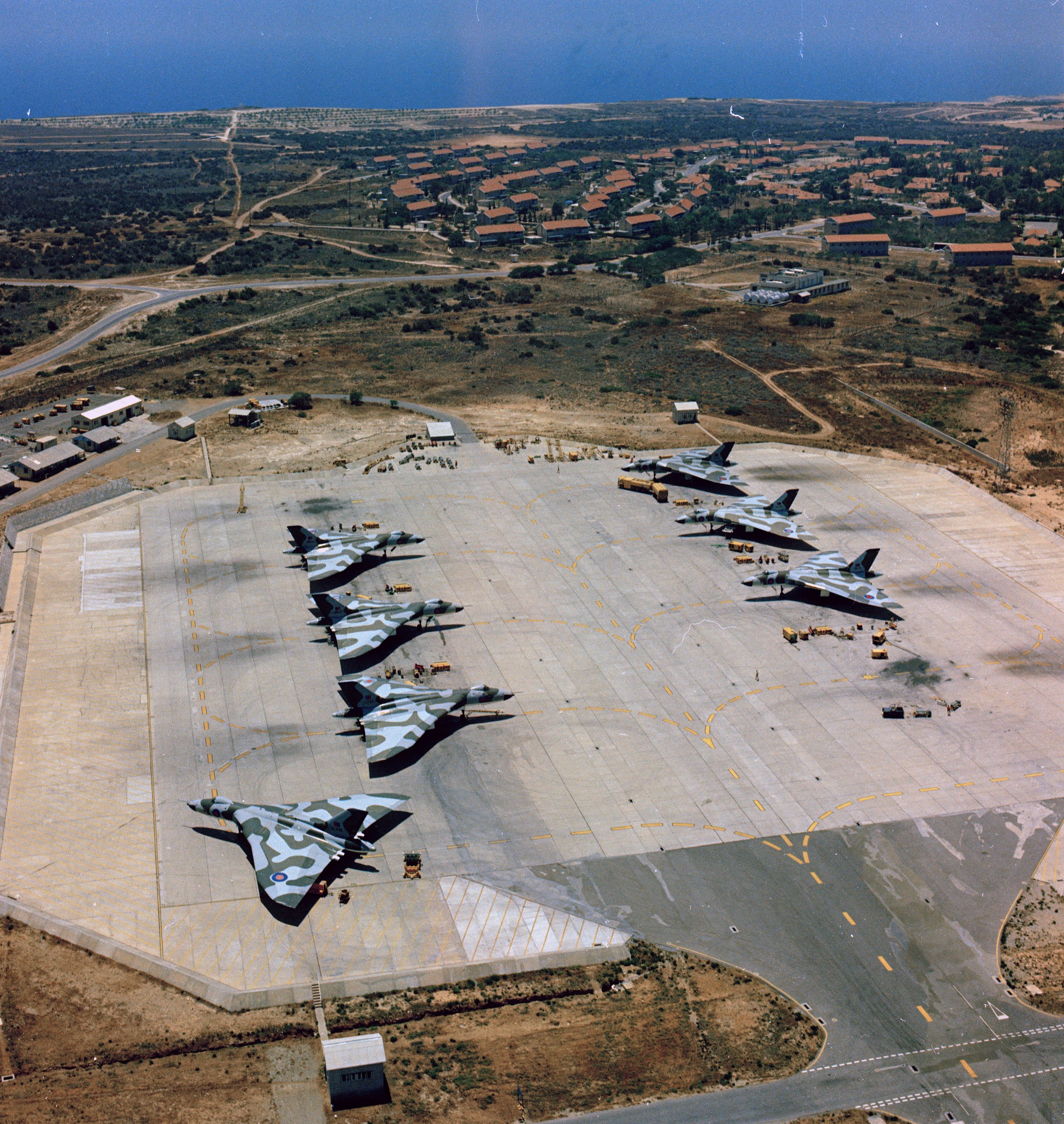
In 1955, Britain established the Akrotiri base, which quickly assumed operational importance. Just a year later, during the tripartite aggression against Egypt, it was used as a launch point for air operations, an early and defining example of its offensive role.
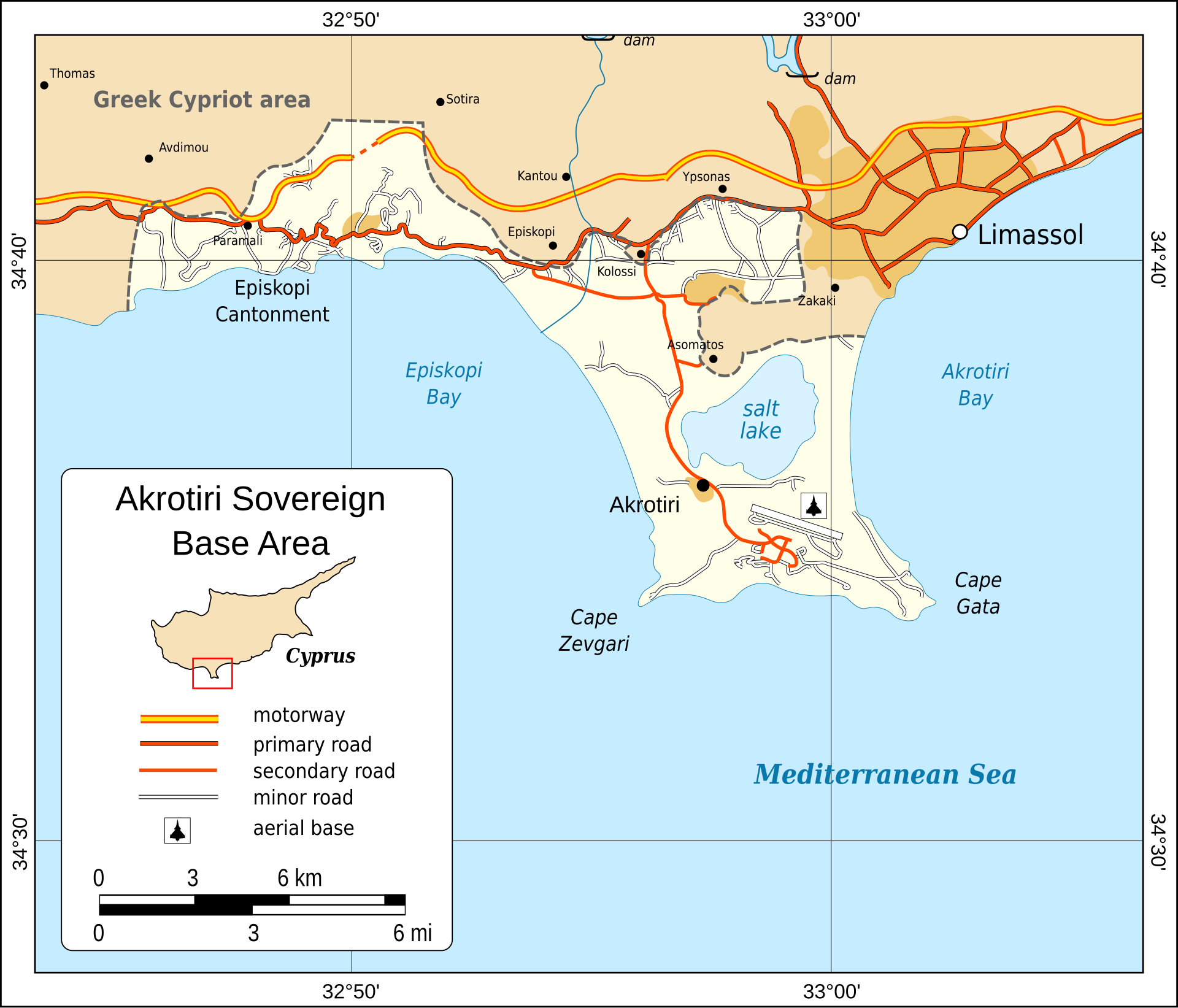
Cyprus gained independence on August 16, 1960, but Britain did not fully withdraw. Under the Treaty of Establishment, it retained full sovereignty over Akrotiri and Dhekelia, creating what are known as the Sovereign Base Areas, territories that remain under British control to this day.
Their strategic utility resurfaced in 1974 during the Cyprus crisis of 1974, when the bases were used for surveillance and crisis management, reinforcing their role in regional conflict oversight.
When Cyprus joined the European Union on May 1, 2004, the status of the bases was formalized through Protocol No. 3, allowing for partial integration into EU frameworks without altering British sovereignty—cementing a uniquely complex legal arrangement that blends national sovereignty with European integration.
According to a briefing by the UK House of Commons Library on October 15, 2024, these bases constitute Britain’s only permanent joint operational platform in the Middle East, underscoring their enduring strategic value.
The Royal Air Force itself describes Akrotiri, in southern Cyprus, as one of its most important military installations across the eastern Mediterranean and the Middle East. Historically used in multiple air campaigns, it continues to function as a central operational hub for British missions in the region.
Sources
- Ghosts of empire: The role of Britain's Cyprus bases in a Middle East at war
- Francesca Albanese: Why I'm accusing 63 nations of complicity in the Gaza genocide
- Head of Lebanon's Hezbollah threatens Israel and Cyprus
- How exactly has Britain supported Israel’s military assault on Gaza? The public has a right to know
- Cyprus leader calls for ‘frank’ conversation on future of UK military bases