Will the Global Sumud Flotilla 2 Break Through to Rafah Despite Political and Security Obstacles?
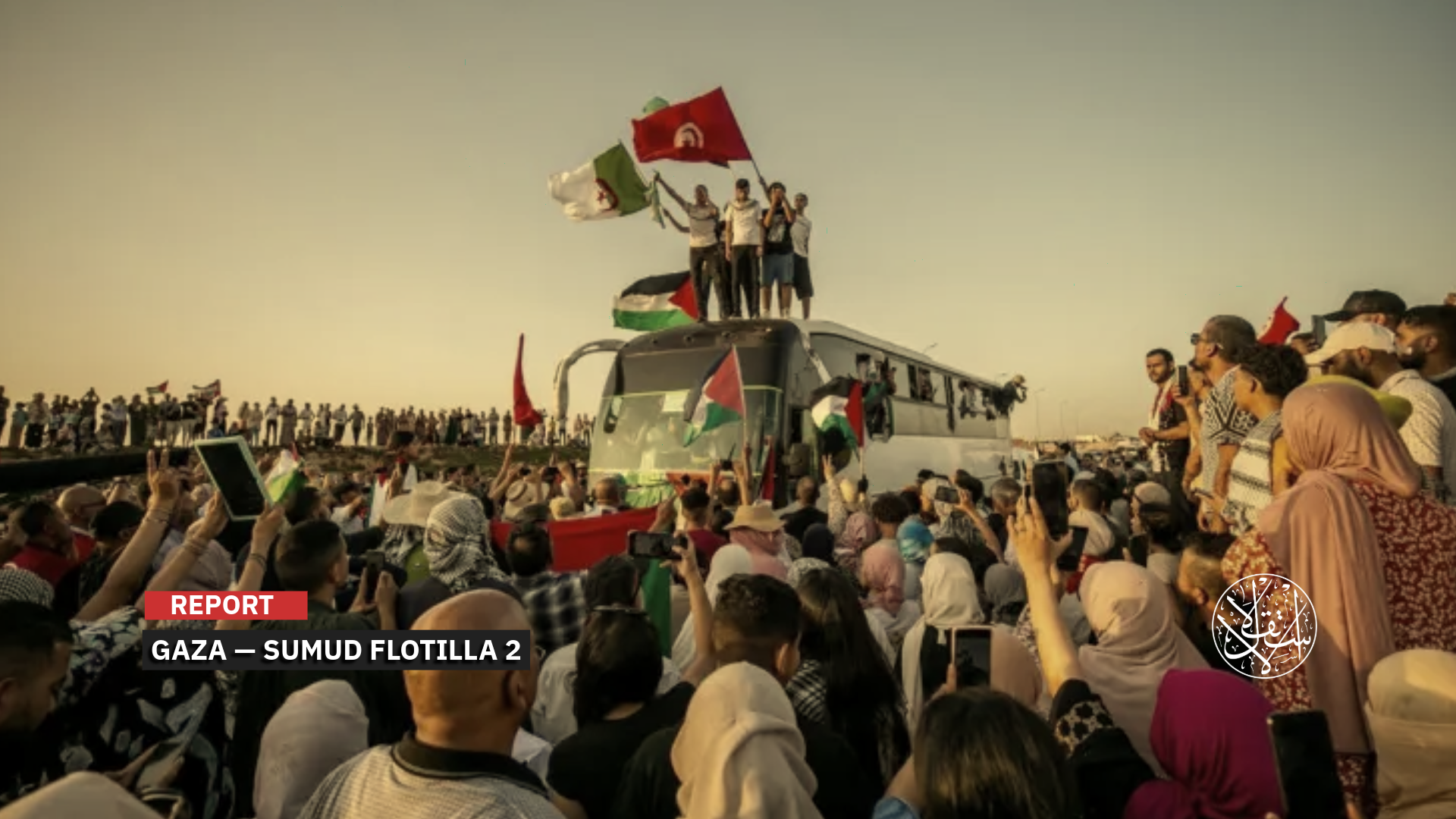
Marouan ben Guettaia: The Sumud Flotilla reflects a return to basic human conscience and a stand to uphold dignity and the remaining sense of honor and values.
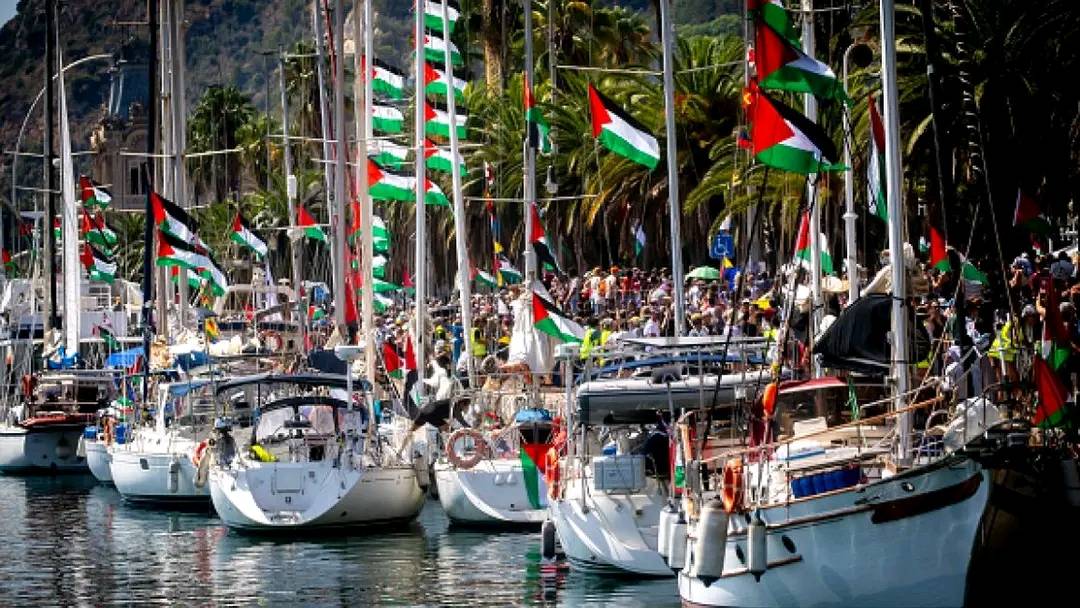
From makeshift camps west of Tripoli to first-aid workshops and legal and media training sessions, preparations are intensifying for the Moroccan Sumud Flotilla 2, part of a broader Maghreb initiative aiming to reach the Egyptian border in a renewed attempt to break the Israeli Occupation’s blockade on Gaza.
With volunteer delegations from Algeria, Morocco, and Tunisia arriving in Libya on May 14, 2026, the Sumud Flotilla has once again become a focal point of regional grassroots solidarity with Palestinians, as warnings mount over deepening famine in Gaza amid continued border closures and slow humanitarian access.
Flotilla Route
The current mobilization coincides with the maritime activity of the Sumud Flotilla, part of a coordinated effort between land and sea initiatives following months of reorganization after the first attempt stalled in the summer of 2025, when the flotilla was halted at the western gate of the Libyan city of Sirte and prevented from advancing toward eastern Libya and the Egyptian border.
In recent days, the situation has grown more sensitive after the foreign ministry of the eastern Libyan administration under Osama Hammad issued a statement saying it would “not allow the passage of any individuals who do not meet the required regulations and procedures.”
It further clarified that Egyptian authorities permit only Libyan nationals to cross land borders, while participants of other nationalities are required to obtain visas through official air travel channels.
Despite these political and security hurdles, participants in the Moroccan Sumud Flotilla 2 insist the initiative will continue without retreat, stressing that its goal goes beyond delivering symbolic aid to Gaza. Instead, they say it aims to keep the Palestinian cause present in both Arab and international arenas, amid what activists describe as efforts to normalize the blockade and desensitize the world to the humanitarian catastrophe unfolding in the enclave.
The Sumud Flotilla 2 began taking shape on May 8, 2026, through Maghreb-wide coordination bringing together activists and civil society groups from Morocco, Algeria, Tunisia, Mauritania, and Libya, along with solidarity volunteers from Europe, Turkiye, and the United States.
The land activists set out from Algeria toward Tunisia before entering Libyan territory, where participants established a main assembly point at Joud Daem Forest, roughly 30 kilometers west of Tripoli, to complete final preparations before continuing eastward.
In a lengthy post on his official page, Marouan ben Guettaia, head of the Algerian Popular Coordination for the Support of Palestine and Relief of Gaza, said the convoy represents a continuation of a path that began after participants returned from the maritime flotilla. He stressed that those involved have “pledged to keep moving until the end,” despite what he described as mounting restrictions and efforts to discourage them.
He added that the Sumud Flotilla is not a symbolic gesture or a form of detached solidarity but rather an expression of commitment to human values and dignity. Its core message, he said, is to tell people in Gaza that they have not been abandoned, despite attempts to normalize the blockade and distract from the ongoing crisis.
Organizers emphasize that the convoy is an independent grassroots initiative, not tied to any political or governmental agenda, and they frame it primarily in humanitarian and relief terms, especially as living conditions in Gaza deteriorate and international warnings grow over expanding famine and acute shortages of medical supplies.
According to participants, the convoy includes volunteers, medical teams, and activists from diverse backgrounds, as well as legal and media figures. All have undergone training in first aid, land-based mobility tactics, and legal and media response strategies to prepare for potential obstacles along the way.
Members of the Maghreb Sumud Flotilla say the current phase focuses on completing the gathering of participants inside Libya before gradually moving eastward, in preparation for an eventual attempt to reach Egyptian territory and proceed toward the Rafah crossing.
Crossing Obstacles
But the road to Gaza does not appear smooth for the Sumud Flotilla 2 amid Libya’s fragmented political and military landscape and the ongoing divide between the country’s east and west.
The first iteration of the Sumud Flotilla, which set off from Tunisia in June 2025, was effectively halted on the outskirts of Sirte after forces affiliated with Khalifa Haftar blocked its advance into eastern Libya. Several participants were detained amid tight security measures, and the convoy ultimately withdrew back toward western Libya.
Those same concerns are resurfacing today following a statement from the foreign ministry of the eastern-based administration under the House of Representatives. While the statement praised the initiative as a “humanitarian step reflecting solidarity with the Palestinian people,” it also stressed the need for full compliance with regulations governing transit.
It noted that Egyptian authorities “welcome any humanitarian effort” but clarified that land crossings are restricted to Libyan passport holders only—leaving participants from Morocco, Algeria, Tunisia, and other countries facing additional legal and procedural hurdles.
The Libyan statement also urged participants to rely on official air routes and complete visa procedures, a move activists see as a signal that a collective overland passage toward the Egyptian border would be difficult to authorize.
These developments have raised questions about how much freedom of movement the convoy will actually have in eastern Libya, particularly since the route to the Egyptian border runs entirely through areas controlled by Haftar’s forces, which previously blocked the convoy’s progress.
On the Egyptian side, Cairo appears cautious toward any large-scale popular or international mobilization toward the Rafah crossing, amid security considerations along the Gaza border and the broader political sensitivities surrounding the war, the blockade, and the entry of humanitarian aid.
Participants say they have already been in contact with Egyptian entities, including the Egyptian Red Crescent, as well as with authorities in both eastern and western Libya, in an effort to secure safe passage and avoid a repeat of the earlier blockade. However, no final agreements or clear guarantees have been announced so far.
Symbolic Messages
The Moroccan Sumud Flotilla 2 carries symbolic and political weight that goes far beyond the immediate delivery of aid. Participants argue that simply sustaining overland and maritime convoys more than a year into the war and blockade is, in itself, a message to the Israeli Occupation: Gaza has not been forgotten, and efforts to normalize or desensitize the destruction have not fully succeeded.
In a post of his own, Marouan ben Guettaia issued direct messages to “Israel,” insisting that both land and sea mobilizations will continue and that Israeli Occupation violations will not deter participants from returning to solidarity initiatives.
The Flotilla also seeks to speak to Arab and Muslim publics, stressing that “the door to participation remains open,” in an effort to revive the wave of popular solidarity that surged in the early months of the Israeli genocide on Gaza before gradually fading amid prolonged war and overlapping regional crises.
At the same time, activists involved in the convoy do not rule out facing pressure campaigns, smear efforts, or restrictions along the route, particularly as Israeli media campaigns against international initiatives supporting Gaza—whether maritime or overland—have intensified.
Over the past months, several international attempts to reach the enclave have been labeled by the Israeli Occupation as “political provocations” or publicity-driven actions, while flotilla organizers maintain that the core objective is humanitarian, centered on breaking Gaza’s isolation.
Some participants also express concern over possible security or logistical obstacles inside Libya, especially in the east, as well as the risk of being blocked from approaching the Egyptian border.
Despite these challenges, organizers insist that success should not be measured solely by reaching Gaza but also by the convoy’s ability to refocus attention on the blockade, mobilize public opinion, and build a transnational wave of solidarity across borders.
Beyond Symbolism
Libyan journalist Omar al-Hassi told Al-Estiklal that the Moroccan Sumud Flotilla 2 has evolved from a passing solidarity initiative into a major public and media event inside Libya, fueled by strong engagement from local citizens—through logistical support, solidarity visits, and a heavy presence on social media.
He added that what is unfolding today underscores that the Palestinian cause remains deeply embedded in the Maghreb public conscience, despite sustained efforts to exhaust regional and international attention as the war and blockade on Gaza drag on.
Al-Hassi noted that the flotilla is facing real logistical and organizational challenges, including accommodation, transport, and securing basic needs for participants, alongside ongoing uncertainty over movement toward eastern Libya and eventually Egypt.
He said repeated delays and waiting periods are placing psychological and operational pressure on participants, especially given the widespread awareness that the route to Rafah remains far from guaranteed.
“The flotilla is clearly civilian and humanitarian, with no armed groups or political agendas. It is made up of volunteers, activists, doctors, and solidarity participants who have come at a moment when the world is witnessing daily what Gaza is enduring in terms of siege, starvation, and killing,” he said.
Al-Hassi called on the relevant authorities in Libya and Egypt to “facilitate the flotilla’s passage and provide the necessary humanitarian and logistical support,” saying that “allowing a civilian relief convoy of this scale could send a politically and morally pressing message to Israel and affirm that Arab publics are still acting to break the silence over what is happening in Gaza.”
Sources
- The Sumud Flotilla 2 Sparks Debate in Libya Over Sovereignty, Security, and Border Crossing Limits [Arabic]
- The Sumud Flotilla Sets Sail Again After Israeli Interceptions [Arabic]
- Mauritanian Delegation Arrives in Tunisia to Join the Sumud Flotilla [Arabic]
- With Moroccan Participation, Intensive Preparations Underway for a Land Convoy Toward Gaza Alongside a Maritime Flotilla [Arabic]
- The Land Sumud 2 Flotilla Prepares in Libya to Set Off Toward Gaza with Broad Maghreb and International Participation [Arabic]