Pickaxe Mountain: The Nuclear Fortress That Could Decide the U.S. War on Iran
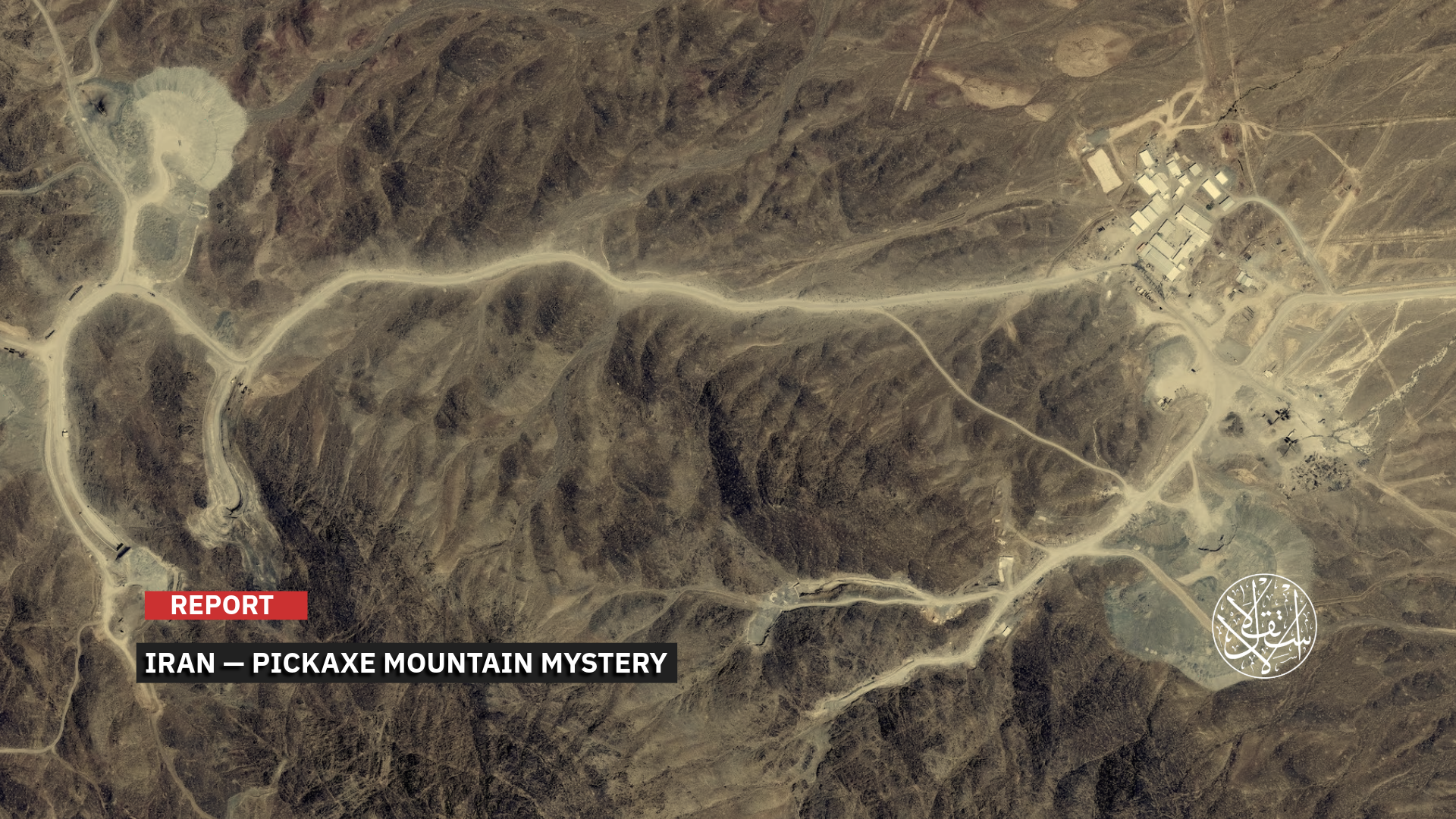
Pickaxe Mountain lies beneath dozens, and possibly more than 100, meters of granite rock, protected by a network of tunnels and multiple entrances.
Donald Trump has thrust one of Iran's most secretive nuclear sites into the center of his war on the country after warning on July 14, 2026, that the United States could destroy Pickaxe Mountain and warning that it could soon become a military target.
Unlike Natanz or Fordow, the threat was not directed at a publicly acknowledged nuclear facility but at a heavily fortified tunnel complex carved into a mountain south of Natanz. Its true purpose remains one of the biggest unanswered questions surrounding Iran's nuclear program, with neither international inspectors nor intelligence assessments able to reach a definitive conclusion.
Iran says the complex was built to assemble advanced centrifuges and shield them from sabotage. Western intelligence assessments, however, suspect it could eventually serve as a covert uranium enrichment facility or a strategic reserve designed to preserve Tehran's nuclear program even if its known sites are destroyed.
That is why Pickaxe Mountain matters. Its significance lies less in what has been confirmed inside it than in its potential to keep Iran's nuclear program alive beneath hundreds of feet of solid rock.
From the Natanz Fire to the Heart of the Mountain
Pickaxe Mountain was not part of Iran's nuclear landscape before 2020. Instead, it emerged in the aftermath of one of the most damaging blows to Tehran's nuclear program in the past decade.
In July 2020, an explosion followed by a fire destroyed the advanced centrifuge assembly center at the Natanz nuclear facility, the site responsible for producing the next generation of centrifuges that Iran sees as critical to expanding its enrichment capabilities.
Within weeks, Ali Akbar Salehi, then head of the Atomic Energy Organization of Iran (AEOI), announced that Tehran had begun constructing a new facility inside the mountains surrounding Natanz, saying the goal was to relocate sensitive operations to a far more secure location that would be difficult to attack.
From that point on, satellite imagery began revealing what appeared to be a project unlike any of Iran's known nuclear facilities.
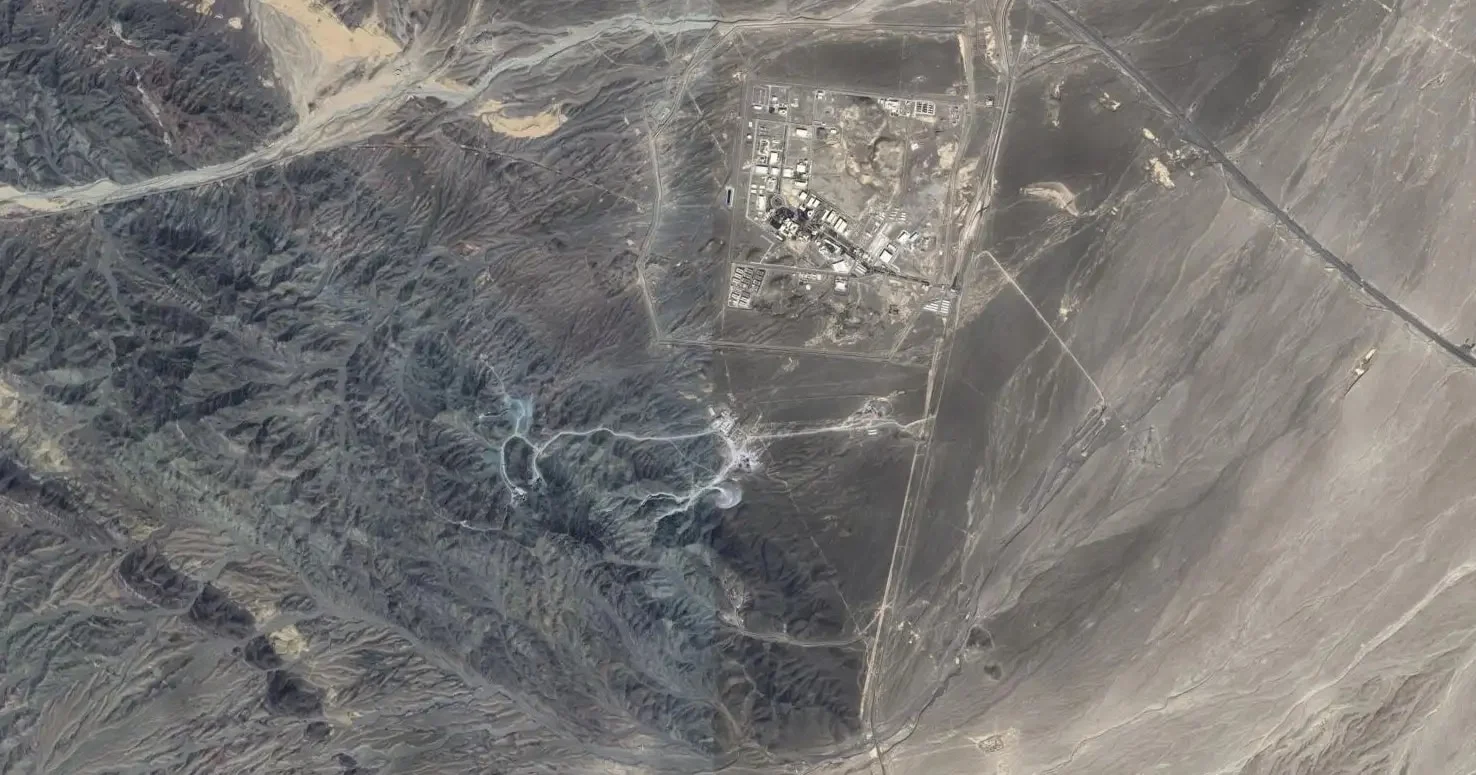
The site is carved into a mountain locally known as “Kuh-e Kolang Gaz La” in Isfahan province, about 1.2 miles south of the Natanz complex. Although the Persian name carries no military significance, its English translation, Pickaxe Mountain, gradually became the label used in Western intelligence reports before entering the international spotlight after President Donald Trump adopted the name in his recent warnings.
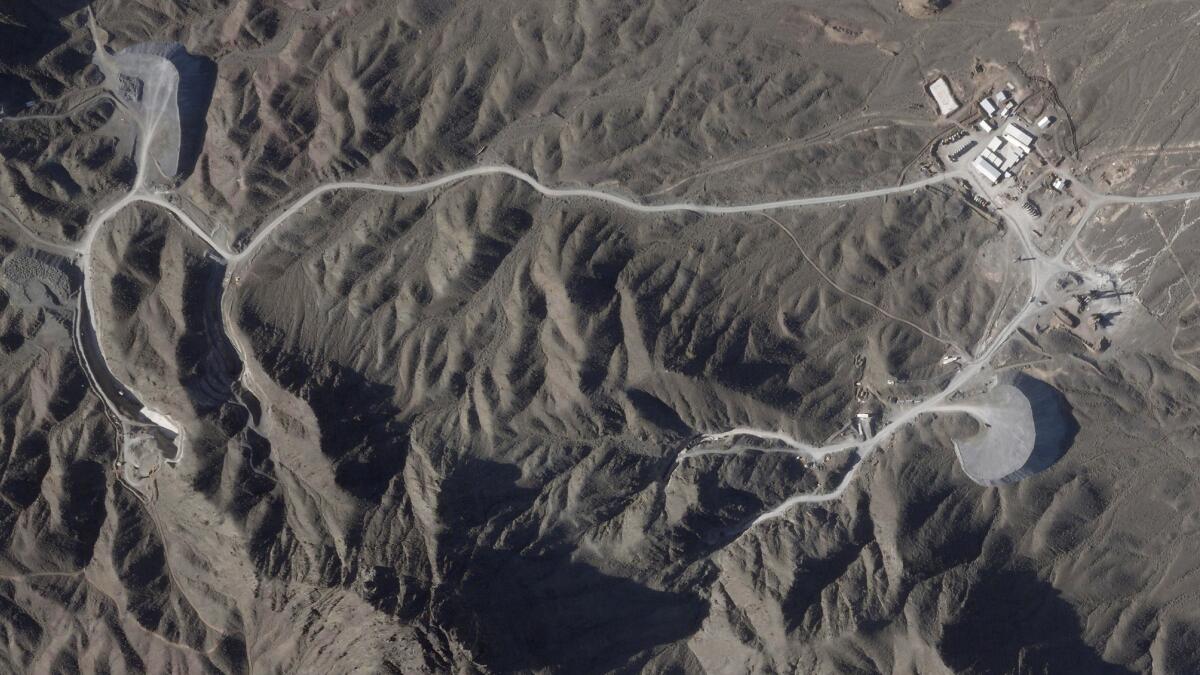
Satellite images analyzed by specialized research institutes show that the project is far more than a single tunnel or backup warehouse. It consists of an extensive underground complex with multiple tunnel entrances, newly built access roads, support facilities, and excavation work that has continued for years.
The imagery also revealed two separate tunnel complexes south of Natanz. One dates back several years, while Pickaxe Mountain is the newer and substantially larger project that began shortly after the 2020 attack. Since then, it has become one of the most closely watched and least understood elements of Iran's nuclear program.
Why Does the West Fear It?
Pickaxe Mountain's importance does not stem from being Iran's largest nuclear facility, nor from any confirmed evidence that it is already operational. Rather, its significance lies in what it could become if Tehran decides to move critical parts of its nuclear program underground.
For that reason, nuclear nonproliferation experts view the project as a strategic effort to eliminate the vulnerabilities exposed by repeated attacks on Natanz over the past several years.
After Natanz was hit by a series of sabotage operations, cyberattacks, and strikes targeting its aboveground infrastructure, Iran fundamentally changed the way it designs sensitive nuclear facilities.
Instead of relying on halls buried at relatively shallow depths, Tehran appears to have shifted its most critical operations into the heart of a solid mountain, making the surrounding rock itself part of the protective shield rather than depending solely on reinforced concrete.
Satellite imagery analysis indicates that the Pickaxe Mountain complex lies beneath dozens, and possibly more than 100, meters of granite rock, protected by a network of tunnels and multiple entrances designed to reduce the impact of any strike on a single access point.
The years-long excavation and expansion also suggest the complex was designed to accommodate multiple facilities rather than serve merely as a replacement workshop for assembling advanced centrifuges.
That is where Iranian and Western assessments sharply diverge.
Tehran insists the site is intended solely for assembling and manufacturing advanced centrifuges and that relocating those operations inside the mountain is meant only to protect them from sabotage.
Western intelligence agencies, however, argue that the project's scale and level of fortification go well beyond the needs of a manufacturing plant. They believe the complex could be capable of housing a covert uranium enrichment facility, strategic stockpiles of enriched uranium, or a reserve center that would allow Iran to rapidly revive its nuclear program if Natanz, Fordow, or other known facilities were destroyed.
No definitive evidence has yet resolved those competing claims. The International Atomic Energy Agency (IAEA) has not announced that it has inspected the complex or verified what lies inside it, and Iran has not declared that nuclear material has been transferred there.
Yet that uncertainty is precisely what gives Pickaxe Mountain its strategic significance. It has become the only major site in Iran's nuclear program where Tehran's adversaries cannot say with confidence what lies behind its granite walls—or whether it is simply a fortified manufacturing center or the ultimate insurance policy for a nuclear program that could survive even the destruction of Natanz and Fordow.
A Fortress Beneath the Rock
Choosing a site inside a rocky mountain was not merely an engineering decision. It was part of Iran’s broader strategy to change the rules of engagement with the United States and the Israeli Occupation. After years of nuclear facilities being targeted by sabotage operations and airstrikes, Tehran sought to build a site where knowing its coordinates would not be enough to destroy it, but where any attack would require a complex military operation capable of penetrating hundreds of tons of rock before reaching its inner chambers.
Estimates by the Institute for Science and International Security (ISIS), based on satellite imagery and terrain analysis, indicate that parts of the complex are covered by more than 100 meters of rock in some areas, making it deeper than most known Iranian nuclear facilities.
The site’s strength does not lie only in its depth but also in the hardness of the surrounding granite, the multiple tunnel entrances, and the ability to distribute sensitive facilities across separate underground chambers, reducing the impact of any direct strike.
That has fueled repeated questions within U.S. military circles over whether bunker-busting weapons could completely destroy the complex.
The United States possesses the GBU-57 Massive Ordnance Penetrator, the largest conventional bunker-busting bomb in its arsenal, designed to penetrate deeply buried facilities before detonating.
But military experts argue that the weapon’s effectiveness depends on several factors, including the thickness of the rock cover, the type of terrain, the angle of impact, and whether multiple strikes can hit the same target area, rather than simply the bomb’s weight.
Some analysts argue that destroying Pickaxe Mountain would not necessarily mean penetrating its deepest chambers. Instead, an attack could focus on tunnel entrances, ventilation systems, power networks, and supply routes, potentially disabling the facility or isolating it for an extended period.
Reaching the facilities buried deep inside the mountain would be a far more complex scenario, especially given the lack of precise information about the tunnel layout and the internal distribution of the chambers.
This helps explain why Trump did not simply refer to monitoring the site but specifically named Pickaxe Mountain in his recent threats. The reference suggests that Washington views it as one of the most challenging potential targets in any future aggression on Iran. The U.S. dilemma is no longer just locating the facility; it is determining whether it could guarantee its destruction if a decision were made to strike.
Who Guards Pickaxe Mountain?
Pickaxe Mountain is no longer simply an engineering project overseen by the AEOI. It has become one of the most sensitive sites within Iran’s national security apparatus.
The story began when the then head of the AEOI, Ali Akbar Salehi, announced that Tehran had decided to build a new facility "inside the heart of the mountain" near Natanz, with the aim of protecting the industrial backbone of its nuclear program from future acts of sabotage.
After Mohammad Eslami took over the AEOI in 2021, excavation and expansion work continued, while the project’s technical details remained tightly guarded. Iran has not disclosed the names of the scientists or engineers overseeing the facility, unlike some of its other nuclear sites where officials have been publicly identified.
In March 2022, Tehran took a notable step by establishing the Nuclear Security and Protection Corps under the Islamic Revolutionary Guard Corps (IRGC). The new unit was created following a series of attacks targeting the Natanz and Fordow facilities, as well as the assassinations of Iranian nuclear scientists.
The command was placed under Major General Ahmad Haqtalab, who later said that protecting nuclear facilities had become part of Iran’s deterrence strategy and that the IRGC was responsible for defending them against military strikes, sabotage operations, and intelligence breaches.
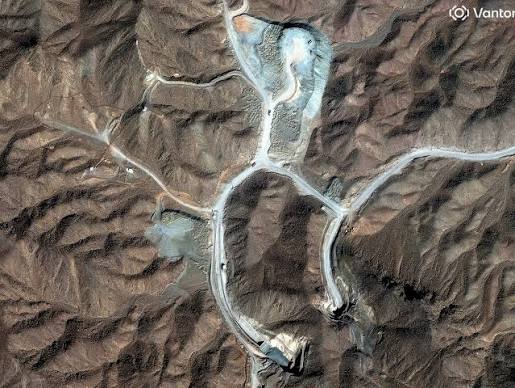
There is no publicly available information about the number of personnel deployed at Pickaxe Mountain or the specific units assigned to protect it. However, satellite images in recent years have shown the construction of a security perimeter around the area, surveillance roads, fortified tunnel entrances, and additional barriers and defensive structures, indicating that the site has moved from a construction phase into long-term security operations.
The overlap between the AEOI and the IRGC reflects the dual nature of Iran’s nuclear program. While the organization manages the scientific and technical aspects, the IRGC is responsible for protecting and securing the facilities. As a result, any strike on Pickaxe Mountain would not target only a nuclear site but also a location that has become part of Iran’s wider military and security infrastructure.
Sources
- Trump says US to strike Iran's Pickaxe Mountain nuclear site
- Iran’s Natanz Tunnel Complex: Deeper, Larger than Expected
- Satellite photos show activity at Iran nuclear sites as tensions rise over protest crackdown
- What We Know About Iran’s Pickaxe Mountain, the Site Trump Threatened to Destroy [Arabic]
- Inside Iran’s Hidden Nuclear Tunnels: What Is Being Built in the Mountains Around Natanz? [Persian]