Damascus' Shifts Disrupt ‘Tel Aviv's’ Calculations: What Lies Ahead for the 'Peace Railway'?
Syria has emerged as the potential strategic alternative for the Gulf states and Turkiye.
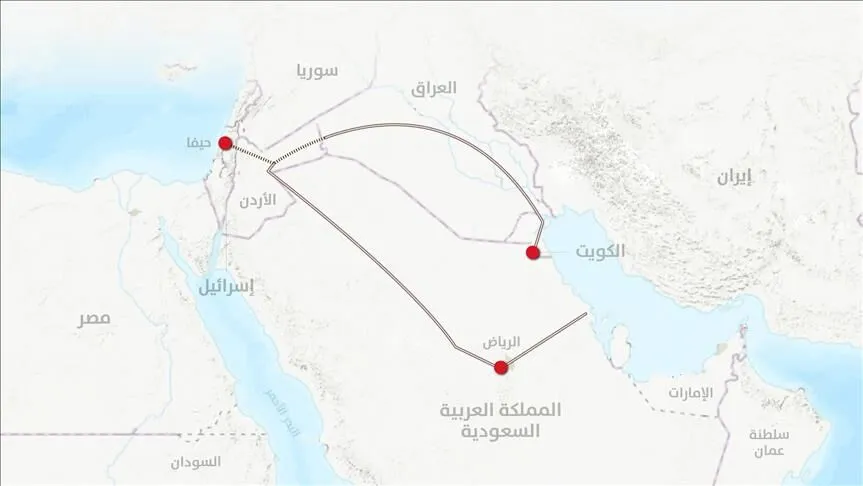
Debate has resurfaced over the future of the "Peace Railway" project amid indications that Gulf states are considering alternative routes that would pass through Syrian territory instead of “Israel”.
In this context, the Israeli i24NEWS reported on July 8, 2026, citing two sources familiar with the discussions, that Saudi Arabia is considering a major revision to the route of the India–Middle East–Europe Economic Corridor (IMEC). The proposed change would exclude “Israel” from the project and reroute the corridor through Syria.
According to the two sources, the war in Gaza, together with the stalled normalization talks between Saudi Arabia and “Israel”, has prompted Riyadh to explore alternative routes and options for the corridor.
The 'Peace Railway': Is It Losing Its Original Route?
Among the leading options currently under consideration is rerouting the economic corridor through Syrian territory, creating a land link between the Gulf states and the Mediterranean without passing through “Israel”, according to the Israeli i24NEWS.
The India–Middle East–Europe Economic Corridor (IMEC), unveiled during the G20 Summit in New Delhi in 2023, was designed to connect India and Europe through a network of ports, railways, and shipping routes passing through the Gulf states, Jordan, and “Israel”.
Under the original plan, goods were to move from Saudi Arabia through Jordan to “Israel”, before being shipped to Europe via the Port of Haifa and then distributed by sea to European and U.S. markets. The corridor was also intended to accommodate passenger transportation.
According to one of i24NEWS's sources, rerouting the project, if implemented, could deal a significant blow to “Israel's” geopolitical and economic standing.
“Israel” has viewed the corridor as a strategic asset and a cornerstone of a broader regional vision that it hoped would ultimately culminate in a normalization agreement with Saudi Arabia.
Against this backdrop, questions are mounting over whether the "Peace Railway" project risks losing its economic and strategic significance as Syria's regional role expands and the country emerges as a potential alternative route for the corridor.
The "Peace Railway" project was first proposed in 2018 by “Israel's” then-Minister of Transport, Israel Katz, during the International Transport Conference held in Muscat, Oman, in November of that year.
Katz promoted the initiative as a railway network linking the Gulf states with “Israel” via Jordan, claiming that Palestinians would also benefit by gaining rail access westward to the Port of Haifa and eastward to the Gulf states.
At the time, he also spoke of what he described as the project's "enormous economic benefits" for “Israel”, Jordan, Saudi Arabia, and the Gulf states, while suggesting that Iraq and Syria could eventually join the network.
Katz also highlighted the project's security dimension, presenting the "Peace Railway" as, in his words, "an alternative that reduces the risks posed by Iran in the Straits of Hormuz and Bab al-Mandab," according to a detailed presentation of the plan that was reported by international media at the time.
According to his presentation, the initiative was based on two central ideas: transforming “Israel” into a land bridge linking Asia and Europe, and establishing Jordan as a regional logistics hub for freight transport. Trade flowing through the corridor was projected to reach approximately $250 billion by 2030.
Despite the ambitious vision surrounding the project, the "Peace Railway" has remained largely confined to the political realm since its launch in 2018 and has never materialized, despite “Israel's” efforts to position it as one of the region's most important economic connectivity projects.
“Israel” viewed the project as a means of strengthening its economic ties with the Gulf states, expanding its network of regional partnerships, and reducing its dependence on its domestic market and a limited number of economic partners.
However, the region's rapidly evolving geopolitical landscape, particularly the political and military conflicts that have unfolded in recent years, has prevented any meaningful progress in implementing the project.
Current developments now raise the prospect of the corridor being rerouted and potentially excluding “Israel” altogether.
Geopolitical Hub
As regional economic corridors are being redrawn, the possibility of rerouting the "Peace Railway" project has once again come to the forefront, potentially leaving “Israel” outside the initiative.
The project, which “Israel” has long viewed as a means of strengthening its commercial position and linking the Gulf with Asia and Europe, now faces the prospect of losing its strategic role as Syria emerges as a more likely alternative route amid shifting regional dynamics.
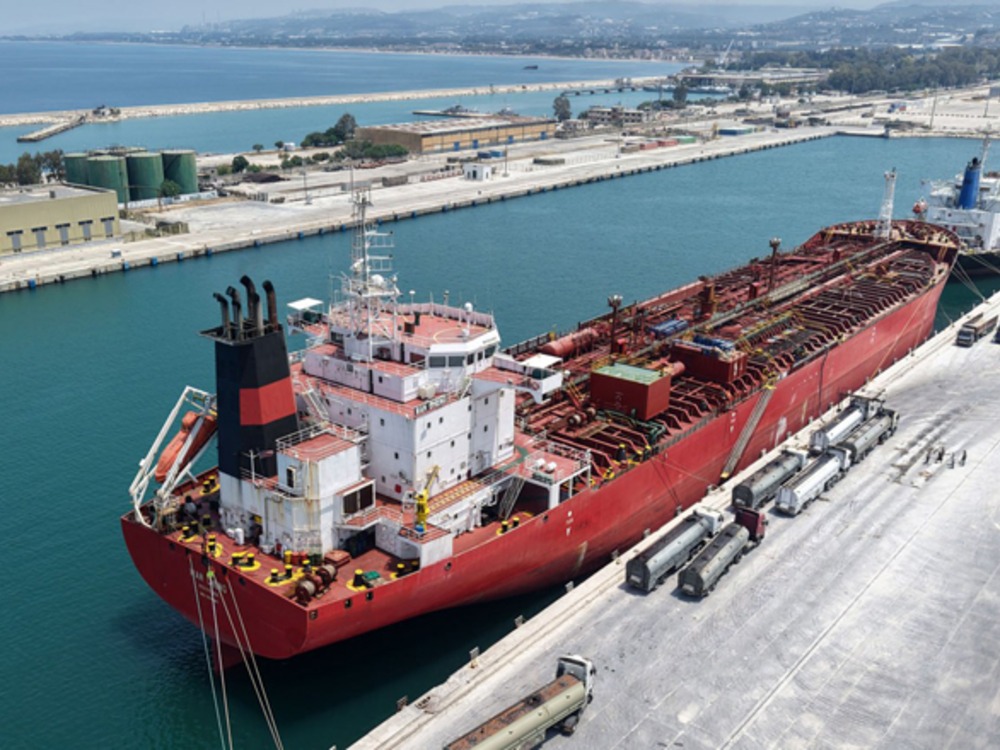
The political changes in Damascus following the ouster of Bashar al-Assad's regime have revived Syria's role as a geopolitical crossroads, particularly as Saudi Arabia and Turkiye explore plans for a corridor linking the Gulf to the Mediterranean through Syrian territory, extending onward to Iraq and Turkiye.
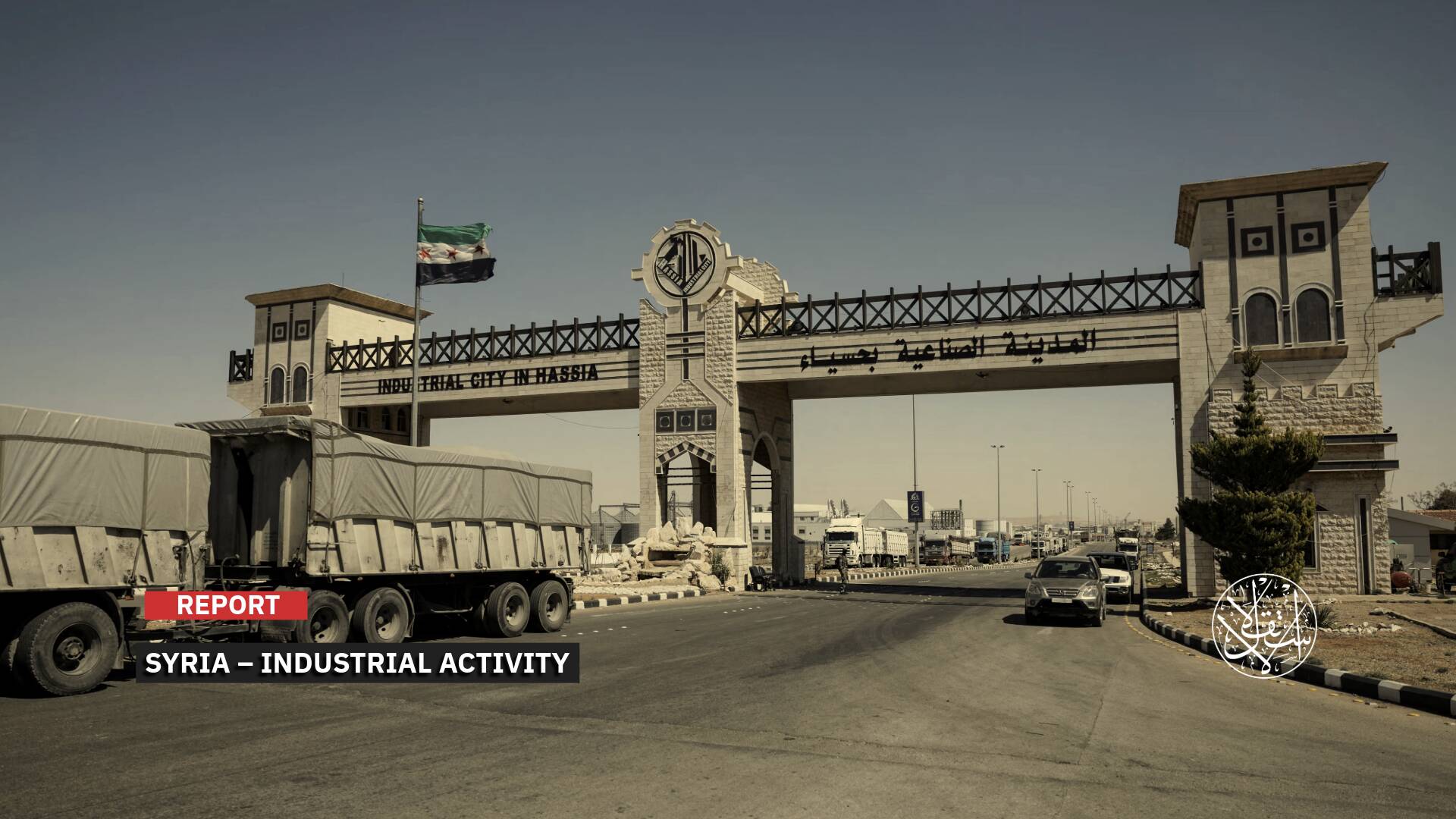
This proposal is gaining momentum at a time when Syria is prioritizing reconstruction, attracting investment, and strengthening its economic ties with its regional neighbors.
In this context, political analyst Bashar Obeid told Al-Estiklal that "Israel has long sought to revive and activate the 'Peace Railway' project because of its significant commercial and economic importance."
Obeid added that "the recent developments in Syria have had a major impact on the region, particularly as Syria has become an important geopolitical hub in light of the political transformations it has undergone."
He noted that "the repercussions of these changes have not been limited to Syria's neighboring countries but have extended across the region as a whole."
Obeid further said that "Saudi Arabia and Turkiye are currently studying the possibility of rerouting the project by directing the vital economic corridor through Syria. One of the key considerations behind this is to create an alternative to Israel and remove it from the route."
He explained that "the concept is to connect Syria with the Gulf states through Jordan, extending to the Mediterranean, while also linking it with Iraq and then Turkiye, ultimately reaching Europe. Such a route would help revive the historic Silk Road and strengthen regional and international trade corridors."
Obeid also pointed to "international efforts to rehabilitate the Hejaz Railway, which once served as a major transportation artery connecting the Levant with the Arabian Gulf and the Hejaz."
Israeli Concerns
This is not the first time that the possibility of excluding “Israel” from the project has been raised.
In November 2025, Israel's i24NEWS reported that work on the railway project linking “Israel” and the United Arab Emirates had continued behind the scenes despite “Israel's” war in the Gaza Strip.
The outlet added that the project had reached an advanced stage of preparation and that an Israeli delegation from the Ministry of Transport, headed by Minister Miri Regev, visited Abu Dhabi that month to advance the initiative.
According to the Hebrew-language news site Ynet, the Israeli minister and her accompanying delegation held what was described as an important meeting with a senior figure close to the UAE's ruling family, the chairman of the Etihad Rail company, and the UAE's Minister of Transport.
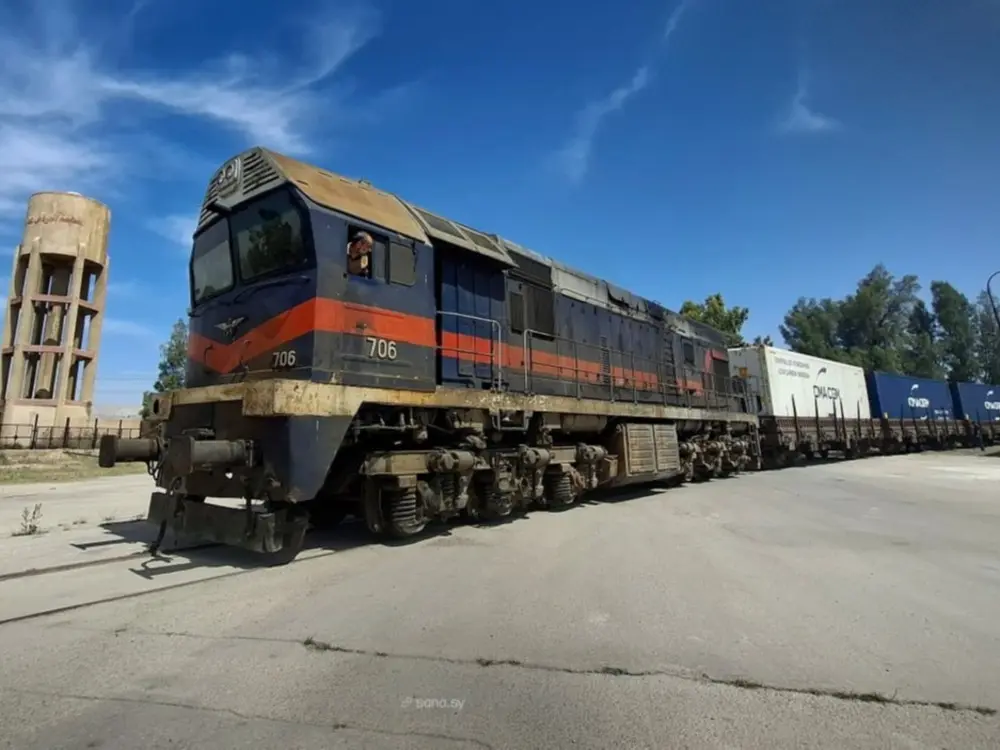
Israeli media, citing Ynet, reported that the Israeli delegation traveled to the UAE on short notice after “Tel Aviv” concluded that France and Turkiye were seeking to exclude “Israel” from the "Peace Railway" project by proposing an alternative route running from Jordan through Syria to a Lebanese port, bypassing Israeli territory.
Commenting on these developments, political analyst Bashar Obeid told Al-Estiklal that "Israel is increasingly concerned about the possibility of losing the 'Peace Railway' corridor because it views the project as strategically important both economically and geopolitically."
He explained that "the project's significance for Israel lies in its role as an economic link to Asia. Losing this corridor would therefore mean forfeiting a key part of its commercial position and its role in regional trade."
Obeid added that "Israel is attempting to open a new window by seeking to normalize relations with Syria. The question, however, is whether Damascus, under its current circumstances or in the future, would be willing to engage in a normalization process with Israel."
He said that he "does not expect the Syrian government to normalize relations with Israel, whether directly or indirectly," arguing that "the political project pursued by Damascus is not moving in the same direction as that of some countries that have established relations with Israel."
He continued, "Syria remains committed to its rejection of the Israeli project, a position that is consistent with its current policies and the orientation of its government."
Obeid added that "Damascus's priority is reconstruction, reviving the economy, and addressing the consequences of years of war, not becoming involved in projects linked to normalization with Israel."
He also noted that "Gulf states, led by Saudi Arabia and the United Arab Emirates, are channeling substantial investments into Syria as part of a regional economic vision through investment projects and trade agreements aimed at supporting reconstruction and reintegrating Syria into the regional economy."
He further argued that "for the Gulf states and Turkiye, Syria has emerged as the leading strategic alternative for regional economic connectivity projects, particularly the India–Middle East–Europe Economic Corridor, strengthening trade flows and reviving historic commercial routes."
Obeid concluded, "If Arab and regional countries maintain their current positions, Israel is likely to lose this economic corridor to Syria."
Sources
- Saudi Arabia Reroutes the "Peace Railway" Corridor: Israel Left Off the New Route [Arabic]
- "Peace Railway": The Plan to Link Israel with Jordan and the Gulf States [Arabic]
- Tel Aviv and Abu Dhabi Secretly Continued Building the "Peace Railway" During the Gaza War [Arabic]
- After Years of Suspension, the First Freight Train Arrives from the Port of Latakia to Adra in the Damascus Countryside [Arabic]