Yemen at a Crossroads: As Saudi Arabia and the Houthis Prepare, What Comes Next?
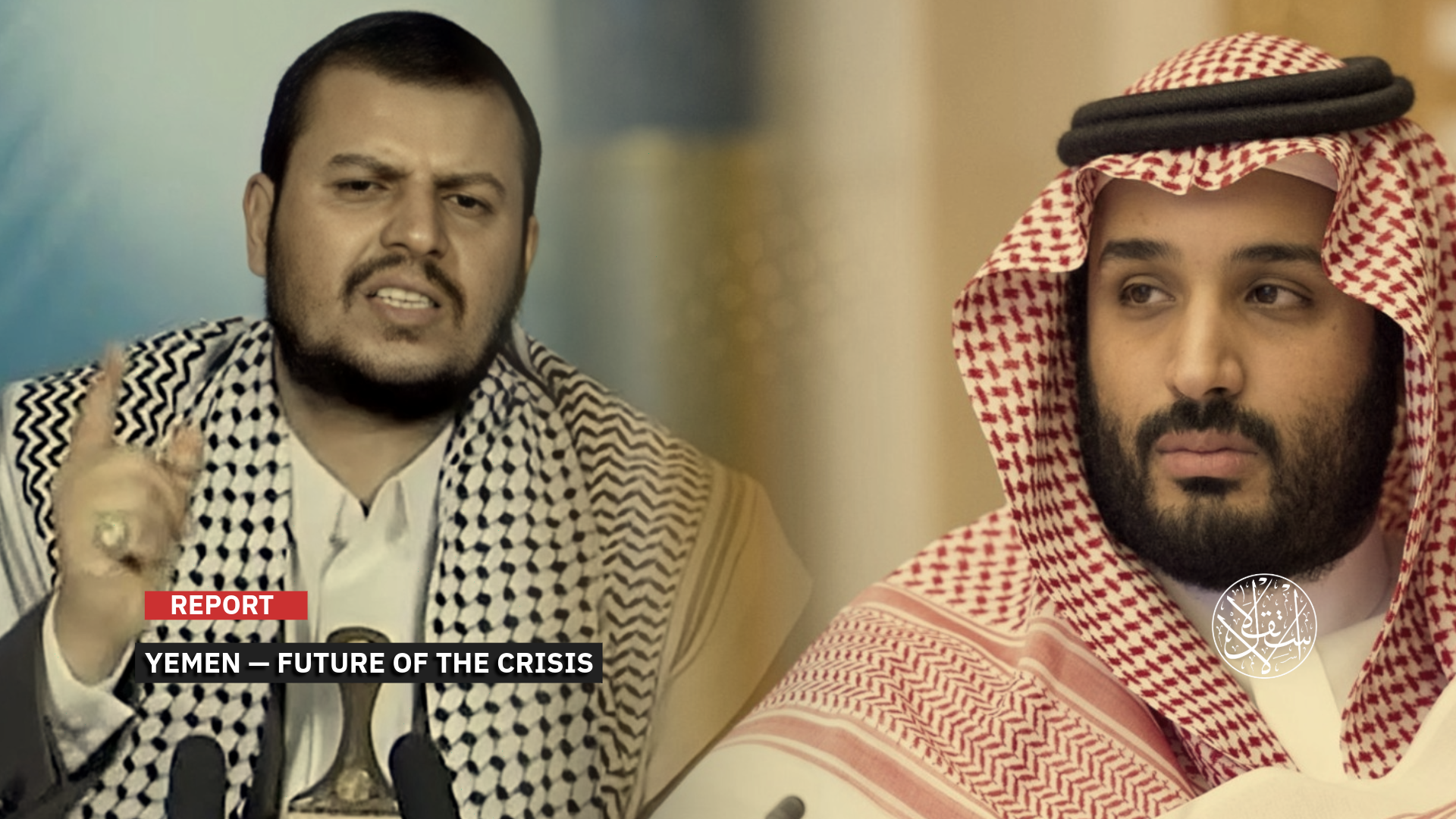
The internationally recognized government intensified its military and political measures following the Iranian plane crisis.
Field movements suggest that Saudi Arabia and Yemen’s internationally recognized government are raising their level of preparedness for a possible new round of fighting against the Houthis, amid growing U.S. political and military support. Iran and the Houthis, meanwhile, appear to be matching that escalation, signaling readiness to widen the confrontation if the conflict reignites.
According to a report by Axios, President Donald Trump gave Saudi Crown Prince Mohammed bin Salman (MBS) the green light for a military operation against the Houthis after Riyadh requested U.S. backing, anticipating a possible expansion of the conflict and recognizing that any renewed confrontation could require American military and diplomatic support.
The developments come as the United States continues its aggression on Iran, creating a new regional equation that could give Riyadh an opportunity to reopen the military front and seek to reshape the balance of power in Yemen after more than a decade of war.
Against this backdrop, Yemen’s internationally recognized government has stepped up its military and political measures following the Iranian plane crisis. The Presidential Leadership Council (PLC) announced the highest level of readiness and said it was taking military, political, and diplomatic steps to protect Yemeni sovereignty, while insisting that no foreign flights or aircraft would be allowed to operate at Yemeni airports without government approval.
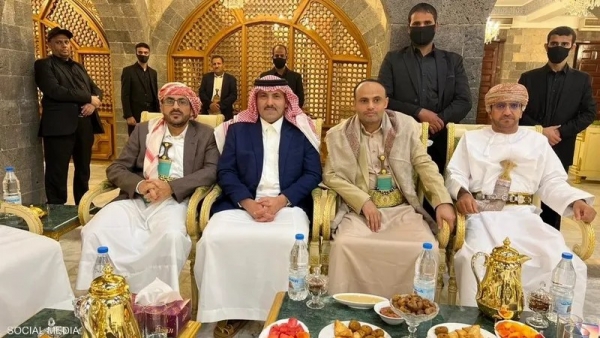
Saudi Arabia: Has Riyadh Recalculated Its Strategy?
More than a decade after Saudi Arabia launched Operation Decisive Storm on March 26, 2015, to restore Yemen’s state institutions and end the Houthi takeover, the outcome of Riyadh’s intervention appears far removed from the objectives it announced at the start of the war.
When Saudi Arabia entered the Yemen war, the country, despite the Houthis’ control of Sana’a, still had unified state institutions, one flag, one army, and one central bank. Years of war, however, created a far more complex reality, marked by competing centers of influence, divided institutions, de facto authorities, and rising regional and separatist movements.
Throughout the conflict, the Houthis consolidated their control over northern Yemen and expanded their military capabilities with Iranian support. Meanwhile, the Southern Transitional Council (STC) strengthened its influence across large parts of the south while advancing a separatist agenda. On the western coast, Tariq Saleh’s forces emerged as an independent power center with closer ties to the UAE’s sphere of influence. The result was a map of power far more complex than the Saudi-led coalition’s original objectives.
Saudi Arabia, meanwhile, saw many of its local bets fail to deliver the outcomes it sought. The STC evolved into a force challenging Yemen’s unity, while the Houthis became the kingdom’s most serious security threat as their military arsenal expanded and Iranian influence grew along Saudi Arabia’s southern border. Riyadh’s Yemen policy now faces challenges far more complicated than those it confronted when the war began.
Against this backdrop, Saudi Arabia appears to be reassessing its approach to Yemen after peace efforts stalled, the Houthis rejected settlement initiatives, and their ties with Tehran deepened. The goal is to regain the initiative, curb Iranian influence, and reshape Yemen’s political and military balance in a way that better aligns with Saudi security interests.
Factors Behind a Shift in Saudi Policy
A series of developments inside Yemen and across the region suggest that Riyadh may be preparing to rethink its Yemen strategy, moving away from a policy of containment toward a more assertive approach against the Houthis.
First, Yemen’s internal dynamics are changing. The rise of anti-Houthi tribal mobilization and growing public dissatisfaction with the group’s rule have opened the possibility of tribal movements reshaping the balance of power on the ground.
For Riyadh, this creates a new dilemma. If tribes succeed in weakening the Houthis or challenging their authority, Saudi Arabia’s ability to influence the shape of any future settlement could diminish. This may push the kingdom toward a more active role to protect its interests and help shape Yemen’s future.
This comes after years in which Saudi policy remained cautious about seeking a decisive military outcome, focusing instead on managing the conflict rather than ending it.
Second, the de-escalation track with the Houthis has stalled. Despite the initiatives and concessions offered by Riyadh, the Houthis have maintained their positions, relying on growing military capabilities, Iranian backing, and divisions within Yemen’s internationally recognized government. These factors have strengthened their belief that they can impose their own political and military terms.
As the group has become a direct threat to Saudi security through its expanding missile and drone capabilities and its growing role within Iran’s regional network of influence, Riyadh appears increasingly likely to view military action as a way to contain the threat—although it remains uncertain whether such a move could bring Yemen’s crisis to an end.
Third, regional shifts have altered the equation. The ongoing U.S.-Israeli War on Iran has created a new regional landscape, with mounting military pressure on Tehran, rising tensions in the Red Sea and Bab el-Mandeb Strait, and worsening friction between Iran and Gulf states.
With Tehran preoccupied by U.S. strikes, Riyadh may see a more favorable window to reorder its security priorities and reduce Iranian influence along its southern border by targeting its Houthi ally—an approach aimed at reshaping Yemen’s balance of power in line with Saudi strategic interests.
A Realignment of Conflict Actors
Amid these shifting dynamics, Yemen’s landscape is no longer governed by the same conflict equations that shaped the past years. Instead, it has entered a broader phase of political and military realignment driven by changes inside Yemen, regional developments, and shifting balances of power.
Recent moves suggest that the key actors involved in Yemen are reassessing their options and calculations ahead of a potentially decisive phase—one that could reshape the balance of influence far beyond simply preparing for another round of military confrontation.
The Recognized Government: Preparing for a Decisive Showdown
PLC Chairman Rashad al-Alimi has taken a hardline stance on sovereignty, declaring that Iranian planes will no longer be allowed to land anywhere in Yemen, in what he described as an effort to end the "Iranian-Houthi blockade."
In a post on X, al-Alimi addressed residents of Houthi-controlled areas with four messages, reaffirming the state's responsibility toward all Yemenis. He accused the Houthis of sabotaging peace efforts and forcing the closure of Sana’a International Airport by detaining Yemenia Airways aircraft. He also urged tribal leaders not to send their sons into battle while reiterating the government's commitment to protecting Yemen's sovereignty and pursuing a just peace that would end the Houthi takeover.
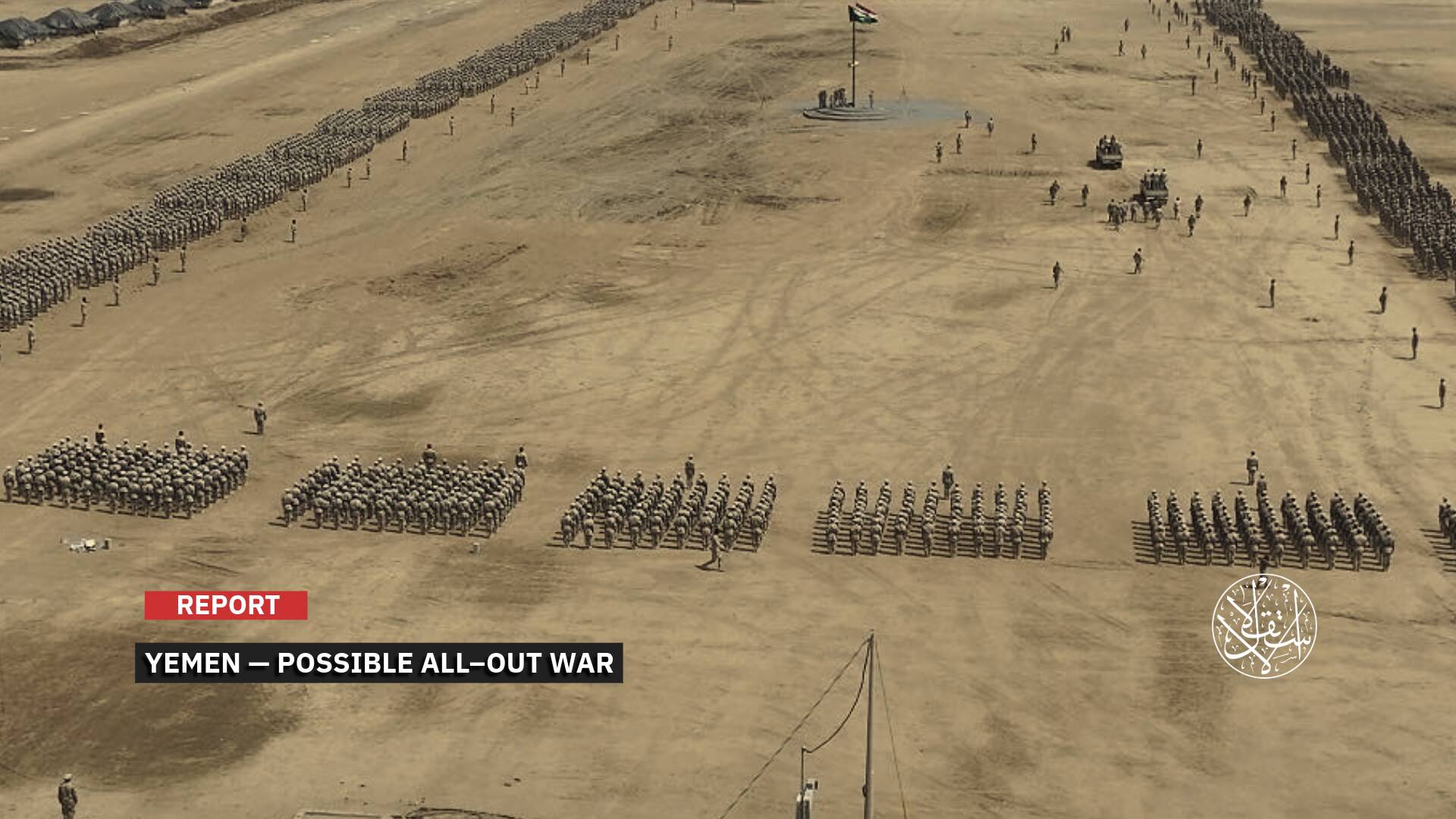
At the same time, the internationally recognized government has stepped up its military readiness. Saudi reinforcements have reportedly arrived in Marib, combat readiness has been raised, and Yemeni fighter jets have been refurbished and returned to service. International reports also indicate that Yemen's air force now possesses Chinese-made Wing Loong II drones. In Aden, senior military officials led by the deputy chief of staff have held coordination meetings aimed at unifying the country's armed formations, while government forces recently thwarted a Houthi attack on the Qanaw front east of al-Jawf.
According to media sources, the prospect of the internationally recognized government launching a military offensive is now considered more likely than at any point in recent years if Houthi escalation continues.
Diplomatically, PLC member Abdullah al-Alimi has been in London seeking British support, amid reports that the internationally recognized government is preparing to return from abroad to lead what has been described as a "comprehensive war." Those reports have been accompanied by renewed assurances from the U.S. Embassy that Washington remains committed to confronting the Iranian-backed Houthi threat.
The Tribes: The Waiting Is Nearly Over
Tribal mobilization in Yemen's al-Jawf province points to growing preparations for a possible military confrontation. Leaders at the al-Rayyan tribal gathering grounds announced that the mobilization of fighters had been completed and that tribal forces had reached their designated assembly points.
In a message to his followers, Sheikh Hamad bin Fadgham, commander of the al-Jawf Tribal Mobilization (Nakaf), declared that "our patience has lasted long enough," adding that "the waiting train is nearing its final stop." In a separate statement, he announced that the tribes were ready for what he called the battle to liberate and cleanse Yemen.
The developments underscore the continued influence of tribal forces in Yemen's conflict and their potential role in supporting military operations should the crisis escalate into open warfare. Such a shift would strengthen the internationally recognized government's strategic depth and reinforce momentum toward a broader military campaign.
If this wave of tribal mobilization evolves into a full-scale deployment, it could present the Houthis with a growing internal challenge and weaken their ability to maintain control over their areas of influence.
Saudi Arabia: Strengthening Deterrence
Saudi Arabia’s front has witnessed intensive strategic moves, highlighted by a meeting between Saudi Deputy Chief of Staff Lieutenant General Fahd al-Ghufaili and U.S. Central Command chief Patrick Frank to discuss defense cooperation and joint security efforts. This has coincided with U.S. approval of a $1.96 billion sale of advanced lethal weapons systems to Riyadh.
More significantly, reports cited by Alhurra indicated that the U.S. administration had given Saudi Arabia a "green light" to launch military action against the Houthis, reaffirming Washington’s commitment to regional security, protecting freedom of navigation, and countering the Iran-backed Houthi movement, which the United States designates as a foreign terrorist organization.
Saudi Arabia’s recent moves against the Houthis and their Iranian ally are not based solely on U.S. support. Riyadh is also counting on Pakistan’s backing and military capabilities.
According to the Saudi Press Agency (SPA), Pakistan renewed its full support for Saudi Arabia and condemned the Houthi militia’s ballistic missile attacks against the kingdom, reaffirming its solidarity with Riyadh and support for its security, sovereignty, and territorial integrity.
Saudi writer Suleiman al-Oqaili said Pakistan’s leadership had warned Iran that any attack targeting Saudi Arabia would be considered an attack on Pakistan itself, describing the kingdom as a red line.
These moves reflect Saudi Arabia’s shift toward strengthening military deterrence by expanding its network of regional and international alliances. They also suggest that Riyadh may be preparing for a more assertive approach toward the Houthis, backed by U.S. support and political and military assistance from its allies, amid growing concerns over Iran’s expanding influence in Yemen.
The Houthis: The Strait Closure Card
The Houthis are holding firm to their red lines, considering direct flights with Tehran a non-negotiable issue. The group has threatened a preemptive deterrence response that could include "paralyzing" Saudi airports and strategically closing the Bab el-Mandeb Strait if such flights are targeted, while reports point to growing coordination with al-Shabaab in the Horn of Africa.
In a speech on Thursday, July 16, 2026, Houthi leader Abdul Malik al-Houthi warned that the group would target all Saudi oil facilities, vital infrastructure, and airports if Riyadh enters into any new military escalation against the group. He said the response equation would be "airports for airports and ports for ports."
Al-Houthi also accused Saudi Arabia of imposing a blockade on Yemen and controlling its airports, ports, and resources. He reaffirmed the group’s readiness to confront any escalation while praising Iranian support in breaking what he described as Yemen’s air blockade.
Domestically, al-Houthi has sought to secure the group’s continuity through what it calls the "shadow leaders" doctrine. He has reportedly appointed one of his relatives as a successor in the event of his death, while also naming replacements for key positions to ensure leadership continuity if current officials are targeted.
The group has also increased its military readiness, saying it has downed a Saudi surveillance aircraft, while expanding coordination with its regional allies. It has warned that any direct U.S. intervention in the war would widen the conflict and expand its list of targets, signaling its readiness to escalate militarily and regionally if fighting resumes.
According to Yemeni writer Ahmed Alshalfi, private sources told him that the Houthis had completed preparations to target maritime traffic by deploying missiles and drones near the Bab el-Mandeb Strait. He said representatives of Iran’s Islamic Revolutionary Guard Corps (IRGC) operating in Yemen would oversee decisions on whether to close the strait and determine the timing of such an operation.
These developments indicate that the Houthis have moved toward a broader deterrence strategy by threatening to extend the conflict into Saudi territory and international shipping routes, while reinforcing leadership continuity and military readiness. They also highlight the group’s deepening strategic ties with Iran, raising concerns that any future confrontation could evolve into a wider regional conflict extending beyond Yemen.
Iran: From the Strait of Hormuz to Bab el-Mandeb
Media reports, including from The Telegraph, have revealed what they describe as a systematic Iranian strategy aimed at gaining control over the western side of the Red Sea and replicating the Strait of Hormuz scenario through its proxies, the Houthis and al-Shabaab. The strategy centers on transferring drone technology and preparing to close strategic waterways in an effort to disrupt global trade and pressure Iran’s rivals.
Sources cited by Reuters also said Iran had asked the Houthis to prepare to close the Bab el-Mandeb Strait if the United States targeted Iran’s electricity infrastructure.
The sources added that the Houthis had deployed missiles and drones near the strait, awaiting orders, a move that could threaten international shipping and global energy supplies, amid close coordination between Tehran and the group over Red Sea security.
These leaks point to a significant shift in the Houthis’ role within Iran’s strategy. The group is no longer viewed simply as a local ally but as a regional pressure tool that can be used to threaten one of the world’s most important maritime chokepoints.
This helps explain the growing U.S. and Saudi focus on Yemen and reinforces the view that any future confrontation with the Houthis will be tied as much to Red Sea security as to the future of Yemen’s own war.
Iran’s strategy relies on maintaining its air bridge with the Houthis and strengthening its ability to use Bab el-Mandeb as a strategic pressure card parallel to the Strait of Hormuz. Such a move would allow Tehran to threaten international shipping and raise the cost of any confrontation against Iran or its allies in Yemen.
Where Is the Crisis Heading?
Recent developments suggest that Yemen’s crisis has entered a decisive phase, unlike the years before, amid growing military pressure on Iran and increasing U.S.-British alignment to curb Tehran’s regional influence, including its armed proxies, particularly the Houthis.
Saudi preparations and rising tribal mobilization also indicate that the political and military environment has become more conducive to reshaping the balance of power inside Yemen if a decision is made to move toward confrontation.
However, these developments do not necessarily mean the Houthis’ defeat is only a matter of time. The group still maintains significant military capabilities, benefits from Yemen’s complex geography, and may continue to receive varying forms of Iranian support.
At the same time, maintaining the status quo appears increasingly difficult for the Houthis amid mounting domestic and international pressure and a growing belief among regional and global actors that the group’s military and political role must be limited.
Against this backdrop, the next phase appears likely to follow one of two paths: either a broad confrontation aimed at weakening the Houthis and reshaping Yemen’s political landscape as part of a wider strategy to curb Iranian influence, or the success of regional and international diplomatic efforts in containing the escalation and imposing new political arrangements that delay a military resolution.
Until the final direction becomes clear, the future of Yemen’s crisis will not be determined solely by the desire for war or peace but by the outcome of the broader struggle for influence among regional and international powers. The Houthis’ future is no longer tied only to their military capabilities and the positions of domestic actors; it is increasingly linked to the trajectory of the wider regional conflict and the scale of international shifts toward Iran and its armed allies.
Sources
- Scoop: Trump gave Saudi crown prince his backing for risky strikes on Houthis
- Saudi Arabia’s Role in Yemen After February 11, 2011: From Containing the Revolution to Containing the State [Arabic]
- Exclusive: Iran Urged Houthis to Close Bab el-Mandeb If U.S. Attacked Electricity Infrastructure
- SAl-Alimi: No Iranian Plane Will Return to Yemeni Territory From Today On [Arabic]
- Houthi Leader: All Saudi Oil and Vital Facilities Are Targets for Our Missiles and Drones If Riyadh Escalates [Arabic]
- https://shebaintelligence.uk/exclusive-yemen-reinforces-frontlines-as-houthis-expand-drone-and-missile-deployments-following-us-backing-for-saudi-arabia
- Houthis Threaten to “Paralyze” Saudi Airports and Bab el-Mandeb to Secure Tehran-Sana'a Corridor [Arabic]
- Houthis plot to open new front in Iran war
- Pakistan Renews Support for Saudi Arabia and Condemns Houthi Militia Attacks [Arabic]
- Military Leaders Meet in Aden to Discuss Unifying Yemen’s Armed Forces [Arabic]
- Abdullah Alimi Takes Yemen Crisis to the International Stage, Warning of Iranian Escalation [Arabic]