2,800 Police Officers Killed in Gaza: Why Does ‘Israel’ Continue Targeting Them After the Ceasefire?
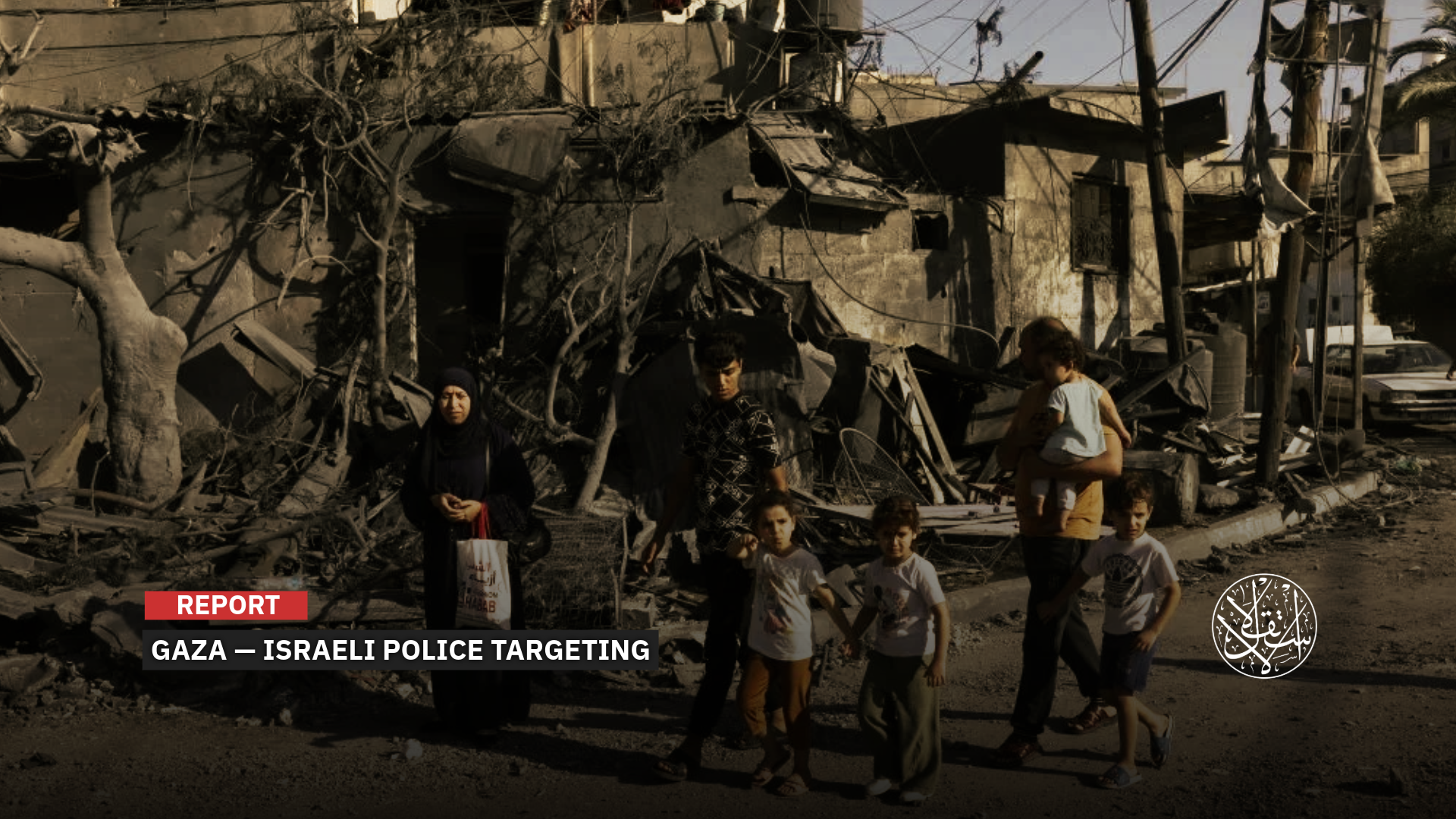
Nine police personnel were killed in a single incident while monitoring markets.
The fragile calm that the Gaza Strip has been experiencing since October 2025 has not put an end to the ongoing Israeli targeting of police positions and personnel, within the context of what Hamas says is a plan aimed at spreading chaos within the Strip.
In recent days, the pace of these attacks has escalated, coinciding with renewed discussions about disarming Palestinian factions, amid local accusations that “Israel” is seeking to strip Gaza of its security apparatus in a way that undermines its ability to manage its internal affairs.
What’s New?
March 2026 was one of the deadliest months for police personnel in the Gaza Strip, as “Israel” intensified its direct targeting of their sites and deployment points.
On the 28th of the month, Israeli aircraft bombed two police checkpoints in Khan Younis in the southern part of the Strip, resulting in the killing of three officers and three civilians, including a girl.
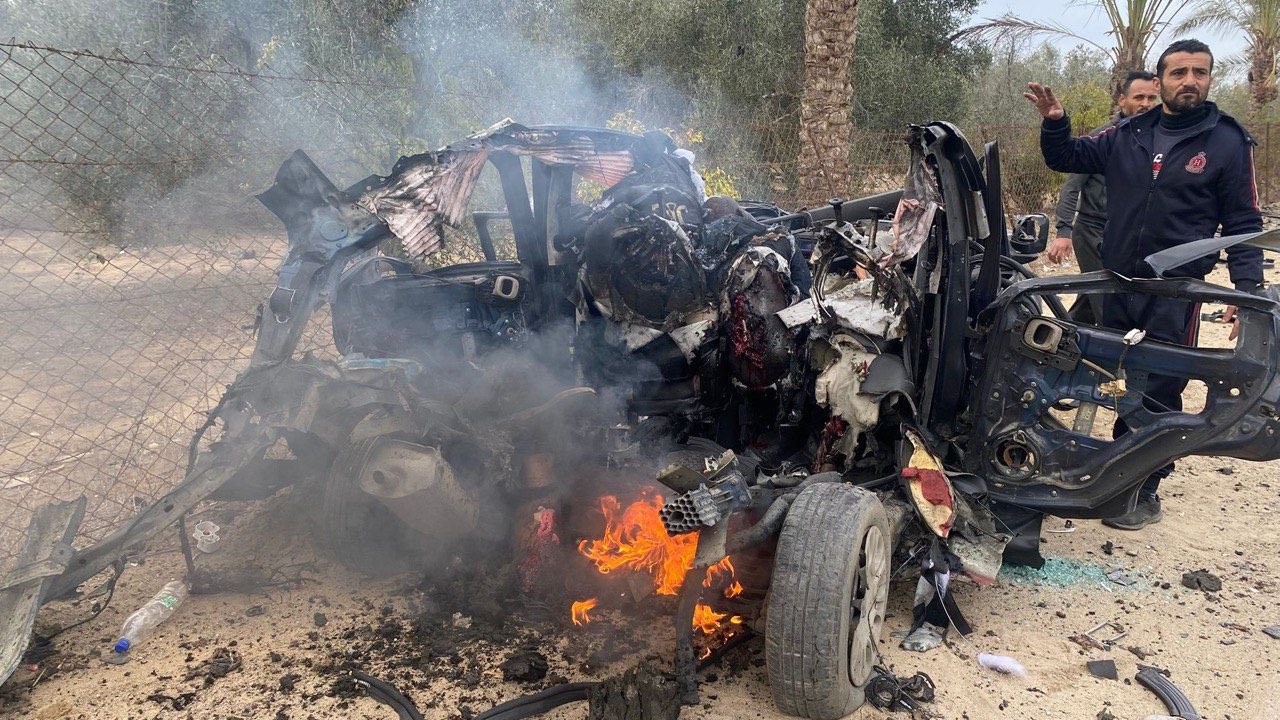
Earlier, in mid-March, nine police officers were killed in an airstrike that targeted their vehicle while they were carrying out duties monitoring markets during the month of Ramadan, at the entrance to the town of al-Zawayda in central Gaza, while 14 others were injured.
These attacks did not stop; since the signing of the truce agreement, “Israel” has escalated from bombing police checkpoints and vehicles to also assassinating personnel, at a time when these operations coincide with political arrangements related to the administration of Gaza.
These include discussions about transferring authority to a new Palestinian body and a partial Israeli withdrawal.
In February 2026, drones targeted two police checkpoints in Khan Younis and near the Bureij refugee camp, resulting in the deaths of five people and injuries to others.
On January 31, 2026, Israeli aircraft bombed the Sheikh Radwan police headquarters west of Gaza, killing 13 people, including five officers, according to the Interior Ministry.
On January 12, a Palestinian group cooperating with “Israel” assassinated Mahmoud al-Astal, the director of investigations in Khan Younis, in an incident that, according to observers, reflects an organized pattern of targeting the security structure in the Strip.
Ismail al-Thawabta, director of the Government Media Office, said that the number of police personnel killed since the outbreak of the war in 2023 has exceeded 2,800, describing it as “a clear violation of the rules of international humanitarian law.”
He added that the targeting continued despite the ceasefire taking effect in October 2025, with dozens of police personnel killed during the period of calm, reflecting ongoing violations.
He also noted that more than 15 police officers have been killed since the escalation of tensions linked to the war on Iran in late February 2026, indicating a widening scope of the targeting.
Tracking the recent attacks reveals two main patterns: first, a focus on targeting police vehicles and checkpoints, restricting their movement; and second, targeting personnel while performing civilian duties, such as traffic regulation or securing markets, as occurred in the March 15 strike.
It is also observed that the pace of these attacks has escalated in parallel with the outbreak of the U.S.-Israeli war on Iran, and with the proposal of a Gaza disarmament initiative presented by Nickolay Mladenov, which was rejected by Hamas.
Effects of the Targeting
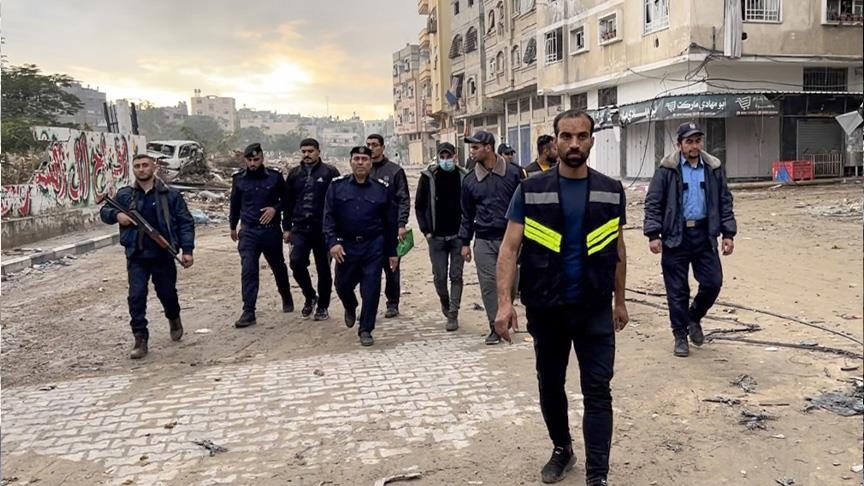
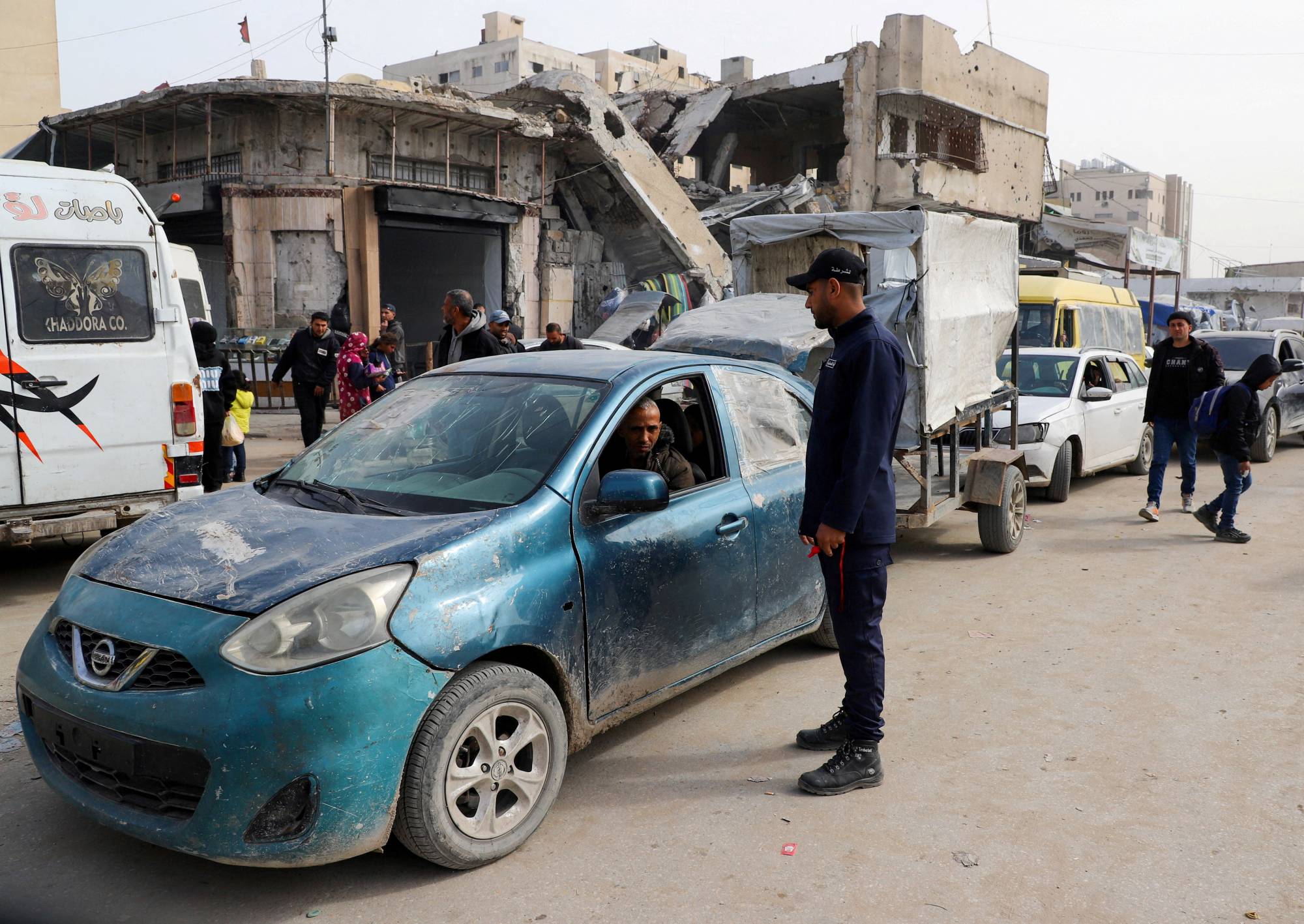
Police in Gaza are tasked with essential civilian duties, including regulating traffic, protecting markets and bakeries, escorting aid trucks, and preventing theft, making them a direct pillar in managing the daily lives of residents.
In this context, the killing of seven to nine police officers while escorting an aid convoy in Rafah in early February 2024 marked a notable turning point. The incident later led security agencies to refrain from accompanying convoys of the United Nations Relief and Works Agency for Palestine Refugees (UNRWA), which contributed to the spread of looting in some areas.
As the security vacuum worsened, Hamas, alongside other factions, moved in the following month to form what became known as the “Popular Protection Committees” in Rafah.
These groups conducted patrols with light weapons and organized markets. The step was met with relative approval from residents, as an attempt to contain disorder and restore security.
However, the impact of targeting security agencies was not limited to the aid issue. A report by the Armed Conflict Location and Event Data Project (ACLED) warned that “Israel” had destroyed more than 230 government buildings and caused severe damage to infrastructure facilities, resulting in the deaths of dozens of police officers, civil defense personnel, and municipal workers.
According to the same report, “Israel” carried out more than 100 strikes targeting facilities or individuals linked to governance structures and the police, which directly contributed to the deterioration of basic services such as waste collection, sewage treatment, and bakery protection.
The strikes also destroyed rubble removal equipment, turning streets into areas crowded with debris.
With the decline in police presence, worrying security phenomena emerged, including the rise of local gangs and armed families.
Another ACLED report recorded more than 220 incidents of internal fighting between the end of 2023 and late 2025, resulting in around 400 deaths, an indication of a widening security control gap.
In response, Hamas established what is known as the “Sahm Unit,” an undeclared force composed of former police members, tribal figures, and volunteers. It has taken on tasks such as enforcing curfews and implementing what it describes as “field punishments” in markets, in an attempt to restore a degree of order.
The strikes also disrupted the food distribution system, particularly bread. In the town of al-Zawayda, residents reported that the killing of nine officers on March 15, 2026, left markets without oversight, allowing some traders to significantly raise prices.
The impact extended to the traffic sector as well, as the absence of police personnel disrupted the regulation of truck and displaced civilians movement.
The assassination of officers responsible for road management, including the attack on a checkpoint in Khan Younis on March 28, 2026, further deepened transportation chaos, especially given the already devastated infrastructure.
Similarly, the bombing of the Sheikh Radwan police station in January 2026, which killed five officers, led to a partial paralysis of traffic police duties in one of the most densely populated areas.
Al-Thawabta, speaking to Al-Estiklal, stressed that targeting police forces falls within a systematic policy aimed at weakening the civilian structure and undermining internal stability. He explained that field data indicate that Gaza’s police forces have been under direct and continuous targeting since the beginning of the war.
He added that the continued targeting of the body responsible for maintaining security and public order is intended to undermine its ability to perform its duties, further complicating the humanitarian situation and deepening the state of chaos within the Strip.
Who Will Fill the Vacuum?
Despite repeated targeting, police in Gaza have continued to appear in some areas since the start of the ceasefire to organize markets and escort aid, but in limited numbers and sometimes without official uniforms, in an attempt to reduce the likelihood of their personnel being targeted.
In January 2026, Reuters reported, citing sources within Hamas, that the movement is seeking to integrate around 10,000 police officers into a new Palestinian administration, as part of the U.S. ceasefire plan, indicating its effort to maintain an organized security role within any upcoming arrangements.
In contrast, the European Union has discussed the possibility of training around 3,000 Palestinian Authority police personnel, in preparation for deploying them in the Gaza Strip, as part of international proposals to rebuild the internal security system.
These proposals reflect a growing international recognition of the need for an effective police force to prevent a slide into chaos, but they face complex political and security obstacles, most notably “Israel’s” rejection of the involvement of cadres affiliated with Hamas.
“Israel” has also expressed reservations about assigning internal security duties to Palestinian Authority personnel, reportedly preferring to support local armed groups that target Hamas members and police forces, raising concerns about reshaping the security landscape on informal foundations.
Post-ceasefire targeting of police came despite reports that Donald Trump had agreed to allow Hamas-affiliated security forces to impose order and prevent looting temporarily, in a step understood as an attempt to contain chaos during the transitional phase.
However, “Israel” refused to grant any legitimacy to Hamas’s role within the police force and, in the post-truce phase, shifted its targeting pattern toward more precise operations focusing on vehicles and checkpoints, after the main headquarters had largely been destroyed during the years of war.
The issue is not limited to rejection or direct targeting, as available information suggests support for local armed groups to attack police personnel, reinforcing the notion of an effort to install informal alternatives by entrenching a state of security disorder.
In this context, the Israeli Channel 12 reported that the army had adjusted its operational policies and escalated attacks against weapons storage sites and anyone carrying weapons, whether from Hamas’s military wing or police personnel, as part of a broader disarmament strategy.
According to the channel, these operations fall within what Prime Minister Benjamin Netanyahu described as “disarmament the hard way,” in parallel with diplomatic tracks proposed within international plans to disarm Gaza.
Hamas maintains that its weapons represent a “legitimate national right” under ongoing occupation, arguing that this right is guaranteed under international law and cannot be relinquished unless full national rights are achieved, foremost the establishment of an independent Palestinian state.
Despite this position, the movement has left room for maneuver, as some of its leaders hinted after the truce agreement at the possibility of “freezing” weapons rather than dismantling them, meaning keeping them stored without use in exchange for guarantees preventing the resumption of military operations.
Meanwhile, Palestinian analysts warn that continued targeting of police may push residents toward increasing reliance on armed groups and clans to protect property, opening the door to the expansion of a parallel economy and undermining the chances of establishing a stable formal authority.
Residents’ fears of a comprehensive security collapse are growing if the targeting of police officers continues, especially since their presence has served as a deterrent to theft and a key guarantee for the delivery of bread and humanitarian aid.
At the same time, Hamas is trying to preserve a minimum level of security structure capable of protecting residents and their property, enforcing order, and facilitating service delivery, in order to avoid a complete security vacuum that could be exploited by various actors.
Within this framework, police forces continue to carry out their duties according to available resources, adopting precautionary measures that include reorganizing deployment and changing movement patterns to ensure the continuity of essential services.
Field sources also confirm that Israeli violations are documented daily and systematically, and are submitted to mediators through detailed reports, as part of efforts to monitor breaches and pursue accountability through relevant international channels.
Sources
- A Source Within Gaza’s Interior Ministry Reveals to “Safa” the Dimensions of the “Security Vacuum” Plan Being Implemented by the Occupation [Arabic]
- 9 Police Personnel Killed as the Occupation Targets Their Vehicle in Central Gaza Strip [Arabic]
- Israeli Airstrikes Kill Gaza Head of Police, 67 Others, Gaza Authorities Say
- Gaza After Two Years: As Israel Expands Control and Sows Chaos, Hamas Adapts to Survive
- Israel Changes Its Policies in the Gaza Strip by Escalating Attacks Against Hamas Police [Arabic]