U.S., Chinese, and Russian Maneuvers: Competition Over Libya or Pursuit of Self-Interest?
The real path to stability lies in the security file.
The Libyan file is witnessing multiple international moves aimed at pushing the political process forward, at a time when observers question whether these efforts can produce any real impact on the ground, given the ongoing political and institutional divisions in the country.
One of the most notable developments was revealed by the French website Africa Intelligence in a report dated March 13, 2026.
The report disclosed the existence of undisclosed political contacts and meetings that have taken place in recent months between figures from eastern and western Libya, facilitated or sponsored by international actors.
According to the report, a new meeting may be held in Washington, D.C., bringing together an advisor from the Government of National Unity and the son of the military commander in eastern Libya. This would follow two previous meetings held in Rome and Paris.
The report explained that these meetings aim to review the outcomes of earlier discussions and to explore arrangements for the next political phase, amid the continued deadlock in Libya’s political process since the elections scheduled for late 2021 were postponed.
It also suggested that these efforts may be linked to proposals to form a new unified government, within arrangements that could allow current leaders to remain in power during a new transitional phase, without setting a clear date for elections.
The source added that these contacts have been ongoing for months between representatives of the main factions in eastern and western Libya, focusing on sovereign positions, the formation of a new government, and the management of the upcoming transitional period.
These U.S.-led efforts echo the position expressed by Donald Trump in a message sent to Mohamed al-Menfi on the occasion of Libya’s Independence Day.
Al-Menfi stated in a Facebook post dated January 2, 2026, that the U.S. president expressed his country’s hope to see a strong, stable, and prosperous Libya.
Trump also emphasized the importance of leaders across Libya engaging in efforts to end divisions and halt violence, and to support a comprehensive political process that serves the interests of the Libyan people.
He further affirmed his administration’s continued support for strengthening cooperation with American companies to create real economic opportunities benefiting both the American and Libyan peoples.
He welcomed steps taken by Libyan leaders toward unity and improved economic governance, describing them as a positive path toward building a better future for the country.
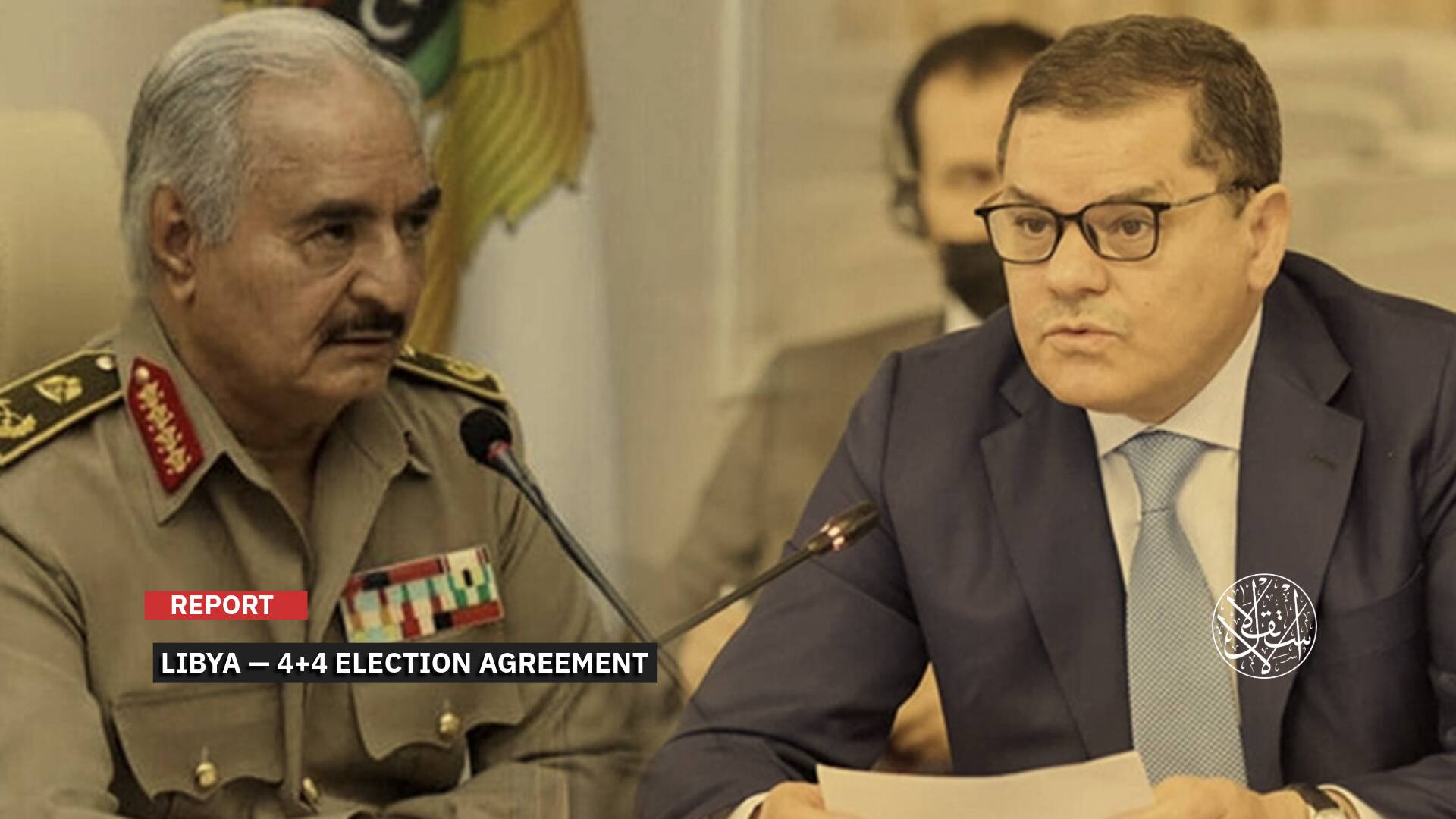
Libya is currently experiencing a power struggle between two governments. The first is the internationally recognized Government of National Unity, led by Abdul Hamid Dbeibeh, which is based in Tripoli and governs western Libya.
The second government was appointed by the House of Representatives in early 2022, headed by Osama Hammad. It is based in Benghazi and controls eastern Libya and most of the southern regions, operating under the authority of General Khalifa Haftar.
U.S. Intervention
In his reading of this U.S. move, the founding president of the U.S.–Libya Business Association, Hani Shennib, said that direct American intervention has become necessary after the failure of the UN-led track over recent years to end the political and security divisions.
Shennib told Al-Estiklal that “the United States will not commit its full weight in Libya unless it sees a real opportunity to achieve progress, especially in light of its strategic interests in North Africa and the Sahel.”
He argued that the real gateway to stability lies in the security file, explaining that this begins with rehabilitating the Libyan army, particularly in the western region, and launching a disarmament, demobilization, and reintegration (DDR) program.
He added that this should be accompanied by the creation of a consensus-based military leadership council between the east and west as a transitional step, instead of an immediate and full unification of the military institution, which he considered a gradual process that is difficult to achieve quickly.
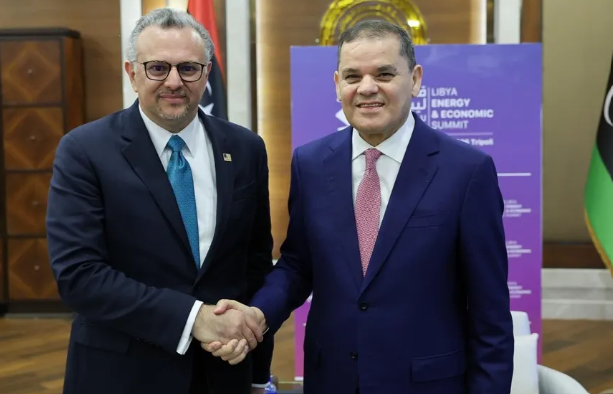
The Libyan politician also stressed that a unified technocratic government would not be able to function without a stable security environment, emphasizing that “the collapse of the dinar and mounting economic pressures make it necessary to accelerate solutions.”
Shennib further argued that Washington has shifted from a policy of working through the United Nations to direct intervention, citing the approach of Donald Trump in redefining the United States’ global role and reducing reliance on international institutions such as the UN.
He concluded that direct engagement with Washington is better for Libya than managing the conflict through regional proxies, adding that stability would also serve U.S. economic interests.
Writer and researcher in international relations and Maghreb affairs, Alaa Farouk, said that there are expanded U.S. movements in Libya, particularly within the eastern camp, where several meetings have been held with military and economic officials, including the signing of economic and security agreements.
Farouk noted, in a statement reported by “Lam Network” via Facebook on March 26, that the Chargé d’Affaires at the U.S. Embassy in Libya, Jeremy Berndt, is handling this portfolio.
He added that Berndt has intensified his visits to eastern Libya through separate meetings with the Chief of Staff of the General Command, Khaled Haftar, and the Director General of the Libya Development and Reconstruction Fund, Belqasem Haftar.
The researcher believes these moves indicate that Khalifa Haftar and his family may be shifting their alignment from Russia toward the United States, especially as this coincides with recent revelations that Haftar signed a $2 million contract with Ballard Partners, a firm close to Donald Trump’s circle, aimed at improving the public image of Field Marshal Haftar and his son, Lieutenant General Saddam Haftar, who is seen as his likely successor.
In addition, Farouk said there are ongoing efforts led by Trump’s Middle East advisor, Massad Boulos, with the participation of Saddam Haftar, aimed at arranging a power-sharing deal between eastern and western Libya, one that would effectively confine power to the Haftar and Dbeibeh families, potentially entrenching family rule and undermining the idea of elections, according to his assessment.
Parallel Moves
The Libyan arena is not exclusive to the United States; other major powers are also seeking to play political and economic roles that serve their interests in this vast, oil-rich country.
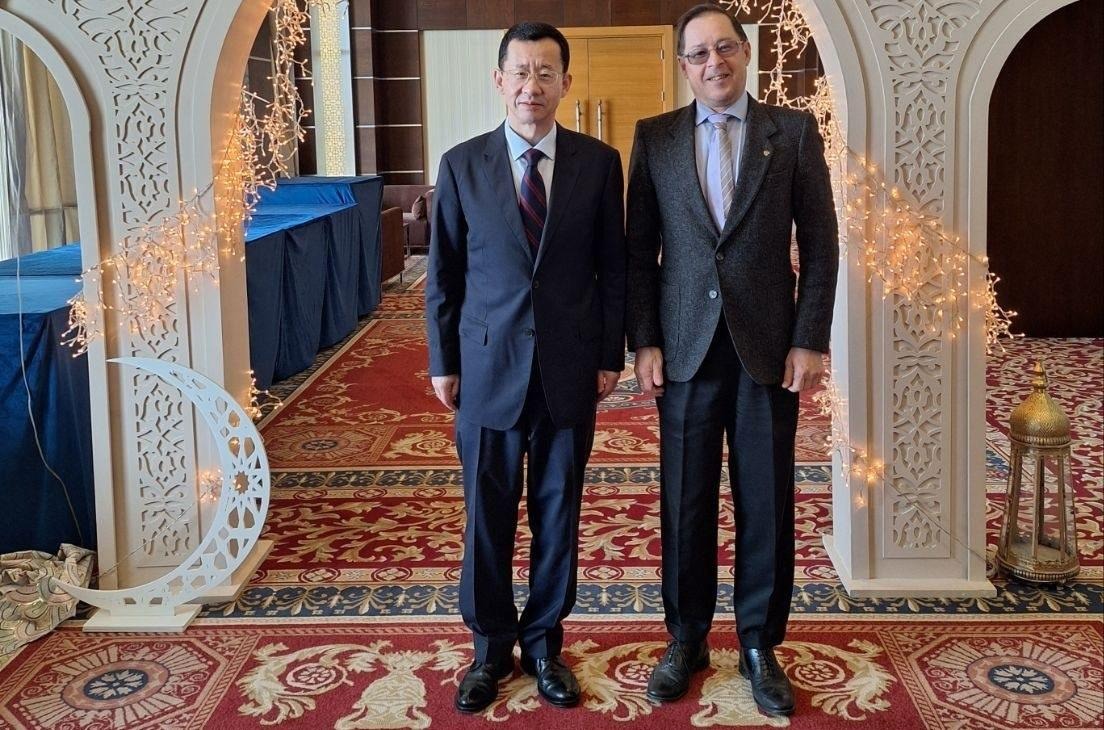
In this context, the announcement issued by the Russian Embassy in Libya on March 22 can be understood. It stated that the Russian and Chinese ambassadors to Libya, Aydar Aganin and Ma Xuliang, discussed the latest developments in the country’s political process.
The same source noted that the two ambassadors also discussed “international efforts aimed at achieving a comprehensive settlement led by the United Nations.”
The Russian Embassy said, in a statement published on its official Facebook page, that the meeting addressed developments in Libya, with a focus on the political process and the efforts led by the United Nations to push forward a settlement between the different parties, amid the political and security challenges facing the country.
However, the focus by Russia and China on a UN-led approach to resolving Libya’s political crisis, which aims to curb the growing U.S. role, does not receive strong support from some observers of the Libyan scene.
Managed Stagnation
In this context, political analyst Ahmed al-Tuhami argued that political activity in Libya, despite its multiplicity, still faces fundamental challenges that hinder any real breakthrough in the crisis, especially given the slow performance of the UN mission and its inability to achieve tangible progress, as he put it.
Al-Tuhami stressed, in a statement reported by the local website “Al-Saa 24” on March 24, that the “state of comfort experienced by Libyan parties, both in the east and the west, contributes to the continued stagnation.”
“Each side believes it can manage its affairs and preserve its gains without the need to make concessions, which is also reflected in the international position that sees its influence in Libya as stable and not requiring urgent action,” he added.
He also pointed out that the UN mission’s efforts remain limited in impact, attributing this to its insufficient engagement with influential international actors, which reduces the chances of success for any political initiative it sponsors.
The political analyst further noted that the international focus on ongoing conflicts, especially in the Middle East, is not expected to directly affect the nature of the existing authority in Libya.
He suggested that ruling parties are more likely to maintain the status quo rather than restructure themselves, amid the declining priority of the Libyan file among several international powers.
Al-Tuhami emphasized that Libya lies outside the direct sphere of influence of these conflicts, as both Russia and the United States maintain relations with various Libyan actors in the east and west, ensuring their interests without the need to actively intervene in the Libyan file.
He concluded that the absence of motivation among these major powers to re-engage in Libya stems from the fact that their interests are already secured, making any potential movement primarily dependent on internal Libyan factors rather than international developments.
Possible Scenarios
Multiple scenarios for resolving the Libyan crisis in the near term have been outlined, including those presented in a report issued by the RA Center For Strategic Studies (RCSS) on January 14, 2026.
The center identified four main scenarios. The first is the “continuation of stagnation and division,” which it considers the most likely in the short term, given the ongoing split between the eastern and western governments and the stalled electoral process.
In this context, official institutions will remain limited in effectiveness, while militias will continue to exploit weapons and resources to strengthen their influence. This will lead to continued popular protests and rising levels of social anger.
The report explained that the continuation of this scenario means the country will remain in a state of crisis management without reaching a genuine political solution, with the possibility of escalating security tensions if any local armed conflict is triggered.
The second scenario, according to the report, is the “achievement of a partial political agreement” under UN supervision. This would include the unification of some institutions, such as forming a temporary presidential council or a joint legislative committee, along with setting a limited timeframe for holding elections.
The center noted that this scenario could help reduce divisions and improve the state’s ability to manage revenues and oil resources, in addition to gradually improving the level of basic services.
However, this path remains fragile, as any partial agreement may face opposition from some armed groups or political forces. It may also require renegotiation when new disputes arise, meaning that stability would be temporary and not comprehensive, although it would represent an important step toward building trust between the parties.
The center stated that the third scenario involves holding unified presidential and parliamentary elections under UN supervision, with effective international and regional support.
It added that achieving this scenario would bring a fundamental transformation to the political landscape, grant legitimacy to any new government, and pave the way for reforming financial and security institutions.
The report emphasized that success in this path requires a suitable security and political environment, along with consensus among international and regional powers, which is difficult to achieve in the short term, but remains the most stable option in the medium and long term.
If all political tracks fail, the report pointed to the possibility of escalating armed confrontations between competing parties, whether between east and west or among various militias.
It noted that this scenario could worsen the humanitarian crisis, increase refugee and migration flows, and lead to economic deterioration, and possibly direct or indirect international intervention.
Although it is currently considered the least likely due to international pressure, it remains a potential threat given the fragility of state institutions and the reliance of conflicting parties on force.
The report concluded that achieving long-term stability in Libya requires a comprehensive political solution based on integrating official institutions, unifying security agencies, and redistributing resources in a fair and transparent manner, along with holding free and fair elections.
It stressed that any delay in addressing these issues will maintain a state of uncertainty and increase the likelihood of internal and regional escalation.
It concluded by noting that strengthening dialogue between Libyan parties, with support from the international and regional communities, remains the most realistic path toward achieving gradual and sustainable stability, placing Libya at a critical crossroads between continuing crisis management or moving toward a fundamental political transformation.