Local Elections Under the Rubble: Do the April 25 Ballots in Palestine Matter?
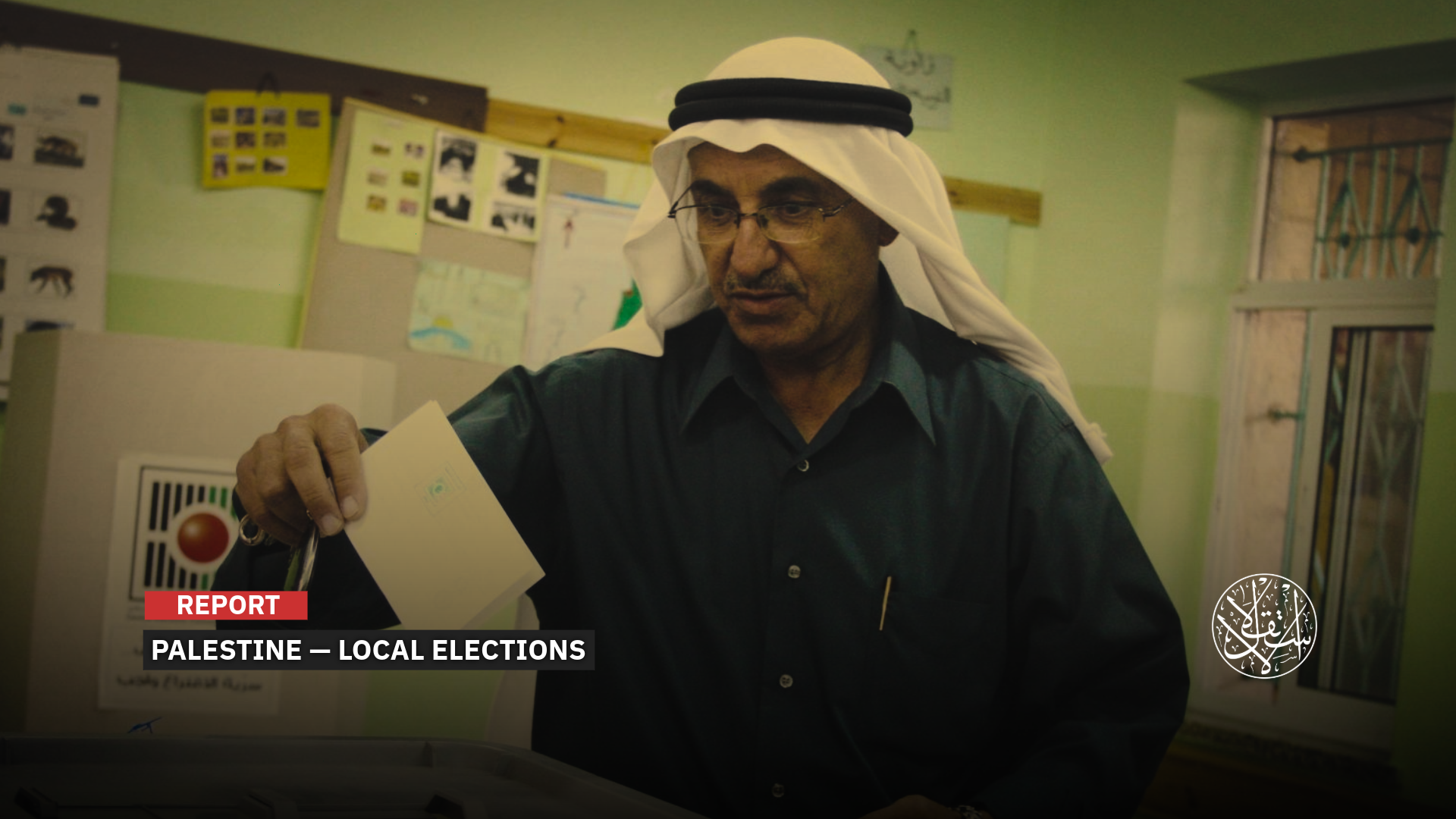
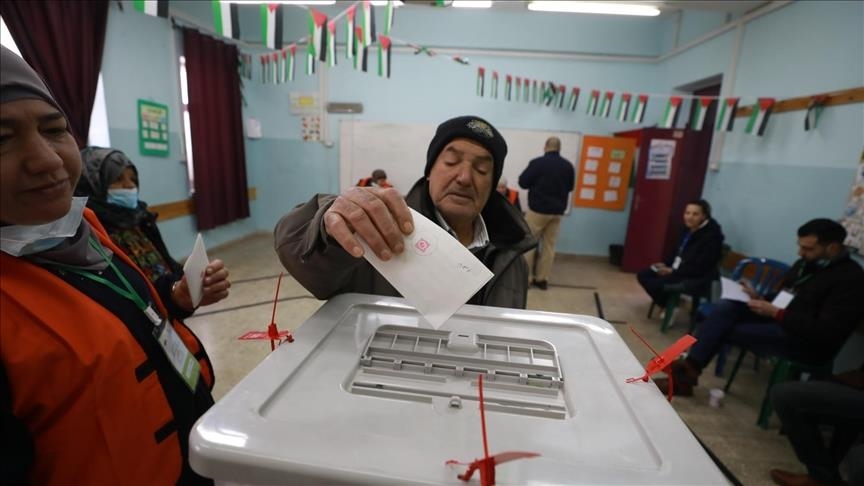
Special voting in Gaza was limited to the city of Deir al-Balah.
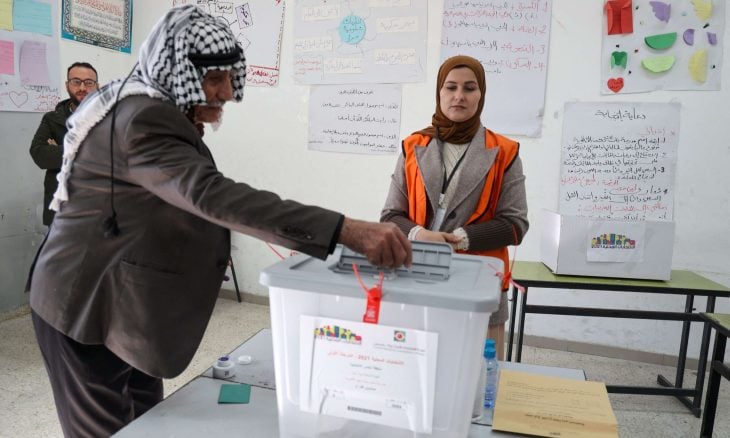
With Gaza still lying in the ruins of a devastating war and Israeli Occupation raids and settlement attacks intensifying across the West Bank, Palestinian municipal ballot boxes are set to open on April 25, 2026.
From the outset, the vote lays bare the scale of imbalance. The Palestinian Central Elections Commission has said holding the process across Gaza in full is “extremely difficult,” restricting voting instead to the city of Deir al-Balah, the least damaged area after the Israeli war, alongside 420 local bodies in the West Bank.
In that sense, the elections approved by the Palestinian Authority (PA) in the West Bank in late 2025 are not grounded in any assumption of normal political life but in an attempt to preserve the bare minimum of an electoral framework within an already fractured geography.
Complex Conditions
In Gaza, the problem is not technical or procedural so much as structural. According to the UN Relief and Works Agency (UNRWA), water and sewage networks across the enclave were “almost completely destroyed” over two years of war.
The UN Office for the Coordination of Humanitarian Affairs (OCHA) reported on March 27 that daily access to drinking water has fallen to just 4.5 to 6 liters per person, even as only limited repairs continue on pipelines, wells, and open drainage channels.
Municipalities are not merely facing an electoral test. They are confronting an existential question about whether they can still deliver basic services such as water, sanitation, and public hygiene at all.
In the West Bank, the electoral environment is no less fragile, only different in nature. OCHA said more than 36,000 Palestinians were forcibly displaced in a single year amid settlement expansion and settler violations.
The report documented an accelerating pattern of de facto annexation, including plans or approvals for around 27,200 settlement units in the rest of the West Bank and 36,973 in occupied East Jerusalem, alongside the establishment of 84 new settler outposts.
According to OCHA, March alone saw more than 200 settler attacks across over 100 Palestinian communities, averaging nearly six incidents per day.
The elections therefore unfold in a space shaped by ongoing violations of the Gaza ceasefire and by sustained geographic and social fragmentation in the West Bank.
This reality raises questions over the value of simply rotating local administrations, turning the process into a symbolic act of survival rather than a fully competitive democratic exercise.
There are 445 local bodies across Palestine, including 420 in the West Bank and 25 in Gaza, comprising 161 municipalities and 284 smaller local councils.
On November 3, 2025, WAFA News Agency reported that the Ministry of Local Government of the Palestinian National Authority had converted municipalities into caretaker administrations from December 11 of that year until elections are held, following the end of their four-year mandates.
Local elections were last held in the West Bank in 2021 in two phases, while the cabinet postponed voting in Gaza until suitable conditions are available amid political divisions and disputes with the Palestinian Resistance Movement (Hamas).
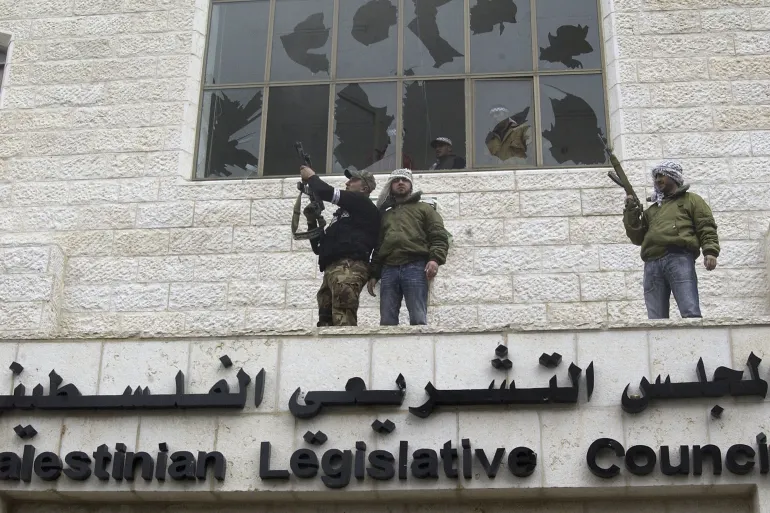
Since 2007, the Palestinian political landscape has remained split, with Hamas governing Gaza and the PA, led by Fatah under President Mahmoud Abbas, administering the West Bank.
Limited Competition
Final figures released by the Central Elections Commission on March 31 underline the narrow nature of the electoral contest.
Out of 421 local bodies included in the process, only 184 will see real competition, including 91 municipalities and 93 village councils. Another 197 bodies will be decided uncontested, while 40 received no candidates or lists at all. At the same time, around 1.04 million voters are eligible to participate.
The map suggests a geographically constrained election, where more than half of local bodies will not witness any meaningful contest. This significantly weakens the representative value of the process and turns much of it into a reshuffling of councils rather than a genuine contest of platforms and policies.
In addition, Decree Law No. 23 of 2025 reshaped the electoral system itself, introducing open-list proportional representation for municipal councils, while retaining a majoritarian system for village councils.
The law, issued in November 2025, lowered the candidacy age to 23 and increased the minimum female representation in municipal lists to three women in councils of 11 seats and four in councils of 13 or 15 seats. It also required some public employees and executive officials to resign before running.
On paper, these changes suggest legal and procedural modernization, but in practice their impact appears far more limited, given the absence of a stable or level political environment.
A further amendment in January 2026 added a political condition, requiring candidates to pledge commitment to the Palestine Liberation Organization (PLO) as the “sole legitimate representative of the Palestinian people,” along with its political program and relevant international resolutions.
This formulation effectively sets a political ceiling, excluding factions that reject the PLO framework, particularly over recognition of the Israeli Occupation.
Hamas warned against holding local elections under the new law, saying it aligns with “Israel’s” push for greater subordination and fragmentation of the West Bank.
The European Council on Foreign Relations (ECFR) similarly argued that the new candidacy conditions undermine genuine representation and restrict the entry of activists or groups that do not adhere to the Oslo framework of 1993 or the current PLO program.
As a result, the electoral field is narrowed not only by conditions on the ground in Gaza and the West Bank but also by the law itself. The competition is therefore expected to be less partisan and more local in character.
This is reflected in lists linked, formally or informally, to Fatah, alongside independents, families, and local service networks, with weaker participation from other factions, a pattern that is not entirely new.
In the 2021-2022 elections, most lists were nominally independent, though many were loosely affiliated with Fatah or rooted in family and local networks. The first round at the time saw real competition in only 154 of 376 bodies, according to the ECFR.
In that sense, the 2026 elections appear to reproduce the same pattern, but under harsher constraints: limited competition, localized representation, and a political landscape increasingly shaped by family ties, service networks, and social influence rather than major party competition.
What’s the Point?
Against this backdrop, the social and political climate offers little sign of a renewed public trust. Arab Barometer survey results from January 2026 show that 76 percent of West Bank residents do not trust the PA government.
The same survey found that 77 percent do not trust the Palestinian president, while 51 percent of Palestinians say they do not identify with any political faction. Even in Gaza, where governance structures are different, trust in the authorities does not exceed 32 percent.
The findings point to a growing distance between the public and existing political institutions, with many increasingly focused on security, services, and survival rather than traditional political representation.
The ECFR argues that the West Bank is fragmenting into isolated enclaves, where local actors and civil society fill the vacuum, while the authority of the central leadership erodes under Israeli Occupation pressure, financial constraints, and the realities of settlement expansion.
At the same time, the UN Development Programme describes local governance in the West Bank as the last remaining layer of the Palestinian system, since it is still subject to periodic elections, giving it particular significance even amid broader institutional decline.
This means municipal elections may preserve small pockets of accountability and local representation, but they fall far short of restoring national politics or resolving the broader Palestinian legitimacy crisis.
Political researcher Bara’a Salman says local elections serve as a test of the Palestinian society’s ability to renew its local elites and open space for new figures who can link public service to accountability rather than social inheritance or political monopoly.
In an article published in the local newspaper Alquds, he added that the importance of the new law lies in reducing the dominance of closed or semi-closed lists and placing responsibility on council members as representatives of citizens rather than of a specific faction.
However, he warned that this shift could also increase individual participation while weakening structured political programs, leading to a lack of mature electoral culture and prompting some councils to avoid running lists or candidates altogether.
“Local elections are an urgent necessity to provide feedback, correct mistakes, and meet citizens’ needs in municipalities and village councils, provided they are conducted with integrity and transparency,” he wrote.
For the process to succeed, Salman argued first that elections must cover all Palestinian geography, including Gaza.
Second, he stressed the need to protect elections from family or factional rivalries that could deepen divisions in a society still scarred by past fractures.
Third, he called for encouraging active participation free from family or party pressure, allowing voters to choose programs that best serve their communities.
The Vision for Political Development Center says the new election law strikes at the core of service institutions by imposing political constraints tied to alignment with the PLO program.
“This erodes Palestinian public trust in local councils and weakens their standing and role at a highly sensitive and dangerous moment, especially amid clear Israeli efforts to dismantle Palestinian institutional structures in the West Bank, replace them with Israeli control, and advance settlement expansion at the expense of Palestinian presence,” according to the center.
Sources
- UNRWA Commissioner-General on Gaza: Water Systems Devastated as UNRWA Delivers Lifeline
- UN says more than 36,000 Palestinians displaced by Israeli settlement drive
- Mapping Palestinian Politics
- Local Elections Between Necessity and Reforming Representation [Arabic]
- Palestinian Local Elections 2026: The Debate Over the New Law and Its Implications [Arabic]