David Petraeus: The General Who Led the War on Iraq Returns to the Spotlight Under al-Zaidi Government
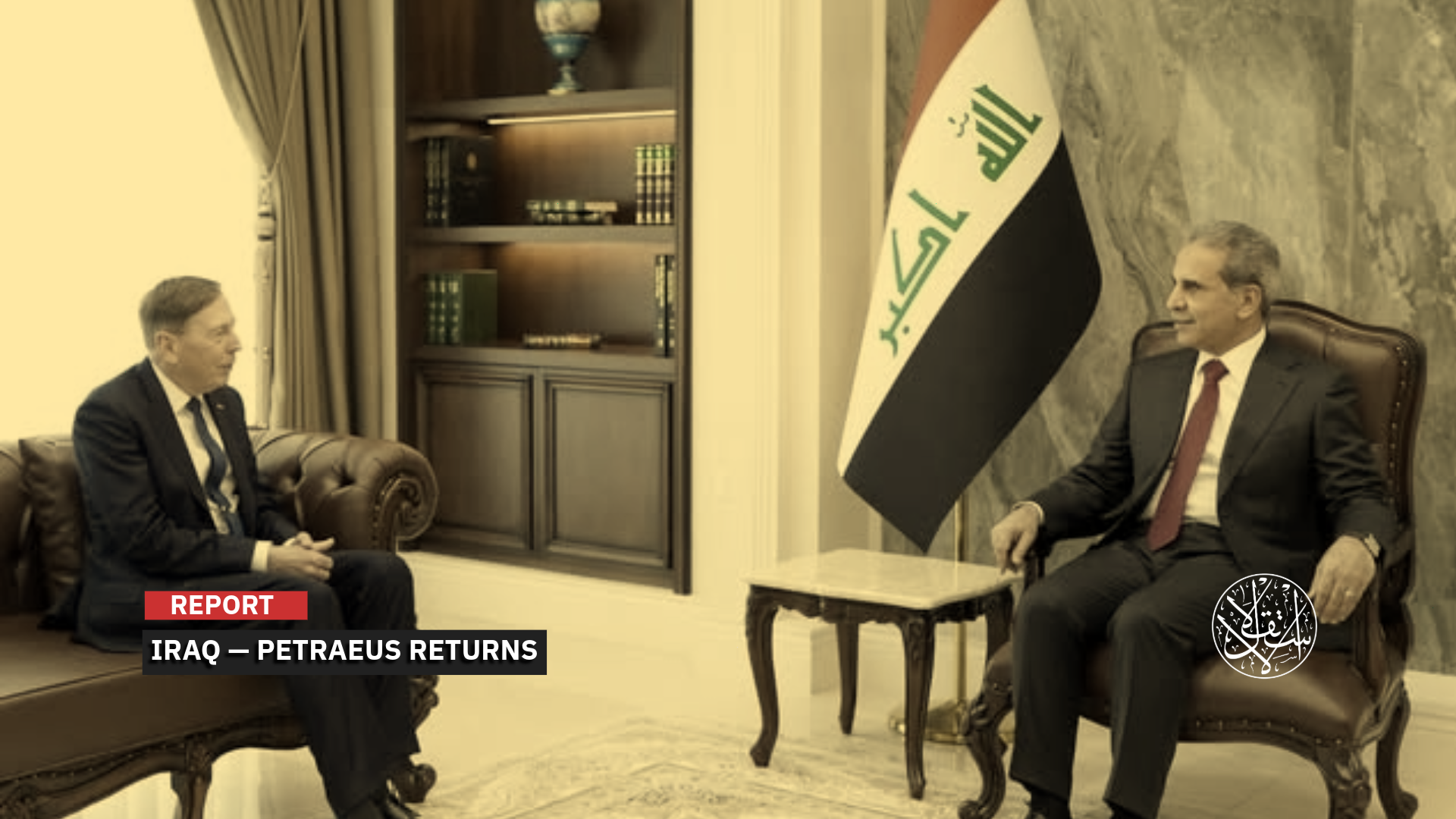
Al-Hilali said that Petraeus serves as an adviser to al-Zaidi on restructuring Iraq’s security file.
With the formation of Ali al-Zaidi’s government in Iraq, the name of retired U.S. general David Petraeus has resurfaced with unusual prominence amid American pressure to exclude Iran-aligned armed factions from the cabinet unveiled on May 13, 2026.
Petraeus’s return to the Iraqi political conversation has raised questions about his current status and the role he may be playing in a country where he once commanded U.S. forces at the height of the U.S. war, before the American withdrawal in December 2011.
‘A Security Role’
According to information revealed by Iraqi political actors, retired U.S. general David Petraeus was in Baghdad days before the announcement of the new government, where he was engaged in security-related discussions and in applying American pressure on political factions to keep armed groups out of the cabinet.
A’id Al-Hilali, an adviser to former Iraqi Prime Minister Mohammed Shia’ al-Sudani, said Petraeus’s mission is “purely security-focused,” centered on designing a new security ministry that would absorb several armed formations.
In a televised interview on May 13, al-Hilali said the proposed new ministry would include the Popular Mobilization Forces (PMF), the Federal Police, border forces, and some tribal “Sahwa” units, all reorganized under the label of directorates.
He added that Petraeus is currently working on this broader restructuring of Iraq’s security architecture and is expected to serve as a military adviser to Prime Minister Ali al-Zaidi, arguing that the prime minister lacks sufficient military and political experience—hence Petraeus’s sustained presence in Baghdad.
Al-Hilali stressed that the United States is heavily focused on the Iraqi file, seeking to pull it away from Iranian influence, while Iran, in turn, remains highly mobilized.
He also warned of the possibility of chaos, noting that al-Zaidi would struggle to dismantle or integrate the armed factions or to bring weapons fully under state control, while those same factions would resist such moves.
On May 16, a statement from Iraqi Parliament Speaker Haibet al-Halbousi confirmed he had met Petraeus in Baghdad to discuss Iraq’s overall situation as well as regional and international developments.
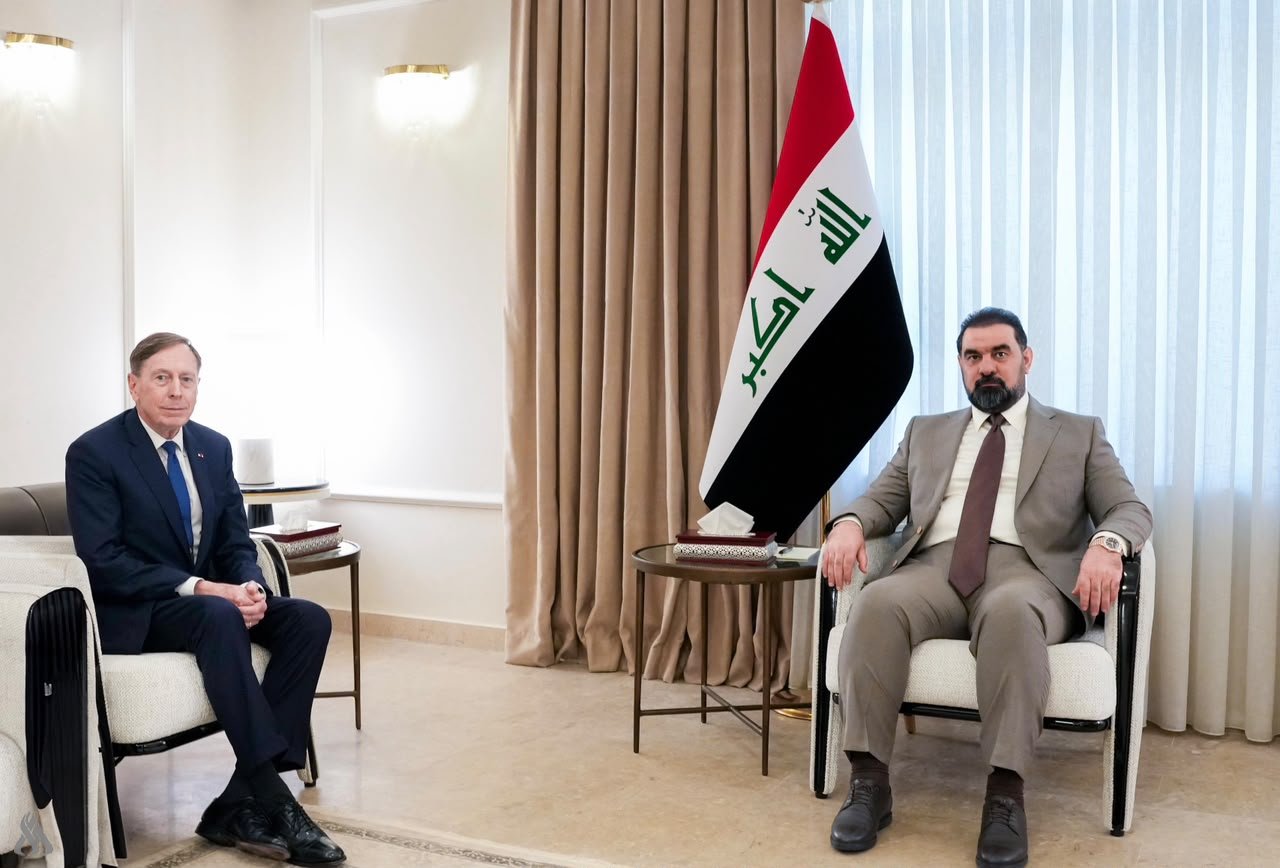
The same day, Chief Justice Faiq Zidan also received Petraeus, thanking him for his “past efforts” in Iraq during his military service, particularly in “counterterrorism and reconciliation efforts.”
Earlier reports had suggested Petraeus might be appointed as a new U.S. envoy to Iraq following the dismissal of former envoy Mark Savaya and the assignment of Tom Barrack to oversee the Iraq portfolio from Ankara.
However, Iraq’s al-Sharqiya TV cited unnamed U.S. sources on May 7, denying that Petraeus had been appointed envoy, stating that he is currently focused on research and academic work and frequently participates in seminars and policy forums on the Middle East, particularly Iraq.
Security Restructuring
Regarding Petraeus’s true mission, Iraqi political analyst Asim al-Fayez said that David Petraeus’s understanding of Iraq’s security landscape aligns with the approach of U.S. President Donald Trump, who, he said, seeks an Iraq free of armed factions and non-state actors.
Speaking to Al Estiklal, al-Fayez said Trump is fully aware that many of these groups have expanded beyond their security and military roles to become economic power centers in Iraq, using their arms and influence to strengthen their legislative and political presence—something he described as a growing threat to U.S. interests.
“Petraeus’s presence confirms what is already evident: the United States has no intention of leaving Iraq, having learned that its withdrawal created space for expanded Iranian influence, which Washington rejects.”
“Iran has demonstrated during its confrontation with the United States a willingness to undermine American presence in the region, not only through diplomacy but also through intimidation tactics, including pressure on Gulf states,” he added.
“Iran is actively seeking to expand Chinese influence in Iraq, which represents another strategic challenge for the United States,” according to the researcher.
Al-Fayez stressed that Petraeus is working to reshape Iraq’s security architecture, particularly after comments by Iranian Quds Force commander Esmail Qaani, who reportedly described dismantling armed factions as a red line for Tehran following his recent visit to Baghdad.
“Some forces within the Coordination Framework occasionally express openness to dissolving armed groups but are waiting for the right timing, potentially after Trump leaves office.”
“The United States has a broader project to restore Iraq’s democratic trajectory in the post-2003 era—one that extends beyond Trump and could possibly be pursued by two or even three U.S. presidents,” al-Fayez added.
Political analyst Ramadan Albadran said the issue of armed factions in Iraq has become too complex to be resolved through quick decisions or unilateral measures after years of their deep entrenchment within the country’s security, political, and economic structures.
Albadran added that while al-Zaidi may lead this process, he cannot do so alone, as it requires dialogue, coordination, and gradual dismantling to avoid backlash that could push the country into a new phase of instability, according to al-Aalem al-Jadeed newspaper on May 17.
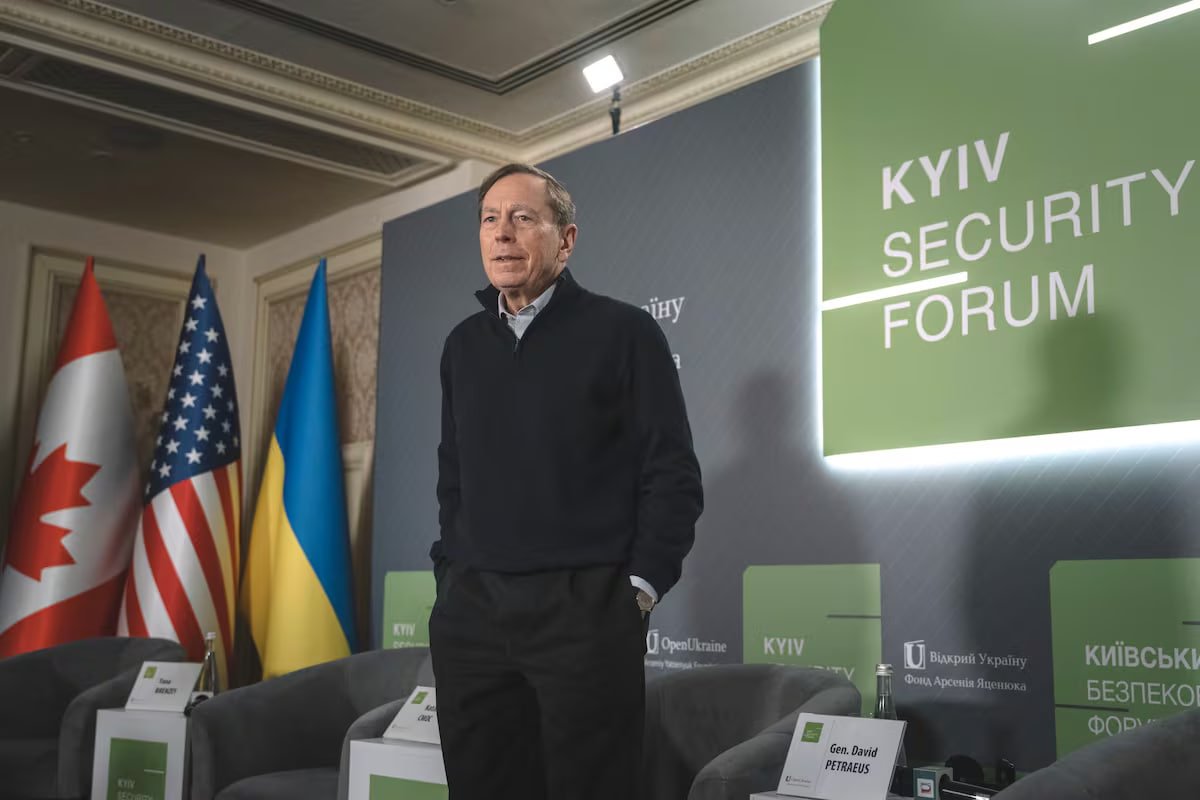
The War General
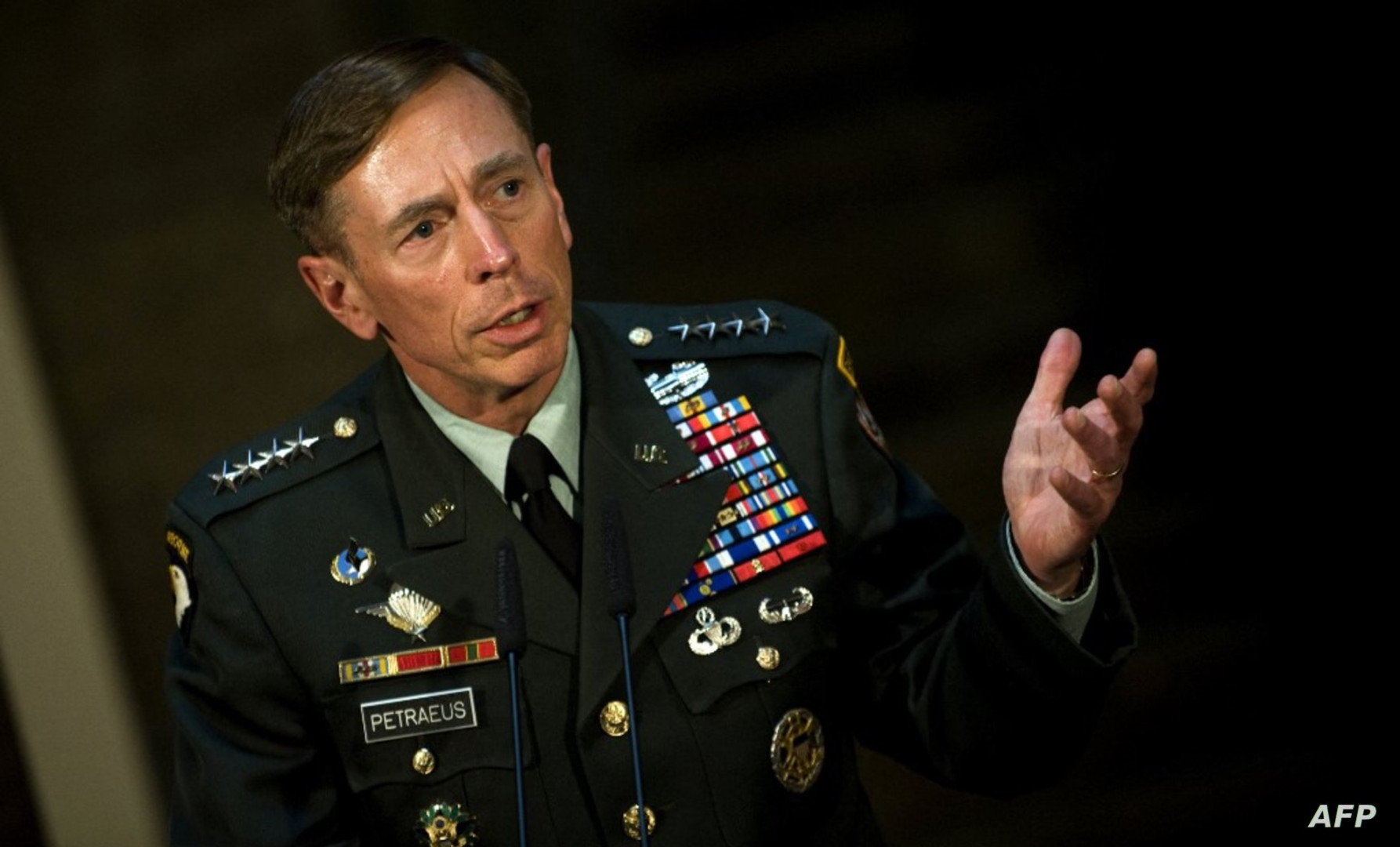
David Petraeus, 74, was born in New York to a family of Dutch descent and is regarded as one of the most prominent American military commanders of his generation, having served in wars in Bosnia; Iraq—where he led multinational forces—and later Afghanistan.
A PhD holder in international relations from Princeton University, Petraeus also worked as an assistant professor at the U.S. Military Academy, alongside a long military career that began in 1983 after graduating as an officer from the U.S. Army Command and General Staff College.
He served as deputy chief of staff and deputy commander of NATO forces in Bosnia and Herzegovina, and later commanded the 101st Airborne Division, which entered Baghdad after the fall of Saddam Hussein in 2003, before taking charge of the Mosul region in 2004.
In January 2007, he was appointed commander of multinational forces in Iraq, replacing General George Casey.
He was later selected by former U.S. President George W. Bush in April 2008 to oversee American military operations in the Middle East and Central Asia, succeeding Admiral William Fallon.
At the time, he presented a report to the U.S. Congress assessing the situation in Iraq, arguing that an early withdrawal of U.S. forces would lead to catastrophic consequences for internal security. He instead proposed a phased drawdown, initially recommending the withdrawal of 4,000 troops.
Petraeus also argued that political progress in Iraq depended on achieving sufficient security conditions.
He is widely credited with helping establish the “Sahwa al-Iraq,” local Sunni tribal and insurgent groups first formed in Anbar Province to fight al-Qaeda, later expanding into Diyala, Nineveh, Saladin, and Kirkuk.
By the end of 2006, funding for these groups under Petraeus had reached roughly $200 million in salaries, grants, and support projects.
The “Sahwa” ultimately led to the fragmentation of Sunni insurgent factions, which were later disarmed under a decision by former Prime Minister Nouri al-Maliki (2006–2014).
In July 2010, Petraeus took command of ISAF, the NATO-led force in Afghanistan, overseeing the deployment of an additional 30,000 U.S. troops to counter escalating Taliban operations.
After retiring from the U.S. Army on August 31, 2011, he was appointed director of the Central Intelligence Agency (CIA), succeeding Leon Panetta, who became Secretary of Defense.
In December 2012, David Petraeus resigned after admitting to a sexual affair outside marriage, which investigations later revealed was with Paula Broadwell, an activist involved in organizations supporting military causes and military families in Florida, who was known to be close to him and his family.