From Camp David to Early Warning Systems: Why Egyptian Moves Are Raising Alarm in Israeli Occupation
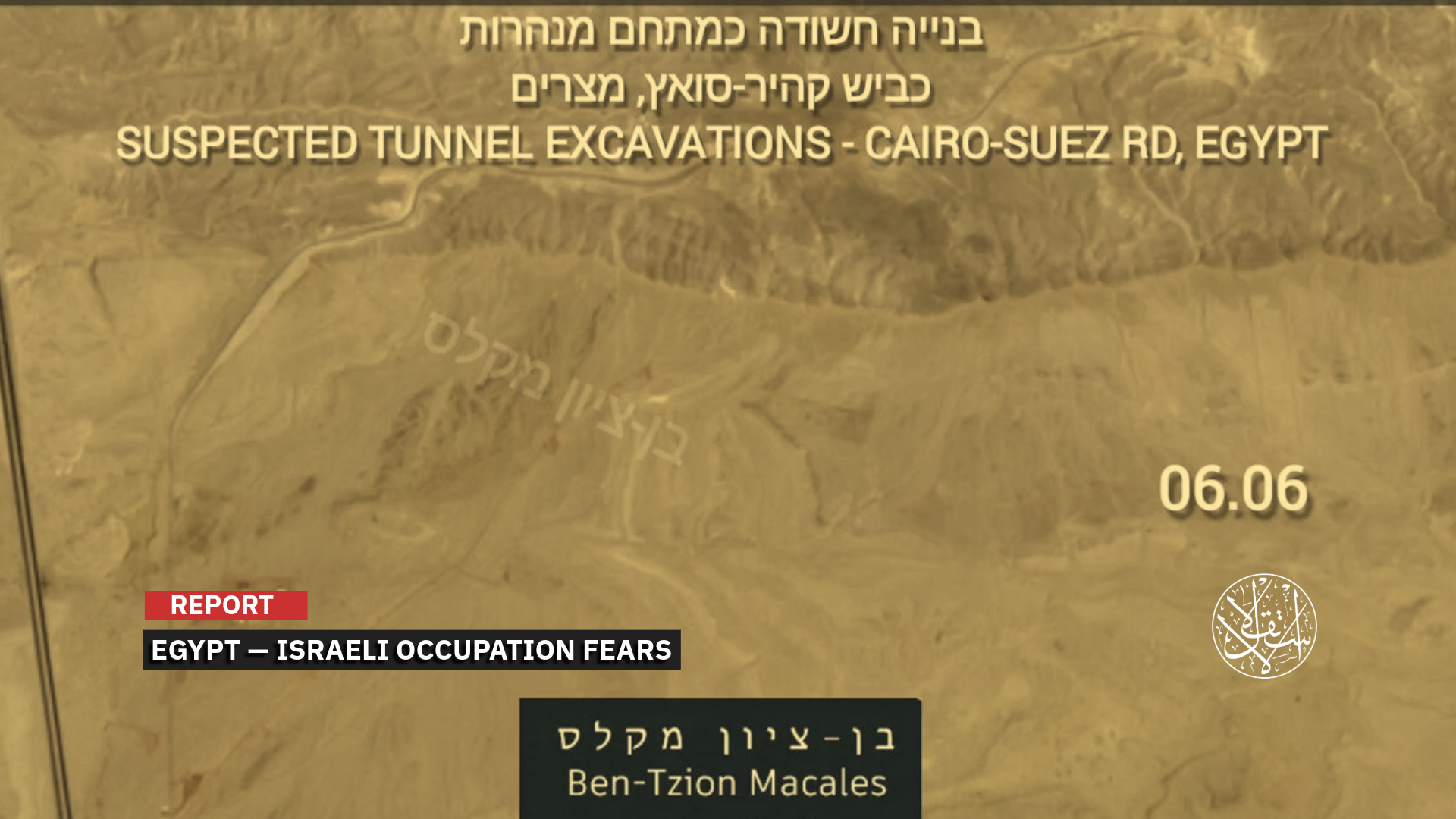
Macales’s posts surfaced amid a rising Israeli discourse portraying Egypt’s military presence in Sinai as steadily expanding.
What Israeli satellite imagery analyst Ben Tzion Macales published on May 11, 2026, was not merely a passing technical observation on a niche channel.
Using satellite images, coordinates, and visual analysis, he drew attention to two Egyptian sites: an underground complex under construction east of Cairo near the Cairo-Suez road and el-Gorah Airport in northern Sinai, roughly 14 kilometers west of the Egyptian border with the Israeli Occupation.
In the first post, Macales pointed to the underground facility’s proximity to a “Rezonans-NE” radar system that he said Egypt had installed between 2019 and 2020, raising questions about a possible connection between the two locations. He also noted that roads leading to the tunnel entrances had been newly paved.
In the second, he described what he called unusual activity inside el-Gorah Airport, including land leveling operations and the resurfacing of an abandoned runway, while noting that part of the base is used by the Multinational Force and Observers (MFO) tasked with monitoring the Egyptian-Israeli “peace” treaty.
At first glance, the information appeared to fall squarely within the world of open source intelligence, where civilian analysts use commercial satellite imagery to track military developments.
But the significance of these posts lies not only in the images themselves but also in the political atmosphere surrounding them.
Macales’s publications came more than a year after a growing wave of Israeli political and media rhetoric warning about the “expansion” of Egypt’s military presence in Sinai, alongside accusations that Cairo is violating the security arrangements of the “peace” treaty and calls for Washington to pressure Egypt.
At that point, the satellite image ceases to be merely visual evidence. It becomes part of a broader process that begins with public surveillance, moves through security interpretation, and then media amplification before ultimately turning into a political issue inside “Israel” and the United States.

Where the Danger Lies
What Macales’s posts reveal is not simply that “Israel” is watching Egypt. States have always monitored one another, especially two countries that fought major wars before signing a peace treaty whose security arrangements remain exceptionally sensitive.
What has changed is that part of this surveillance has moved from closed intelligence circles into the public sphere through analysts’ accounts, open-source intelligence (OSINT) platforms, and security-oriented media outlets, turning Egyptian military activity into material for political interpretation and public debate.
In a post on X, Egyptian researcher Abdelrahman Ayyash noted that Macales did not definitively claim a functional link between the underground complex east of Cairo and the Russian radar system nearby. Instead, he framed the issue in a way that opened the door to security speculation.
The same pattern appeared in his discussion of el-Gorah Airport. Macales did not describe the construction work as a direct threat but emphasized its unusual nature, timing, and proximity to the Israeli Occupation border.
Ayyash argued that Macales operates as what he described as “an open source intelligence arm working in broad daylight,” publishing findings that are later cited by Western media outlets and research centers.
Once these suspicions enter an already tense Israeli political climate shaped by the war on Gaza, Ayyash said, they stop being technical observations and become part of a broader narrative portraying Egypt as steadily expanding its military infrastructure and capabilities. He added that the Israeli Occupation understands that Egypt is different from other arenas in the region, which is why there is growing attention to monitoring its movements and military capabilities. That is where the real sensitivity lies.
The issue is no longer simply that an Israeli analyst is tracking Egyptian facilities. It is that a political and media environment already exists that may be prepared to interpret such observations as further evidence of a strategic shift in the regional balance.
In that sense, Macales’s posts are less important as definitive proof than as a window into how visual information travels from an open platform into wider security and political discourse.
‘Serious Violations’
The controversy over Egypt’s military movements did not begin with Macales’s posts. Long before that, the issue had already reached the official level inside “Israel” through diplomatic statements and media reports accusing Cairo of breaching the security arrangements of the “peace” treaty and calling for the matter to be raised with Washington.
In February 2025, Yedioth Ahronoth quoted “Israel’s” ambassador to the United States, Yechiel Leiter, accusing Egypt of committing “serious violations” of the “peace” agreement.
Speaking during a meeting with Jewish organizations, Leiter said, “There are bases being built, and they can only be used for offensive operations and offensive weapons.”
“This is a clear violation. For a long time, this issue has been shoved to the side, but it continues. This is an issue that we are going to put on the table, very soon and very emphatically.”
Notably, the newspaper reported that the video containing his remarks was deleted shortly after publication, describing it as the first time an Israeli official had raised the issue so publicly and explicitly.
Days later, Israel Hayom reported that senior Israeli officials had contacted Cairo regarding what the paper described as “serious violations” of the “peace” treaty’s terms, citing what it said was an Egyptian military buildup in Sinai exceeding agreed limits. According to the report, Egypt proposed U.S. mediation to ease tensions between the two sides.
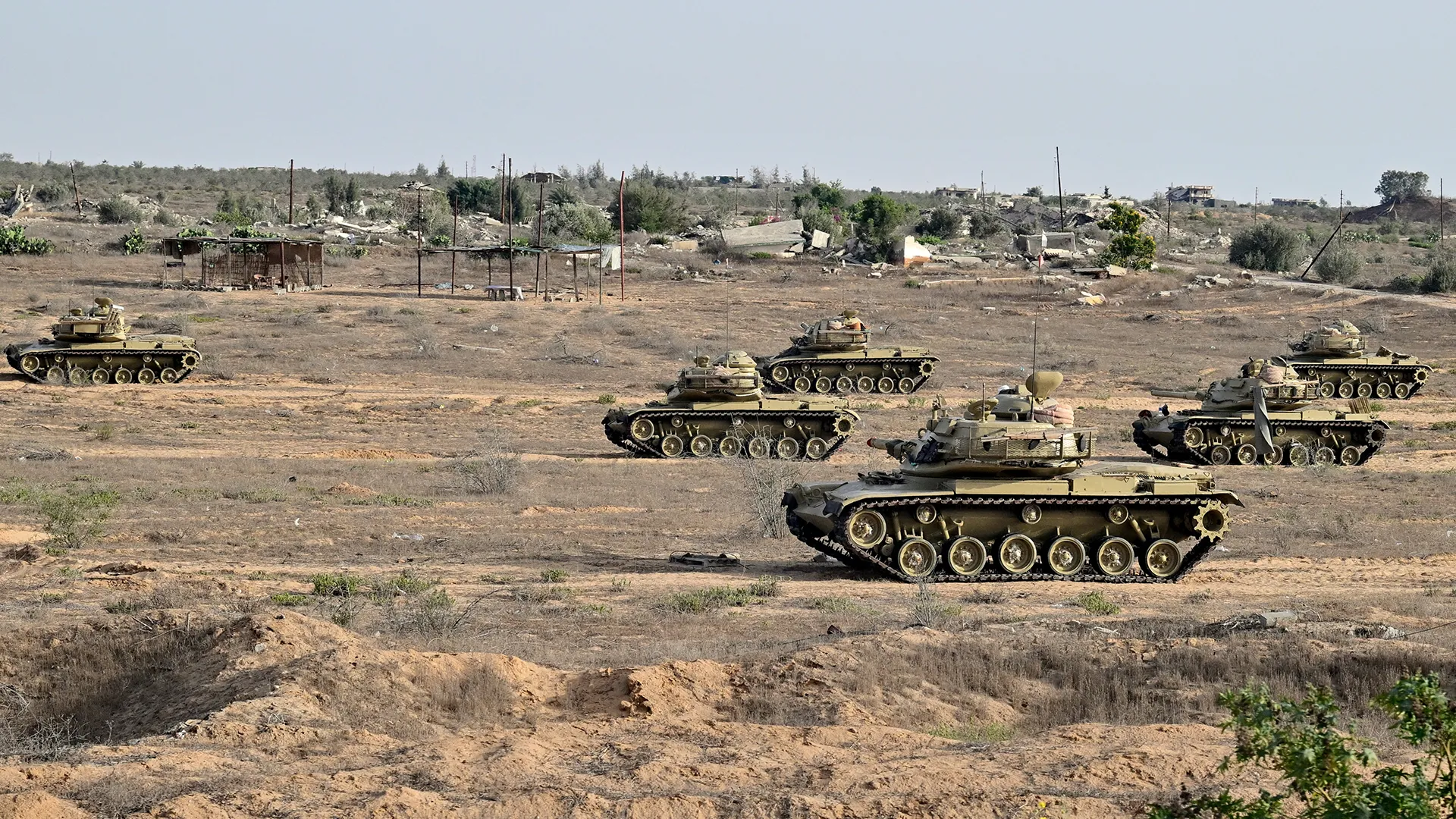
In March 2025, The Jerusalem Post quoted an Israeli security source as saying that “Israel” had detected Egyptian military reinforcements in Sinai, including troop deployments exceeding permitted quotas, alongside the expansion of port facilities and the extension of airport runways.
The source said “Israel would not accept the situation and would not tolerate violations from Cairo,” adding that Washington bears responsibility as the principal guarantor of the “peace” agreement.
Taken together, these developments show that the issue has moved well beyond satellite image analysis or the posts of individual observers. It has become a political and security file actively pursued through Israeli diplomacy, with the United States increasingly drawn in as the chief guarantor of the Egyptian-Israeli “peace” treaty.
In that context, the work of analysts and open-source observers is no longer treated merely as a technical interpretation of military activity. Their findings are increasingly folded into a broader security and political narrative surrounding Egypt’s military presence in Sinai and its potential implications for the post-Camp David order.
The October 7 Obsession
It is impossible to fully understand “Israel’s” escalating rhetoric toward Egyptian military activity without considering the deep psychological impact of Operation al-Aqsa Flood on its security mindset.
Following the intelligence failure to anticipate “the attack” on October 7, 2023, Israeli political, security, and media institutions have become far more inclined to treat any nearby military activity as a potential early warning signal—even when no direct threat is evident.
Since then, Israeli interpretation has no longer been based solely on observable facts on the ground. It has increasingly been shaped by a fixation on avoiding another “strategic surprise,” reinforcing a tendency to closely monitor military developments in neighboring countries, particularly Egypt, and to reinterpret them through a more sensitive and preemptive security lens.
This logic was clearly reflected in remarks by “Israel’s” ambassador to the United Nations, Danny Danon, who asked in a Hebrew-language interview why Egypt would need so many submarines and tanks if it were not facing threats along its borders.
He added that what happened after October 7 should serve as a warning siren, arguing that “Israel” had learned its lesson and must closely monitor developments and prepare for every scenario.
These comments were highlighted by the Hebrew newspaper Makor Rishon, which is aligned with the religious nationalist right, in a February 22, 2025, article by analyst Hagai Segal. He argued that this framing adds a psychological and political layer to Israeli discourse: the issue is not only what Egypt is doing in Sinai but also what “Israel” fears it failed to understand in advance.
Segal explained that the “post-Gaza logic” is now being projected onto Sinai through a simple principle: do not wait for buildup to become surprise—monitor early, apply pressure early, and shape the political file before reality becomes irreversible.
But this approach faces a clear interpretive and political problem. It overlooks the fact that much of Egypt’s military presence in Sinai has taken place in the context of counterterrorism operations and with prior Israeli approval under arrangements that allowed deviations from the numerical limits set in the security annex of the “peace” treaty.
A December 2025 report by the Israeli Institute for National Security Studies (INSS) acknowledged a clear paradox: measures that “Israel” once accepted or facilitated during “the fight against terrorism” are now being reinterpreted in parts of Israeli discourse as indicators of a potential Egyptian threat.
The report noted that the shift is not in the physical reality alone but in how that reality is politically read.
Even within right-leaning Israeli media, the tone has grown sharper. In April 2026, The Jerusalem Post published a report on Egyptian live-fire exercises near the border.
While the drills were technically conducted with Israeli Occupation military approval, the paper said they raised concerns among residents in southern “Israel,” with some linking them to warning signs they associate with the events preceding Operation al-Aqsa Flood.
The report also connected the exercises to what it described as an accelerating Egyptian military buildup in Sinai, including additional forces, tanks, and air defense systems, suggesting that some Israeli circles now view these developments as a gradual erosion of the Camp David framework.
In another opinion piece, the same newspaper portrayed Egyptian-Israeli “peace” as increasingly under strain due to three main factors: cross-border arms smuggling, Egyptian military reinforcements in Sinai, and growing anti-”Israel” public sentiment in Egypt amid the war on Gaza.
Significantly, the article framed the issue not only as a bilateral dispute between Cairo and “Tel Aviv” but also as a strategic concern for the United States as well, urging Washington to step in to preserve the “peace” agreement and prevent its gradual erosion.
Within this evolving context, Egyptian military activity is no longer interpreted by some Israeli circles as isolated security arrangements tied to Sinai alone. Instead, it has become part of a broader post-October 7 narrative—one in which any military development is flagged early, before it can once again become an unexpected strategic shock.
A New Frontline
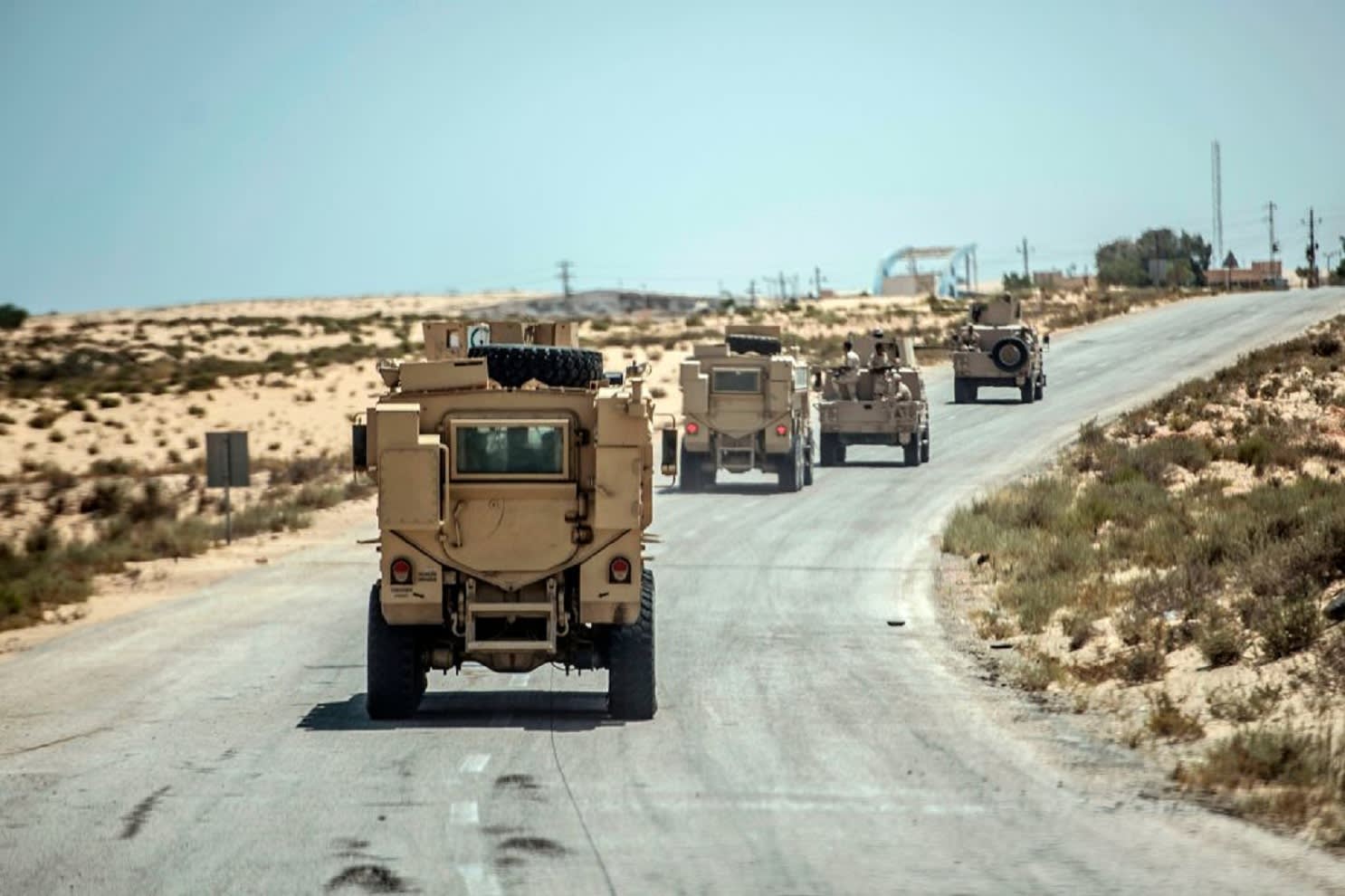
Egyptian political researcher Aamir Hassan, of the Institute of Arab Research and Studies (IARS), told Al-Estiklal that current Israeli rhetoric does not openly suggest that war with Egypt is imminent. Instead, he said, it operates on a more dangerous level: building a psychological and political readiness inside Israeli society to view Egypt as a potential future front line.
“There is a clear difference,” Hassan said, “between the language used by Israeli security research institutions such as the Institute for National Security Studies and the discourse of the political and media far-right.”
According to Hassan, the institute is not talking about war. Rather, it focuses on how to manage disagreements within the framework of the “peace” treaty, proposing updates to security arrangements and stronger mechanisms for trust building and border coordination, particularly around the Philadelphi Corridor and the Gaza-Sinai crossings.
The Israeli right, however, approaches the issue very differently.
“It seeks to turn every Egyptian military move, whether it is a new road, a military facility, exercises, radar deployments, or underground construction, into part of a broader narrative about a growing Egyptian threat,” Hassan said.
“Israel understands that Sinai today is no longer what it was in the aftermath of the Camp David Accords.”
“Egypt,” he noted, “has spent years fighting armed groups in northern Sinai, while the war on Gaza has reshaped Cairo’s view of its eastern border as a matter of national security and sovereignty, particularly amid fears of displacement and regional instability that Egypt believes Israel is attempting to push toward its borders.”
“In that context, it is natural for Cairo to develop its military and logistical infrastructure in and around Sinai,” Hassan said. “But Israel views these steps through a different lens, because any Egyptian military buildup east of the canal is seen as narrowing Israel’s strategic margin of superiority and placing greater limits on its freedom of movement in any future crisis.”
Hassan argued that the most striking feature of the current moment is that satellite imagery and open-source intelligence analysis published by figures such as Ben Zion Macales are no longer treated as purely technical material.
“They have become part of a political and media environment that is reconstructing the idea of an Egyptian threat inside Israel,” he said, “by presenting every military facility or movement as evidence that can later be politically and militarily mobilized.”