Ultra–Orthodox Jews Bring Down Netanyahu: Who Wins the Battle Between the State of Torah and the State of War?
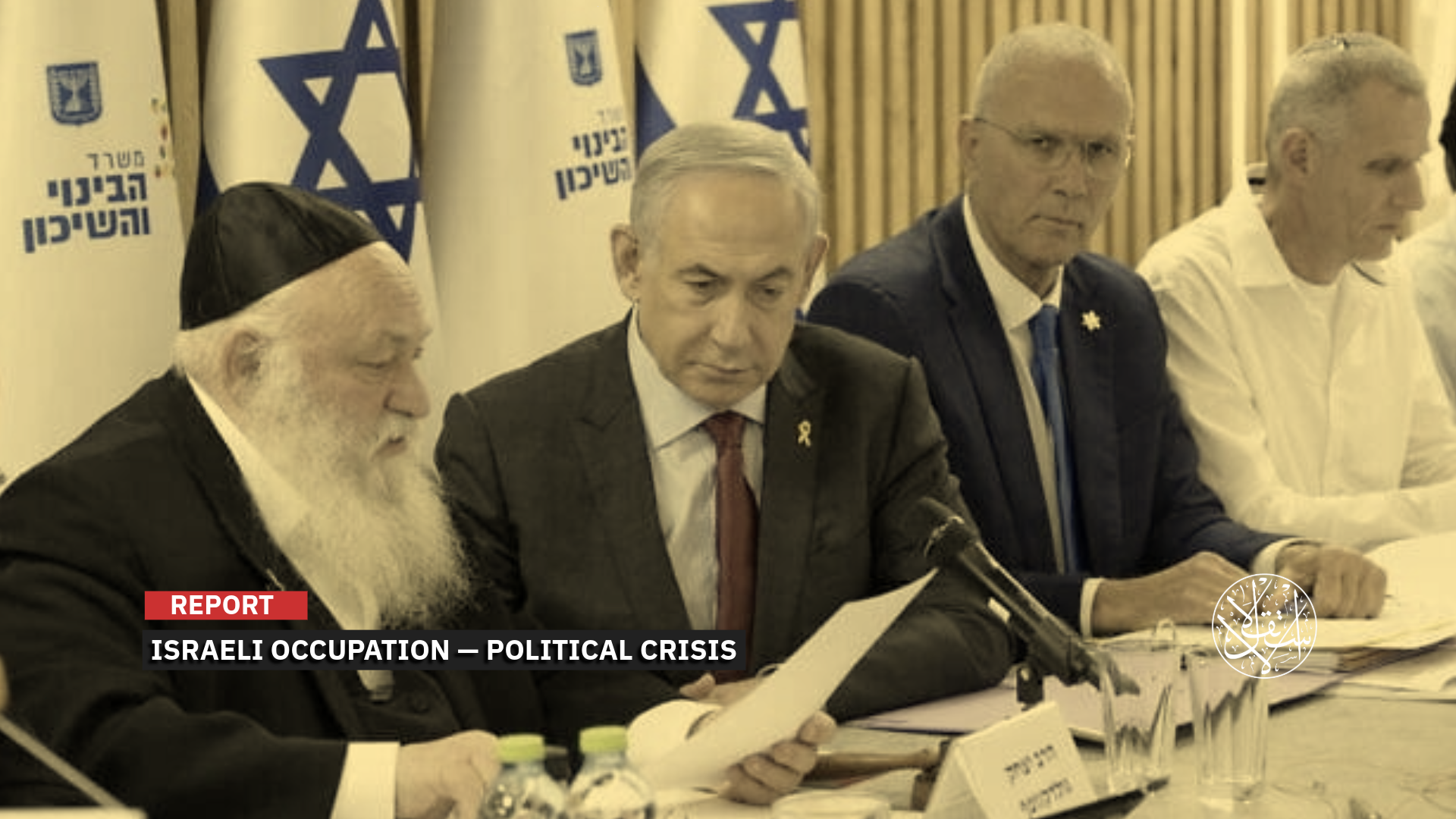
Netanyahu is seeking to move the election date away from October, a month in Israeli memory closely associated with Operation al-Aqsa Flood.
Echoing a biblical Samson-like logic of “I will bring down everything, and let catastrophe fall upon me and my enemies,” Israeli Prime Minister Benjamin Netanyahu appears to be dismantling his own government by pushing for the dissolution of the Knesset and moving toward early parliamentary elections within 90 days instead of the scheduled date of October 2026.
Netanyahu’s decision to bring down his government comes after a break with ultra-Orthodox Jewish factions, the Haredim, who turned against him despite the benefits he had secured for them, most notably shielding their communities from mandatory military service.
Their withdrawal of support followed his refusal to pass legislation granting them a permanent exemption, under pressure from the military establishment, prompting a political rupture with a key coalition pillar.
Yet the move toward dissolving the Knesset and advancing elections is not driven solely by domestic tensions. It is also shaped by external calculations, including what is seen as Netanyahu’s failure to achieve the goal of toppling the Iranian government through military aggression conducted in coordination with the United States, a result he had hoped to present as an electoral achievement.
Another factor is his desire to distance the election date from October, a month etched in Israeli memory by Operation al-Aqsa Flood, widely viewed as a political and security failure for his government against Palestinian resistance fighters, amid fears that invoking this date could negatively affect his electoral prospects.
The dispute over Haredi conscription exemptions is not new, having been frozen for years. But mounting pressure from ultra-Orthodox party leaders and Netanyahu’s message that he cannot currently advance a permanent exemption law due to a lack of parliamentary majority within his coalition accelerated the escalation.
The crisis deepened as Haredi parties threatened to introduce a bill to dissolve the Knesset and trigger early elections, placing Netanyahu in an awkward position, especially given that these same parties have long benefited from his political protection while remaining essential to his governing majority.
When the Haredi Degel HaTorah party announced its intention to submit a dissolution bill over the failure to pass conscription legislation, Netanyahu moved to take control of the process himself, seeking to preempt the opposition and prevent it from claiming political momentum.
In the end, his Likud party submitted an official request to dissolve the Knesset in coordination with coalition partners, paving the way for early elections after negotiations with Haredi factions collapsed over military service exemptions.

A Profound Rift
Israeli analysts say the clash between ultra-Orthodox Jewish factions, the Haredim, and Netanyahu this time goes far beyond a political dispute, exposing a deeper structural contradiction within the Zionist project between a militarized state that relies on soldiers for prolonged war and a religious, Torah-centered camp seeking to preserve its financial and political privileges while remaining exempt from military service.
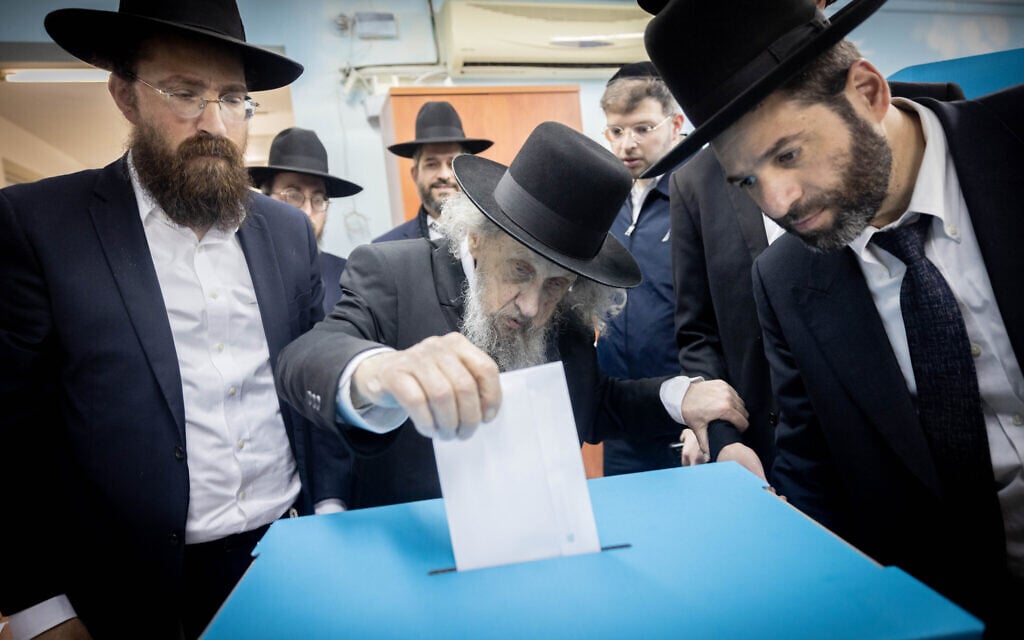
The Israeli Occupation army is pushing to recruit young Haredim to address manpower shortages, while ultra-Orthodox leaders view conscription as a threat to their religious identity, insisting that Torah study alone provides spiritual protection for “Israel.” Their withdrawal of support for Netanyahu stems from his refusal to enshrine their exemption in law.
Netanyahu now finds himself trapped between preserving his coalition and sustaining the war effort. Conceding to the Haredim risks alienating the military establishment and broader public opinion, while enforcing conscription could collapse his government, turning “Israel’s” political crisis into a struggle between a state of Torah and a state of war.
A senior source in the Haredi parties said in an interview on Kan News Radio Bet that “we clearly understood that Netanyahu does not intend to pass the draft law in this session. Therefore, there is no reason for us to commit political suicide for him during an election period. Everyone for themselves.”
Netanyahu, meanwhile, appears to be counting on the Haredi vote, assuming they have no real alternative beyond aligning with centrist opposition parties, which support conscription and would block any blanket exemption law, while ultra-Orthodox voters fear losing their base if they align with secular rivals, according to the Times of Israel.
Israeli assessments suggest the Haredim now find themselves in a political deadlock after breaking with Netanyahu, as his right-wing coalition had been the only political framework willing to accommodate their religious demands, a balance now disrupted by wartime manpower needs and the demands of the military state.
At the same time, leading rabbis and yeshiva students are reportedly grappling with uncertainty after losing their legal cover following the split amid fears of potential arrest over draft evasion accusations.
Despite the political rupture, the ultra-Orthodox street remains broadly loyal to Netanyahu and deeply hostile to the secular left and its approach to religion and state relations, including the judiciary, which they associate with parties such as Meretz and Labor, and which they see as part of the secular establishment.
They argue that Netanyahu has delayed and failed to fulfill his commitments, particularly the terms of the coalition agreement signed three and a half years ago.
They now see a need to seek new partners in the center and left, whom they believe may grant them any law they demand in exchange for toppling Netanyahu and taking power, according to Rabbi Landau, possibly in the hope of securing guarantees from the Bennett–Lapid–Eisenkot alliance on exemptions.
However, senior Haredi figures say that a centrist victory would instead lead them to negotiate specific arrangements with a new government, particularly on budgetary issues, without entering into full coalition cooperation.
The Core of the Crisis
But the dispute over conscripting or exempting the Haredim is not the real core of the crisis. What ultimately brought down Netanyahu’s government was the wars themselves and the Zionist military state’s growing need for human fuel for the war machine from the Haredim, whose population is estimated at around one million.
The Israeli Occupation army says it needs at least 10,000 Haredi recruits, yet only around 3,000 have been enlisted, while the rest refuse on religious grounds.
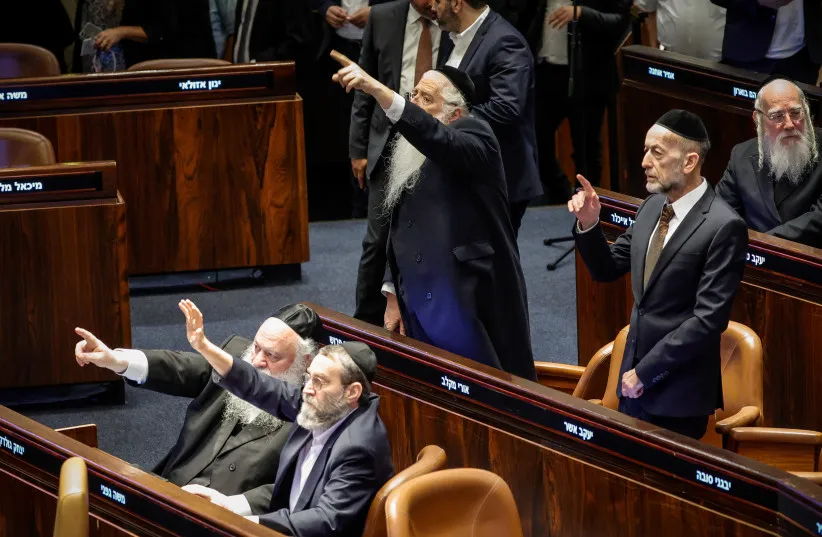
Ultra-Orthodox political leaders, particularly within the Agudat Yisrael faction of the Hasidic community, have remained unmoved by the multi-front war, holding firmly to their position and continuing to demand full exemption from compulsory military service.
As a result, the war has become a political bomb inside the governing coalition, bringing the long-delayed issue of Haredi conscription back to the surface after years of Netanyahu’s attempts to avoid confronting the army’s demands in order to preserve their political support.
The Israeli genocide in Gaza, and its subsequent spillover into Lebanon and Iran, reignited this postponed crisis, placing Netanyahu in an impossible position between granting exemptions and risking the loss of his right-wing, militarized base or rejecting Haredi demands and collapsing his coalition.
Over the years, Netanyahu had offered the Haredim various concessions, including funding for religious schools, political influence, and protection from conscription. But his failure to pass a formal exemption law, blocked by military opposition, ultimately led to their withdrawal of support and their decision to move against his government.
His move to dissolve the Knesset and call early elections came after mounting pressure from the military establishment, which warns of severe manpower exhaustion, as well as from secular Israelis and reserve soldiers who increasingly feel they are bearing the burden of the war alone.
Israeli and Western analyses argue that the Haredi issue is not the sole reason behind the potential dissolution of parliament. Rather, the prolonged war, military strain, post-October 7 governance failures, and deep internal divisions form the broader backdrop, with the conscription dispute acting as the catalyst that exposed these contradictions, according to the Associated Press.
The war itself is the underlying driver of the crisis. The Israeli Occupation military is facing a severe manpower shortage due to prolonged wars, with reserve forces nearing exhaustion, turning the issue of Haredi conscription into a political flashpoint, according to The Times of Israel.
The crisis is not merely legislative but tied to demands for equal burden sharing during wartime and rising public anger over the refusal of the Haredim to serve in what is widely framed as an existential war, amid an uneven distribution of security responsibilities, according to the Israel Democracy Institute.
The war has radically reshaped Israeli public sentiment, intensifying demands to conscript the Haredim as the Israeli military faces mounting human and military exhaustion from its wars on multiple fronts and continues to call for more troops.
Why Bring Elections Forward?
Netanyahu’s push to dissolve the Knesset and move toward early elections is not driven solely by the conscription crisis. Analysts say it is also shaped by his reluctance to hold elections in October, a month he reportedly views as politically ominous due to its association with Operation al-Aqsa Flood, as reported by Israeli media.
He is said to understand that the failure of October 7 is widely seen in the Israeli Occupation as the most catastrophic intelligence and security failure in the country’s history and that facing voters during its anniversary could prove politically damaging. As a result, he would prefer to hold elections earlier, possibly in September, which coincides with “Israel’s” major holiday season.
“Israel’s” public broadcaster Kan 11 reported on May 13, 2026, that Netanyahu has come to favor advancing the election date to September in order to avoid holding it in October alongside the third anniversary of the “October 7, 2023 attack.”
A political source quoted by the channel said that Netanyahu’s greatest concern is an election held in October because of what he described as “the massacre of October 7,” which killed around 1,200 Israelis.
Many Israelis hold Netanyahu responsible for the security failure that “enabled Hamas to carry out the unprecedented attack,” in which resistance fighters entered “Israeli territory” and killed an estimated 1,200 soldiers and civilians.
At the same time, Netanyahu is also seeking to use his refusal to pass legislation exempting the Haredim from military service to present himself as a leader prioritizing the needs of “Israel’s” militarized state over religious demands, attempting to consolidate support across a broad political spectrum.
A Serious Bind
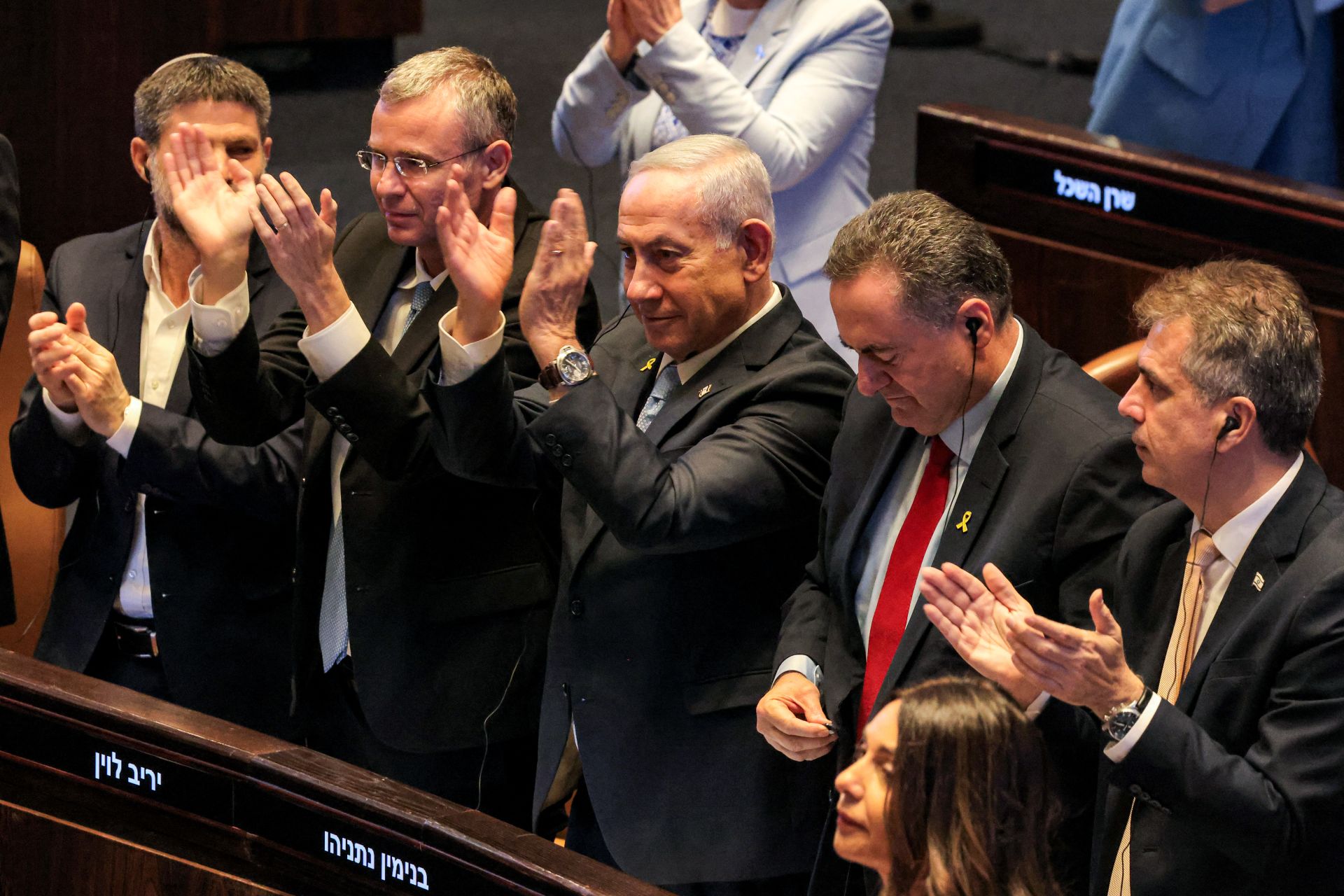
Netanyahu’s move toward early elections is far from a simple escape route. While he is betting that voters will reward him for what he presents as “military achievements” against Iran and Hezbollah, he is fully aware that the next election will be anything but an easy contest.
He is currently on trial for corruption and is under pressure to accept a settlement proposed by the Israeli president, which would require him to admit wrongdoing and step down and could result in either a pardon or imprisonment. He is also held politically responsible for failing to prevent Operation al-Aqsa Flood, an event that deeply shook Israeli Occupation society.
The upcoming electoral battle is expected to be highly fragmented, with multiple ideological camps of roughly similar weight, ranging from Netanyahu’s far-right bloc to the centrist right, national religious forces, and remnants of the Zionist left. Despite their differences, most are campaigning around a shared theme: saving “Israel” before it reaches its historically ill-fated eighth decade, which witnessed the downfall of two previous Jewish states.
Polls suggest a weakening of Netanyahu’s governing coalition, but the opposition still falls short of a comfortable majority capable of forming a stable government, particularly as it seeks to avoid reliance on Arab parties.
For Netanyahu, early elections therefore represent a serious risk. Victory is far from guaranteed, and defeat could end his rule while significantly narrowing his legal and political room for maneuver in his ongoing corruption case, according to The Jerusalem Post.
As long as he remains in office, he retains political leverage and institutional protection. Once out of power, the prospects of a negotiated settlement, pardon, or managed exit become far more difficult.
Netanyahu understands that the outcome of the next election will determine not only his political future but also his judicial fate. He is therefore balancing between continuing the fight to the end or seeking a legal arrangement that would allow him to leave politics under more favorable conditions.
Yedioth Ahronoth has suggested that Netanyahu may attempt to reignite war ahead of the vote, extending the aggression in order “to accumulate further political and military gains that could bolster his electoral standing.”
Avigdor Lieberman, leader of Yisrael Beiteinu, echoed these concerns on May 14, 2026, warning that Netanyahu might launch “a military operation” for electoral purposes after advancing the bill to dissolve the Knesset.
However, any decision to fully resume war depends on Netanyahu’s assessment of his electoral prospects. If he concludes that his chances of forming the next government are fading, he may prefer a controlled exit rather than a decisive electoral defeat.
Despite the heated rhetoric, much of the political competition remains within the broader Zionist spectrum. The opposition, including figures such as former Prime Minister Naftali Bennett, opposition leader Yair Lapid, and former Israeli Occupation Forces chief Gadi Eisenkot, is not seeking a radical shift in policy but rather a more disciplined form of governance weakened by Netanyahu’s rule and preventing the collapse of the Zionist state.
This means the election will not only determine who leads the government but also whether the Israeli Occupation can correct accumulated structural weaknesses or continue down a path of increasing centralization of power and politicization of state institutions amid growing tensions with the judiciary and the Supreme Court.
Current polling suggests a slight advantage for the opposition bloc, projected at around 59 to 60 seats. However, forming a government would likely require support from Arab parties, which are expected to win between 10 and 15 seats, or from Haredi parties holding around 29 seats.
The current governing coalition consists of Netanyahu’s Likud; far-right parties including the Religious Zionist Party, led by Finance Minister Bezalel Smotrich, and Otzma Yehudit, led by National Security Minister Itamar Ben-Gvir; alongside ultra-Orthodox parties Shas and United Torah Judaism, which later broke away from the coalition.
Despite their departure, the Haredi parties have continued to support legislation aimed at weakening the judiciary in response to Supreme Court rulings targeting draft evasion exemptions.
Netanyahu has now served more than 18 years as “Israel’s” prime minister, making him the longest-serving leader in the country’s history. He is once again seeking another term despite facing a long-running corruption trial.
Sources
- Lieberman: Netanyahu May Launch Military Operation for Electoral Purposes Alone [Arabic]
- Israel’s ruling coalition proposes early elections amid ultra-Orthodox anger at Netanyahu
- Ultra-Orthodox parties break with Netanyahu but know they have nowhere else to go
- Haredi parties may push elections as Netanyahu loses leverage - analysis
- Coalition Files Bill To Dissolve Knesset Amid Growing Rift Over Hareidi Draft Law
- Netanyahu’s coalition takes first step toward new elections in Israel
- Israel’s ruling coalition proposes early elections amid ultra-Orthodox anger at Netanyahu