The Hejaz–Istanbul Route: Does It Threaten the Future of Iraq’s Development Road?
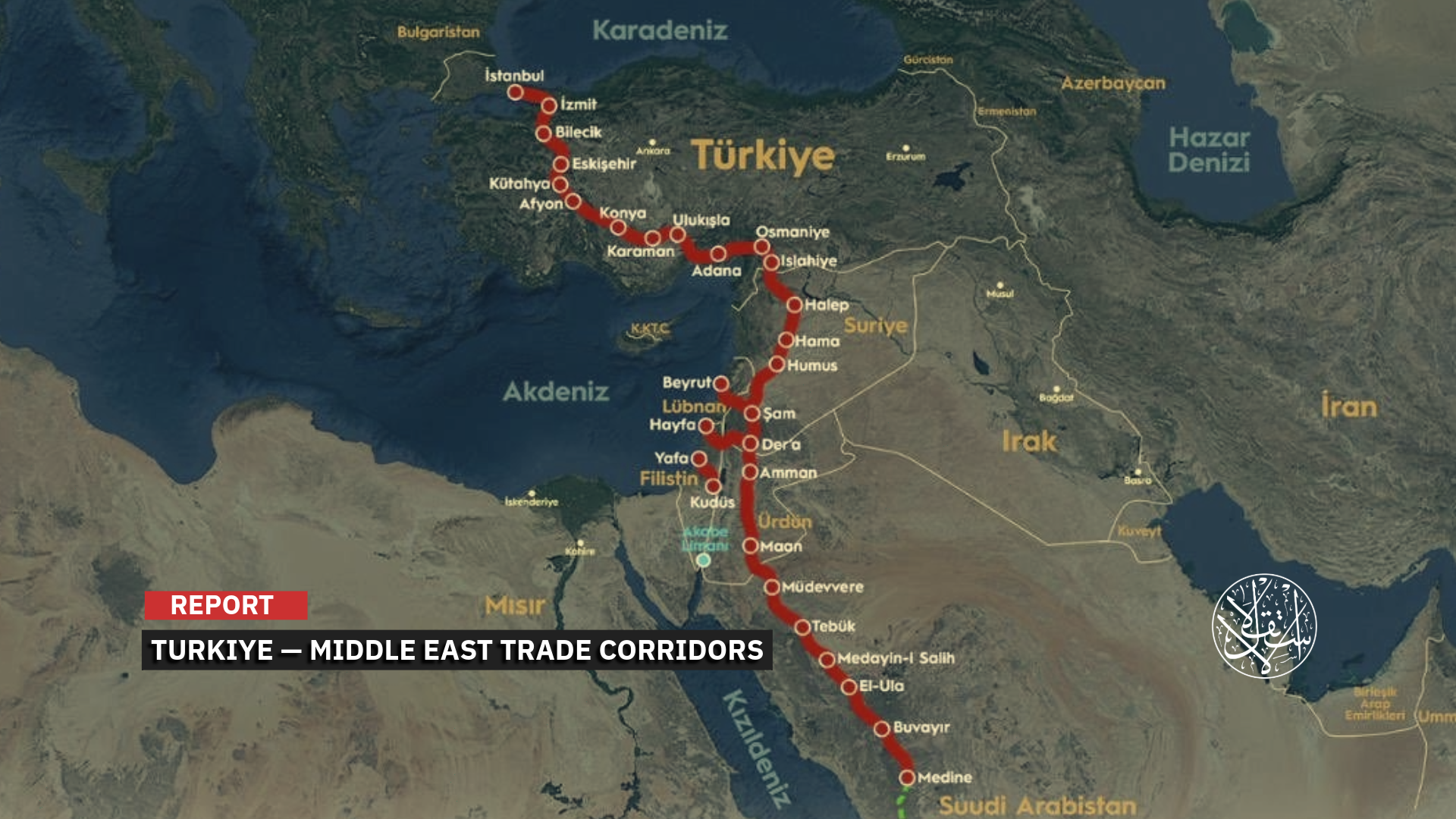
The project is expected to boost regional trade and strengthen sustainable land transportation across the region.
Amid escalating tensions in international waters, particularly in the Strait of Hormuz, stemming from the U.S.-Israeli war on Iran, countries in the region are seeking safer strategic routes to ensure the continuity of supply chains and reduce reliance on maritime corridors that have become increasingly vulnerable to security risks.
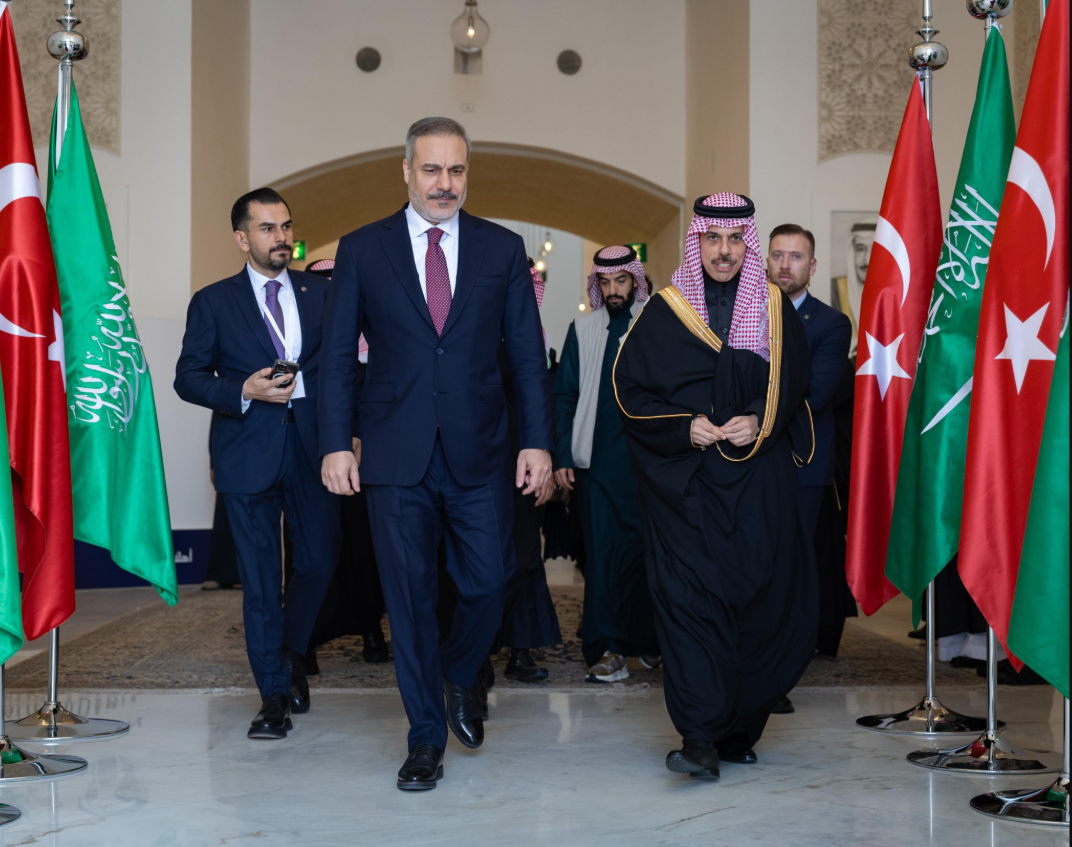
On April 22, 2026, Saudi Transport Minister Saleh al-Jasser announced the completion of a feasibility study for a railway link project connecting Saudi Arabia with Turkiye via Jordan and Syria before the end of the year.
He stated that the project would strengthen regional integration, boost trade, and enhance sustainable land transport across the region.
Turkish Foreign Minister Hakan Fidan and Transport Minister Abdulkadir Uraloglu also confirmed efforts to develop a railway corridor linking Turkiye with Syria, Jordan, and ultimately Saudi Arabia, reviving the historic Hejaz Railway route originally launched by Sultan Abdul Hamid II in 1900.
However, discussion surrounding this major project has raised questions about whether it could emerge as an alternative to Iraq’s “Development Road” project, announced in late May 2023.
The initiative aims to connect Asia and Europe through the Grand Faw Port via a transport and railway network stretching roughly 1,200 kilometers toward the Turkish border.
Secure Alternatives
Regarding the future of Iraq’s “Development Road” project amid growing discussion about the “Hejaz–Istanbul” route, Iraqi researcher Hamed al-Obaidi said that “countries are increasingly searching for safe routes passing through stable nations to ensure the uninterrupted flow of trade, whether oil or other goods the world is keen to keep moving.”
Al-Obaidi told Al Estiklal that “the Development Road cannot be replaced by other routes because its path is different. It is designed to receive trade from East Asian countries, especially China, and transport it to Europe through Turkiye. However, the project may face delays before it becomes a reality.”
He pointed out that “the situation in Iraq remains unstable due to the presence of armed militias seeking to tie the country’s resources to Iranian influence, in addition to the massive budgets required for the project, making it difficult to predict when it will be completed.”
The researcher also noted that “continued attacks by Iran-backed militias inside Iraq and against Gulf countries could lead to Iraq’s economic isolation or disrupt the project, especially since Saudi Arabia, Qatar, and the UAE are key stakeholders in it.”
In the same context, Iraqi journalist Othman al-Mukhtar believes that “the Saudi–Jordanian–Syrian project could eliminate the Development Road project between Basra and Turkiye before it even begins.”
In a post published on X on April 23, al-Mukhtar explained that “the Hejaz–Turkiye route is considered a safe corridor passing through stable countries governed by the rule of law, away from militia influence,” adding that “these militias are a source of impoverishment and hunger in Iraq.”
On May 27, 2023, the “Development Road” conference was launched with the participation of Saudi Arabia, Kuwait, the UAE, Qatar, Oman, Turkiye, Syria, and Jordan. However, only four countries signed a memorandum of understanding in Erbil in 2024 to implement the project in three phases.
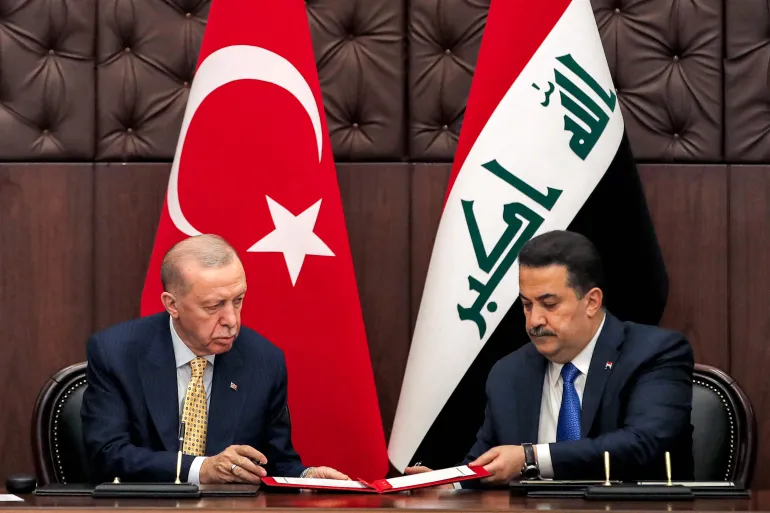
The memorandum of understanding was signed by Iraq, Turkiye, Qatar, and the UAE during a conference held in Baghdad on April 22, 2024, attended by Turkish President Recep Tayyip Erdoğan and Iraqi Prime Minister Mohammed Shia' Al Sudani, who stated that the project “will transform the region economically.”
Meanwhile, Iraqi Transport Ministry spokesperson Maytham al-Safi said that the government had completed the preliminary designs for the “Development Road” project and had moved on to the detailed design phase, which is nearing completion.
In remarks reported by Al-Mirbad on April 28, 2026, al-Safi added that the next phase would involve promoting the project and presenting it to major international companies in preparation for implementation, in line with approved economic feasibility studies.
He also noted that contracts had already been signed with international firms, and intensive meetings had been held to review the designs, economic model, and technical audits, ensuring the project proceeds according to its planned timeline.
A Unique Chance
Meanwhile, Iraqi economic expert specializing in maritime transport Ziad al-Hashimi commented on the potential impact of the recently discussed Saudi–Turkish route on the future of Iraq’s “Development Road” project.
In a post published on X on April 27, al-Hashimi said that Saudi Arabia had launched a railway corridor linking its Red Sea ports with Turkish ports in southeastern Turkiye via Jordan and Syria, as part of a strategic effort to diversify international transport routes away from the risks associated with the Strait of Hormuz.
He added that the route had sparked concerns within Iraq that it could undermine the future of the “Development Road” project, and that the region might no longer need the Iraqi corridor.
However, al-Hashimi explained that “the existence of multiple multimodal land routes within the same region does not necessarily mean that one will succeed at the expense of another. Each route has its own markets, points of origin, ports, and business model, meaning they are not necessarily in direct competition with one another.”
He continued that “the Saudi route focuses on connecting Saudi and Gulf markets and origins with Europe via Turkish ports, aiming to reduce reliance on maritime choke points and the Suez Canal, lower costs, and shorten transit times, while the ‘Development Road’ route theoretically focuses on transporting trade coming from Asia to Europe through Turkiye.”
He concluded that “what threatens the future of the Development Road is not the Saudi route, but the possibility of the Strait of Hormuz being closed and shipping access to Iraq’s Grand Faw Port being disrupted. This is a strategically serious issue, given Iraq’s position at the head of a semi-enclosed Gulf that could face geopolitical complications, as we are witnessing now.”
He also noted that both the Iraqi and Saudi routes, if implemented based on accurate feasibility studies, could evolve into a complementary rather than competitive model, by integrating them into an interconnected regional railway system that ensures smooth trade flows in all directions with a high level of security.
Iraqi writer and political analyst Mujahed Altaee said in a post dated April 29 that Iraq’s “Development Road” is no longer merely a national development project, but has become a strategic option for reshaping trade and energy routes in the Middle East.
He explained that Gulf states have long depended on a narrow and volatile corridor such as the Strait of Hormuz, but the scale of current disruptions and their rapid impact have revived the need for alternatives that go beyond traditional maritime choke points.
He added that the “Development Road,” which aims to connect the Gulf to Europe via Iraq and Turkiye, has become an urgent strategic option within broader efforts to redraw the region’s trade and energy map amid rapidly evolving geopolitical shifts.
He noted that the project’s importance is closely tied to Iraq’s economic structure, which relies on oil exports for about 90% of its revenues, with most shipments passing through the Strait of Hormuz, making any disruption in this route a direct threat to the national economy.
Altaee pointed out that the project’s success depends on its ability to integrate with and expand Iraq’s oil pipeline network, stressing that “geography alone is not enough; a stable political and security environment is essential to transform location into an effective corridor for energy and trade.”
He emphasized that disruption of navigation in the Strait of Hormuz should not be treated as a temporary crisis, but rather as a “structural warning” requiring a comprehensive reassessment of infrastructure and supply routes, placing land-based projects, particularly the “Development Road,” at the center of global strategic thinking.
He added that international interest in Iraq’s stability is increasing, but it will remain conditional on Baghdad’s ability to provide credible guarantees, especially given the existence of regional alternatives that could bypass Iraq via Jordan and Syria.
Altaee concluded that security developments in the Strait of Hormuz represent a “rare strategic opportunity” for Iraq to reposition itself regionally, but capitalizing on this opportunity requires more than infrastructure projects, demanding deep political reforms and effective institutional coordination.
Sources
- Iraqi Ministry of Transport to al-Mirbad: The Development Road Project Is Approaching Completion of Its Designs in Preparation for Implementation and Presentation to Global Companies [Arabic]
- Joint Agreement Between Turkiye, Jordan, and Syria on a Strategic Corridor Project Toward Europe [Arabic]
- The Hejaz Railway: From Historical Legacy to an Economic Artery Reshaping the Middle East Map [Arabic]
- From Riyadh to Istanbul: What Do We Know About the Revival of the Hejaz Railway Project? [Arabic]
- Saudi Transport Minister to Al Arabiya: Completion of Feasibility Study for Rail Link with Turkiye via Jordan and Syria Soon [Arabic]
- Turkish Trade Minister: Historic Middle East Corridor to Enter Service in 2026 [Arabic]
- Despite Its Importance, Why Is the Iraqi–Turkish “Development Road” Train Not Moving? [Arabic]