How ‘Israel’ Turns Disrupting Education Into a Tool for Displacing Palestinians in the West Bank
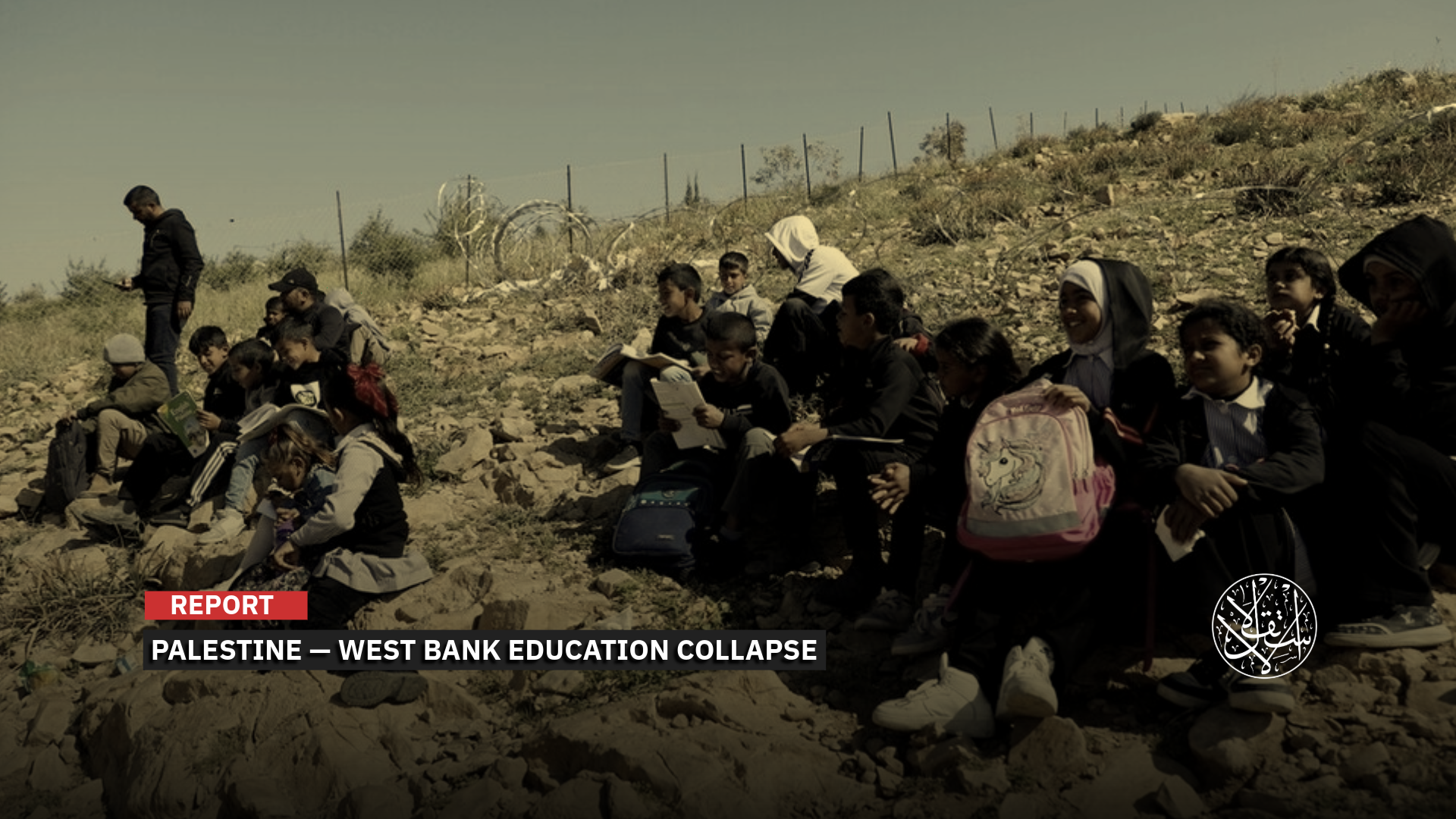
Around 140,000 children in the West Bank face obstacles to accessing education.
Israeli attacks against the Palestinian education sector in the West Bank have taken on an increasingly severe and systematic nature in recent weeks.
The targeting no longer stops at disrupting a school day, but now includes live fire near schools, the installation of barbed wire blocking access routes, and demolition orders threatening educational institutions.
As these violations and attacks escalate, the United Nations Children’s Fund, UNICEF, says that around 140,000 children in the West Bank, including refugee camps, face obstacles to accessing education.
How Is Education Being Targeted?
For years, the Palestinian education system has been subjected to an unprecedented and systematic Israeli campaign of destruction, with its methods and forms escalating in recent months.
On April 21, 2026, armed settlers stormed Al-Mughayyir Secondary School for Boys east of Ramallah and opened fire at its gate, killing 14-year-old student Aws Hamdi al-Naasan and 32-year-old Marzouq Abu Naiem, who had tried to defend the students. The attack disrupted classes and spread panic inside the classrooms.
Al-Mughayyir was not an isolated incident. On May 5, 2026, a settler stormed the courtyard of Silat al-Dhahr Basic School for Boys south of Jenin, threatened to shut it down, and chased students through the school grounds.
The Palestinian Ministry of Education described the incident as part of a broader pattern targeting the education sector, following the al-Mughayyir attack and repeated assaults on schools and students.
Since January 2023, the Education Cluster, a UN-led humanitarian coordination mechanism, has documented an ongoing pattern of settler attacks, including school raids, vandalism of classrooms and equipment, intimidation of students and teachers, obstruction of access to schools, and damage to infrastructure linked to the education sector.
One earlier example occurred in August 2023, when settlers stormed Ras al-Tin School east of Ramallah, already under threat of demolition, smashing its windows and vandalizing its contents.
In the village of al-Lubban al-Sharqiya south of Nablus in the northern West Bank, soldiers and settlers disrupted classes in 2022 by preventing students from reaching their school near the Ramallah–Nablus road.
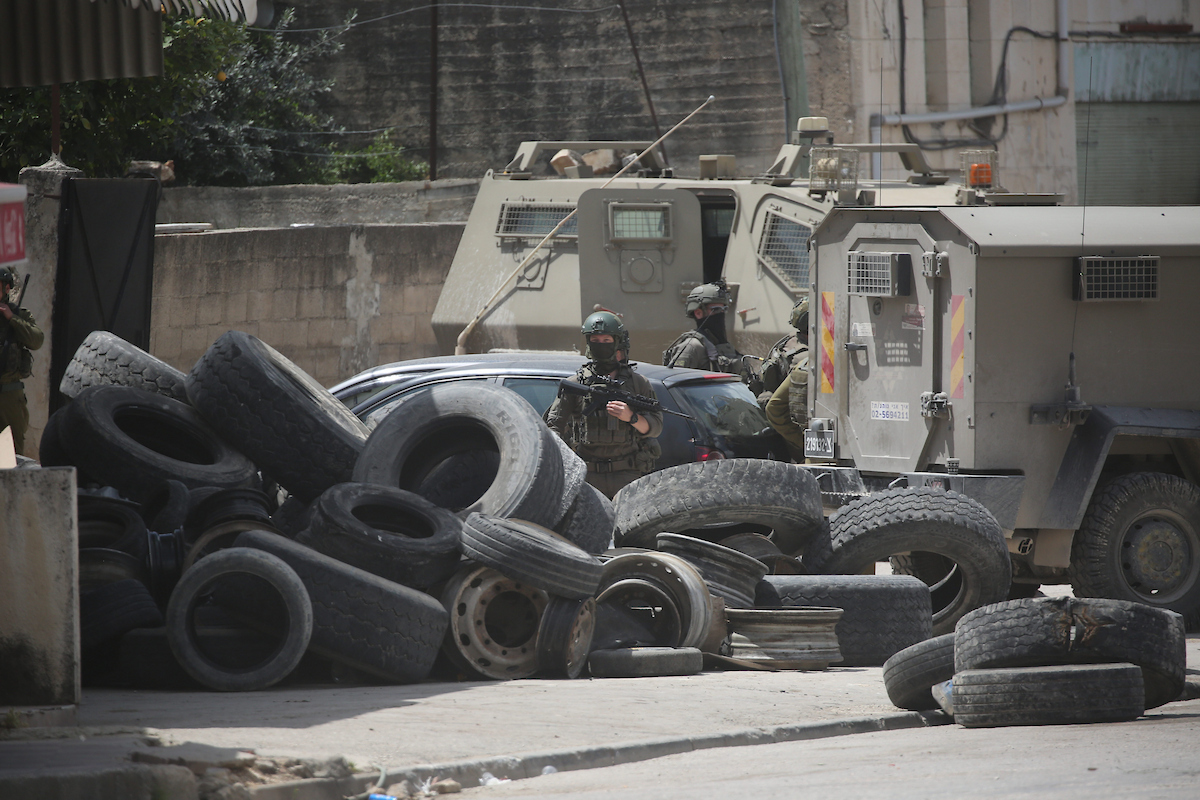
But in 2026, this pattern became even more severe. On January 20, 2026, another example of blocking education emerged through a military closure in Hebron, prompting the city’s Directorate of Education to suspend classes in 26 schools and three kindergartens.
The move followed an Israeli military raid into the southern part of the city and the imposition of a full lockdown that paralyzed residents’ movement and made it difficult for students and teachers to reach schools.
The Ministry of Education said absenteeism reached 22.7 percent among students in the closed areas, while around 8 percent of teachers were unable to access their schools.
The disruption of education is not limited to villages and Bedouin communities. In the northern West Bank, the United Nations Office for the Coordination of Humanitarian Affairs, OCHA, says access restrictions and military operations have affected educational facilities run by the United Nations Relief and Works Agency for Palestine Refugees, UNRWA.
Among them were school buildings in Jenin refugee camp that remained inaccessible, forcing around 1,600 students to relocate to alternative learning spaces outside the camp. This indicates that the targeting extends beyond the school itself, placing the surrounding environment under threat and rendering it unfit for education.
These incidents are unfolding within a wider climate of escalating settler violence. According to OCHA, the United Nations documented more than 580 attacks by settler groups across over 190 Palestinian communities from the beginning of 2026 through early April, creating an environment in which schools and the roads leading to them have become part of daily danger.
UNRWA also says that Israeli violations and settler attacks caused 2,000 learning disruptions during the 2024–2025 academic years, leaving students living under fear and psychological trauma.
School as a Condition for Survival
In threatened rural and agricultural communities, schools do not function merely as educational institutions, but as one of the conditions for survival. The presence of a nearby classroom means a family can remain in the area, while demolishing it or cutting off access to it turns education into a daily force of displacement.
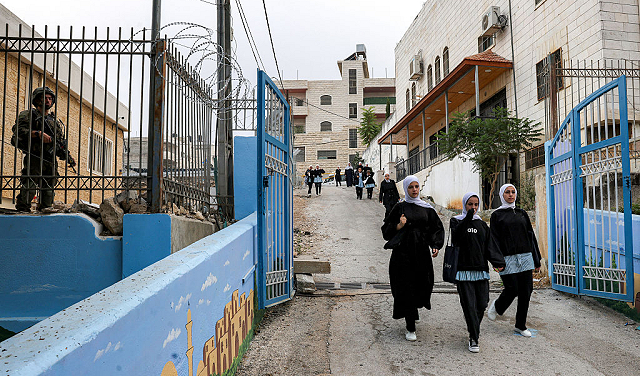
Children in rural villages and frontline areas face school journeys that have become difficult daily tests. The road connecting home to the classroom may be a dirt path crossing hills, intersect settler bypass roads, or end at a military checkpoint where children are subjected to searches and delays.
The presence of 925 movement obstacles and checkpoints across the West Bank, according to OCHA, means that reaching school is no longer guaranteed, especially in Masafer Yatta, the Jordan Valley, and northern areas.
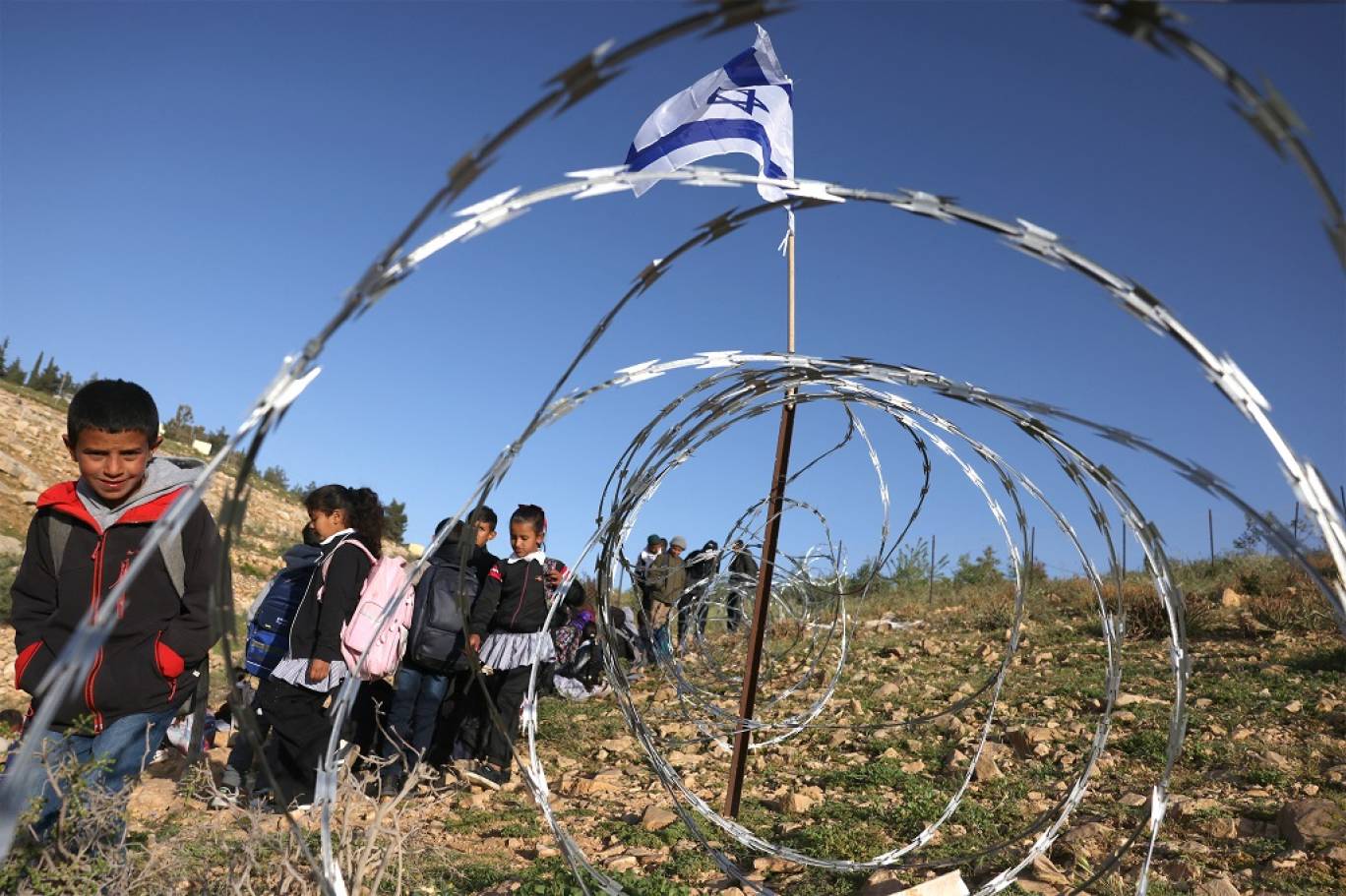
For example, settlers recently installed barbed wire fencing in the village of Umm al-Khair south of Hebron, blocking the road to the school and forcing children to sit beside the barrier.
Mohammad al-Hathaleen from the village told Al-Estiklal, “We went with our children to protest and help them cross the fence, but Israeli Occupation Forces protecting the armed settlers fired tear gas at us.”
Al-Hathaleen, a father of two primary school children, added, “The alternative road to reach the schools passes near the neighboring Karmiel settlement and is considered dangerous, so we were forced to keep our children at home until the road is reopened.”
Similar cases documented by human rights reports have occurred in Masafer Yatta south of Hebron, where hundreds of children walk long dirt roads without protection, with around 557 children facing these conditions every day.
Even in the northern Jordan Valley, checkpoints isolate entire villages. Schools such as al-Maleh and al-Muntar are far from students’ homes, forcing children to pass through military gates that can close without warning. With international missions barred from accompanying them, the journey to school becomes a dangerous ordeal.
Hammamat al-Maleh School in the northern Jordan Valley clearly illustrates this reality. The European-funded school was not an isolated building, but an essential service for pastoral communities already living under the pressure of demolitions, movement restrictions, and a lack of basic services.
When the school was demolished in April 2026, one of the practical reasons encouraging families to remain in the area disappeared with it.
Before its demolition, published estimates placed the number of students between 43 and 70 children, though attendance had already declined because of attacks and displacement.
Several European countries, including Ireland, demanded compensation for the destruction of a facility funded with their money.
In Al-Mughayyir, the killing of child Aws al-Naasan near the school was not seen as an isolated crime, but as a message of intimidation targeting both the school and the village.
Al-Hathaleen said, “When families feel that the road to school could turn into a shooting zone, moving children elsewhere, reducing their attendance, or even thinking about leaving the area becomes part of daily survival calculations.”
According to OCHA, 113 people, including 57 children, have been displaced from Al-Mughayyir since 2023 because of settler violence and access restrictions.
More broadly, the Education Cluster says dozens of other schools are facing demolition orders, threatening the education of more than 13,000 students.
Israeli authorities are using this reality to push residents toward displacement, as demolishing or shutting down classrooms disrupts not only education itself, but the very existence of the community.
Rapid Deterioration
Over recent years, the Palestinian education system has been subjected to continuous erosion, as the education sector in the West Bank has deteriorated further due to “Israel’s” refusal to transfer clearance revenues, tax funds that make up nearly two-thirds of the Palestinian Authority’s income.
Since 2019, Israeli authorities have imposed monthly deductions from these revenues, claiming the Palestinian Authority uses funds to pay stipends to the families of prisoners and those killed in the war. Between February 2019 and July 2024, nearly $1 billion was deducted.
After the October 7 Attacks on October 7, 2023, “Israel” began withholding an additional $75 million per month, representing Gaza’s share of the funds, before halting transfers entirely in May 2025.
According to official figures, the withheld funds had reached $4.5 billion by the end of 2025, pushing the liquidity available for salaries and public services to its lowest level.
At the same time, the Palestinian Authority lost around a quarter of its gross domestic product after work permits for more than 200,000 Palestinian laborers in “Israel” were revoked and restrictions and checkpoints intensified. Local tax revenues declined sharply, making it impossible to finance salaries without taking on new debt.
The withholding of revenues coincided with a steep decline in foreign aid. International support for the Palestinian Authority dropped to $358 million in 2025, compared with nearly $2 billion in 2008. Meanwhile, a 2012 pledge by the Arab League to provide $100 million per month was only partially implemented, according to the Arab Center for Research and Policy Studies.
As debts accumulated and borrowing from local banks increased, the Palestinian Authority’s debt reached the equivalent of 106 percent of GDP by November 2025.
Since November 2021, the government has been forced to pay only partial salaries, sometimes half or even less, and often irregularly, with the education and health sectors among the hardest hit.
Today, public schools are no longer able to consistently pay teachers’ dues or operate throughout the full school week, making disruptions unavoidable.
Local sources indicate that education workers make up more than half of all public sector employees. They receive only around 60 percent of their salaries and at irregular intervals, prompting prolonged strikes.
Teachers now conduct in-person classes only three days a week, while schedules have been compressed into intensive sessions, increasing pressure on educators and limiting their ability to deliver complete lessons.
The financial crisis forced the Ministry of Education to reduce the school week from five to four days during the 2023–2024 academic year, and then to just three days at the beginning of the 2025–2026 school year.
The Palestinian curriculum requires 182 school days to complete the academic content, but students in public schools attended fewer than 50 days during the first semester, meaning they lost nearly half of their instructional time.
This widening gap places students at risk of failing to acquire basic literacy and numeracy skills. UNRWA warned that the crisis is shifting from a learning poverty problem into a full-scale systemic emergency.
At the same time, dropout rates are increasing among the 650,000 students enrolled across 1,948 public schools in the West Bank, in addition to 500 kindergarten classes, raising fears of long-term consequences for academic achievement and social stability.
Sources
- Palestinian Education Still Under Attack
- Fact Sheet: Movement and Access in the West Bank, April 2026
- ‘Go Inside, He Will Kill You’: Israeli Militants Step Up West Bank School Attacks
- Several Palestinian Students Suffocate as Israeli Forces Storm Bethlehem-Area Village
- OPT: West Bank Children Hold Tenth Day of Peaceful Protest After School Blocked by Israeli Settlers
- Settlers Block Palestinian Pupils' Path to West Bank School With Barbed Wire
- OCHA: Humanitarian Situation Report, 1 May 2026
- Occupation, PA Inaction and Financial Troubles Drive Education Crisis in Palestine