Nigeria Deepens Military Cooperation with Turkiye: What Next for Boko Haram and ISIS–WA?
Nigeria received its first armed Bayraktar TB2 drones in October 2023.
Nigeria is looking to open new pathways to confront persistent terrorist threats and curb the violence carried out by Boko Haram by deepening its military cooperation with a number of partners, including Turkiye.
In that effort, Defense Minister Christopher Gwabin Musa announced a new military agreement with Ankara aimed at strengthening Nigeria’s capacity to tackle an insurgency that has dragged on for more than 17 years.
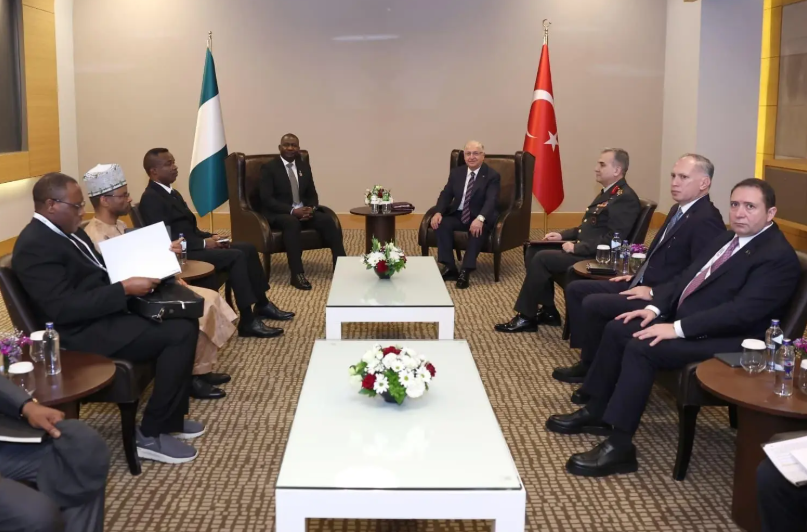
The announcement came on the sidelines of the 2026 Antalya Diplomacy Forum (ADF), held in southern Turkiye from April 17 to 19, where Musa outlined a shift toward more advanced stages of cooperation between the two countries.
Speaking to Turkish media, he said the deal includes expanded joint training and collaboration in defense production, steps designed to reinforce the growing military partnership.
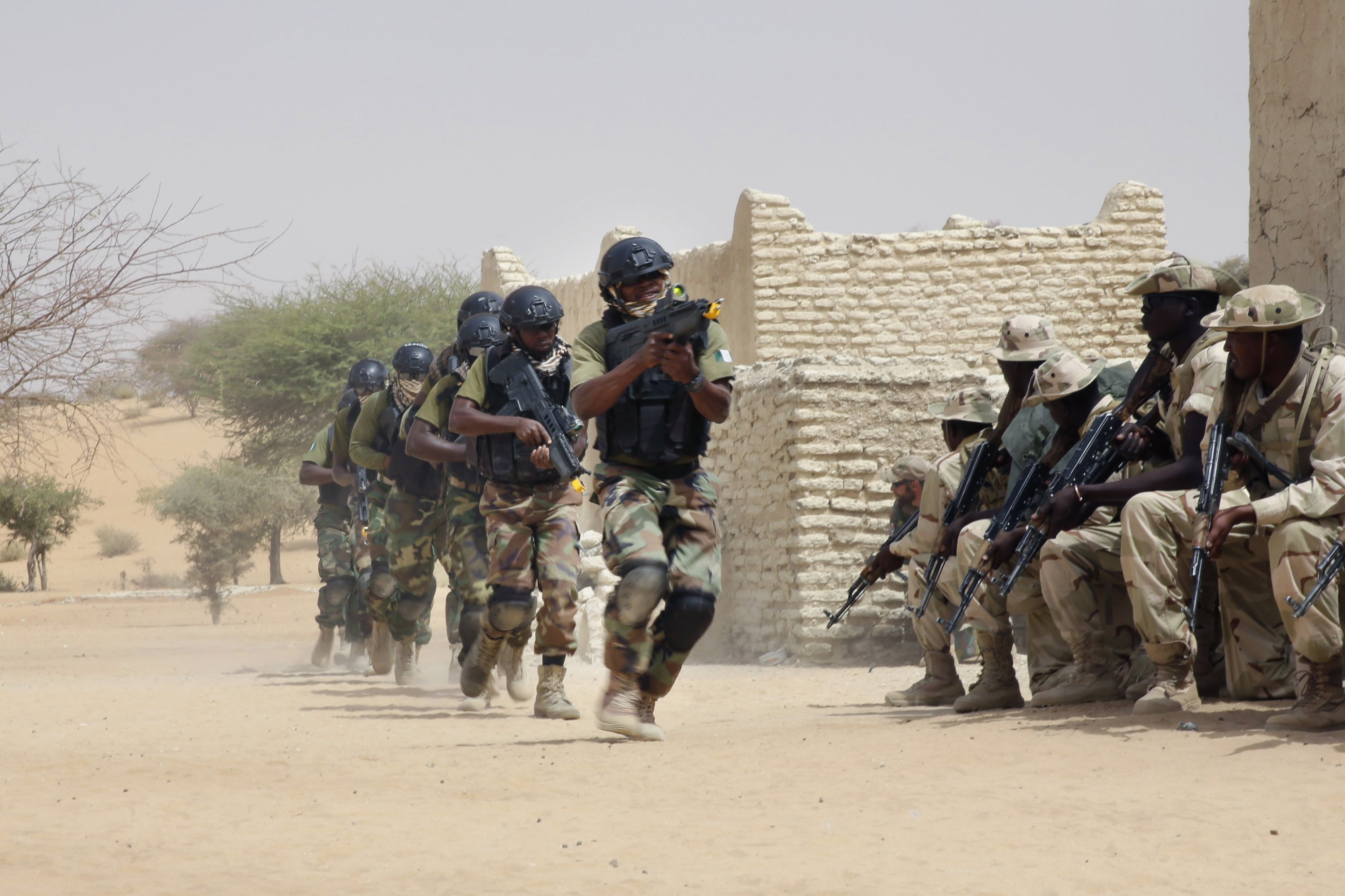
Around 200 Nigerian special forces personnel are expected to be sent to Turkiye for specialized training, part of a broader push to improve the armed forces’ readiness in the face of mounting security challenges.
The agreement also covers the supply of advanced systems, including surveillance technologies, drones, satellite monitoring capabilities, counter-IED systems, and infantry fighting vehicles, with joint military exercises planned later in 2026.
Nigeria has already begun integrating Turkish defense technology into its arsenal, having received its first armed Bayraktar TB2 drones in October 2023, alongside the deployment of T129 ATAK attack helicopters.
A Mounting Security Strain
Set against this backdrop, Africanews reported on April 20, 2026, that Nigeria is facing Islamist extremists from Boko Haram and its rival splinter faction, as well as the Islamic State-West Africa (ISIS-WA), alongside armed criminal gangs known as bandits who loot, kill, and kidnap in the northwest.
The pressure extends beyond its borders. The country is also contending with a worsening crisis across the Sahel, a vast belt south of the Sahara where instability has allowed jihadist groups to expand across West Africa.
Nigeria’s long-running security challenges have also drawn scrutiny from Washington. In recent months, Donald Trump claimed that Christians in the country are facing “persecution,” a remark that added a political edge to the crisis.
Against that backdrop, Musa’s trip to Turkiye signals an effort to reduce reliance on the United States and diversify Nigeria’s security partnerships.
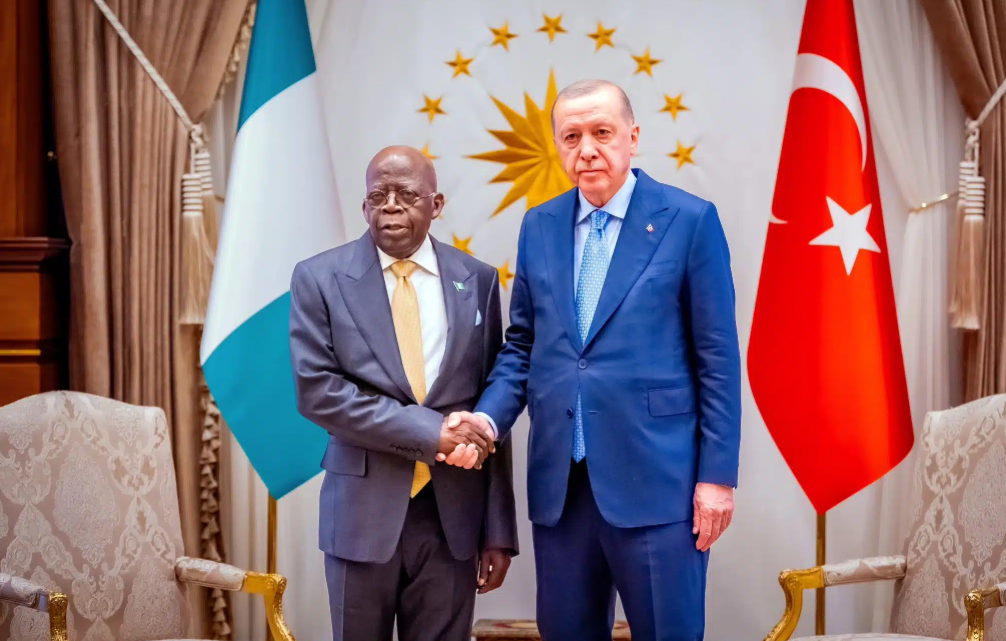
His visit follows a trip by Bola Tinubu to Ankara in late January 2026, the first visit by a Nigerian president in nine years, underscoring a broader push to recalibrate the country’s external alliances.
A Strategic Partner
Speaking to reporters after meeting Bola Tinubu at the presidential residence, Recep Tayyip Erdogan described Nigeria as a strategic partner with which Ankara maintains close coordination on key issues affecting the Islamic world.
Erdogan said the two leaders reviewed cooperation across trade, investment, education, energy, and defense industries, noting that his 2021 visit to Nigeria helped lay the groundwork for expanding ties. He pointed to what he called a “strong political will” on both sides, highlighting the presence of senior Nigerian officials in Tinubu’s delegation as evidence of that commitment.
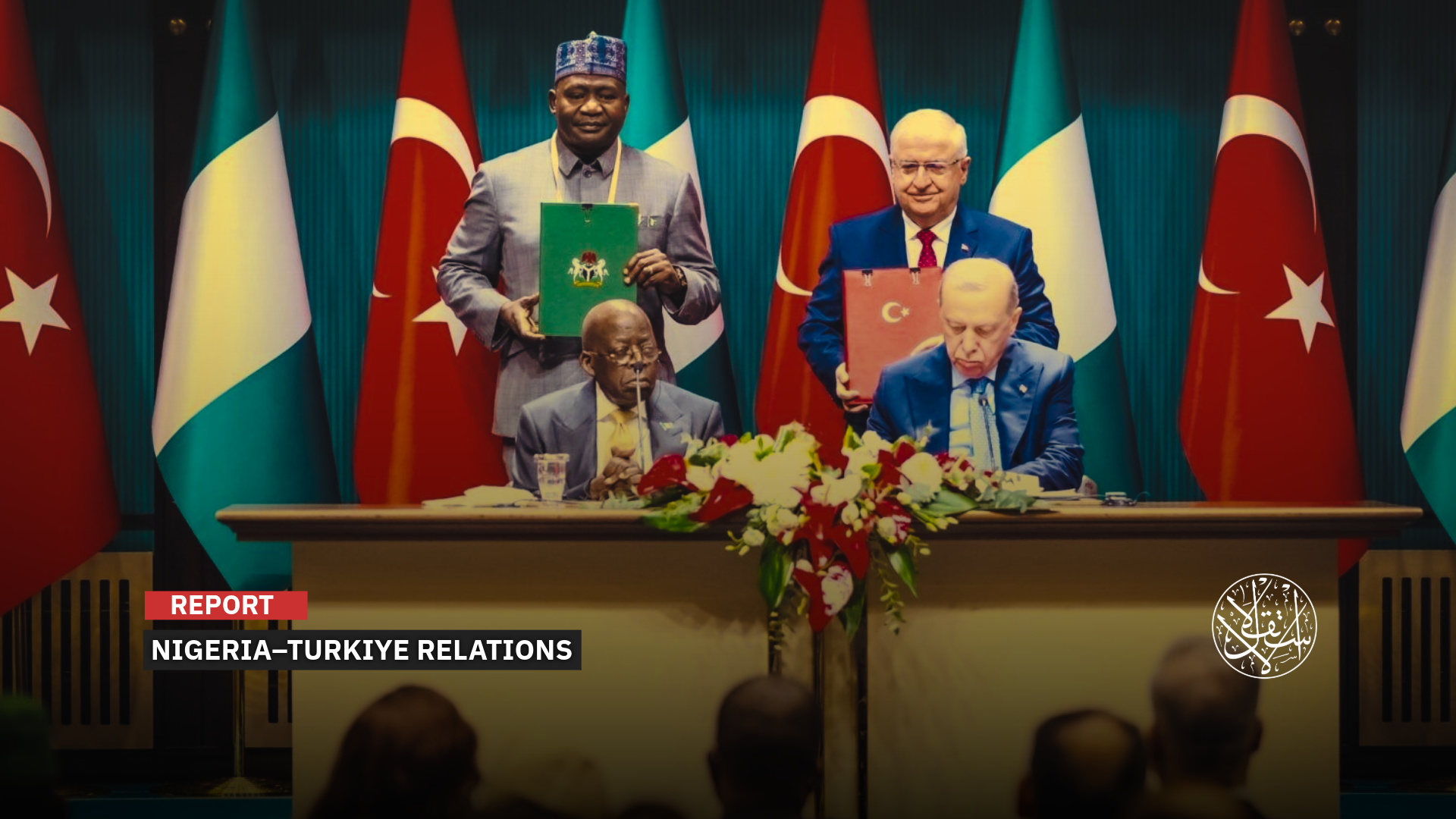
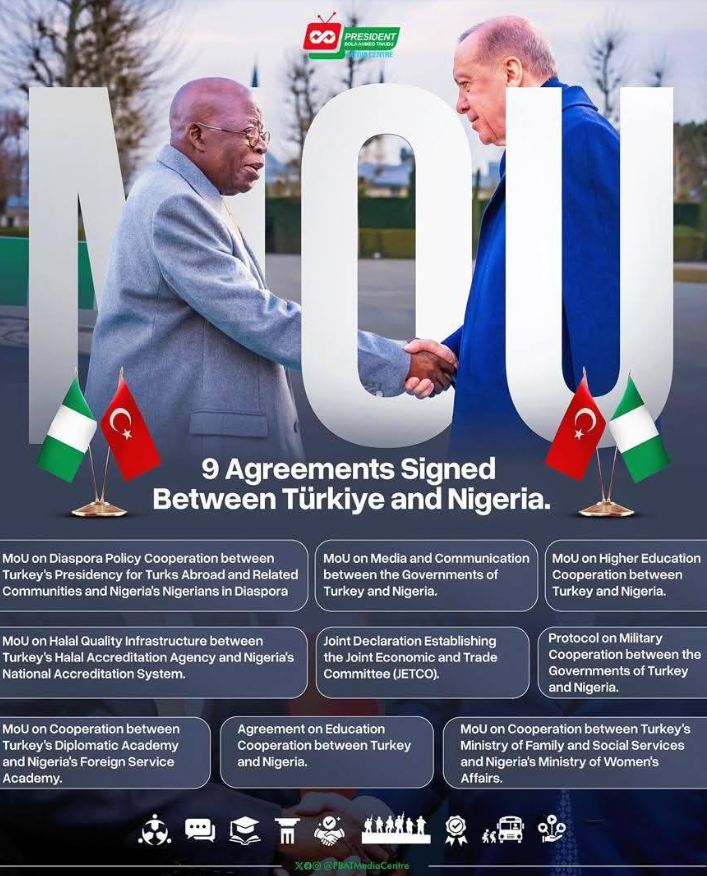
Following bilateral and delegation-level talks, the two countries signed nine agreements covering diplomacy, education, media, women’s affairs, halal certification, diaspora engagement, and military cooperation.
The deals include a military cooperation protocol, a memorandum on media and communications, an agreement to establish a Joint Economic and Trade Commission, and memoranda between the diplomatic academies of the two foreign ministries, among others.
Turkiye has emerged as a major player in the defense sector, particularly in low-cost drone technology. Nigerian Defense Minister Christopher Musa said Ankara has made notable advances in this field, with both sides agreeing to explore joint production of certain military equipment.
A Practical Necessity
In an opinion piece published in early May 2026 by the Nigerian outlet TheCable, the Nigerian defense minister stressed the importance of sending around 200 Nigerian troops to Turkiye for advanced training to combat the insurgency.
He argued that, if it were up to him, he would send even more, describing defense cooperation as a necessary part of international defense diplomacy.
Musa also pushed back against the notion that military force alone can resolve Nigeria’s security challenges. “In warfare, to pull the trigger is one thing; to aim at the target is another thing,” he wrote, noting that multiple factors determine the success or failure of missions.
Addressing speculation about a possible Turkish military base in Nigeria, he dismissed it as a misunderstanding of standard defense agreements. Such arrangements, he said, often involve reciprocal access to facilities for training and coordination without infringing on national sovereignty.
He emphasized that the agreement with Turkiye is not designed to undermine Nigeria’s sovereignty but rather represents a significant step forward. Turkiye ranks among the leading countries in global firepower indexes and is one of the world’s major exporters of arms and ammunition.
For Musa, the stakes are clear. Nigeria faces layered security threats and needs sustained, multifaceted responses. The agreement with Turkiye, he argued, is not only a defense measure but also the beginning of a partnership with a capable ally in efforts to stabilize the country’s security landscape.
Security fears have surged in Nigeria after at least 20 civilians were killed in an attack by Boko Haram gunmen on villages in Borno State in the northeast on April 21, 2026.
The assault reflects a renewed surge in militant activity, coinciding with growing political pressure to reassess military strategy and review reintegration programs for former fighters, particularly Operation Safe Corridor, which has faced mounting criticism over its effectiveness and limited public support.
Local reports say the attackers stormed the villages shortly before sunset prayers and continued their assault until early Wednesday, overpowering local security forces before carrying out killings.
The villages lie on the southern edge of Sambisa Forest, long considered a key stronghold for Boko Haram and a frequent battleground between the group and the ISISI-WA in a struggle for control and influence.
The attack comes amid a broader escalation in operations carried out by Boko Haram and ISIS-WA, with a notable shift toward targeting military and police positions.
This shift suggests an attempt by Boko Haram to regain military initiative after years of security pressure that had limited its movements.
Nigerian forces are facing growing challenges in the northeast, where armed groups rely on guerrilla warfare tactics and operate across difficult terrain, particularly Sambisa Forest and areas around Lake Chad.
A Broader Rethink
In the aftermath of the attack, Nigeria’s Senate held an emergency session condemning the violence and calling for a comprehensive review of military operations in the northeast.
According to the Qiraat African website, the Senate asked Chief of Army Staff Olufemi Oluyede to conduct a full operational and logistical audit of recent incidents, examine the circumstances surrounding them, assess the adequacy of military equipment, and review the rules of engagement.
Lawmakers also stressed the need to strengthen training on civilian protection and respect for international humanitarian law and investigate any allegations of civilian casualties during military operations, referring to an airstrike on a market used by the armed group, in which the army was accused of killing dozens of civilians.
During the session, Senate President Godswill Akpabio said the insurgency would ultimately be defeated but emphasized the need to intensify efforts to strengthen national security as attacks on military formations increase.
Alongside the latest attack, the Senate urged the government to step up efforts to rescue 416 hostages held by Boko Haram since late March 2026, after armed groups threatened to execute them unless a ransom of $3.7 million is paid.
Observers say reliance on military solutions alone is no longer sufficient, prompting authorities to expand alternative approaches such as Operation Safe Corridor, one of Nigeria’s main non-military programs aimed at reintegrating former fighters into society.
The program focuses on deradicalization, rehabilitation, and reintegration, particularly for low-risk fighters who surrender to authorities.
Official data released in February 2025 shows that 2,190 participants have been successfully reintegrated, while more than 130,000 individuals have surrendered since the program began in 2015.
Despite this, the initiative continues to face widespread criticism for prioritizing perpetrators over victims, as well as for the spread of misinformation about its outcomes.
Critics argue that the program allows ex-gang fighters to return to communities that were neither consulted nor prepared to receive them, creating social tensions and forcing victims to live alongside those who harmed them. They warn that reintegration without genuine reconciliation risks producing the opposite of its intended effect.
A Balancing Act
In an April 29 analysis, Truth Nigeria said Turkiye’s terms for military cooperation with Nigeria appear attractive, noting that Bayraktar TB2 drones cost roughly a quarter of comparable Western systems, while Ankara is also open to joint production.
For Nigeria’s leadership, the outlet added, Washington’s freeze on certain arms sales over human rights concerns has made the Turkish model a smoother alternative.
Even so, the shift is not a break. The United States remains Nigeria’s single largest arms supplier in dollar terms.
According to Pentagon data, nearly $1 billion in approved foreign military sales contracts were recorded with Nigeria between 2020 and 2024. At the center of that is the A-29 Super Tucano package, a fleet of 12 light attack aircraft delivered for close to $500 million, making it the largest such program in sub-Saharan Africa.
In August 2025, Washington approved an additional $346 million sale of munitions, while AH-1Z Cobra attack helicopters are expected to be delivered later in 2026.
Security ties have also deepened operationally. Following coordinated airstrikes in December 2025, around 200 U.S. troops arrived in Bauchi in February 2026 with MQ-9 Reaper drones and established a joint intelligence cell.
The distinction between partners is increasingly clear. Turkiye offers competitive drones and flexible production terms, while the United States provides strategic airlift, precision munitions, satellite intelligence, attack helicopters, and naval capabilities able to project force from the Gulf of Guinea.
For Abuja, the deal with Turkiye helps fill real gaps, particularly in drone training and operational capacity, according to Truth Nigeria.
More broadly, Nigeria’s diplomatic posture now spans security arrangements with multiple partners, including Russia, France, and the United Kingdom, reflecting a leadership that appears willing to pursue every available option in the face of persistent violence.
Sources
- Turkey to train 200 Nigerian special forces soldiers under new defence deal
- Nigerian Defense Minister: Turkiye to Train 200 Members of Our Special Forces [Arabic]
- Nigeria to send 200 special forces troops to Türkiye for training
- The Nigerian military within the Nigeria-Turkey strategic alliance: The facts and the illusions
- Nigeria Courts Turkey as Washington Plants Boots in Bauchi State
- Boko Haram Kills 20 Civilians in New Test Case for Nigeria’s Operation Safe Corridor [Arabic]