How Trump Sparked a Crisis with Germany
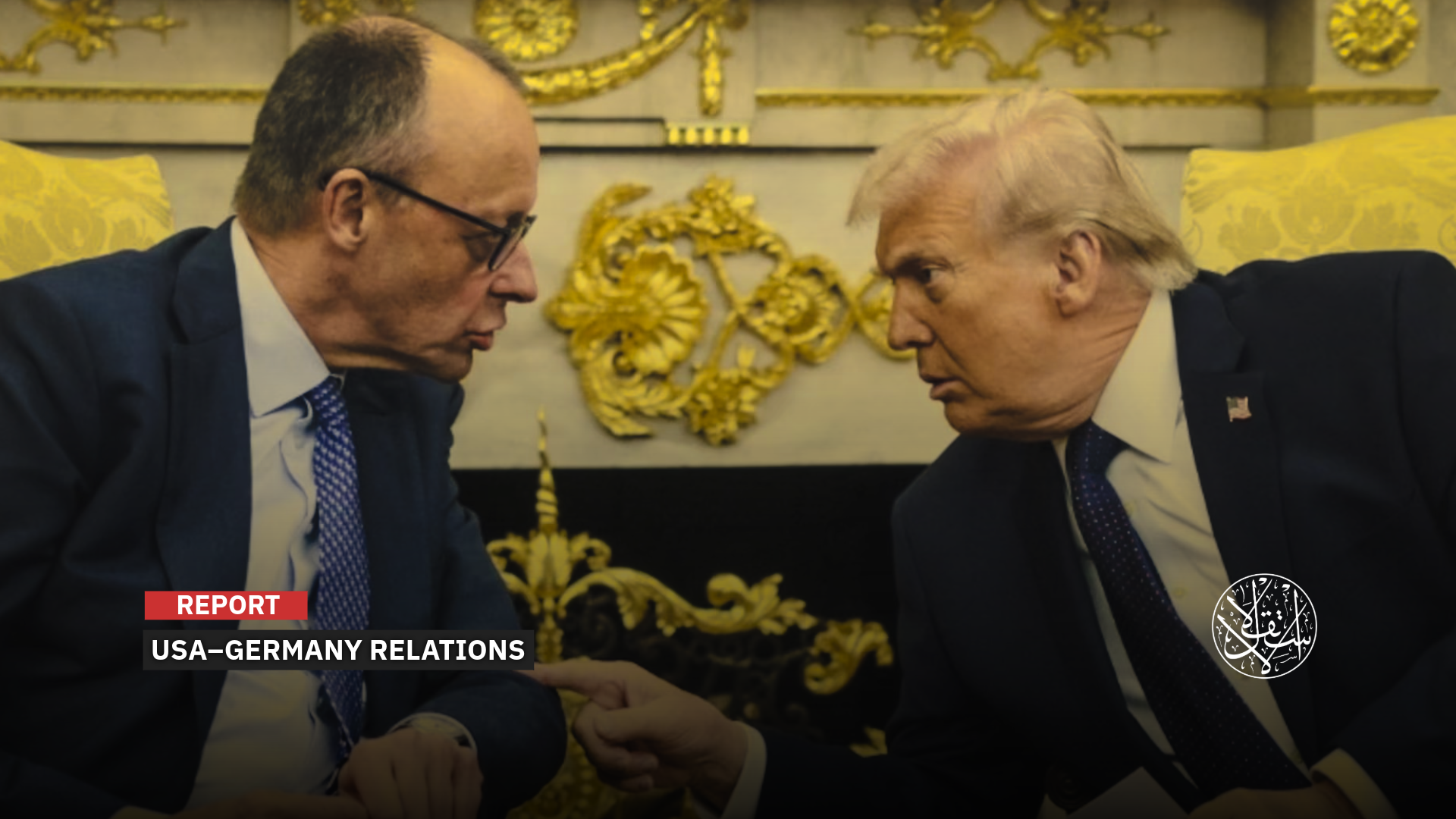
“Trump's withdrawal of 5,000 US troops from Germany marks a turning point in relations between the two countries.”
US President Donald Trump's announcement of the withdrawal of approximately 5,000 US troops from Germany has sparked widespread controversy and deep concern in European political and security circles, given the historical role played by US forces there since the end of World War II.
This decision, expected to be implemented over a period of six months to a year, is seen as a potential shift in US strategy that could reshape the relationship between Washington and Berlin and raise questions about the future of security balances within NATO.
Besides Germany, Washington's relations are also at their worst with Italy, Spain, France and the UK as a result of the repercussions of the war on Iran.
Ineffective Efforts
The U.S. announced the withdrawal of 5,000 troops from Germany, according to the US Department of War (the Pentagon), at a time when President Trump escalated his threats against Italy and Spain for their lack of participation in reopening the Strait of Hormuz.
As part of the US decision, a Biden-era plan to deploy a US battalion with long-range Tomahawk missiles to Germany has also been dropped - a blow to Berlin, which had pushed for the move as a powerful deterrent against Russia.
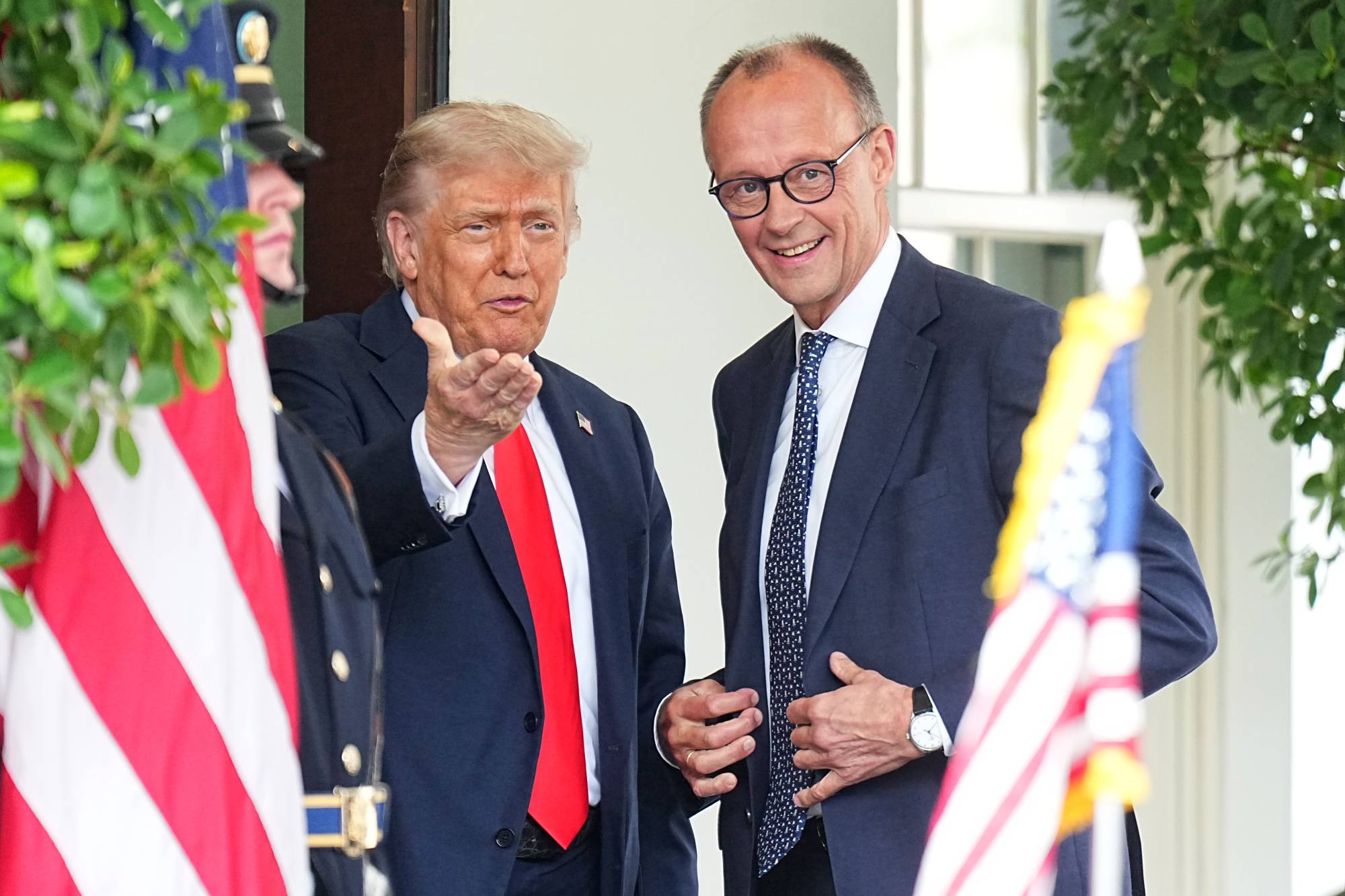
Although Trump appeared satisfied with Germany's increased military spending, as recommended by NATO, his decision to withdraw US troops seems linked to recent criticisms leveled by German Chancellor Friedrich Merz against the U.S. regarding Iran.
Merz stated that the U.S. is being humiliated by Iran, while Trump responded that Merz should focus his efforts on ending the war, deeming him completely ineffective on this issue.
He added that the German Chancellor should concentrate on immigration and energy issues within his country, rather than interfering in efforts to end the Iranian nuclear threat, which would make the world, including Germany, safer.
In an attempt to defuse the tension, Merz emphasized the importance of relations with NATO and the United States, and criticized Iran for refusing to engage in peace negotiations.
Without mentioning Trump, Merz reiterated his support for a NATO-led solution in the Middle East, speaking of a reliable transatlantic partnership.
In this context, German Foreign Minister Johannes Wadephul noted that similar statements had been made by previous US presidents, including Joe Biden, Barack Obama, and Bill Clinton.
He added that troop movements were already underway and that the German military was preparing for these changes, emphasizing the need for Germany to assume greater defense responsibilities.
German Defense Minister Boris Pistorius called on Europeans to take greater responsibility for their own security, adding that Germany was on the right track to achieve this.
He also revealed closer cooperation within the so-called G5, which comprises Germany, France, the UK, Italy, and Poland.
Polish Prime Minister Donald Tusk expressed his concern about the decision, warning that the greatest threat to the transatlantic alliance was not external adversaries but internal disintegration, and calling for collective action to contain the repercussions.
US-European Dispute
The French newspaper Le Monde considered the withdrawal of US troops from Germany a major political shock for the country, which hosts the largest US military presence in Europe.
The U.S. has deployed approximately 36,000 troops in Germany since the end of World War II, out of a total of 78,000 stationed in Europe.
Germany hosts key US facilities, most notably Ramstein Air Base and Landstuhl military hospital, which form a crucial logistical base for US operations in Europe, the Middle East, and Africa.
Trump had threatened to withdraw 25,000 US troops from Germany during his first term, reiterating the threats upon his return to the White House for his second term.
Although military experts in Germany considered the decision to withdraw 5,000 American troops from a total of more than 36,000 to be symbolic, others viewed the decision to halt the deployment of long-range Tomahawk missiles as potentially more serious.
The German newspaper Die Welt quoted military expert Carlo Masala as saying that the failure to deploy these missiles is more significant than the decision to withdraw American troops.
Le Monde emphasized that these new decisions come in a more complex environment, where the Russian-Ukrainian war intersects with escalating tensions in the Middle East, making any adjustment to the American military presence in Europe fraught with delicate security considerations.
Any reduction in this presence should not be interpreted merely as a passing political disagreement, but rather as an indication of a broader strategic repositioning, which may aim to redistribute American military resources or pressure European allies to assume greater responsibilities.
On the economic front, the decision has repercussions that extend beyond the military dimension, as several German regions, particularly Rhineland-Palatinate, rely on the American presence as a significant source of economic activity and employment.
The decision coincides with Trump's announcement of a 25% tariff on European cars and trucks, a move directly targeting German industry, which reinforces the impression that Washington is using both military and trade tools to reshape its relationship with Europe.
While Berlin attempts to contain the tension by emphasizing its commitment to the transatlantic partnership, the US decision raises fundamental questions about the future of European reliance on the US security umbrella.
The newspaper questioned whether the American withdrawal represents the beginning of a genuine rift in the historic alliance between Washington and Berlin, or merely a tactical repositioning within a more assertive American strategy toward its allies.
It emphasized that in both cases, Europe appears to be facing a moment of strategic reassessment that could redefine its collective security for decades to come.

Withdrawal Without a Strategy
Politicians from Merz's ruling party stressed that the U.S. benefits from its military bases in Germany.
The Social Democratic Party (SPD), a partner in the German government, was more critical of the American decision.
The SPD's defense expert, Siemens Müller, said that the US withdrawal was without a strategy, adding that European security and NATO stability have unfortunately become increasingly at the mercy of the US president.
German Vice Chancellor Lars Klingbeil, who heads the SPD, sharply criticized Trump after the latter's attack on Merz.
"We don't need any advice from Trump right now. He needs to see the mess he's made," Klingbeil said, defending the chancellor.
While opposition parties in Germany criticized Merz's remarks, saying they did nothing to improve the strained relationship with Washington, they also criticized the Pentagon's decision.
Jan Nolte, foreign policy spokesman for the far-right Alternative for Germany (AfD), the largest opposition party in parliament, described the US decision as symbolic and having no impact on NATO's deterrent capabilities in Europe, adding that Europe must be able to defend itself in the long term.
Merz also faced harsh criticism from the opposition within Germany after criticizing the US administration.
The Green Party accused Merz of pursuing an inconsistent foreign policy, even though the party itself is a frequent critic of Trump and his policies.
Agnieszka Brugger, the Green Party's parliamentary group leader, called for immediate action with allies to strengthen European security.
Europe, and Germany in particular, relies heavily on the U.S. for its security. Despite Germany's significant military spending in recent years, particularly since the war in Ukraine, its armed forces remain ill-equipped to defend the country after decades of deliberate weakening.
Last year, the Merz government announced a massive defense and infrastructure spending package to accommodate its growing military capabilities.
However, German and European defense industries are unable to produce enough weapons quickly enough to keep pace with this military buildup.
Germany fears that Russia is preparing for a military operation against a NATO member state in the coming years, and its military recently adopted a new, secret defense doctrine designed to prepare for potential attack scenarios.
A report in Politico stated that Trump's threat to reduce troop levels in Germany sent shockwaves through the Pentagon.
A congressional aide said the Defense Department was not expecting the move and had not planned any troop reductions in Germany, especially since it contradicts a lengthy review of the U.S. global military deployment that did not recommend significant withdrawals from Europe.
From Trump’s perspective, troop deployments are no longer a matter of transatlantic commitment or long-term security calculations, but rather a punitive measure against governments that refuse to join his war against Iran or criticize Washington’s actions in the Middle East.
However, Republican responses appeared cautious. Senator Kevin Cramer said he needed to hear more about the strategy behind this thinking, emphasizing that Ramstein Air Base is a strategic and important base.
Republican Sen. Roger Wicker and Rep. Mike Rogers, the chairs of the Senate and House armed services committees, said they were very concerned, saying the troops should not be moved from Europe, but moved east.
Sen. Mike Rounds, a member of the Armed Services Committee, said he did not see a real shift in US policy toward Europe.
He argued that the president was responding to German statements and that actions, not public pronouncements, were what mattered.

Political Pressur
This withdrawal comes amid widening rifts between the U.S. and its NATO allies over a potential war with Iran.
Spanish Prime Minister Pedro Sanchez had expressed his opposition to a US-Israeli war on Iran from the outset, while Rome maintained a policy of restraint until late March, when it refused to allow US aircraft transporting weapons for the war to use an airbase in Sicily.
Relations between Rome and Washington became even more strained after Italian Prime Minister Giorgia Meloni criticized Trump's attack on Pope Leo for the Vatican's condemnation of a war on Iran, while Trump accused her of lacking courage for not joining the war.
When recently asked whether he would consider withdrawing US troops from Italy and Spain, Trump told reporters, "Probably... Why not? Italy has never helped us, and Spain has been very, very bad."
In turn, Italian Defense Minister Guido Crosetto said he did not understand Trump's motives for threatening to withdraw US troops from Italy, rejecting accusations that Rome had not provided assistance to Washington, particularly regarding maritime security.
According to the US Defense Manpower Data Center, the number of active-duty US military personnel permanently stationed at overseas bases in Europe reached approximately 68,000 by the end of last year.
Late last year, in what appeared to be a response to Trump's threats to reduce military ties with Europe, the US House of Representatives passed a defense bill restricting the president's authority to reduce troop levels.
The bill prohibits reducing troop levels below 76,000 on the continent for more than 45 days and forbids the withdrawal of major military equipment.
The role of these bases has changed dramatically since the end of the Cold War. They have become vital forward operating bases and logistical support points for US military operations, used to launch and support US wars, including those in Iraq, Afghanistan, and, most recently, Iran.
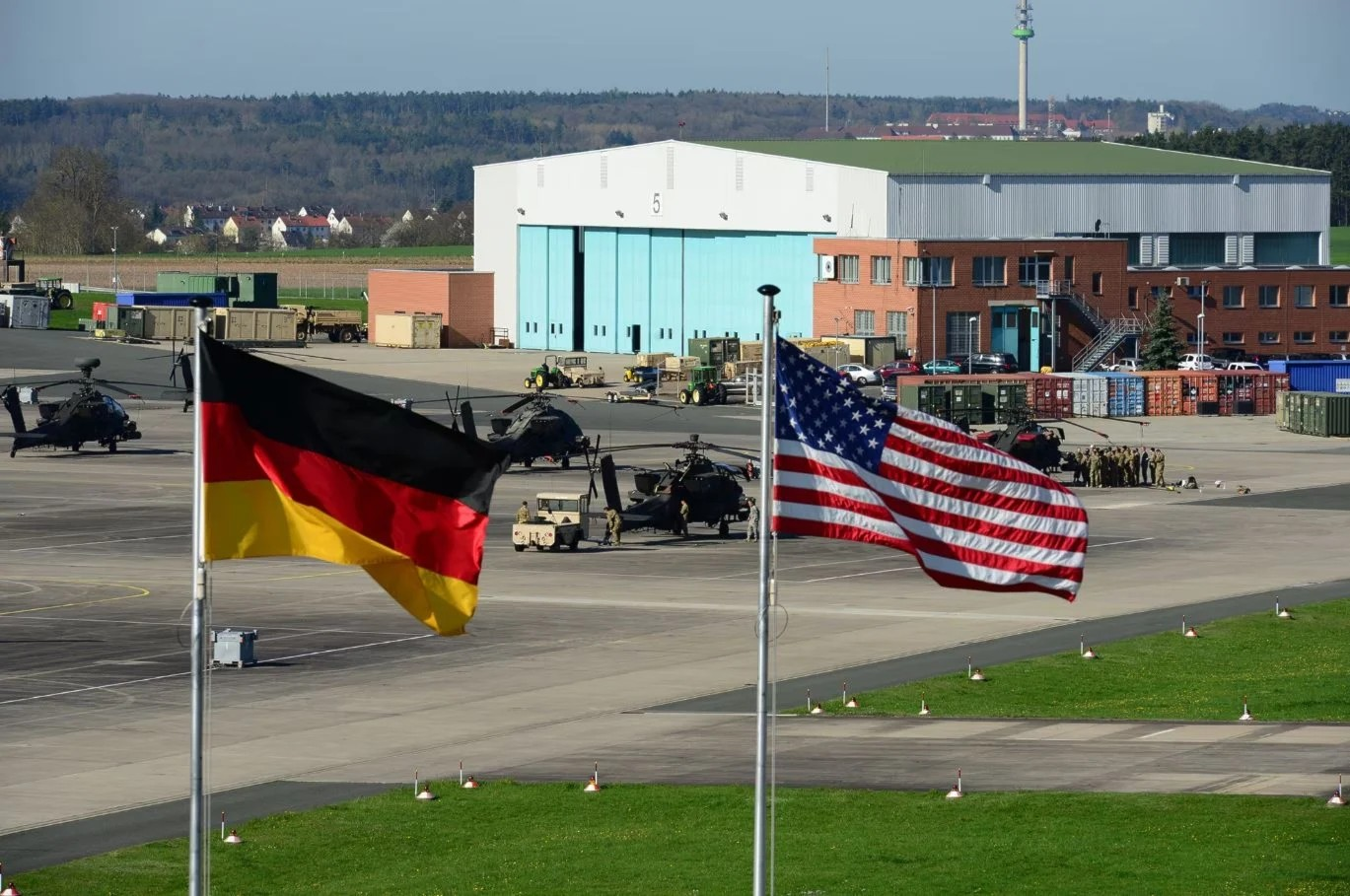
For his part, political analyst Ibrahim Khatib explained to Al-Estiklal that "Europeans do not want the withdrawal of American forces, considering them a protective shield against Russia, especially in light of the war in Ukraine and fears that the Russian threat could extend beyond Kyiv."
He pointed out that the danger of an American withdrawal lies not only in the possibility of its immediate implementation, but also in the fact that it could transform the US military presence in Europe from a strategic pillar of deterrence into a tool of political pressure.
"Besides Italy, Germany, and Spain, relations are also at their lowest point between Washington and both France and Britain, amid public criticism and the two countries' efforts to lead a separate maritime operation to reopen the Strait of Hormuz by non-military means," he added.
Reuters revealed last month an internal Pentagon memo outlining options for punishing NATO allies whom Washington believes have not supported US operations in the war on Iran.
Among these options are: suspending Spain's membership in the alliance and reviewing the US position on the UK's claim to the Falkland Islands.