A New Wave of Assassinations Rocks Aden in Southern Yemen: Who Is Behind It?
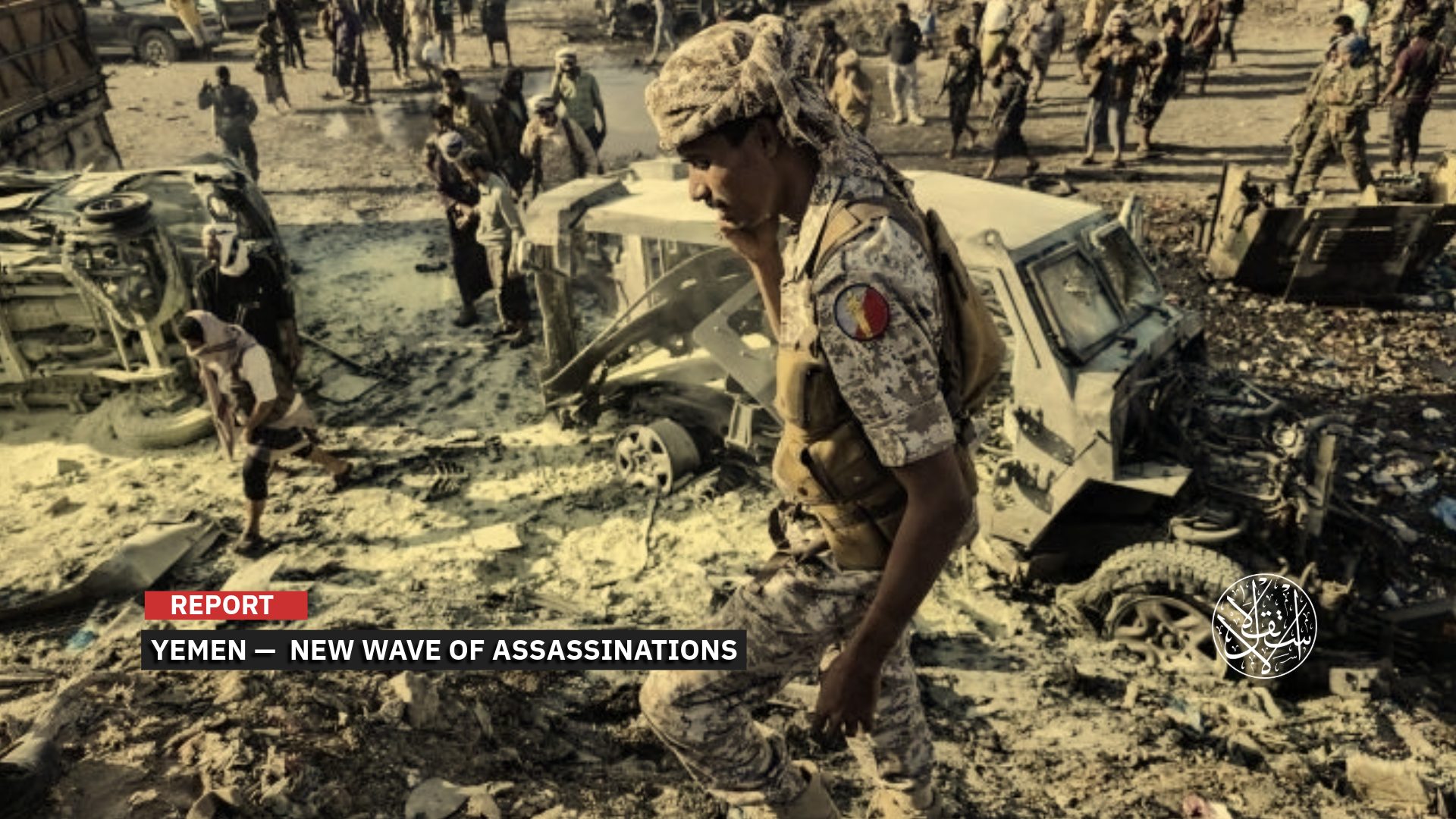
Two assassination incidents in Aden have placed the security situation under intense scrutiny.
The wave of assassinations that has swept through Yemen’s temporary capital of Aden in recent days has once again thrust the city’s file of assassinations that took place over the past years back into the spotlight, following the Houthi coup against Yemen’s internationally recognized government.
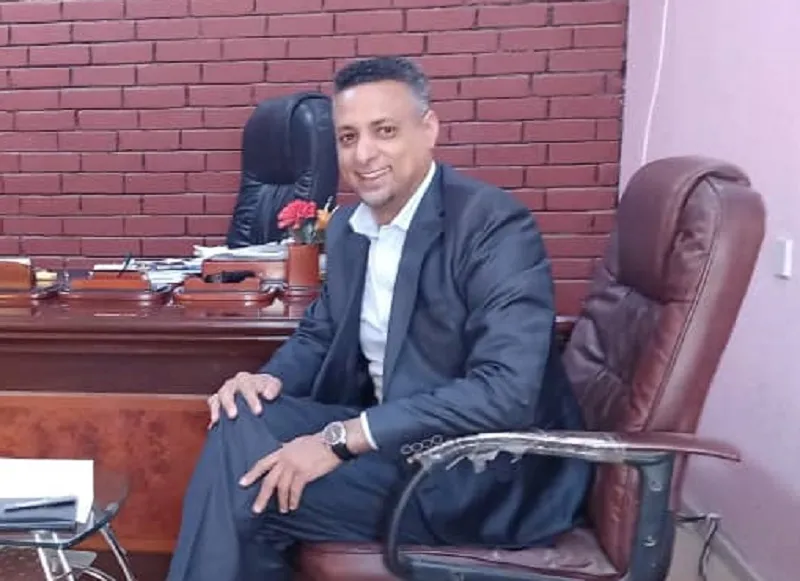
Over the past two weeks, Aden has witnessed the assassination of Wesam Qaid, executive director of the government-run Social Fund for Development, as well as the killing of Abdulrahman al-Suhaibi, known as “al-Shaer,” a senior figure in the Yemeni Congregation for Reform party (al-Islah).
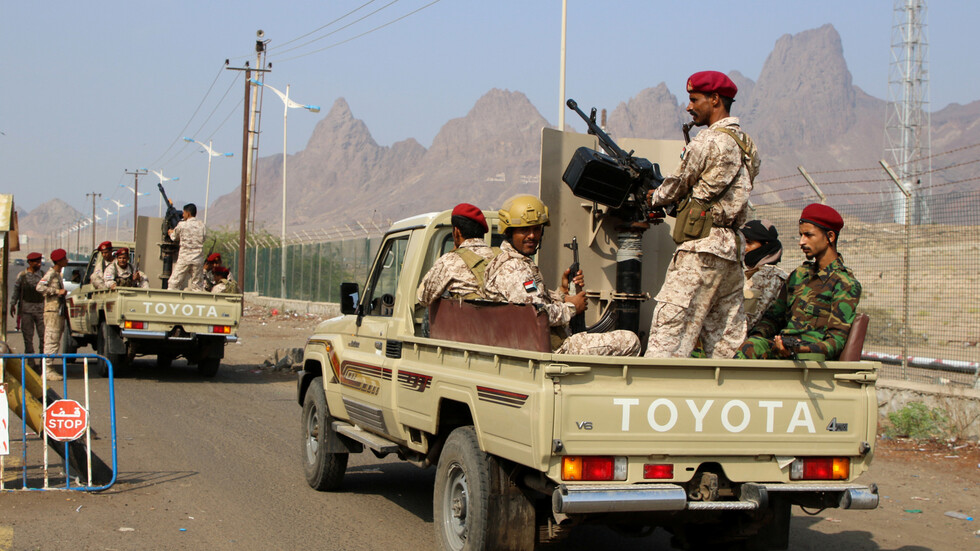
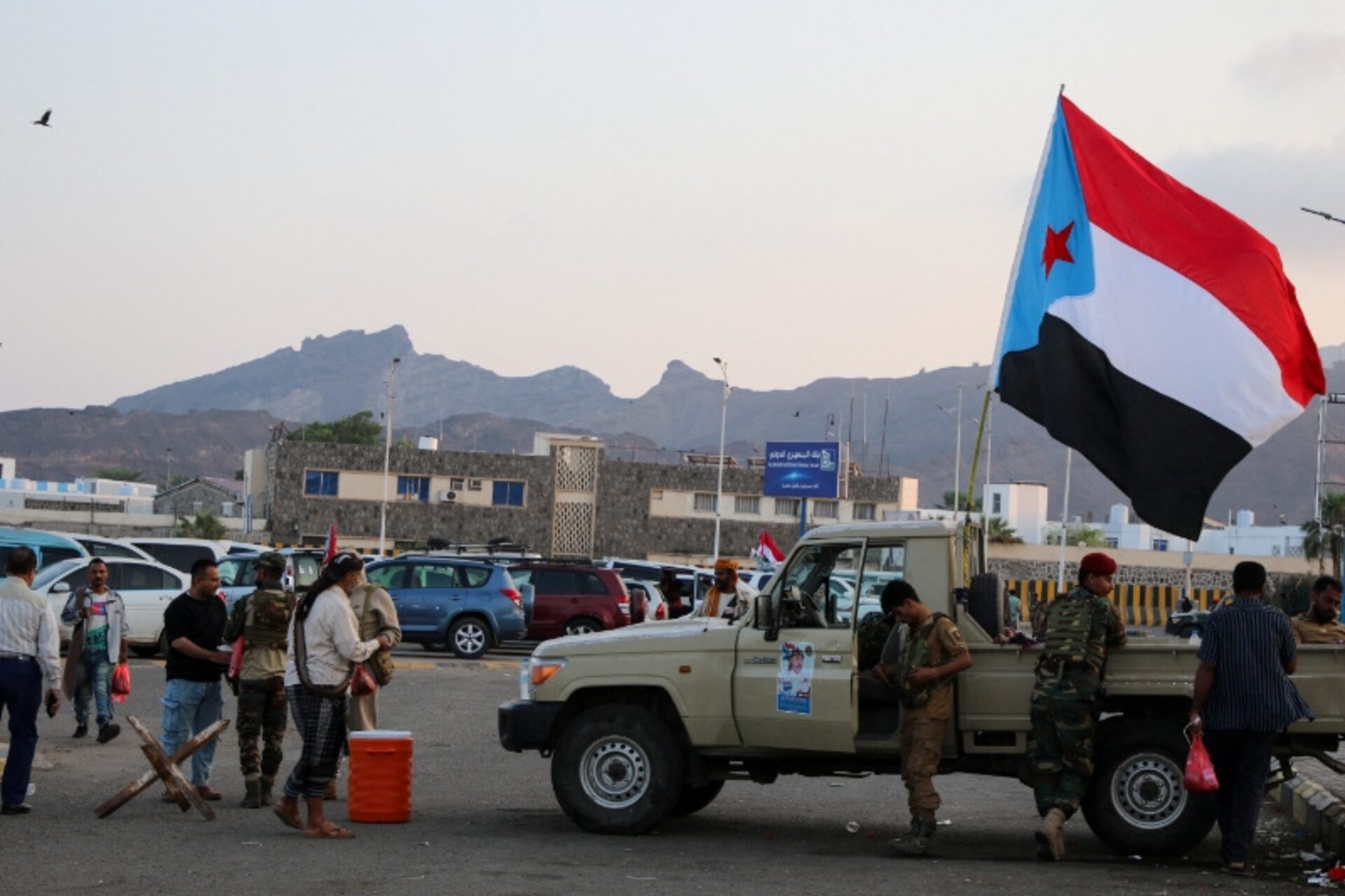
The two assassinations mark a striking escalation in a file many believed had begun to recede, particularly amid the political and security shifts that followed the internationally recognized government’s return to Aden after it regained control of the city from the UAE-backed separatist Southern Transitional Council (STC), whose leader, Aidarus al-Zubaidi, fled the country in early January 2026.
A Blunt Warning
On the government side, Prime Minister Shaya al-Zindani said in a post on X on May 3, 2026, that he was “closely following the circumstances and developments surrounding this treacherous and cowardly crime,” adding that he had instructed security and military agencies to take “urgent and decisive measures” to track down those responsible and bring them to justice without delay.
The National Bloc of Political Parties and Components (NBPC) condemned the assassination, describing it as a continuation of the “tragic and deeply alarming wave of terrorism” that the bloc had warned about in a statement issued on April 26.
In a sharply worded statement, the NBPC warned that security chaos, conflicting chains of command, and the continued delay in holding terrorists accountable have become fuel for further crimes, arguing that what is unfolding in Aden today is a stark warning that the city could slide into a dangerous security collapse unless the relevant authorities act firmly, decisively, and without delay.
Internationally, France’s ambassador to Yemen, Catherine Corm-Kammoun, said that those responsible for this “heinous crime” must be tracked down, arrested, and held accountable, reaffirming French support for Yemeni authorities’ efforts to preserve security and stability across the country.
British Ambassador Abda Sharif expressed her anger and shock over the assassination, saying that “the late official worked tirelessly to ensure lifesaving aid reached millions of Yemenis across the country.”
In a post on X on May 3, she stressed the need to “swiftly identify those responsible, hold them accountable, and bring them to justice.”
Condemning the assassination, UN Coordinator Laurent Bukera said that such horrific crimes could not be tolerated, adding that he supported the government’s efforts to ensure those responsible were brought to justice.
On January 22, 2024, the BBC published an investigation titled “UAE has funded political assassinations in Yemen, BBC finds,” a report that reportedly triggered anger and unease within the Gulf state.
The British investigation said the UAE played a major role in funding politically motivated assassinations in Yemen, contributing to the deepening conflict among the country’s rival factions.
It further revealed that counterterrorism training provided by American mercenaries to UAE units operating in Yemen was covertly used to train local operatives, fueling the rise of targeted political assassinations.
‘Muddying the Waters’
On the escalating wave of assassinations, Yemeni writer and political analyst Yassin al-Tamimi told Al-Estiklal that the recent killings appear to fall into two distinct tracks.
Some, he said, are an extension of a pattern of assassinations carried out over the past years—likely driven by the same “security doctrine” targeting anyone associated with Islam and the Yemeni Congregation for Reform party.
The second track, according to al-Tamimi, is linked to “muddying the waters in Aden,” as illustrated by the killing of Wesam Qaid, the executive director of the Social Fund for Development, a technocratic government official described as highly competent and politically unaffiliated.
Targeting Qaid, he argued, projects a degree of state influence and presence—something that does not sit well with those seeking to undermine the legitimacy of the authorities at this stage, whether the Houthis or factions within the STC and the UAE. “In all cases, Aden remains the target,” he said.
Al-Tamimi stressed that the ultimate goal is to throw Aden into confusion and portray it as a theater of terrorist activity, a narrative he said aligns with the version promoted by the STC under Emirati guidance—that it has been filling a security vacuum in the south and confronting al-Qaeda and terrorism.
However, he added, a closer look at the nature of the targets in Aden does not support this narrative but rather suggests that the operations are carried out through disciplined security and intelligence mechanisms.
He also pointed to what he described as a loosening and lack of discipline in the security grip in Aden, where Presidential Leadership Council (PLC) member Abdulrahman al-Muharrami holds responsibility, though he does not believe he is directly involved in what is unfolding in the city.
At the same time, al-Tamimi said al-Muharrami bears responsibility in the sense that Aden has not been sufficiently secured, nor have adequate steps been taken to restructure the security apparatus in a way that allows for proper control of the city’s security landscape.
He further suggested that those behind the disruption of the scene may be a mix of remnants of the STC, supported by a regional intelligence apparatus, and possibly coordination between the Houthis and the STC in Aden.
He noted that the targeting of the Social Fund director is “a purely Houthi objective,” arguing that Qaid’s relocation of the fund’s headquarters to Aden and his securing of around $130 million in support deprived the Houthis of access to those resources, which had previously helped fund projects in areas under their control.
On the continuation of assassinations, al-Tamimi said, “We appear to be facing a long-term project,” stressing that the matter is not solely about the will of the legitimate government but also involves what he described as clear and active intervention from the Saudi side.
He said such involvement is necessary, as it requires a restructuring of security institutions in Aden and freeing them from regional and closed networks that have turned them into tools serving a specific secessionist agenda.
He concluded that rebuilding the security apparatus in Aden into a national institution would require diversifying its personnel and leadership in order to stabilize the Yemeni security landscape based on the state’s priorities, agenda, and objectives.
Political Implications
A recent surge in assassinations in Aden is once again highlighting the city’s fragile security environment and the deeper political tensions embedded within its instability.
Yemeni writer Mustafa Naji noted that the killings, which have occurred repeatedly over just a few weeks, cannot be viewed as isolated incidents. Instead, he argued that each assassination carries both political and security significance within a broader, highly complex context marked by shifting power arrangements in Aden and neighboring provinces.
In a post on X dated May 4, Naji linked the escalation to partial changes in authority following the reconfiguration of local political structures and ongoing shifts in governance across the region.
In his view, the pattern reflects more than security lapses—it points to a structural exposure that underscores the fragility of existing institutions rather than temporary dysfunction.
Naji stressed that addressing the crisis requires more than short-term measures. It demands a serious review of the entire security apparatus, including restructuring, personnel rotation, and the rebuilding of a coherent intelligence system capable of operating effectively.
He added that any meaningful response must begin with accountability. At a minimum, he said, progress depends on apprehending those responsible and uncovering the truth behind the killings—an essential step toward restoring trust in a city where violence continues to outpace institutional control.
Aden al-Ghad Editor-in-Chief Fathi bin Lazraq wrote in a post on X on May 4 that there have been no real results in investigations into dozens of past assassination cases.
He said that since 2015, there have been “dozens, even hundreds” of assassinations in Aden and other governorates, while public discourse has been filled with statements, confessions from unidentified individuals claiming responsibility, and accounts of alleged planning, execution, and financing.
He added that television appearances and social media statements by security officials have repeatedly highlighted what they describe as major achievements and successes. However, he said that in practice, “all of these people disappear afterward, slipping away like fine grains of sand through the fingers.”
Bin Lazraq said he has not seen a single execution of those convicted, nor any trial of anyone found guilty of murder. He stressed that what is needed above all is security and real intelligence services.
He described the situation as a “great emptiness,” saying it was like smoke that people tried to grasp but that quickly vanished—along with victims, professionals, minds, and exhausted lives.
He concluded by calling for genuine security that informs people in the morning that it has succeeded in protecting them, rather than security that announces harm only after it has already occurred.
An analysis published by Chatham House days ago said the assassination of Wasam Qaid is not an incidental event, warning that the killing could prompt international organizations and donor agencies to hesitate before sending their staff into dangerous circumstances.
The analysis, prepared by Yemeni researcher Farea al-Muslimi, stated that the incident exposes the PLC’s lack of a unified and effective security system. It noted that security agencies in Aden continue to suffer from fragmentation, competing loyalties, and weak intelligence coordination.
It added that attempts to integrate security forces have remained superficial amid an ongoing policy of politically absorbing armed factions at the expense of professional standards, which has weakened the ability of security institutions to prevent threats before they occur.
According to the report, the continuation of such operations reinforces the perception that the Yemeni government remains unable to impose stable security control even within areas under its authority, despite the regional and international support it receives.
It also argued that the fragmentation of security forces and the proliferation of armed actors in southern Yemen have created a complex environment that undermines state institutions and limits their ability to protect civilians and humanitarian workers.
The analysis stressed the need for a comprehensive restructuring of the security apparatus in Aden and other government-controlled areas, alongside the establishment of a centralized mechanism to coordinate intelligence work, in parallel with serious economic reforms.
Sources
- Joint INGO Statement: Killing of Wesam Qaid SFD [EN/AR]
- Second Assassination in Yemen’s Aden in Two Weeks: Condemnations and Calls for Accountability [Arabic]
- Killing of development leader exposes insecurity in government-controlled Yemen
- Prime Minister Directs Urgent and Firm Measures to Track Down Killers of Social Fund Director and Bring Them to Justice Without Delay [Arabic]
- Why Does the BBC Focus on UAE-Linked Assassinations in Aden While Ignoring Them in Other Areas? [Arabic]