Washington Embarrassed in Dehdasht: Was It a Botched Dry Run for an Airborne Operation?
The mission was not just about rescuing a pilot, but a failed attempt to seize Iranian uranium.
Between the failed Desert One mission in eastern Iran in 1980, launched to rescue American embassy captives, and the Dehdasht attack in the country’s southwest on April 4, 2026, aimed at saving a downed U.S. pilot, the American military once again found itself facing a defining test, one that appeared to shape the political calculus over whether to press ahead with war or pull back.
While the U.S. military has declared success in rescuing the crew of the F-15 shot down by Iran, the cost appears steep. It was not limited to the loss of four aircraft and dozens of wounded troops but extended to a deeper symbolic toll and political embarrassment that could carry consequences for President Donald Trump, echoing the fallout that once haunted Jimmy Carter and cost him reelection.
The controversy has only intensified with circulating reports that the mission was not solely about rescuing a pilot but a failed attempt to seize Iranian uranium, later recast as a rescue operation for forces that had already touched down on the ground.
‘Dasht-e Lut’ and ‘Dasht-e Tabas’
In Persian, “dasht” means a vast open plain or desert, an ironic thread linking two U.S. operations decades apart. The 1980 mission in Dasht-e Tabas, part of the wider Dasht-e Lut desert and known in Washington as Operation Eagle Claw, and the 2026 operation in Dehdasht both ended with American losses, albeit of different kinds.
The first, launched to rescue U.S. captives in Iran, collapsed into disaster after a sandstorm and a midair collision, killing eight American servicemen in what is now South Khorasan province.
The second has also carried the weight of failure, though without officially confirmed fatalities so far. Still, reports on April 4 indicated that the rescued F-15 pilot was seriously wounded, a point later acknowledged by President Donald Trump.
Several special forces personnel involved in the operation were also injured, and the complexity of the mission suggests that many of its details may never fully emerge, leaving open the possibility of further casualties among the wounded.
Since the U.S.-Israeli War on Iran began on February 28, 2026, no U.S. troops have been killed or captured inside Iran. However, 13 American personnel have died in strikes targeting positions in Kuwait, Saudi Arabia, and Iraq.
The most visible losses, though, have been in hardware. Multiple aircraft were destroyed or damaged, prompting Iranian media to label the operation “Tabas Two,” a pointed reference to the earlier debacle.
The losses began with Iranian air defenses downing an A-10 Warthog, followed by the destruction or damage of four aircraft involved in the rescue mission, including two HH-60 helicopters and two C-130 Hercules transport planes.
An MH-6 Little Bird helicopter was also destroyed, along with an A-10 Thunderbolt II and one or possibly two MQ-9 Reaper drones, with military estimates pointing to additional damage to at least three other aircraft.
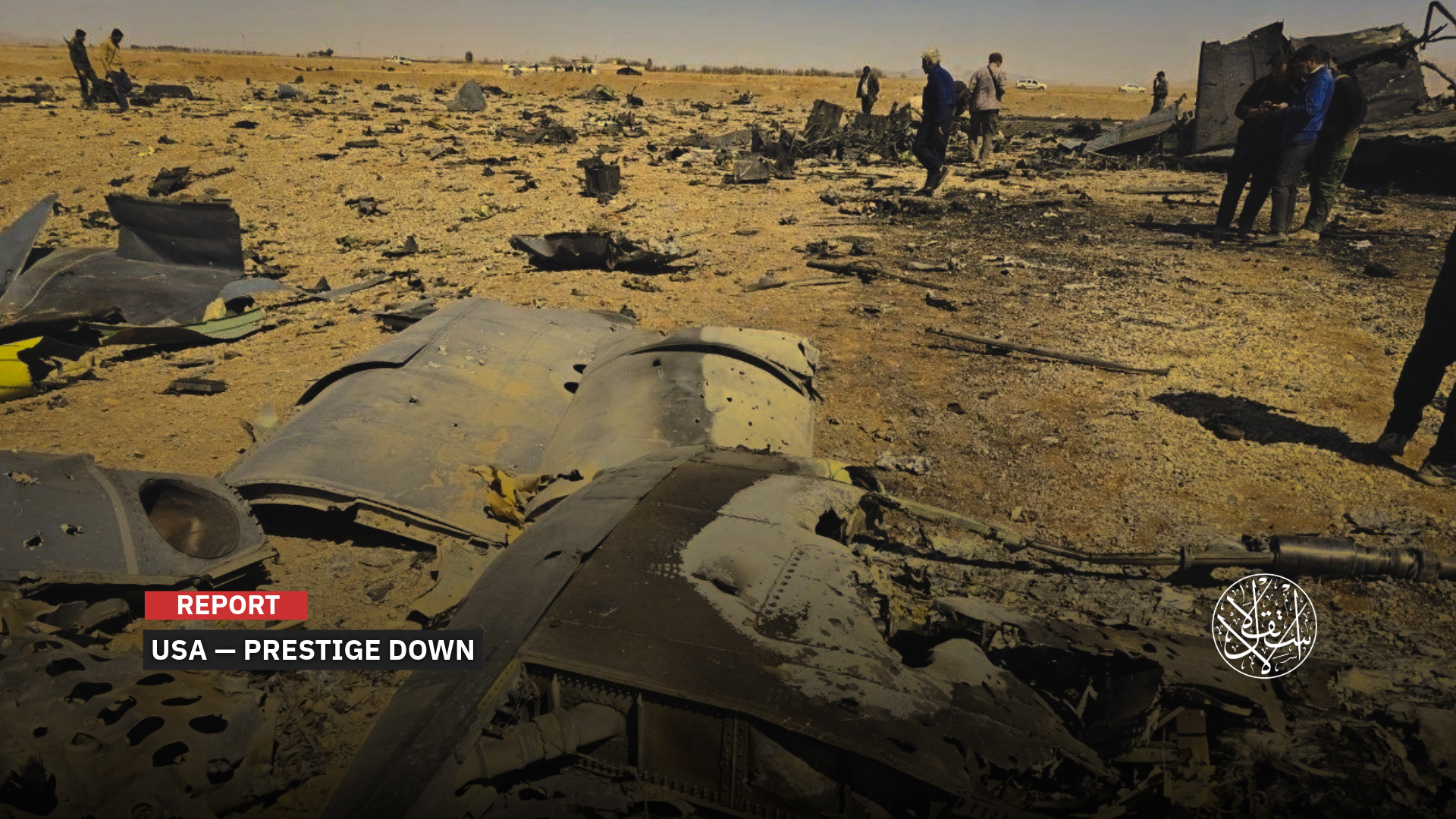
Images of the burned aircraft showed clear signs of projectile impacts on the fuselage of a C-130 that crashed south of Isfahan, suggesting it was hit by Iranian fire, contrary to the U.S. account that described it as a “technical failure.”
According to the Clash Point platform, the cost of the F-15 pilot rescue operation reached roughly $386 million in aircraft alone. This included the destruction of an F-15E Strike Eagle (about $100 million), an A-10 (around $18.8 million), two C-130 aircraft (nearly $200 million combined), an MH-6 helicopter ($7.5 million), and one or two MQ-9 drones valued between $30 million and $60 million.
The Wall Street Journal (WSJ) reported on April 5, 2026, that each of the two U.S. transport aircraft destroyed during the operation was worth more than $100 million, noting that the two MC-130J aircraft were stranded on the ground before being destroyed.
In contrast, Iranian accounts described far greater losses. The Islamic Revolutionary Guard Corps (IRGC) claimed it had destroyed multiple U.S. aircraft and inflicted “significant losses on the enemy,” echoing its narrative of the 1980 Tabas operation.
A spokesperson for the Khatam al-Anbiya Central Headquarters said Iranian forces struck two Black Hawk helicopters and a C-130 transport aircraft, insisting they were completely destroyed, and dismissed Trump’s statements as an attempt to cover up what he called an “enemy defeat.”
Trump’s remarks also reflected the operational uncertainty surrounding the mission. He pointed to concerns about a possible Iranian “trap” during the rescue attempt after receiving a message from the pilot containing the word “God,” which raised suspicions that he might have been lured in, according to Axios on April 5, 2026.
He added that around 200 special operations troops took part in the mission.
In a notable development, the IRGC published images it said showed the skull of a U.S. soldier found inside a C-130 aircraft, in an attempt to prove American fatalities.
However, other media reports suggested it may in fact belong to an Iranian soldier killed by a missile while approaching the operation site.

Was Uranium the Real Objective?
The U.S. military operation on April 4, 2026, publicly described as a rescue mission for the pilot of an F-15 shot down by Iran, has triggered questions and competing interpretations over its true purpose, with analysts and media reports casting doubt on the official U.S. narrative.
Several sources, including leaked material cited by The Washington Post on April 2, suggested the operation was not limited to a rescue effort but may have been aimed at seizing Iranian uranium stockpiles.
Larry Johnson, a former CIA officer, also argued that the Pentagon may have misled public opinion, suggesting the downed U.S. aircraft was part of a broader plan for ground aggression on a nuclear facility in Natanz before the rescue attempt unraveled into a full-scale disaster.
The U.S.-based Iranian academic Arash Reisinezhad said available evidence suggests the operation was not linked to any attempt to rescue a pilot but was instead a failed airborne insertion aimed at locating Iranian uranium.
He pointed out that the crash site in southwestern Iran’s Kohgiluyeh and Boyer-Ahmad province is around 200 kilometers from the nuclear facilities in Isfahan, arguing that the distance raises questions over whether the mission was in fact a cover for a larger operation.
Other analyses, including a report by CNN Turk, said the number of aircraft involved, along with the deployment of around 200 soldiers and officers, was inconsistent with a single-pilot rescue mission and instead pointed to a broader military operation aimed at seizing Iran’s stockpile of uranium enriched to up to 60% in Isfahan.
Foreign monitoring analyses suggest that the pilot narrative may have served as a cover story, masking the operation’s original objective. They note that the MC-130J aircraft involved are primarily used for troop transport and evacuation missions, equipped for aerial refueling and designed to operate under contested airspace, including threats from heat-seeking missiles—underscoring the scale and complexity of the mission.
These assessments further argue that the heavy U.S. bombardment during the search operation was driven by efforts to secure equipment and sensitive nuclear-related assets after aircraft were struck on the ground, effectively turning the mission into a large-scale rescue effort for personnel rather than a narrowly defined pilot recovery operation.
The summary here suggests that the recent U.S. operation in southern Iran, despite being presented as a pilot rescue mission, may have in fact been a far larger covert attempt to infiltrate and seize Iran’s highly enriched uranium, with heavy human and material costs and significant political repercussions for Washington.
A Test of American Power
The administration of U.S. President Donald Trump described the recovery of a second American pilot carried out in Iran on April 4, 2026 as one of the boldest search-and-rescue operations in U.S. history, involving dozens of aircraft and an elite military unit. Iran, by contrast, called it a “complete failure,” while Western assessments and analyses suggested the operation carried implications of a deeper American setback rather than a straightforward rescue success.
What was meant to function as a blend of military display and political calculation—where success would bolster deterrence and political standing, and failure would produce a double embarrassment for both the military and the administration—has instead become another case study in the limits of force. Western analyses note that U.S. interventions in Iran are increasingly becoming complex tests that go beyond conventional warfare, echoing earlier operations such as the 1980 Tabas mission, where environmental conditions and geography exposed critical operational vulnerabilities.
The recent Dehdasht operation reflects the continued challenges of operating in a hostile environment deep inside Iran, where multiple layers of risk complicate every stage of the mission, raising broader questions about the limits of U.S. power in such a highly complex strategic landscape.
The BBC reported on April 6, that, despite Trump declaring victory after the pilot’s recovery, the operation has produced a far more complicated picture of what it means for the United States in Iran. Experts noted that the loss of multiple U.S. aircraft highlights the continued effectiveness of Iranian air defenses, even after weeks of intensive American and Israeli strikes on Iran’s military infrastructure.
Analysts added that the loss of aircraft and the complexity of the extraction could discourage the U.S. administration from future ground operations aimed at seizing strategic sites such as oil export facilities on Kharg Island or stockpiles of highly enriched uranium. U.S. forces, they noted, still face remaining Iranian air defense capabilities, including man-portable air defense systems, which are particularly effective against low-flying aircraft.
Mediapart argued that Trump’s recovery of the pilots did little to dispel the broader trap of war, noting that Iran has demonstrated resilience and that the aggression on the country has not achieved its stated objectives, whether regime change or preventing Tehran from acquiring nuclear weapons, despite U.S. claims.
The NYT described the downing of the F-15E Strike Eagle as a blow to claims of U.S. air superiority, adding that Iran had used the wreckage for propaganda purposes to challenge Washington’s account of the operation.
Other Western reports also highlighted discrepancies over U.S. claims that two disabled aircraft were destroyed, while Iranian accounts suggested they had been struck on the ground. A spokesman for Iran’s Khatam al-Anbiya Central Headquarters said several aircraft, including two Black Hawk helicopters and two C-130 transport planes, were forced into emergency landings south of Isfahan before being surrounded and later destroyed on orders from U.S. command to avoid what he called a political embarrassment for Trump and to preserve the illusion of military prestige.
Military analyses suggest that the destruction of damaged aircraft on the ground reflects an implicit acknowledgment of the limits of U.S. protective systems under sustained pressure and a strategic concern over the possible exposure of sensitive technological codes to Iranian intelligence.
A Failed Rehearsal for Airborne Insertion
According to Western assessments, the U.S. pilot rescue operation in Iran may have functioned as a rehearsal for a larger airborne insertion deep into Iranian territory should President Donald Trump decide to authorize such a move.
U.S. media outlets, like Fox News on April 5, 2026, were keen to host military officials to discuss the operation, arguing that it exposed “Iran’s vulnerability” and demonstrated the feasibility of airborne insertions “anywhere,” according to the U.S. narrative.
Iranian accounts, however, recast the episode as a warning to the United States, arguing that any future airborne insertion would face inevitable failure, pointing to the destruction of U.S. aircraft during the mission as evidence. Iranian analysts insist that the areas Washington might seek to target, whether oil fields or nuclear facilities, are heavily fortified and that even if U.S. forces manage to enter, survival and extraction cannot be guaranteed.
Yedioth Ahronoth picked up on the American embarrassment, with analyst Ronen Bergman writing on March 5, 2026, that the United States had failed to establish meaningful deterrence against Iran. He added that this perceived weakness could encourage countries such as Russia and China to consider the use of force more freely, without fear of American retaliation.
Israeli security officials also criticized U.S. performance in the U.S.-Israeli War on Iran, arguing that the loss of a U.S. fighter jet and the destruction of four additional aircraft demonstrated a lack of readiness to confront this type of threat. According to Bergman, the U.S. military has not fought at this level of intensity in a long time and had been preparing for a short war with expectations of a rapid collapse of the Iranian state.
The Israeli analyst further argued that the United States had failed to defend Gulf allies despite extensive preparation time and had not achieved meaningful deterrence against Iran, underscoring the limits of American capacity to manage complex conflicts deep inside Iranian territory.
Consequences for the United States
The U.S. pilot rescue operation in Iran, and the loss of a significant number of American aircraft, sparked widespread anger among members of Congress, who accused Trump of recklessness and endangering national security.
The Democratic minority leader in the Senate described Trump as an “unhinged madman,” warning that his social media threats, which included incendiary language about destroying bridges and power stations in Iran if the Strait of Hormuz remained closed, could amount to potential war crimes.
U.S. and European analyses and reporting have focused on comparisons between the failed pilot rescue operation and the 1980 captive rescue mission overseen by President Jimmy Carter, where losses in personnel and equipment contributed to a sharp decline in his popularity and ultimately his defeat in the 1980 election. These parallels have raised questions about the potential impact of the latest operation on the image of the U.S. administration and the Republican Party ahead of the November 2026 midterm elections.
At the same time, widely circulated images of burning U.S. aircraft during the operation, along with abandoned highly sensitive equipment, have underscored a moment of national embarrassment reminiscent of the 1980 Tabas desert operation, when Iran released images of abandoned helicopters and scorched wreckage that dealt a significant blow to U.S. prestige.
On the military level, the operation has revived debate over sweeping changes in U.S. military doctrine in the aftermath of failure, echoing the post-Desert One reassessments that followed the 1980 mission in Tabas, including the creation of new joint special operations commands. Observers link the dismissal of the U.S. war secretary and a wider leadership shake-up involving 26 senior commanders directly to the operation’s failure in an effort to reset strategy and avoid repeating the same mistakes.
Sources
- Trump declares victory after rescue but threats to US operation in Iran still loom
- Exclusive: Trump says U.S. feared Iran trap during F-15 crew rescue
- Iran says several 'enemy aircraft' destroyed during US pilot rescue mission
- Trump’s Stone Age Threat Will Lead to Tragedy
- US fighter jet downed in Iran: Pilot rescued in fair condition, navigator's fate unknown