Who Is Behind a Widespread Demonization Campaign Against the Most Powerful Islamist Party in Morocco?
"There are questions about whether the Justice and Development Party has started to frighten them to this extent?!"
Morocco’s Justice and Development Party (PJD) is facing a fierce campaign from its opponents, who are attempting to turn state institutions and public opinion against it by leveling accusations against its leadership and political project, and questioning its patriotism and religious legitimacy.
These accusations have sparked widespread debate in Moroccan political and media circles, especially since Abdelilah Benkirane’s party has not remained silent.
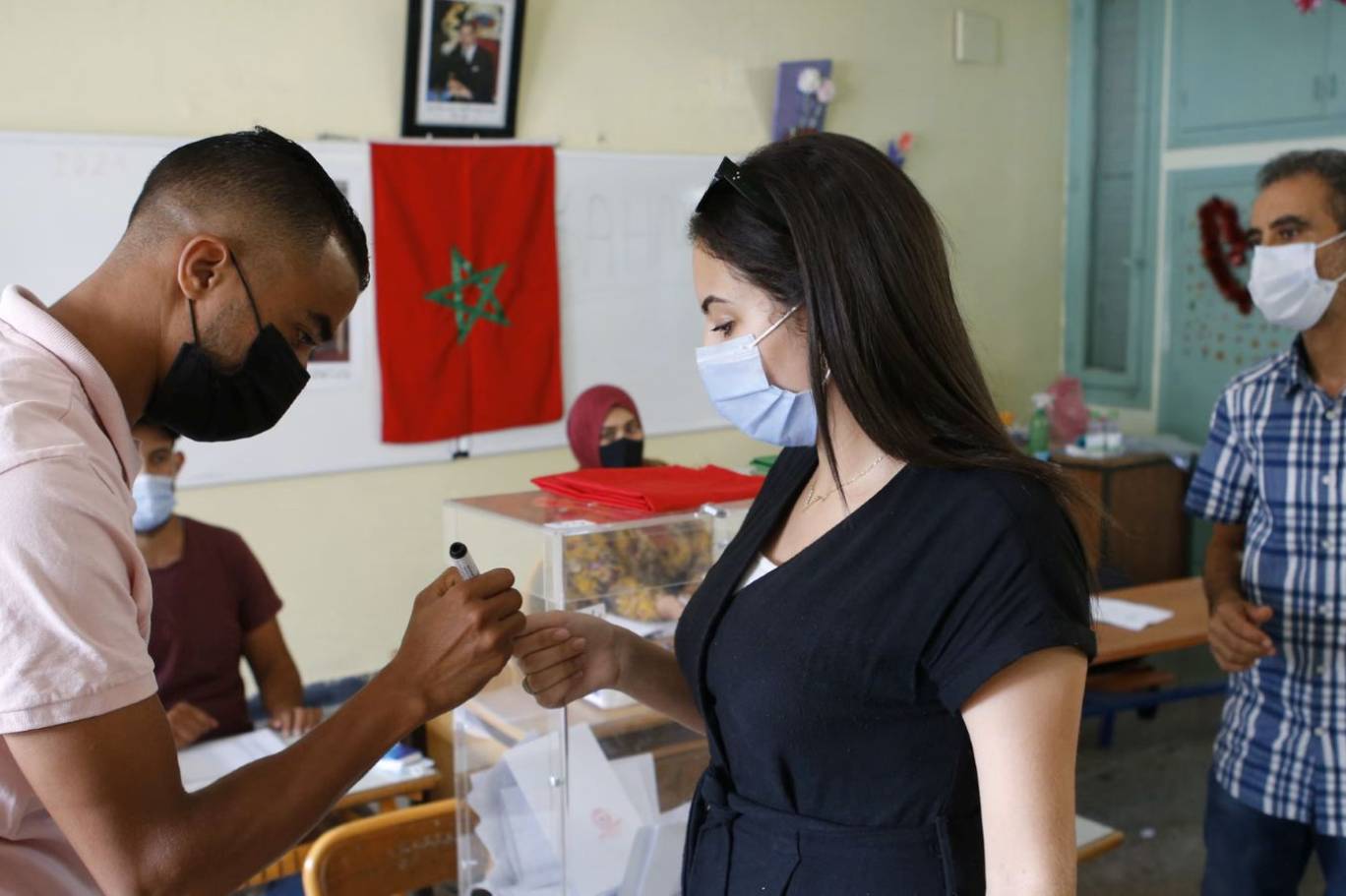
This campaign coincides with Morocco’s preparations for the parliamentary elections scheduled for September 2026, which are considered pivotal.
The party is counting on these elections to regain its electoral presence and urge voters to punish the government of businessman Aziz Akhannouch.
"We Are All Israelis"
The anti-Benkirane faction includes many figures who are loyal to the authorities, support the current Prime Minister Aziz Akhannouch, and endorse the so-called “We Are All Israelis” movement.
Among them is former government official Abdelhak Sanaybi, currently a presenter on the UAE-backed website Hespress, who made what he described as an urgent appeal to the Moroccan monarch to order the immediate dissolution of the PJD.
In a video he posted on social media in May 2026, he said, "We are embarking on an adventure with dire consequences, and officials in the Ministry of the Interior, National Security, and the Royal Gendarmerie will suffer."
He added, "You are contributing to fattening the genie, and one day it will be released from its bottle."
After deeming the existence of the PJD a coup against the institution of the Commander of the Faithful (referring to the Moroccan king), he criticized Abdelilah Benkirane's statement that he could not pray behind Imam Mohamed Fizazi.
Sanaybi said that this was a dangerous statement because the King himself had prayed behind Fizazi in congregational prayer on one occasion.
University professor Abderrahim El Manar Esslimi joined this call, insisting that the party not be given opportunities to express its positions in public media.
He said, "Reintroducing the PJD to the official media agenda is a grave mistake," following the repercussions of hosting Idriss Azami El Idrissi, the PJD's first vice-secretary general, on a talk show on the first channel on May 8.
He pointed out that El Idrissi's opinions and bold criticisms garnered a high viewership, exceeding 147,000, compared to the low viewership of other guests.
Similarly, Fizazi, previously detained on terrorism charges, left his religious field to participate in the political debate.
He directed sharp criticism at the PJD and its leaders through several posts on his Facebook account, as well as through various statements he made to the media.
For example, in a post on May 14, he said, "My disagreement with Benkirane and his followers is ideological, not political. I am not affiliated with any party."
"The point of contention between us is the doctrine of the Twelver Shi'a (Ithna 'Ashariyya). Furthermore, it is a dispute over loyalty to the homeland, not to the enemies of the homeland," he added.
In the latest attack against Benkirane's party, Deputy Speaker of the House of Representatives, Idriss Chtibi, accused the party and its leadership of Shiism during the plenary session held on May 18.
Chtibi, a member of the Socialist Union Party, caused the session to be adjourned and the House Bureau to convene after a heated argument with the Deputy Head of the PJD's parliamentary group, Mustafa El Ibrahimi.

Immoral
The PJD responded to this multifaceted attack, including a statement by El Idrissi, who said: "The frenzy displayed by the opponents towards the party, especially recently, is proof of the party's dynamism and its genuine work."
He added on May 18 that the opponents lack integrity, purity, and commitment. Ethical principles and respect for the management of public funds and citizens' affairs.
"We are not playing games with the monarchy; rather, we always emphasize the necessity of respecting His Majesty the King, and we affirm that he is the pillar of the country," he added.
"Our covenant with our country is firm, while you are with those whose pockets are lined, and you have openly declared your allegiance to Israel and others," he said.
He then addressed the party's historical stance during the February 20th Movement of 2011, emphasizing its desire for reform within a framework of stability, stressing that the PJD continues to maintain and reiterate this position to this day.
"The ten years of the PJD in government between 2011 and 2021 were a source of pride for the nation and its citizens," said El Idrissi, declaring the party's pride in the reforms achieved for the benefit of national businesses and what was offered to Moroccan society, despite the significant challenges at the time.
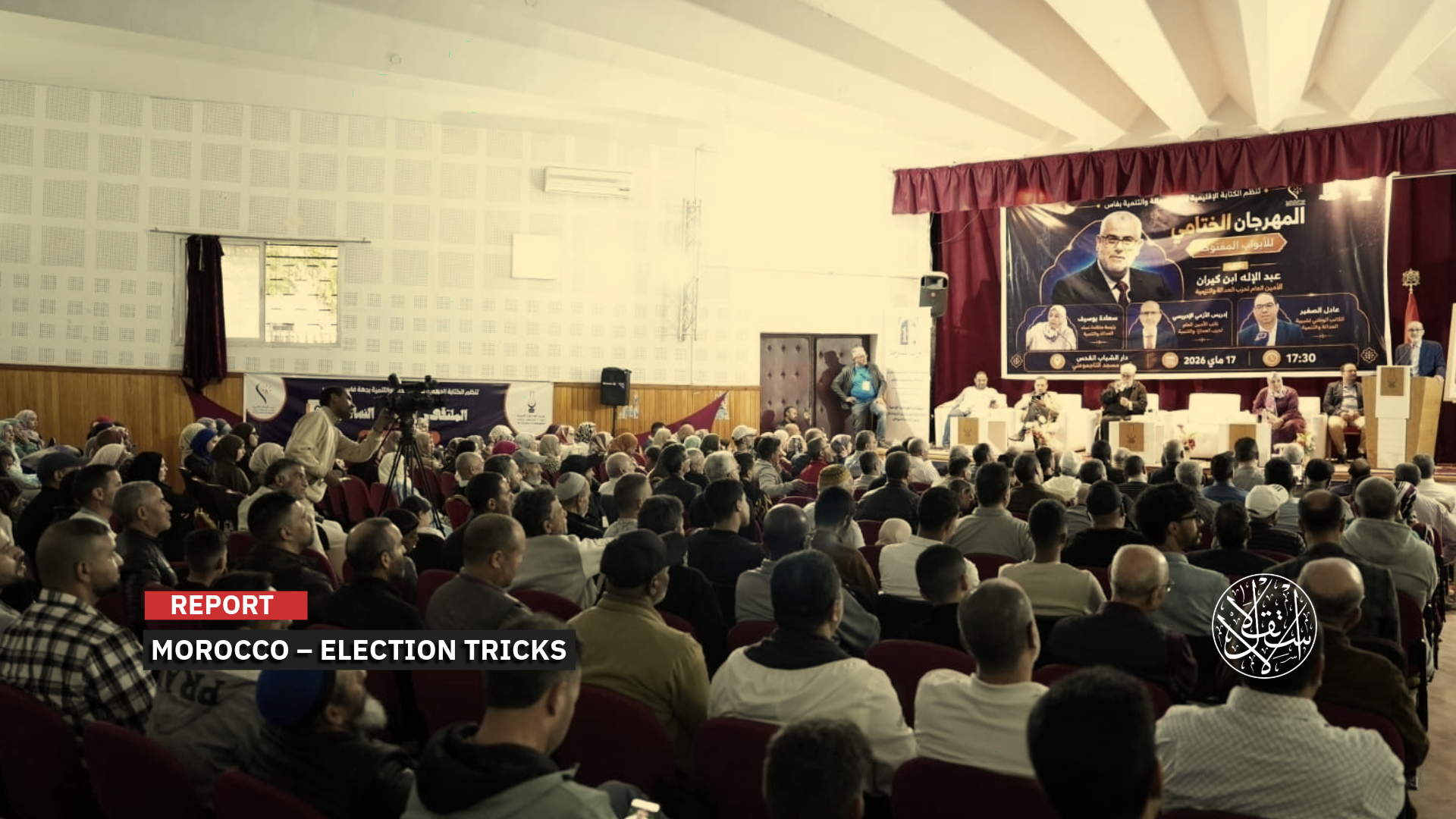
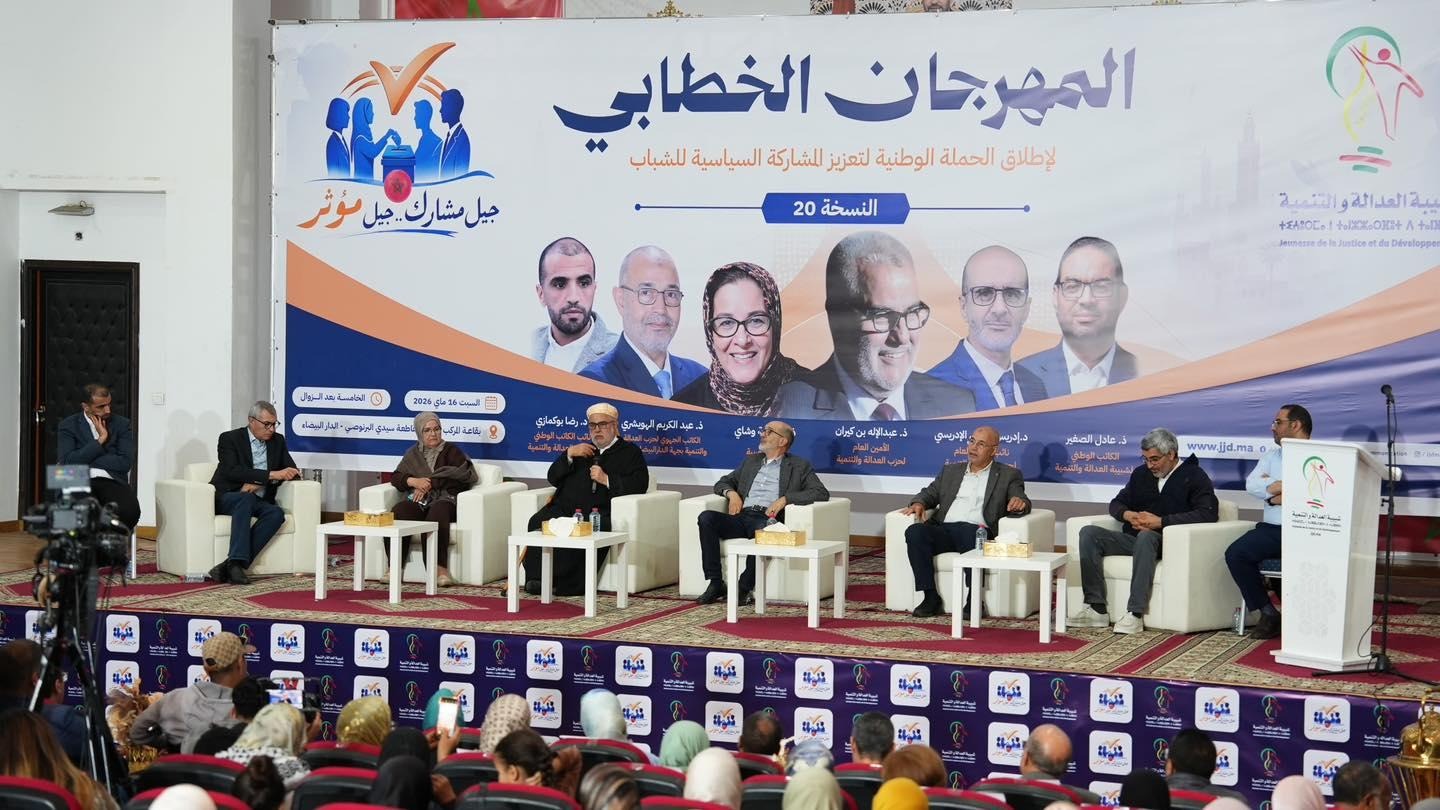
In a party meeting in Fez on May 17, the national secretary of the PJD's youth wing, Adel Sghir, said: "Those who defend corruption are also the ones attacking Benkirane. Some of them want to dissolve the PJD and prevent it from accessing national media outlets funded by Moroccans."
He added, "What kind of patriotism is this that tries to cover up social failures, with an unemployment rate of 13.8% and 1.6 million unemployed, after the government promises to create one million net jobs?"
He continued, "What kind of patriotism is this that defends a minister who places members of his party in public positions in violation of the law, equal opportunities, and equality among all citizens?"
He stressed that the government has failed in everything, and criticized those who defend a party that has given everything to Moroccans and worked for their interests.
Exclusionary Discourse
In this context, political communication researcher Hassan Hamrou pointed out that the discourse calling for the dissolution of a political party, regardless of its position or ideology, goes beyond expressing an opinion.
"It is an explicit expression of an exclusionary tendency that contradicts the spirit of the constitution and the logic of pluralism chosen by Moroccans of their own free will," he said.
In an opinion piece published on the Itlala Press website, he emphasized that talk of dissolving the PJD cannot be separated from this exclusionary trend that views dissent as a threat and pluralism as a burden to be eliminated.
He pointed out that "this party is no longer merely a political organization representing societal sensitivities, but has become part of the Moroccan political and social fabric, and a key player in the development of the national democratic experience."
He noted that the logic of the Moroccan state, as it has been established for decades, is not based on exclusion or eradication, but rather on pluralistic governance and the integration of various currents within the framework of democratic life in the country.
"This is what has enabled Morocco to maintain a degree of stability in a turbulent regional environment. Therefore, the call to dissolve a political party of this size not only appears out of place but also contradicts the state's own choices," he said.
He argued that what is even more dangerous is that such calls open the door to an atmosphere of suspicion and tension, fuel a logic of accusation rather than competition, and push public debate away from its true essence, which is to raise questions of improving political performance, strengthening trust in institutions, and elevating party activity to meet citizens' expectations.
He stated that "Morocco today needs to deepen pluralism, not diminish it, and to renew confidence in political mediation, not undermine it. Calls that invoke the logic of eradication are, at best, an expression of an outdated interpretation, and at worst, an attempt to circumvent the rules of democratic competition."
He concluded that Sanaybi and those like him must understand that the strength of nations is not measured by their ability to exclude those who are different, but by their ability to manage their differences.

Background and Repercussions
Academic researcher and political activist Ali Fadili stated that he had reviewed the remarks of the dismissed official who called for the dissolution of the PJD, emphasizing that they were shocking, extremely rude, and disrespectful.
He told Al-Estiklal newspaper that "what is being said by Sanaybi and his ilk demonstrates a great deal of disrespect towards the King of the country, which raises questions about the source of this rudeness with which they behave."
He affirmed that never before in the history of Morocco has anyone, let alone a dismissed leader, dared to behave with such a level of rudeness and disrespect.
“This is another example of the danger posed by the ‘We Are All Israel’ movement to Morocco,” Fadili said.
He emphasized that their problem with Benkirane and the PJD is not that they are against the monarchy, as they claim, but rather the real problem and the intractable dilemma that plagues them is that Benkirane and the PJD are monarchists and defend the monarchy.
He stated that their real problem is with the reformist movements that believe in the centrality of the monarchy, because the goal of the externally supported clique, since the protectorate era, has been to prevent any rapprochement between the national movement and the monarchy—a goal that has persisted since Morocco gained independence.
On another note, Fadili said that what Idriss Chtibi did in the parliamentary session—accusing PJD members of being Shiites and communists—was a disaster and a major scandal.
He argued that this was not merely the opinion of a member of parliament, but rather the opinion of the Speaker of the House of Representatives, which requires the person occupying that chair to exercise restraint and respect the position he represents and the parliament he is presiding over.
The scandal and the greater calamity are that the perpetrator of this disastrous behavior belongs to the Socialist Union of Popular Forces party, and has been a member of the House of Representatives since 1997, meaning he is a member of the parliament of the alternation experiment led by Abderrahmane Youssoufi.
Fadli emphasized that Chtibi's words are an insult to him and his party, which historically considered itself a socialist party close to the communist camp, and which even has historical ties to the Party of Progress and Socialism, which considers itself an extension of the Communist Party.
He continued, "Another scandal is the deplorable level displayed by the session's chair, who is unable to distinguish between 'Shiism' and 'Communism,' or between Iran as a state and Shiism as a faith and sect."
Regarding El Manar Aslimi, who called for banning the media appearances of Benkirane's associates on public media, Fadli stated that the speaker was a member of the RNI (National Rally of Independents) teachers' network, affiliated with the party leading the current government.
He pointed out that Aslimi had withdrawn from the aforementioned network at the beginning of 2012, just weeks after the PJD's victory in the November 2011 elections.
He noted that Aslimi also withdrew after the significant defeat of the G8 alliance, which comprised eight parties and was led by Salaheddine Mezouar, then head of the National Rally of Independents party, who had aspired to lead the government by attacking the PJD.
However, he added, Professor Manar Aslimi abandoned the Dove (a term used to refer to the National Rally of Independents party) after the party's defeat in 2011.
In turn, the head of the Moroccan Center for Contemporary Studies and Research, Mohamed El Hilali, pointed out that the meeting of those he described as a repentant jihadist, a lost unionist, a corrupt researcher, and a dismissed intelligence leader to attack the PJD from the same angle carries multiple implications.
El Hilali told Al-Estiklal that what is happening raises the question of whether the PJD has become so intimidating that all these individuals have emerged at once.
"Furthermore, this simultaneous attack leads us to conclude that their strategy for competing with the PJD has failed, and that its popularity and presence among citizens remain strong and continuous, despite the setbacks it suffered during the 2021 elections, in which it plummeted from first place with 125 parliamentary seats to eighth place with only 13," he added.
He believed that the continued attacks by these opponents on the PJD will backfire on them, providing further compelling evidence in the party's favor and exposing those who pay for every pen and voice.
He noted that these events will also help convince those hesitant to vote that a genuine alternative to the Akhannouch government and its scandals and disasters exists and is ready, that deliverance from the corrupt is possible, and that the PJD is a key means to achieve this.