Homegrown Alternatives: How Europe Is Moving Towards Strengthening Its Digital Sovereignty
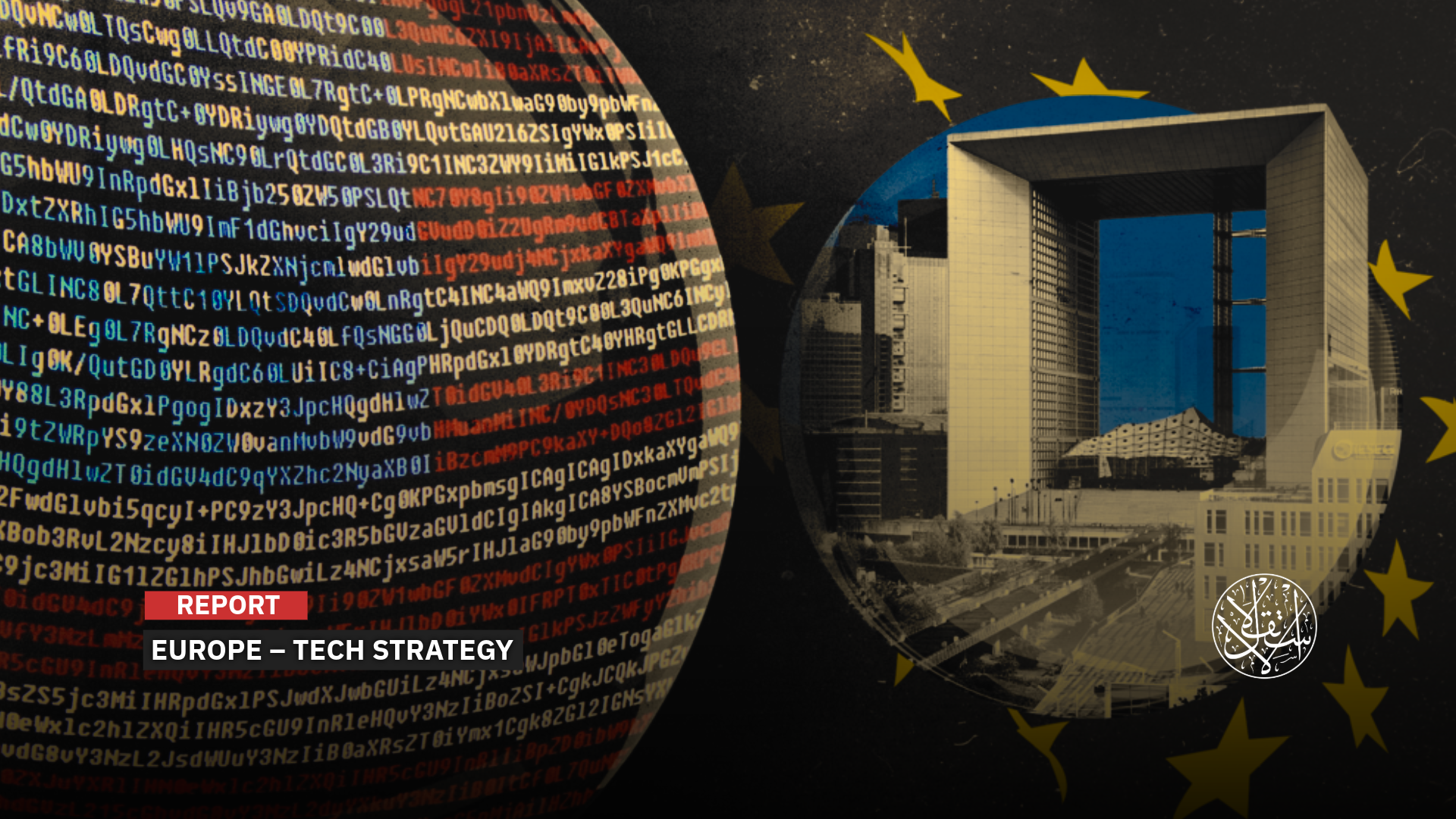
“Reliance on external providers can become a source of pressure or a threat.”
European countries are moving to strengthen their reliance on homegrown technology and reduce their dependence on the United States amid escalating tensions with its President Donald Trump, who is pursuing a hardline policy toward allies.
The worst-case scenario for European officials is an executive order from the White House that restricts or cuts off European countries' access to data centers or email systems, which companies and governments rely on to conduct their business.
Between artificial intelligence (AI) legislation, data and cloud strategies, and rigorous investigations into American tech giants, Europe is attempting to transform itself from a regulated market into a tech powerhouse with its own cloud infrastructure, social platforms, and rules of engagement.
French President Emmanuel Macron recently stated that Europe could face a digital trade war with Washington, after his American counterpart, Donald Trump, claimed that European technology laws harm American interests.
This tension revolves around the Digital Services Act (DSA), which Europe views as a sovereign tool for regulating the technology market, while Washington considers it a direct constraint on its giant companies.
Over the past period, the DSA has transformed from a legislative text into an actual enforcement tool through investigations and fines, redrawing the risk map for American companies in Europe.
Digital Sovereignty
Europe is moving rapidly to build its digital empire, independent of Silicon Valley's dominance, driven by the concern for digital sovereignty and the threat of the kill switch that American companies possess over international institutions and entire governments.
The European Union is no longer content with merely acting as the internet policeman through laws such as regulating digital platforms and markets; it is also moving towards building a digital infrastructure and policies that will make its decisions less dependent on Washington.
This is evident in the concept of digital sovereignty, which mandates that sensitive data and its processing remain within European jurisdiction, while ensuring European users control over encryption, data access, and even how artificial intelligence models are used.
The EU is working on a package of legislation and initiatives, such as the Cloud and AI Development Act (CADA), to support European data centers and establish unified standards for cloud service providers, thus limiting the dominance of American players.
In parallel, the Data Union Strategy aims to open up data access for European companies and researchers by simplifying regulations and reducing costs, while insisting on protecting European data sovereignty against laws like the US CLOUD Act.
In 2025, a global uproar ensued following reports that Microsoft had blocked the email account of Karim Khan, the chief prosecutor of the International Criminal Court, in compliance with US sanctions, forcing him to switch to a European encrypted provider like ProtonMail.
Despite Microsoft's denial of suspending its services to the court, the incident fueled European concerns about the ability of American companies to disrupt the work of sovereign courts and organizations through political decisions in Washington.
This gave a significant boost to the discourse of digital sovereignty and the search for European alternatives in email, productivity, and cloud services.
In February 2026, French authorities raided the offices of the X platform in Paris and summoned its owner, Elon Musk, to appear before investigators. This was part of a public prosecutor's investigation into cybercrimes.
This unprecedented escalation reflects Europe's shift from simply fining platforms to holding the business model and algorithms themselves accountable, linking this to national security and protecting the European public sphere from the influence of foreign platforms that are not fully subject to its regulations.
European Alternatives
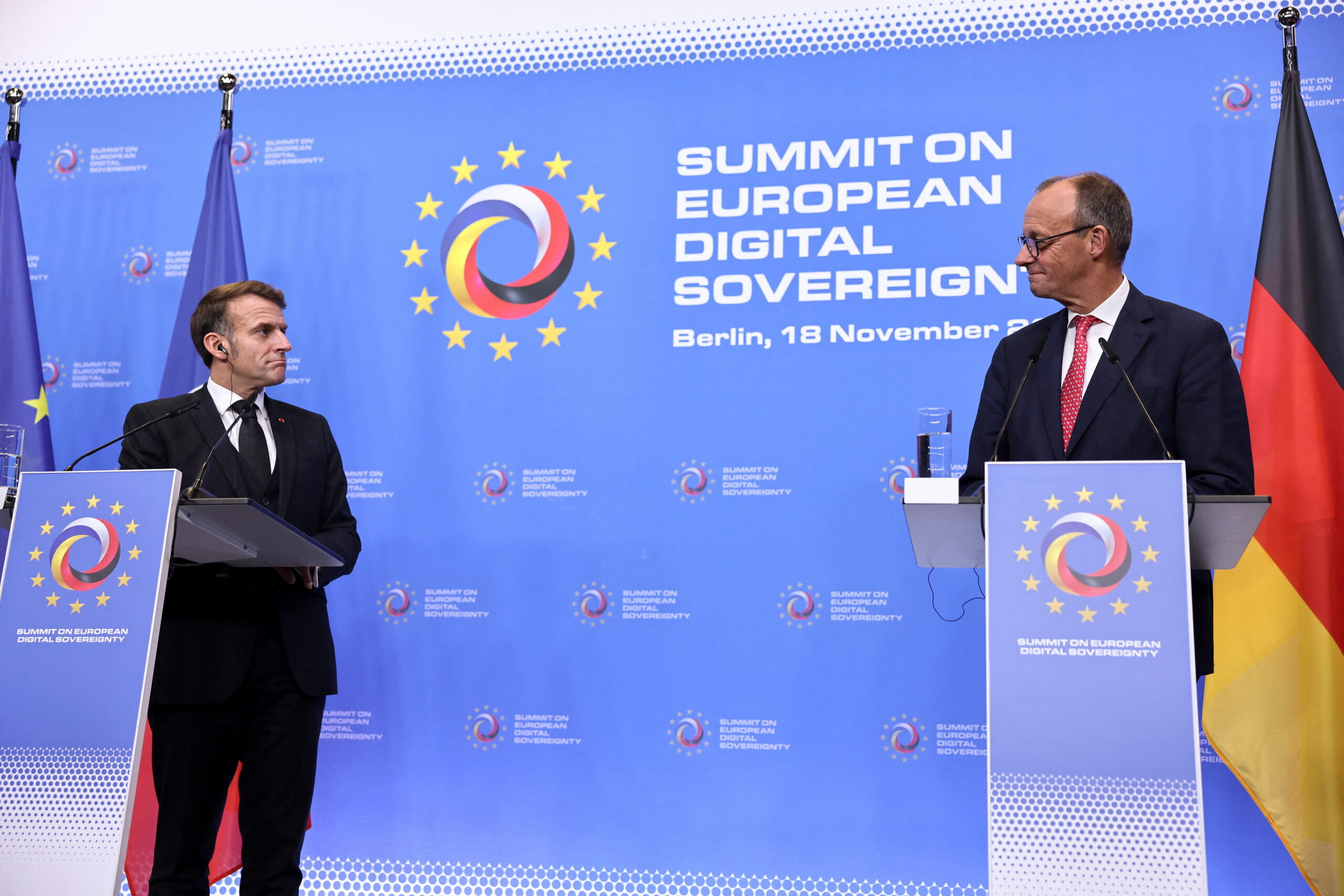
The EU, comprising 27 member states, relies on foreign countries for more than 80 percent of its digital products, services, infrastructure, and intellectual property, according to a 2023 report. This has prompted Europe to accelerate its efforts to reduce this dependence, particularly on American technology.
France recently announced plans to migrate its work computers from Windows to the open-source Linux operating system.
Last week, France also informed its government employees of the imminent adoption of a homegrown service called Visio as an alternative to tools like Zoom and Microsoft Teams.
In contrast, serious European options are emerging, including the German company Ecosia, which redirects its search revenue towards tree planting. Ecosia claims to have planted nearly 250 million trees since 2009 and operates on more solar power than it consumes.
The French company Qwant operates under the slogan ‘We see you as a user, not a producer’, and is currently working with Ecosia to build an independent European index of search engines.
There's also the British Mojeek, which provides results completely independent of Google and Bing, giving all users identical results, free from the algorithms that trap them in digital bubbles.
On the other hand, Chrome, Safari, and Edge together control about 90% of the browser market, and these tools collect data for their respective companies.
The most prominent European alternative is the Norwegian-Icelandic Vivaldi, founded by the founder of Opera after the company was sold to Chinese investors.
It boasts extensive customization and a strict privacy policy based on the protection laws of its home country.
Additionally, there's the German open-source LibreWolf, built on Firefox with a higher level of security.
Gmail, Outlook, and iCloud control about three-quarters of the email market and build detailed profiles of users by tracking their activity.
The most popular European option is the Swiss Proton Mail, used by more than 100 million people, which employs end-to-end encryption.
Alongside it stands out the German company Tuta, which relies entirely on renewable energy, as well as the British non-profit GreenNet, which tops sustainability rankings.
Microsoft Office represents a political and security burden in the eyes of its critics, especially after reports of the Azure platform being used in surveillance programs targeting Palestinians in Gaza and the West Bank.
An alternative is LibreOffice, published by the Berlin-based non-profit The Document Foundation. It is an open-source program similar to Office in form and function.
It is used by the Austrian army and several homegrown governments in Germany and France, in addition to companies and individuals worldwide.
Reports estimate that Amazon will owe hundreds of millions of pounds in unpaid taxes in the UK by 2024, prompting the Ethical Consumer organization to call for a boycott since 2012.
Among the most prominent European alternatives is the French company BackMarket, which specializes in refurbished devices.
In the book sector, Bookshop.org stands out, allocating a portion of its profits to support independent bookstores.
In the AI sector, dominated by OpenAI, Anthropic, Google, and Meta, the French company Mistral, founded in 2023 by former Google and Meta engineers, stands out.
According to expert reviews, its Le Chat model closely resembles ChatGPT and Cloud in performance, boasting a high-performance text generation capability.
The company leverages the AFP news agency archive to enhance accuracy, operates data centers in France and Sweden, and offers open-source models for free modification.
Despite funding from Microsoft and Nvidia, Mistral describes itself as a crucial step towards European technological independence.

Strategic Step
On another front, the revolution has extended to social media, with the European Commission launching its official server on the decentralized Mastodon network, free from provocative algorithms and the sale of data to advertisers.
The Mastodon platform includes Pixelfed, Loops and Sup, designed as privacy-focused alternatives to Instagram, TikTok and WhatsApp, respectively.
The challenges remain significant, as more than 70% of the digital technologies used in Europe are still imported, with the United States accounting for 80% of the global technology market value compared to 4% for Europe.
However, what Europe is building is not a replica of Silicon Valley, but a fundamentally different structure: decentralized, not closed-source, and not based on monopolies.
The real battle is not about replacing one app with another, but about building an infrastructure that no one can shut down.
In light of these developments, Europe appears to be beginning to redefine the concept of digital sovereignty in a practical and cautious manner, far removed from any political slogans, focusing on building independent and internally controllable capabilities.
The International Criminal Court's move to an open-source platform, and the responses of governmental and civil institutions, reflect an understanding that reliance on external providers can become a source of pressure or a threat.
At the same time, the Mistral AI project and the European Legal Alliance for Digital Infrastructure Development represent a strategic step towards establishing an integrated European technology ecosystem, encompassing AI, cloud computing, cybersecurity, geomatics, and social networks, while adhering to federal and open principles.
For his part, social media platforms consultant Mohammad al-Sheikh explained to Al-Estiklal that digital connectivity in the current era represents the raw material from which national sovereignty is forged; it transcends being merely a means of data transmission to become the backbone connecting power plants, banking systems, and military command centers.
“The lack of a unified vision in Brussels and the fragmentation of decisions among European capitals leave the continent vulnerable to digital shocks that could disrupt public life and paralyze governments' ability to respond before any hostile military force moves on the ground,” he added.
He concluded that “fortifying this network is no longer a technical luxury, but has become an existential necessity that cannot be postponed, because losing control over communication routes necessarily means losing the ability to make sovereign decisions in times of major crises.”