Splitting Southern Lebanon in Two, With the Litani River as a Boundary Line: ‘Israel’s’ Post-War Plan in Lebanon
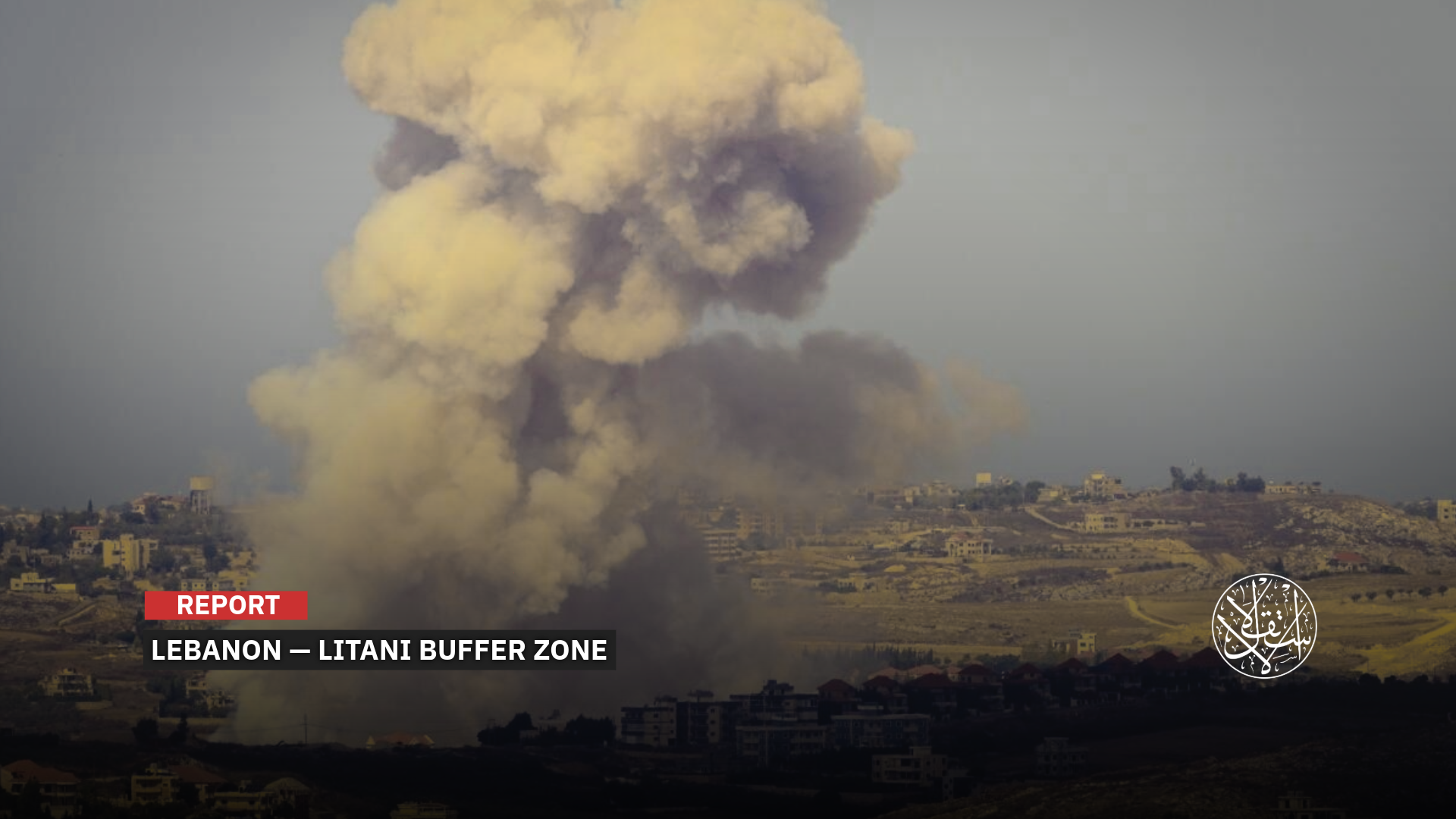
The Israeli plan is based on dividing southern Lebanon into two parts, east and west of the Litani River.
In light of the possibility that the United States may reach an agreement with Iran to halt the war in the future, especially with Tehran linking any settlement to stopping the aggression on Lebanon, “Israel” appears to be in a race against time to impose a new reality on the ground in southern Lebanon.
“Tel Aviv” is moving to accelerate its military plans with the aim of expanding its control south of the Litani River, allowing it to establish a deeper security belt inside Lebanese territory, enhancing its defensive capabilities, and reshaping post-war equations.
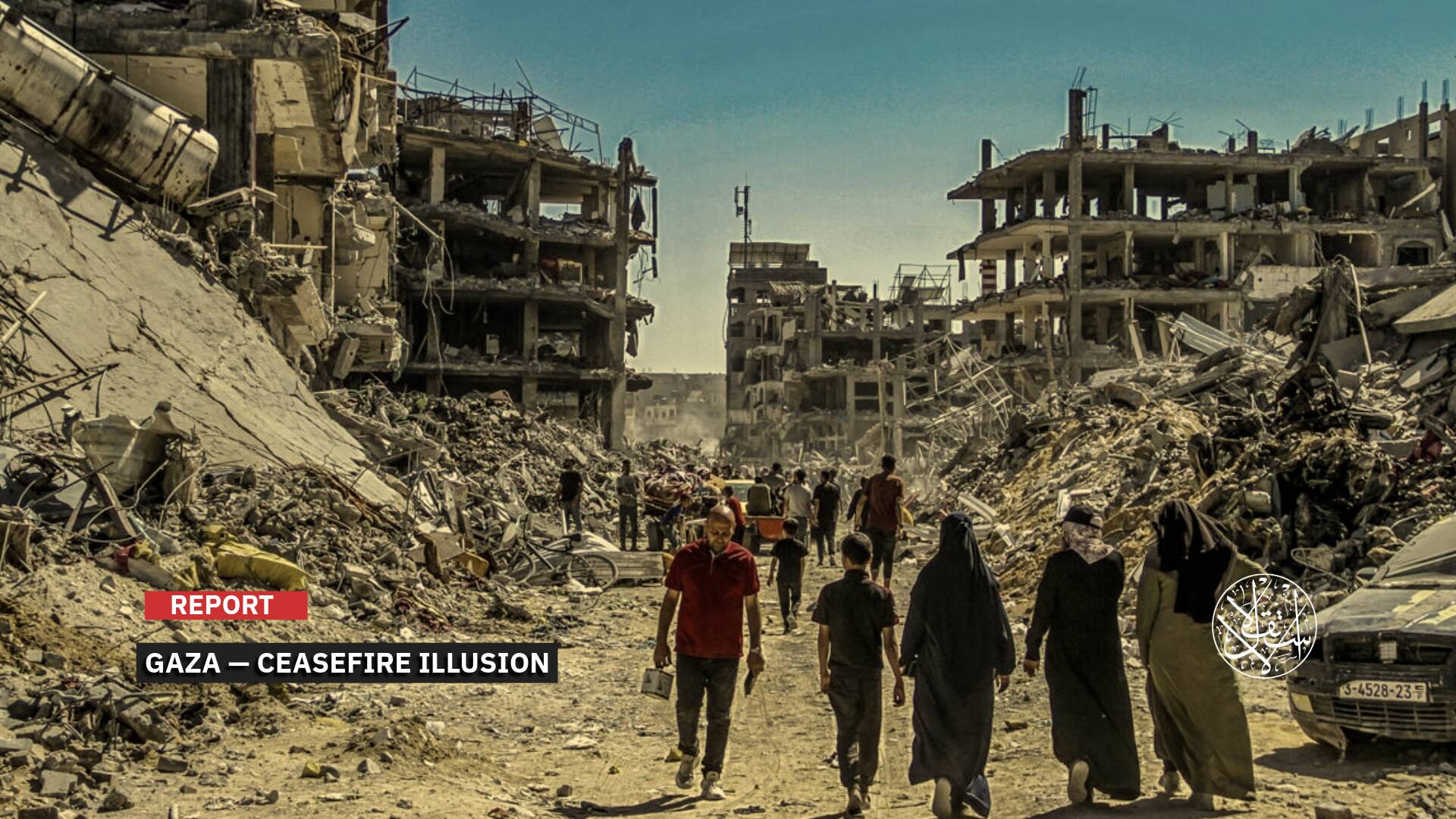
This plan is no longer within the realm of speculation, but has been explicitly announced by Israeli leaders, and in essence reflects an operational pattern that resembles the model of widespread destruction seen in the border areas of the Gaza Strip.
Israeli Defense Minister Israel Katz summarized this approach with a decisive statement, “There will be no homes or residents left up to the Litani River.”
One of the most prominent drivers of this escalation appears to be the shift in Hezbollah’s performance during the current war, as it has not limited itself to defense, but has taken the initiative to attack, carrying out repeated strikes that have reached “Tel Aviv” and areas near the Lebanese border, alongside displacement operations affecting Israelis, in response to the displacement of nearly one million Lebanese from the south due to Israeli military operations.
In contrast, the internal Lebanese scene reveals a sharp division taking on concerning political and sectarian dimensions.
There is a government faction that rejects Hezbollah’s involvement in the war alongside Iran and questions its legitimacy, while another political and popular bloc stands with the “resistance,” believing that its participation may strengthen Lebanon’s negotiating position in any future settlement.
These divisions reflect additional complexities facing any potential political track. The newspaper Haaretz, in a report published on March 25, 2026, noted that sectarian tensions are deepening the crisis.
Christians, represented by President Joseph Aoun, and Sunnis, represented by Prime Minister Nawaf Salam, do not appear willing to enter negotiations with “Israel” without agreement with the Shiites, represented by Parliament Speaker Nabih Berri.
At the same time, Nabih Berri does not seem willing to risk losing the support of his popular base, especially in light of the displacement of large numbers of Shiites from their areas due to Israeli attacks, making any political decision subject to highly sensitive internal balances.
The Plan’s Objectives
The Israeli plan has gained accelerating momentum amid rising internal pressures, especially after mayors of northern border areas publicly issued sharp criticism of the government over its failure to stop rocket attacks and ensure the safety of residents.
In a striking scene, the mayor of the border settlement of Margaliot, Eitan Davidi, appeared on live television in tears, expressing his anger over the army’s failure to protect the settlements, and directing harsh criticism at the political leadership, saying, “There is no state behind us.”
The mayor of Kiryat Shmona, Avichai Stern, also launched a sharp attack on the government on March 25, 2026, accusing it of failing to protect residents of the city near the Lebanese border. He said, “This is the first time we are losing a city in the State of Israel. Today, there are only 10,000 Jews in Kiryat Shmona, and if this situation continues for another month, only 10 people will remain, those who cannot leave.”
These statements reflect the scale of the transformation on the ground. Kiryat Shmona had a population of around 24,000 at the end of 2023, but by early 2026 it had turned into something resembling a “ghost town” after most of its residents fled due to continuous shelling, leaving only about 10,000 or fewer.
In contrast, this escalation came after a notable shift in Hezbollah’s performance, which had seen a significant decline in previous months following the loss of several of its leaders and a series of setbacks.
It had also continued to receive Israeli strikes and assassination operations without a significant response for nearly 15 months, despite the existence of a ceasefire agreement.
However, this trajectory changed suddenly when the group announced on March 2, 2026, that it was entering the war alongside Iran, in response to the assassination of Iranian Supreme Leader Ali Khamenei.
The shift was not limited to joining the confrontation, but was reflected in an unprecedented military escalation, as the group demonstrated notable offensive capabilities against the Israeli army.
In a single day, March 25, 2026, it launched more than 100 rockets toward central “Israel” as part of 22 consecutive attacks, resulting in the killing of three soldiers and the injury of 15 others.
On the same day, Hezbollah carried out 87 attacks against Israeli Occupation Forces in southern Lebanon, the highest number it has ever announced, and intensified its targeting of military vehicles, claiming to have struck 21 tanks and two D-9 bulldozers, confirming the complete destruction of six tanks, bringing the total number of destroyed tanks and bulldozers it has announced since the latest round of fighting to 55.
These operations come in the context of a clear attempt to hinder Israeli ground advances and prevent the implementation of a plan aimed at dividing southern Lebanon and imposing a new reality on the ground.
In contrast, statements issued by the Israeli military leadership reflect the scale of the challenges it faces, as the Chief of Staff acknowledged the difficulty of the situation on the ground, warning of increasing pressure on forces and a shortage of manpower.
In light of these developments, what is described within the Israeli military establishment as the “Gaza option” has emerged, which involves destroying the first line of villages and homes in southern Lebanon, in addition to targeting bridges and infrastructure linking the north and south of the Litani River, in preparation for imposing military control over the area south of the river and turning it into a buffer zone.

The Plan’s Details
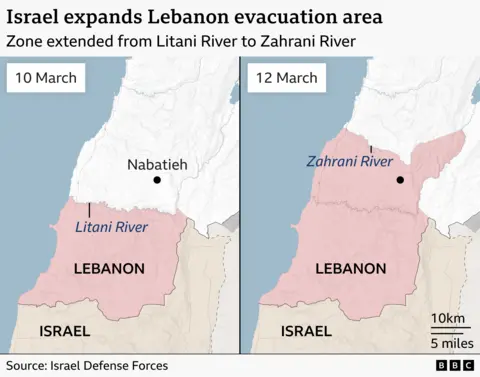
According to statements by Israeli political and military leaders, the Israeli plan is based on dividing southern Lebanon into two parts, east and west of the Litani River, with the aim of expanding areas of control from five border points that were under occupation before the ceasefire agreement on November 27, 2024, to now include approximately 80 kilometers along the Lebanese-Israeli border, compared to about 20 kilometers previously.
“Tel Aviv’s” declared objective is to establish a “buffer zone” that prevents Hezbollah fighters from approaching northern “Israel”, according to Reuters on March 26, 2026.
“Israel” plans to occupy nearly 10 percent of southern Lebanon, designating the Litani River as a “northern security line,” according to statements by Israeli army spokesperson Effie Defrin.
However, the website Zeto reported on March 24, 2026, that this escalation reflects a broader and longer-term ambition tied to a plan known as “Greater Israel,” which has been supported by Israeli Prime Minister Benjamin Netanyahu, and aims to expand Israeli control to include parts of historic Palestine, as well as areas in Syria, Egypt, Lebanon, and Jordan.
The plan was effectively launched on March 4, 2026, when “Israel” ordered residents of areas south of the Litani River to leave their homes, two days after Hezbollah entered the confrontation and launched rockets into Israeli territory.
The Israeli plan includes destroying the first line of homes south of the Litani and pushing residents to move north of the river, while occupying the entire area up to the Israeli border.
To ensure the severing of any links between the north and south of the river, “Israel” forced around one million Lebanese to flee and destroyed five out of six major bridges crossing the Litani River, which divides southern Lebanon into two halves.
The destruction of bridges aims to disrupt Hezbollah’s supply lines, isolate southern villages from one another, and turn the Litani River into a dividing line between “Israel” and Lebanon, in an effort to consolidate Israeli control south of the river.
This is not the first time “Israel” has used a strategy of destroying bridges during wars in Lebanon. During the 2006 summer war, “Israel” bombed 97 bridges and crossings in various parts of the country, including areas far from the immediate southern front.
The Litani River extends eastward from the Mediterranean Sea, about 30 kilometers north of the border with “Israel”, and the areas south of the river account for approximately 8 percent of Lebanon’s total area.
Before the renewed outbreak of war, the Lebanese government had completed the first phase of a disarmament plan south of the Litani, with the second phase intended to begin in areas south of the river, about 60 kilometers from the Israeli border and around 40 kilometers south of Beirut, a move that Hezbollah firmly rejected.
A Second Gaza in Lebanon
According to statements by Israeli leaders, it appears that “Israel’s” objective is to create what could be described as a “second Gaza” in southern Lebanon, by destroying and depopulating roughly 10 percent of the southern region, and establishing an occupied zone extending from the border with “Israel” to the Litani River.
Channel 14 in “Israel” reported on March 25, 2026, that “Tel Aviv’s” plans include taking control of an additional 8 kilometers along the international border, representing about 10 percent of Lebanon’s territory.
Israeli War Minister Israel Katz stated that the Israeli army is operating in Lebanon according to the “Rafah and Beit Hanoun” model, referring to the two towns in Gaza Strip that were destroyed by Israeli Occupation Forces and nearly emptied of their inhabitants.
In a brief post on the platform X, Katz emphasized that “Israel’s” policy in Lebanon is based on not allowing the presence of homes or residents up to the Litani River, in order to push Hezbollah away from the frontline.
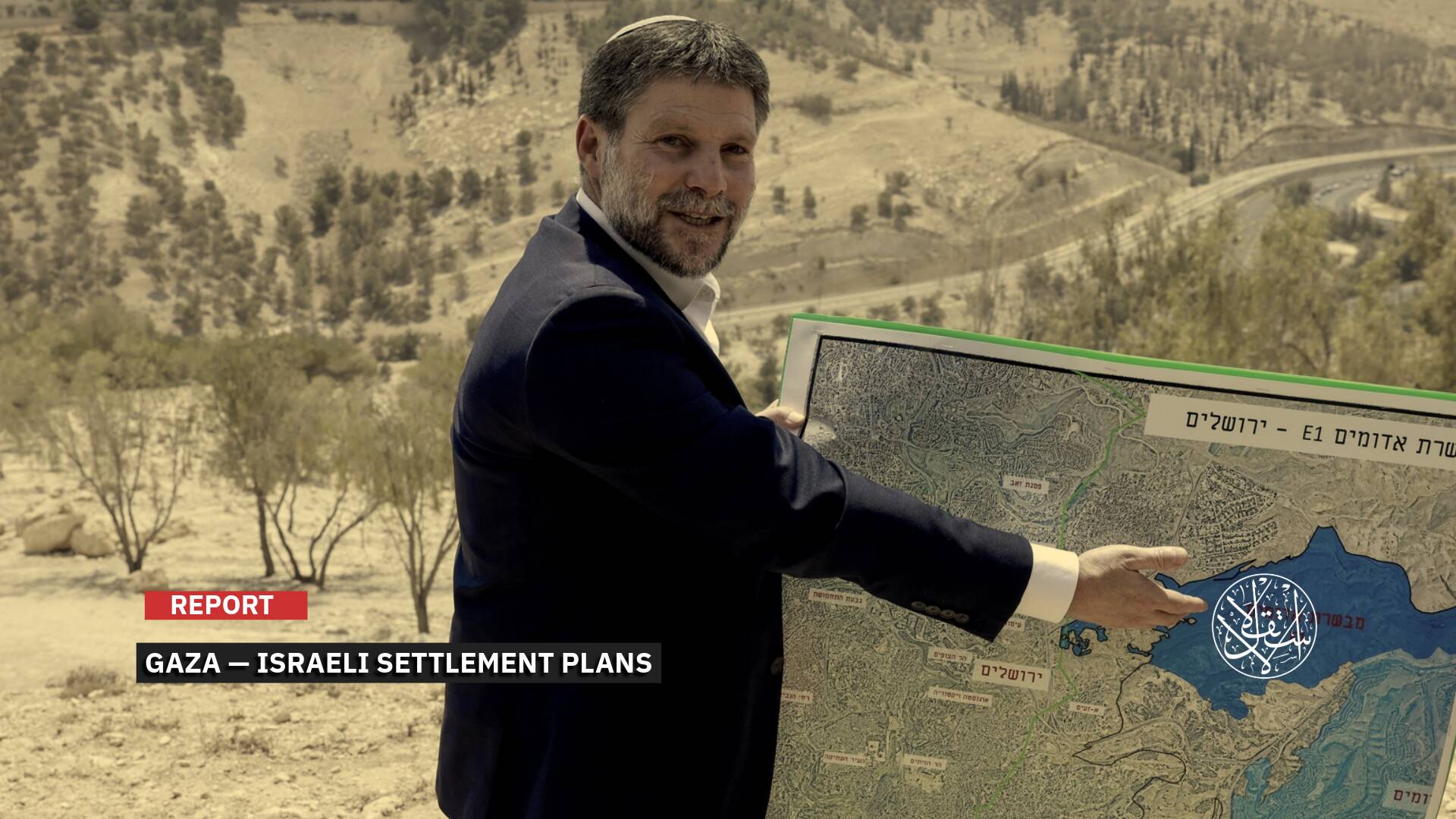
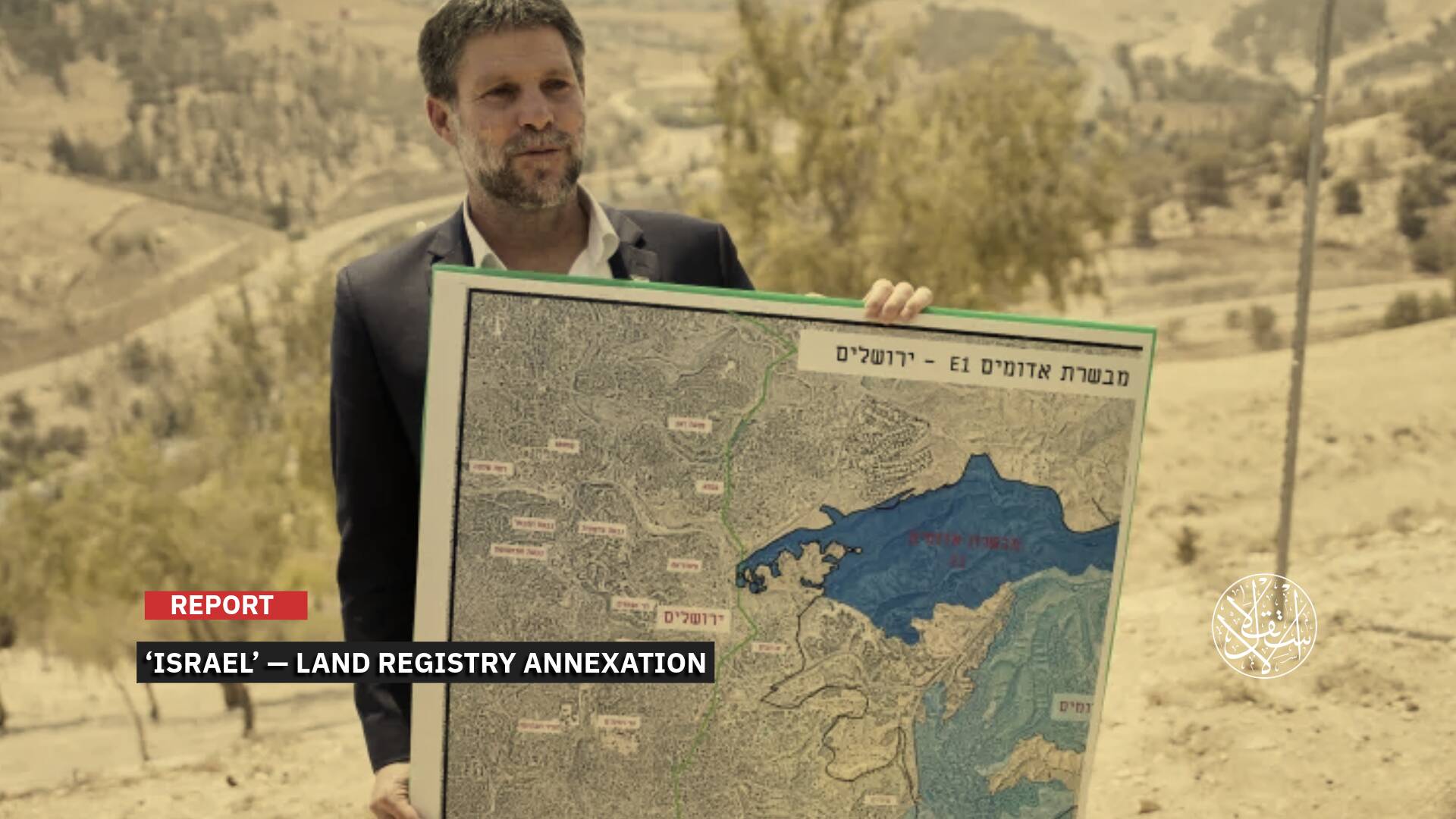
The far-right Israeli Finance Minister Bezalel Smotrich said, “The Litani River should be our new border with Lebanon, just like the yellow line in Gaza, the buffer zone, and Mount Hermon in Syria.”
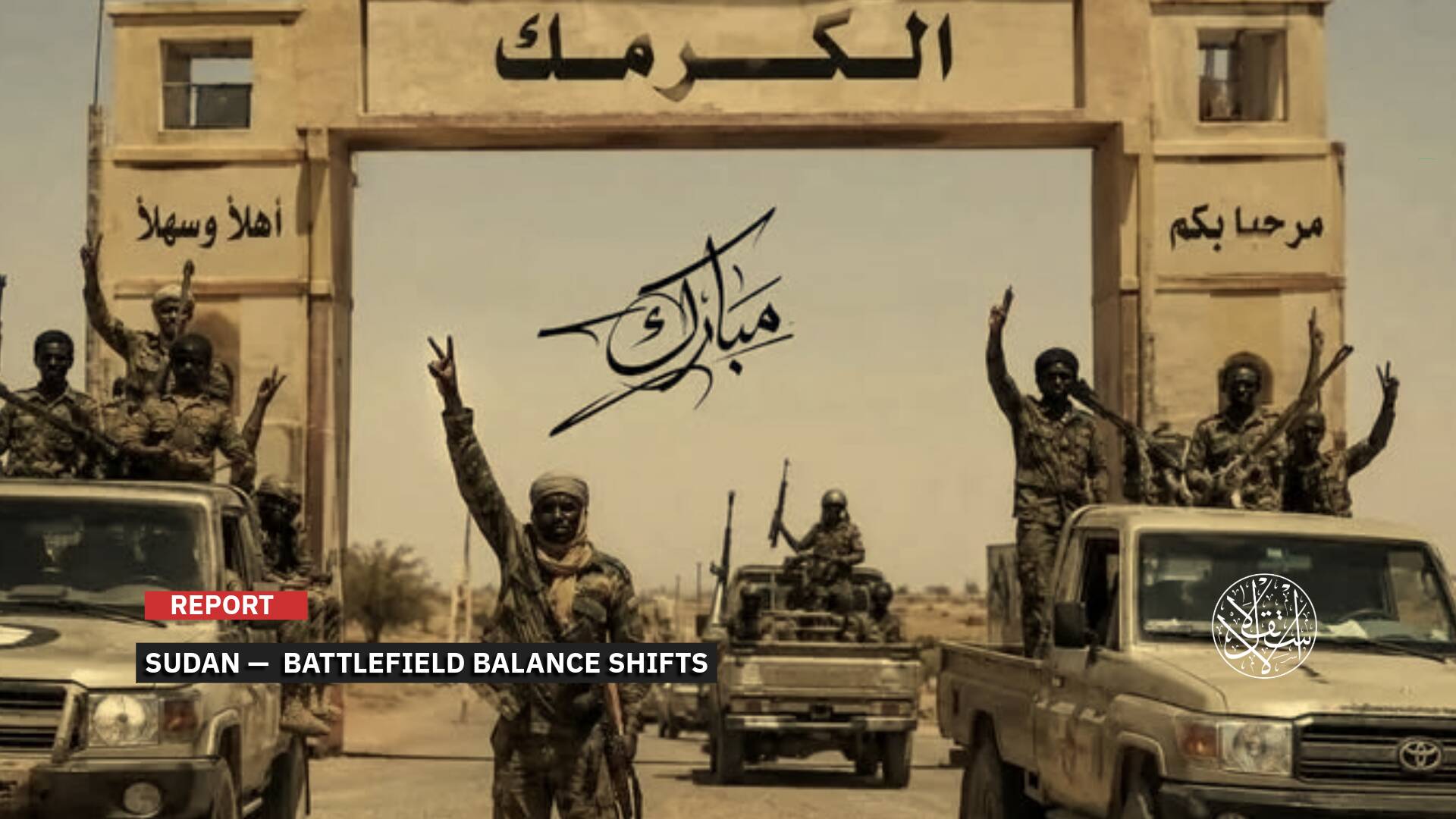
Under this plan, the Israeli army has sent several divisions to invade southern Lebanon, following a policy of demolishing homes, displacing residents, and emptying the area in favor of occupation.
This includes destroying vital bridges and severing the connections across the south to prevent the arrival of supplies to Hezbollah.
The newspaper Yedioth Ahronoth indicated that “Israel” seeks to address the “Hezbollah file” through the Lebanese state, and that the destruction of bridges serves as pressure messages to the government in Beirut to take action and impose control over the group’s weapons, which it considers illegitimate.
Despite these plans, Hezbollah has so far obstructed their implementation, having successfully repelled Israeli attacks since the beginning of the confrontation in March 2026.
This reflects the continued conflict on the ground, with differing Israeli approaches between political pressure and military calculations, especially in light of the possibility of a US–Iran agreement that could impose a halt to the aggression on Lebanon.
Analysts in “Israel” believe that “Tel Aviv” may continue the war on Lebanon after any US–Iran deal, in order to disarm Hezbollah and expand the buffer zone.
Orna Mizrahi from the Institute for National Security Studies in “Tel Aviv” told Reuters on March 26, 2026, that the Israeli army is seeking to gain additional time in Lebanon after any ceasefire with Iran, and that any negotiated settlement with Hezbollah may be a last resort.
In the same context, Joost Hiltermann noted that “Israel” wants to “remain in Lebanon as it did in Gaza,” and that Netanyahu may extend the war for political objectives, relying on the United States’ stance regarding continued involvement in the war.
Historical developments show that the Israeli army was previously reluctant to advance south of the Litani River due to its difficult experience between 1982 and 2000, when it lost hundreds of soldiers in confrontations with Lebanese resistance.
- In 1978, “Israel” invaded southern Lebanon and established an occupied zone with the support of a local militia known as the “South Lebanon Army.”
- In 1982, the occupation expanded to reach Beirut, then withdrew in 1983 while retaining forces in the south. In 1985, “Israel” expanded the occupied area again to a depth of about 15 kilometers, until the “South Lebanon Army” eventually collapsed.
- In 2000, “Israel” withdrew from southern Lebanon under sustained pressure from Hezbollah, ending 22 years of direct occupation.
- In 2006, Hezbollah crossed the Israeli border, leading to a five-week war that included heavy Israeli strikes on Hezbollah strongholds and Lebanon’s national infrastructure.
- Since 2023, Hezbollah entered into a support war for Gaza, and after a ceasefire agreement in 2024, “Israel” kept its forces on five hills in southern Lebanon.
This historical background highlights that any attempt by “Israel” to create a “second Gaza” in Lebanon would face significant military and political challenges, given the continued resistance by Hezbollah and its ability to undermine occupation plans.