No Shelter, No Aid: Palestinian Refugees in Lebanon Near Breaking Point
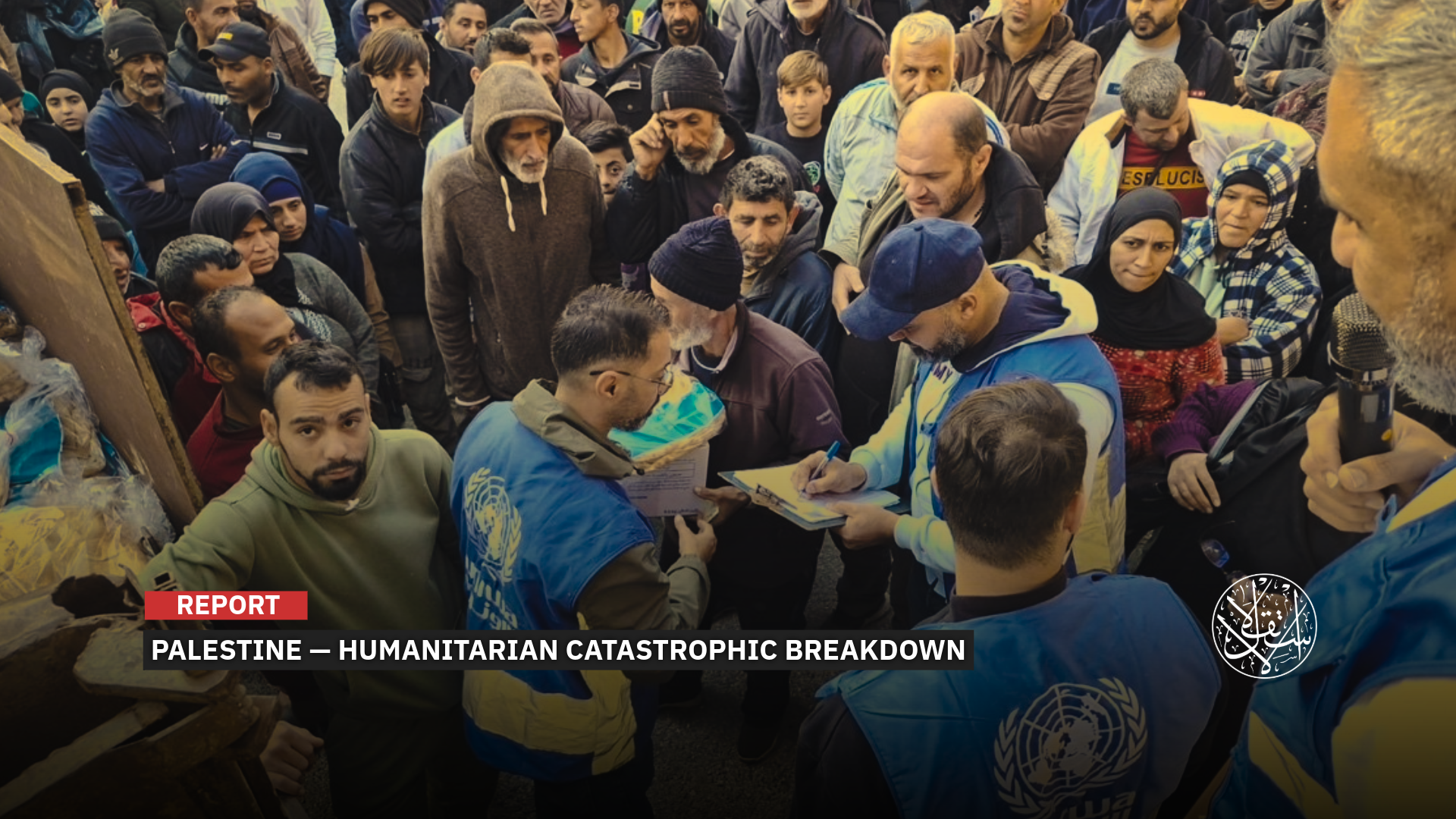
Many Palestinian camps have been hit hard by Israeli attacks, especially due to displacement.
Since the outbreak of the U.S.–Israeli war on Iran, and the subsequent entry of Hezbollah into the confrontation, Palestinian refugees in Lebanon have found themselves facing a new war that deepens their long-standing vulnerability.
They already live in deteriorating camps beyond the control of the Lebanese state, relying on UNRWA for education, healthcare, water, and sanitation.
This latest conflict comes amid an ongoing economic crisis and financial collapse, delivering a double blow: rising food and fuel prices and a weakened capacity of UNRWA to provide services, pushing living conditions in the camps closer to a breaking point.
What Changed?
Many Palestinian refugee camps have been affected by Israeli attacks, particularly due to waves of displacement. The Israeli government issued evacuation orders covering more than 100 villages south of the Litani River, extending to the Beqaa Valley and the southern suburbs of Beirut.
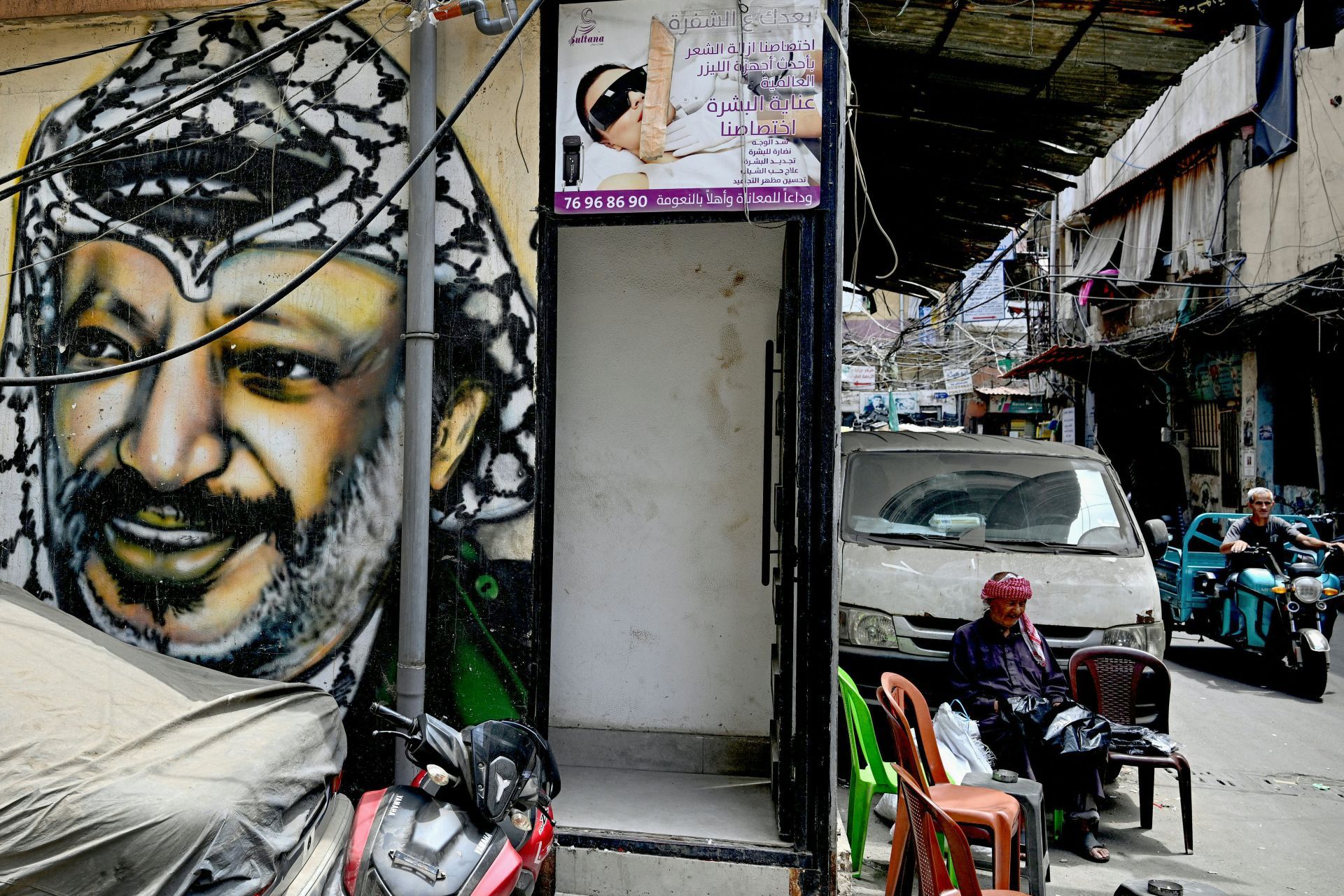
Lebanon hosts 12 officially recognized Palestinian refugee camps, distributed across the south (including Ain al-Hilweh and Mieh Mieh), the Tyre area (Rashidieh, Burj al-Shamali, and al-Buss), Sidon and the Beirut suburbs (Burj al-Barajneh, Shatila, Mar Elias, and Dbayeh), the north (Nahr al-Bared and Beddawi), and the Beqaa (Wavel camp in Baalbeck). In addition to these, more than 40 informal Palestinian gatherings are spread across the country.
According to UNRWA estimates from February 2025, around 222,000 Palestinian refugees currently reside in Lebanon, including approximately 27,000 who fled from Syria.
Only about 45% live inside official camps, while the rest are dispersed across informal gatherings and urban areas.
For the first time in decades, shelling directly affected camps such as Ain al-Hilweh in Sidon and Beddawi in Tripoli, with airstrikes reported nearby.
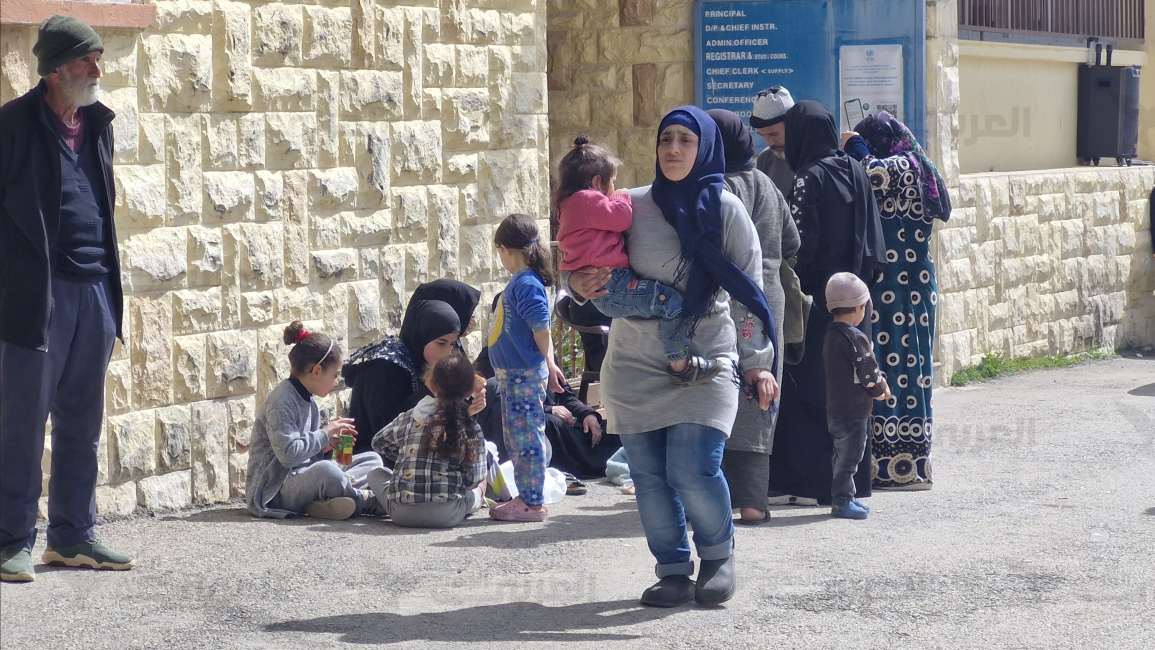
Alongside these limited strikes, warnings triggered the displacement of hundreds of families from southern camps toward northern ones, placing severe strain on already limited resources.
UNRWA reported that 290 families (1,015 individuals) were displaced from camps in the Tyre area (Rashidieh, Burj al-Shamali, and al-Buss) to shelters, while 52 families left camps in Beirut (Burj al-Barajneh and Shatila) for Dbayeh and Mar Elias.
Northern Lebanon received the largest influx, with Nahr al-Bared hosting 350 new families and Beddawi receiving another 230.
These families included 372 children, 26 elderly individuals, and 17 people with disabilities, further increasing pressure on essential services.
Conditions in the camps have deteriorated significantly: southern camps such as Rashidieh, Burj al-Shamali, and al-Buss have been largely emptied and classified as dangerous military zones, while northern camps have turned into overcrowded collective shelters hosting displaced Palestinians, Syrians, and Lebanese alike.
To mitigate the crisis, UNRWA opened two shelters on March 9, 2026, in Sibline near Sidon and in Nahr al-Bared camp, providing ready-to-eat meals, drinking water, blankets, and hygiene supplies.
A total of 1,420 people were registered in these centers. By early April 2026, the number had risen to around 2,100 families distributed between Nahr al-Bared and Beddawi, according to ANERA reports.
Key Impacts
The war has severely affected employment, income, and education. More than 80% of Palestinians in Lebanon live below the poverty line and depend on UNRWA for assistance, according to the TIMEP in Beirut.
When the war broke out, commercial activity in the South came to a halt, and many jobs were lost. Thousands of Palestinian workers were forced to leave their jobs in agriculture, construction, and tourism, while several economic facilities inside the camps shut down due to security concerns.
Health conditions have also deteriorated, with reduced capacity to respond after 47 primary healthcare centers and five hospitals in the south and Beirut were closed as of March 11, 2026, due to shelling, according to the United Nations.
At the same time, electricity outages affected many areas, disrupting water pumps and supply systems. In overcrowded camps, shortages of medicine and doctors have led to a rise in chronic illnesses and delays in treatment.
Education has been deeply disrupted as well. With public schools closed and UNRWA schools suspended for nearly three weeks, before gradually reopening, more than 34,000 Palestinian students were deprived of education for weeks, increasing the risk of school dropout.
Notably, UNRWA had already reduced teaching to four days a week at the start of 2026 due to funding shortages, putting an entire generation at risk of an uncertain future.
Displacement and overcrowding have also strained social and psychological conditions. Reports from local organizations indicate that overcrowded shelters have created serious privacy and mental health challenges, alongside a rise in domestic violence incidents, according to the Palestinian Association for Human Rights (PAHR).
Tensions have emerged within some camps between newly displaced families and long-term residents over limited resources, while fear and anxiety have spread over the possibility of renewed displacement.
Infrastructure inside the camps has also been disrupted. Heavy displacement caused water shortages in parts of Beddawi and Nahr al-Bared camps, and UNRWA was forced to suspend waste collection programs due to security risks.
In Ain al-Hilweh, the largest Palestinian camp in Lebanon, strikes near the Taamir area damaged buildings and displaced several families.
Meanwhile, camps in Beirut such as Burj al-Barajneh and Shatila, located near the southern suburbs, have faced heightened security measures and road closures, effectively isolating them and making movement in and out increasingly difficult.
Who Supports the Camps?
In this context, UNRWA plays a central role in providing essential services to Palestinian refugees, but its capacity is facing unprecedented challenges.
In March 2026, the agency launched an appeal to raise 12.3 million dollars to fund its 90-day emergency response, aiming to provide food, shelter, healthcare, and water and sanitation services for up to 10,000 people in shelters and around 63,000 others outside them.
This figure highlights the limited capacity to respond to displacement that has exceeded half a million people, especially as UNRWA was already facing a major funding shortfall even before the war began.
At the beginning of 2025, it was forced to reduce the annual cash assistance of 50 dollars for 165,000 refugees due to a lack of funding, and later announced a 20% reduction in services starting February 2026.
UNRWA relies on contributions from donor countries and therefore faces a significant funding gap following the suspension of U.S. funding in October 2023.
Although UNRWA in Lebanon stated in January 2025 that the freeze in U.S. funding did not directly affect its operations in Lebanon, reduced support from Gulf countries and the global financial crisis have made this funding increasingly unsustainable.
Later, the United Nations issued an urgent appeal worth 308 million dollars for Lebanon, but by the end of March, the Lebanese government said that only 30% of the required funding had been secured.
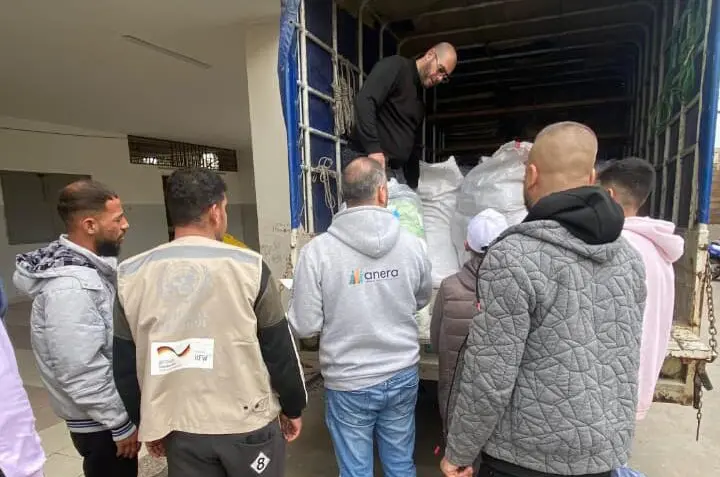
Alongside UNRWA, international and local relief organizations play an important role. ANERA provides water, bread, and hot meals for displaced families in Beddawi and Nahr al-Bared camps.
The medical NGO MAP provides healthcare assistance and calls on the international community to pressure “Israel” to revoke evacuation orders affecting Burj al-Barajneh, Shatila, Rashidieh, Burj al-Shamali, and al-Buss camps.
Other organizations, including the Lebanese Red Cross and the Palestinian Red Crescent, support emergency medical and shelter operations.
The Lebanese state’s role remains limited for political and financial reasons, as it does not enter the camps under the “non-intervention policy” it has adhered to since the Cairo Agreement of 1969.
The camps function as semi-external entities under state restrictions but are effectively managed through a complex network of Palestinian factions, popular committees, and religious organizations that fill the gap left by the state.
These factions compete for influence and receive funding from various sources, but their ability to provide services remains limited.
The Lebanese-Palestinian Dialogue Committee has been attempting since 2025 to negotiate the disarmament of factions to restore state sovereignty, but the current war has made this goal distant.
The Palestinian Association for Human Rights (PAHR) Foundation states that the most dangerous aspect of the situation is the sharp decline and near-collapse in services provided by UNRWA, leaving Palestinian refugees without adequate relief or medical coverage to deal with the consequences of displacement or injuries.
It adds that regional instability leaves Palestinians without safe alternative shelter or concrete emergency plans.
The Institute for Palestine Studies notes that it is still unclear where the Israeli war on Lebanon and the region is heading, but it is almost certain to be catastrophic for Palestinian refugees and camps in Lebanon, especially given their already exceptional and inhumane conditions outside of war.
It further warns that with weakened UNRWA services, living conditions will become more difficult and complex, raising fears that prolonged conflict could further collapse essential services in the camps, potentially mirroring conditions seen in Gaza, especially since the bodies responsible for camp management are unable to fully meet their obligations.
The health sector, for example, has been in chronic decline for years and has not been tested under major crises like the current war.
The education sector has also suffered long-standing deterioration, which the Palestinian refugee community in Lebanon has repeatedly complained about. Combined with financial shortages, this will negatively affect food security in the camps, the institute concludes.
Sources
- UNRWA Situation Report #1 on the Lebanon Emergency Response 2026
- Lebanon Bracing for a Long-Term Displacement Crisis Amid Funding Crunch, Minister Says
- Palestinian Camps and the Current Situation in Lebanon [Arabic]
- Lebanon: UNRWA Protection Update (1 April – 30 June 2025)
- Explainer: What Are the 12 Palestinian Camps in Lebanon?
- Analytical Report on Displaced Palestinian Refugees in Lebanon During the Current War Crisis
- Lebanon Activity Log | April 2026
- Externalizing Migration Control to the MENA Region: Lebanon
- Palestinians in Lebanon: Martyrs and Displaced Amid the War [Arabic]