After Trump’s Visit to Beijing: What Does Appointing Ghalibaf as Iran’s Special Envoy to China Mean?
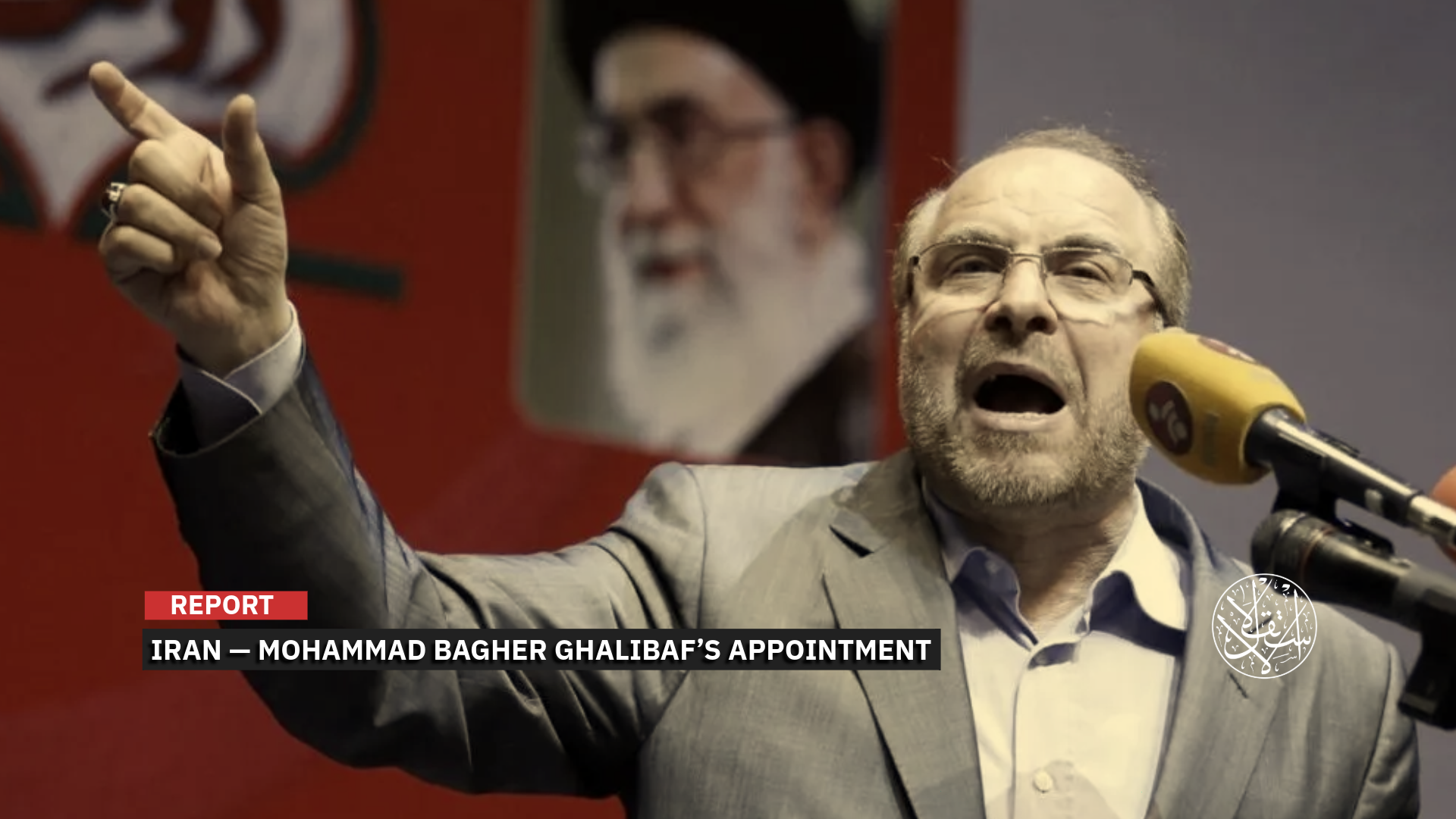
Ghalibaf was appointed following a recommendation by Pezeshkian and with the approval of Iran’s Supreme Leader.
In a move that raised several questions, Iran announced the appointment of Parliament Speaker Mohammad Bagher Ghalibaf as the “Special Representative of the Islamic Republic of Iran for Chinese Affairs,” especially since the move came after U.S. President Donald Trump’s visit to China on May 13, 2026.
Iran’s Tasnim News Agency reported on May 17, 2026, that “Ghalibaf’s appointment as special representative to China came based on a recommendation by President Masoud Pezeshkian and with the approval of Supreme Leader Mojtaba Khamenei,” explaining that Ghalibaf would be responsible for “coordinating the various sectors of relations between Iran and China.”
According to the official Fars News Agency, the position was previously held by both Ali Larijani, Secretary of the Supreme National Security Council, and Iran’s current ambassador to Beijing, Abdolreza Rahmani Fazli. Larijani notably oversaw the signing in 2021 of a 25-year cooperation agreement with China.
Sovereign Coordinator
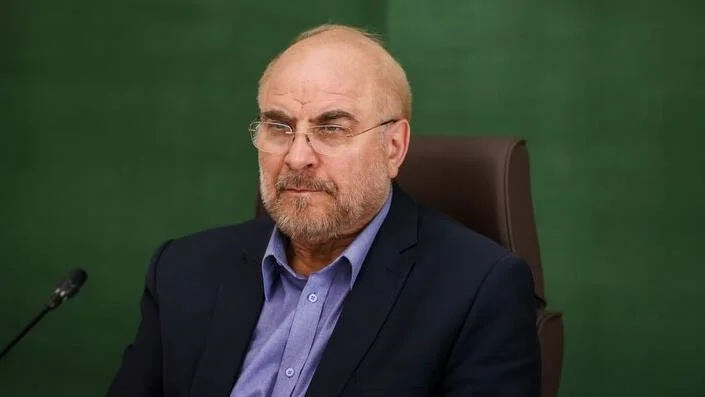
Ghalibaf’s appointment, at a sensitive moment for Iran, opens the door to discussions about the extent of cross-institutional powers granted to him, particularly after he previously led Iran’s negotiating team during the first round of talks with the United States held in Pakistan.
On May 18, 2026, writer Vahida Karimi stated in an article published in the Iranian newspaper Shargh that “the recent war, which lasted from late February to April 2026, placed Iran under an unprecedented combination of military pressure, maritime blockade, and diplomatic isolation.”
According to the writer, the ceasefire reached on April 7, 2026, was not the result of goodwill between the parties, but was largely driven by war exhaustion and pressure from international observers, including China and Russia.
In these circumstances, China has emerged as a guarantor of regional stability. Beijing explicitly called during the war for an end to hostilities and is now seeking, through peace-oriented initiatives, to play a key role alongside mediators, even if it is not a direct mediator.
Iran’s besieged economy today depends more than ever on the full implementation of its 25-year strategic cooperation agreement with China. Beijing, as the largest buyer of Iranian oil and a key supplier of goods during the sanctions period, is no longer merely an option for Tehran but a strategic necessity.
The writer argues that “any gap in coordination between the highest levels of Iranian authority in managing relations with China could threaten the backbone of what Tehran calls the ‘resistance economy.’ Hence, Ghalibaf’s appointment at this critical moment.”
She also noted that Mohammad Bagher Ghalibaf’s appointment came based on a proposal by the Iranian president and approval by the Supreme Leader, which gives him a position that goes beyond representing the executive branch, effectively making him a sovereign-level coordinator between state institutions.
At this point in particular, Iran’s Tasnim News Agency confirmed on May 17, 2026, that “Ghalibaf will act as a coordinator among the country’s various institutions regarding China,” a statement that clearly indicates he holds powers to coordinate between military, economic, legislative, and executive bodies.
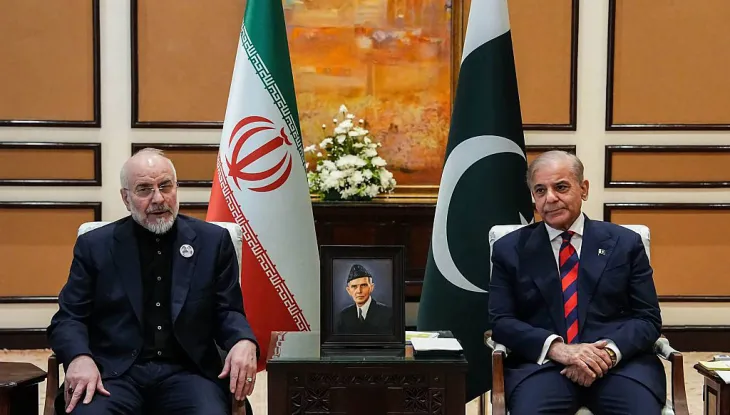
In the post-war phase with the United States and “Israel”, Ghalibaf also took on responsibility for heading the Iranian negotiating delegation with Washington during the first round of talks held in Islamabad, Pakistan, on April 11, 2026.
The writer concludes that assigning the China portfolio to a figure who previously negotiated with the West carries two parallel messages: one to the West, that Iran knows how to negotiate with it but is currently prioritizing the East; and another to China, that the person managing the relationship is a trusted figure experienced in handling crises and sensitive files.
In the context of a fragile ceasefire and economic blockade, the writer argues that redefining China’s role in Iranian foreign policy and assigning a pragmatic figure to this portfolio reflects Tehran’s determination to fully manage its relations with China through its eastern alignment.
Closely Tied to the Regime
At the same time, Kuwaiti writer Zafar Mohammed al-Ajmi interpreted Ghalibaf’s appointment as carrying sovereign and economic weight, arguing that transferring the file from traditional diplomacy (Larijani) to the deep state turns the 25-year agreement with Beijing into an existential security dossier focused on “engineering survival and bypassing sanctions.”
The regional security researcher wrote in a post on X on May 17, 2026, that Ghalibaf’s appointment represents a strengthening of internal influence, as the shift consolidates his position as one of the three key pillars of power in Iran today, combining both legislative authority and strategic executive influence.
Al-Ajmi further interpreted the Iranian decision as “preparation for the day after,” suggesting that Ghalibaf is being presented as a pragmatically minded figure who is internationally engageable and possesses security influence, paving the way for a larger role in a post-Supreme Leader phase.
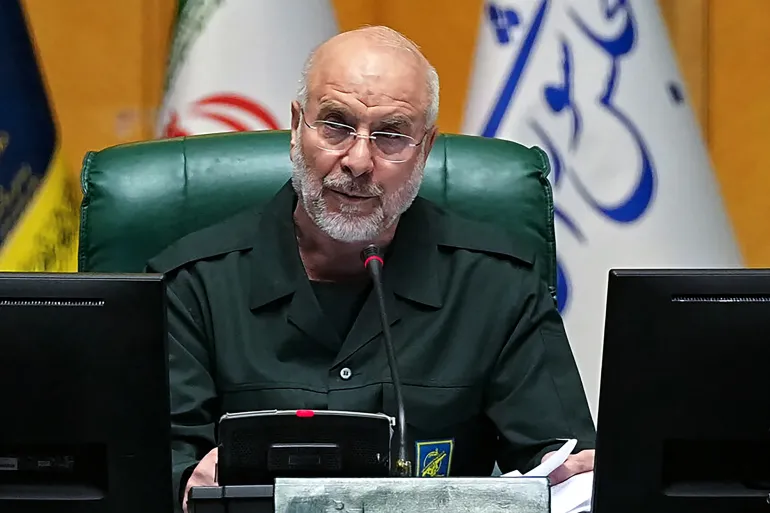
Lebanese writer Nader Ezzedine argued that Ghalibaf’s selection carries implications that go beyond a ceremonial or protocol-based appointment. The Speaker of Parliament is considered one of the most prominent figures linked to the security and military establishment, given his previous leadership of the Revolutionary Guard and its air force, as well as his standing within the pragmatic conservative camp.
In an article published by the Lebanese newspaper An-Nahar on May 19, 2026, the author noted that this professional trajectory suggests that assigning Ghalibaf to the China portfolio signals that the issue is now directly tied to matters of war, energy, maritime navigation, and sanctions evasion. This comes amid a growing conviction in Tehran that the current phase requires closer management by the regime’s centers of power.
He also pointed out that following the summit between U.S. President Donald Trump and Chinese President Xi Jinping in Beijing, Washington attempted to suggest that China understood the need to reopen the Strait and reduce escalation, while Beijing maintained a more cautious tone focused on de-escalation and preventing the war from expanding.
Within this context, the writer explained that Ghalibaf’s role also appears linked to managing relations with China from a broader strategic perspective, including safeguarding the oil partnership, maintaining financial and commercial channels for sanctions circumvention, and countering any U.S. attempt to use China as a direct pressure card against Iran.
Ezzedine stressed that the decision also carries an important domestic dimension, as it grants Ghalibaf a prominent position within one of the most sensitive portfolios in Iranian foreign policy, at a time when internal balances within the system are being reshaped under the pressure of war, sanctions, and economic strain.
This reflects a broader trend in Tehran toward linking major foreign policy dossiers to the regime’s security and political structure, ensuring higher levels of coordination between Parliament, the Revolutionary Guard, the government, and sovereign institutions, particularly in files related to China, Russia, energy, and maritime routes, according to the writer.
Pragmatic Hardliner
Mohammad Bagher Ghalibaf, born in 1961 in the city of Torqabeh in eastern Iran, joined the Islamic Revolutionary Guard Corps (IRGC) at an early age following the outbreak of the Iran–Iraq War in 1980. He was promoted to the rank of general within three years and later went on to command the IRGC Air Force.
In the years following the war, he led the IRGC’s construction wing and then became commander of the Air Force, gaining extensive security and administrative experience that shaped his profile. He developed a military mindset but also acquired experience in managing large-scale projects, which later enabled him to take on civilian roles.
Ghalibaf took part in the suppression of student protests in 1999 and, along with other commanders, signed a letter to then-reformist president Mohammad Khatami warning that they would intervene to crush the protests if necessary.
He was later appointed chief of the national police, where his approach was described as dualistic: he ordered security forces to open fire on protesters in 2002, while at the same time launching a program to modernize the police and improve its appearance and services.
This combination of firmness and reformist pragmatism followed him throughout his career and contributed to his description as a “pragmatic hardliner.” In 2005, he ran for the presidency but lost to Mahmoud Ahmadinejad.
He returned to prominence when he was appointed mayor of Tehran after Ahmadinejad was removed from the post, and he remained in that position until 2017.
His years as mayor were not free of corruption allegations, including claims reported by independent media that funds from the municipal budget were allocated to his wife.
After running in three more presidential elections (2013, 2017, and 2024) without success, he returned to parliament and became Speaker of the Islamic Consultative Assembly in 2020, a position he has held since.
His trajectory through multiple roles, from military commander to police chief, then mayor, and finally parliament speaker, has made him a rare bridge between Iran’s civilian and military institutions.
What distinguishes him from figures such as former Supreme National Security Council Secretary Ali Larijani or former secretary Saeed Jalili is his blend of toughness and pragmatism.
Larijani is often described as a moderate technocrat close to the religious establishment, while Jalili is known for his ideological hardline stance.
Ghalibaf, by contrast, has built his image as someone capable of both administration and political maneuvering, to the extent that some Western diplomats have viewed him as a figure who is “usable” both within and outside the system.