Closing Camps and Rebuilding Syria: A Realistic Goal or an Impossible Challenge?
“There is an urgent need to launch early recovery projects that can create jobs for displaced people. “
The reintegration of displaced Syrians into their original communities after years of forced displacement poses a strategic challenge for the Syrian government, as it seeks to demonstrate its ability to address the lasting damage of prolonged suffering and forced exile.
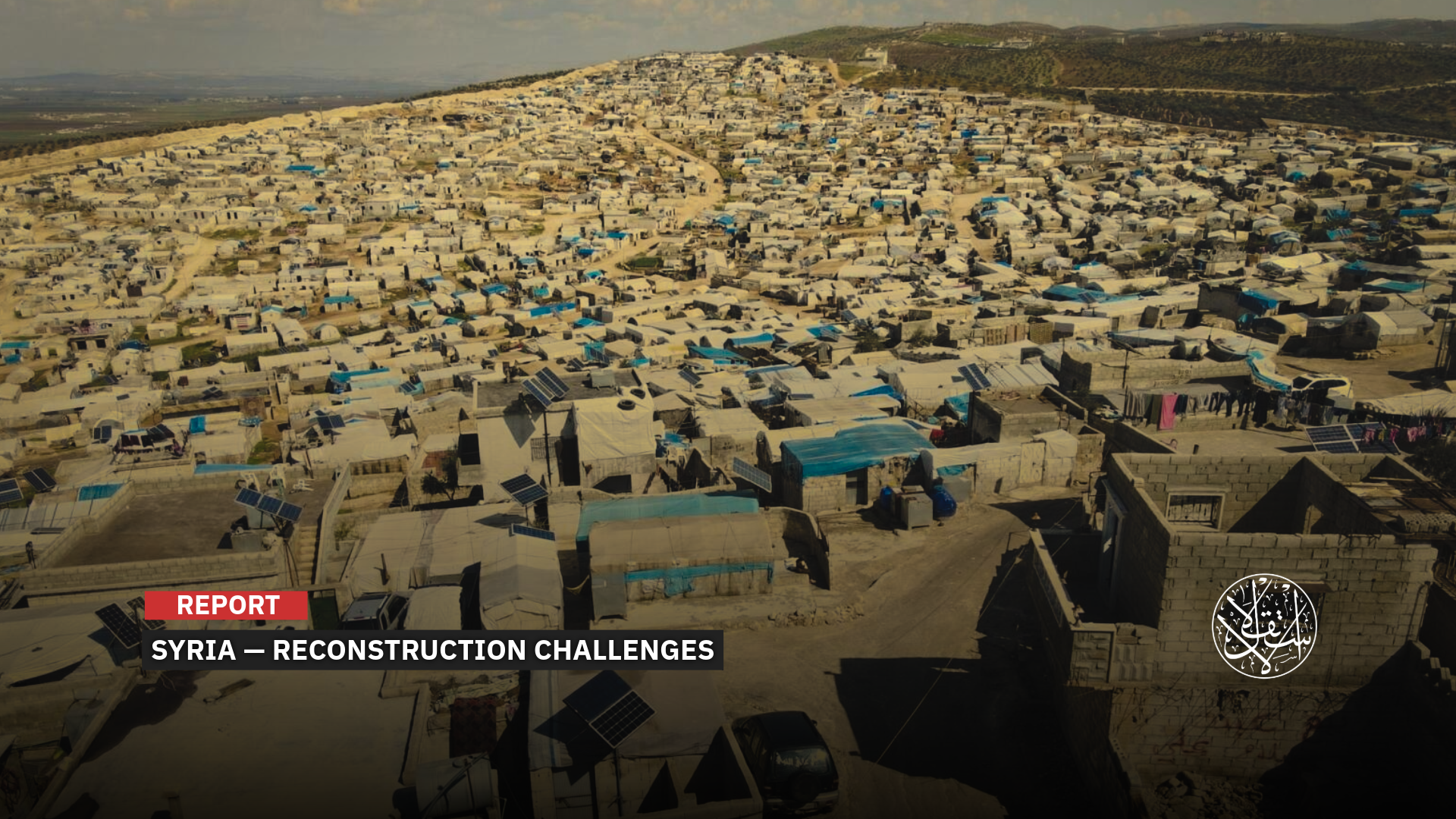
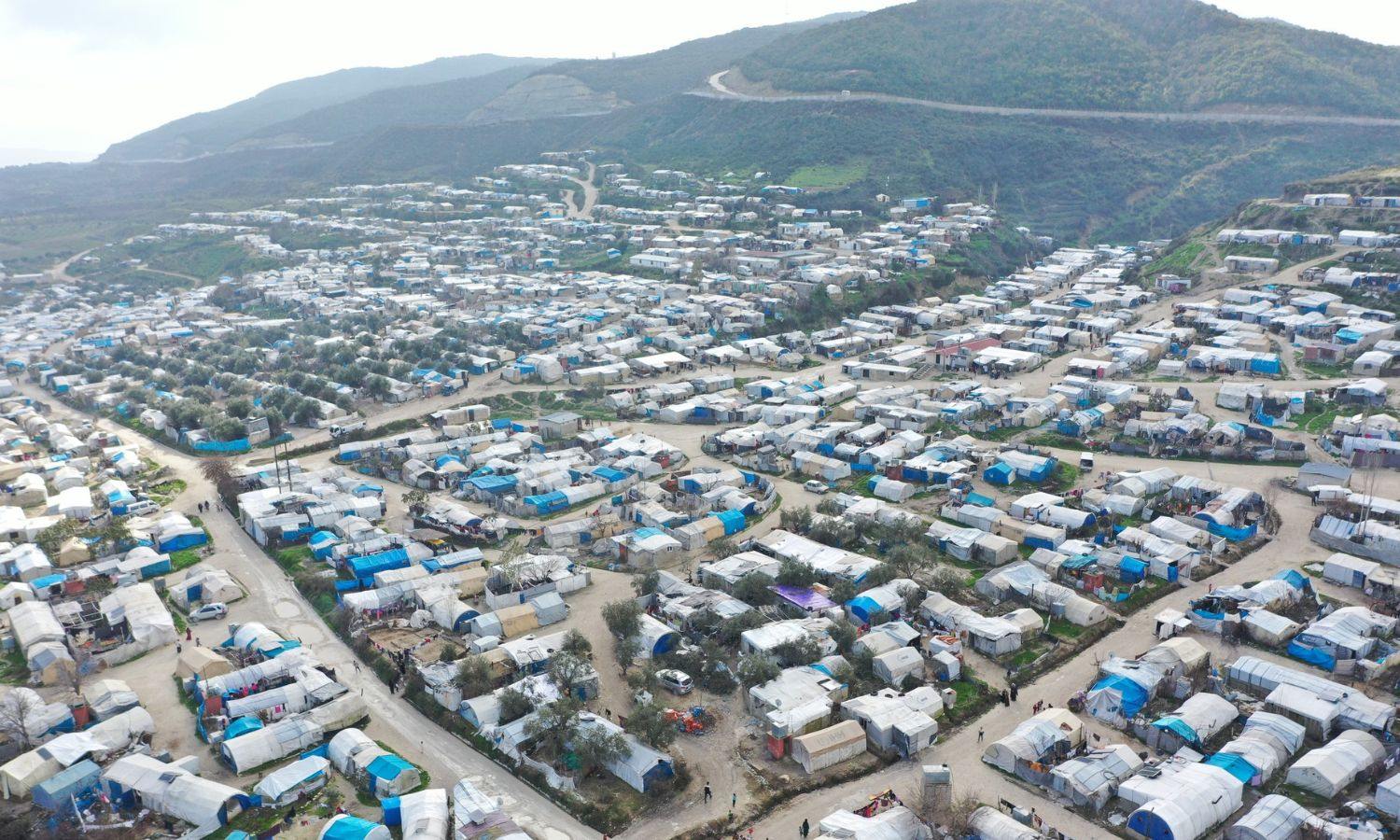
The move comes as authorities announce the start of a countdown to closing displacement camps that proliferated during the years of the Syrian revolution, with northern regions alone hosting around 1,150 camps, including 801 in rural Idlib and 349 in rural Aleppo.
Analysts say success would go far beyond the humanitarian dimension, serving instead as a test of the government’s ability to restore social and political stability, particularly as the effects of displacement continue to strain infrastructure and basic services in host communities.
Syria Without Camps
The reintegration of displaced Syrians into their home communities after years of forced displacement following the fall of Bashar al-Assad’s regime stands as the most significant challenge facing the Syrian authorities, as they seek to demonstrate their ability to repair the damage left by years of suffering and mass displacement.
The push comes as Damascus begins a countdown to ending the sprawling camp system that emerged during the years of the Syrian revolution, with roughly 1,150 camps now scattered across the north, including 801 in rural Idlib and 349 in rural Aleppo, according to official figures.
More than one million displaced people live in these camps under harsh humanitarian conditions, facing severe shortages in infrastructure and sanitation networks, alongside weak emergency preparedness for extreme weather events, according to the Syrian Network for Human Rights (SNHR).
In January 2026, Finance Minister Mohammed Yisr Barnieh launched the slogan “Syria without camps by the end of 2026,” marking the beginning of a government push to return families to their areas of origin in safe and dignified conditions.
On March 10, 2026, President Ahmed al-Sharaa issued Decree No. 59 establishing a committee led by the Minister of Emergency and Disaster Management to rehabilitate infrastructure in damaged areas, paving the way for returns as part of a broader shift from temporary solutions to longer-term resettlement.
Government efforts include restoring essential services such as water, electricity, schools, and health centers, while ensuring humanitarian assistance continues throughout the transition period.
The initiative has also unfolded in coordination with the United Nations (UN). On April 1, 2026, a high-level UN delegation visited Damascus, led by Under-Secretary-General for Humanitarian Affairs and Emergency Relief Coordinator Tom Fletcher and UN Development Programme (UNDP) Administrator Alexandre de Croo, to discuss national priorities and the government’s “Syria Without Camps” plan.
The meeting, hosted by the Syrian foreign ministry, brought together several ministers and senior officials, including representatives from local administration and international cooperation bodies, as well as governors from Aleppo, Idlib, and Hama.
As part of implementation efforts, the Minister of Emergency and Disaster Management, Raed al-Saleh, met on April 4, 2026, with camp representatives in Kafr Yahmul in rural Idlib to discuss the application of Decree 59.
Representatives from more than 40 camps attended, presenting residents’ needs and priorities, with discussions focusing on rebuilding infrastructure such as water systems, schools, health centers, and bakeries, while maintaining services during the transition phase.
Deputy Minister of Emergency and Disaster Management Ahmed Ekzayez said the “Syria Without Camps” vision represents an important step toward ensuring the safe and dignified return of displaced people, adding that the plan aims to phase out tents by 2026 and reach durable solutions for all camps by 2027, depending on conditions on the ground.
Before the fall of the Assad regime on December 8, 2024, around five million people were displaced in northwestern Syria, most of them living in camps across Idlib and Aleppo countryside.
Several local organizations have launched initiatives encouraging displaced people to return to the towns and villages they fled due to Syrian regime military operations since 2011.
Yet humanitarian conditions remain fragile. Winters have repeatedly worsened living conditions in tents, while heavy rains and flooding have caused widespread damage, including deadly incidents in early 2026 when storms inundated camps in Idlib’s countryside and killed at least two children.
Despite ongoing challenges, local organizations continue efforts to support returnees through rehabilitation projects, school repairs, and water network restoration, aiming to make return feasible under safer conditions.
Taken together, these efforts reflect a shared push by Syrian authorities and international partners to move from temporary displacement toward more sustainable solutions that restore dignity, stability, and basic rights after years of upheaval.
A Struggling Economy
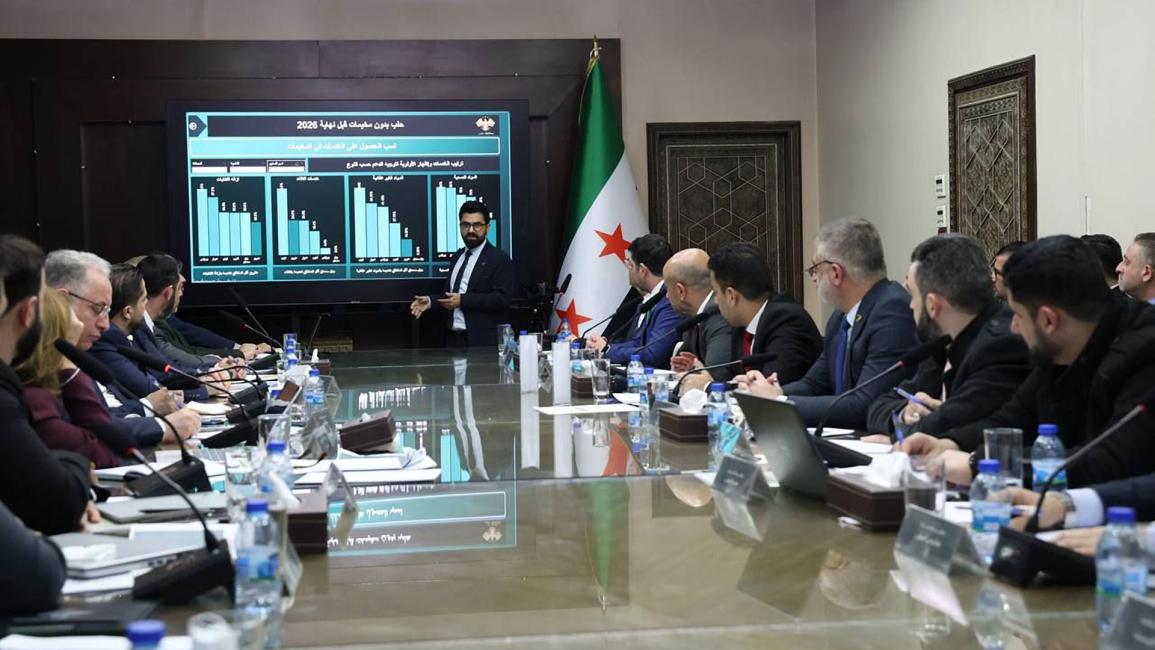
Ending the displacement crisis in Syria’s camps is directly tied to broader reconstruction efforts, particularly in light of a deteriorating financial situation, a weakened economic base, and severely limited resources on the ground.
According to Ahmed Suleiman, Director of Government Communication at the Syrian Ministry of Energy, Syria needs more than $30 billion to rehabilitate its oil, mining, electricity, and water sectors as part of a comprehensive plan to revive energy infrastructure after years of war and sanctions.
Suleiman told The National on the sidelines of the World Future Energy Summit in Abu Dhabi in November 2025 that the electricity sector alone requires around $10 billion.
More than 70% of Syria’s power infrastructure—including plants and transmission lines—has been damaged since the war began in 2011, while operational capacity has fallen by over 75%, according to a February 2025 report by the UNDP.
Syrian researcher and director of the Iqtisadi website Younes al-Karim said the country is facing severe financial deterioration across all levels, from crumbling infrastructure to limited available resources.
“The return of displaced people—requiring housing, water, electricity, education, and healthcare—forms an integral part of the reconstruction process,” he told Al-Estiklal.
“The gap between government ambitions and on-the-ground realities has raised public expectations to levels that are difficult to meet in practice.”
Al-Karim also pointed to a lack of clear prioritization—such as starting with less damaged urban centers before expanding into rural areas—which has created confusion in crisis management and exposed the limits of available resources, ultimately affecting living conditions.
On UN involvement, he said international funding for reconstruction remains largely theoretical at this stage, with the organization currently focused more on logistical and technical support than direct financing.
“Any future funding would likely come with political conditions that could require concessions the Syrian government may not be willing to make.”
Given the scale of needs—running into billions of dollars—UN resources alone would be insufficient, meaning its role is likely to remain focused on setting frameworks and encouraging policies that attract foreign investment to close the financing gap, according to the researcher.
A Series of Obstacles
In what appears to be a shift from managing the crisis to trying to resolve it at its roots, the Syrian government is putting forward an ambitious plan to close the camps and return displaced people to their home areas, backed by cooperation with the UN and plans to rebuild infrastructure.
Yet despite the momentum of official statements and initiatives, the process runs into deep structural challenges, including widespread destruction of economic and service infrastructure and a clear mismatch between aspirations and what can realistically be implemented on the ground. This places the “Syria Without Camps” project under a complex real-world test between ambitions for early recovery and the limits of actual capacity.
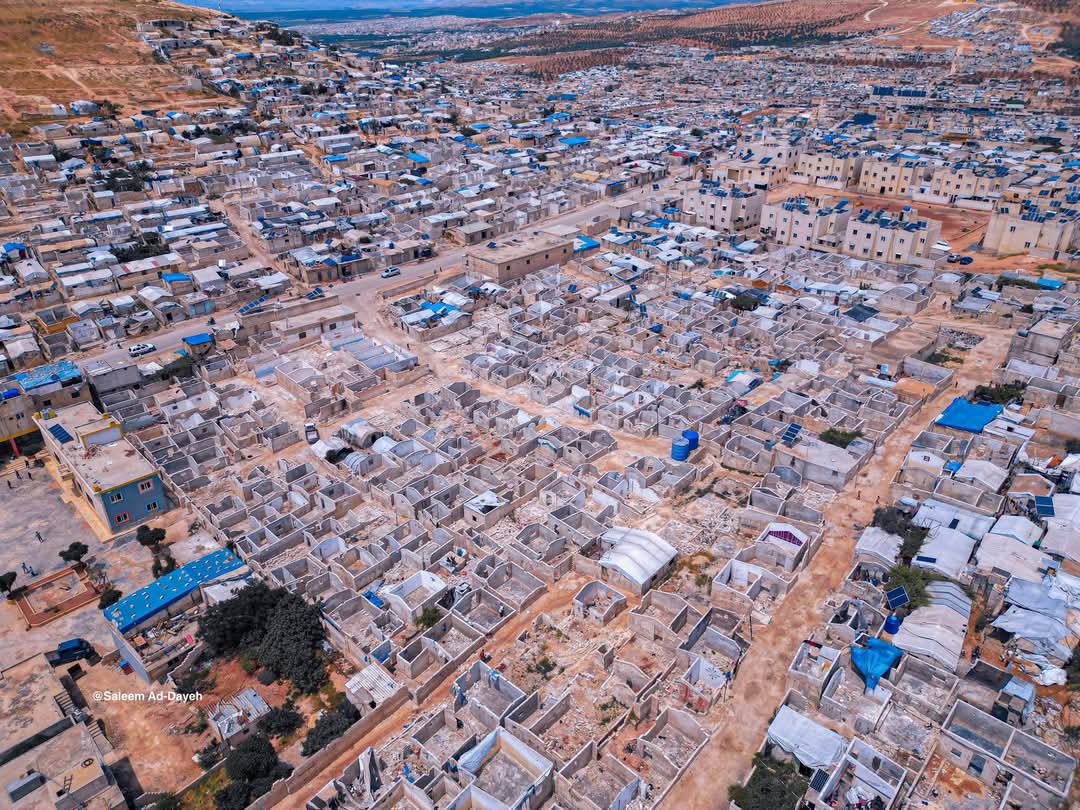
For many camp residents, the primary barrier to return remains the absence of housing, much of which was destroyed by years of shelling.
Researcher Younes al-Karim said UN-linked reconstruction assistance faces multiple obstacles tied to Syria’s internal environment, particularly security conditions, criticism of governance practices, and institutional weaknesses.
“The plan to end the camp crisis appears difficult to implement given the scale and spread of camps across northern Syria,” he added.
“Addressing the issue goes far beyond providing housing, requiring integrated social services, extensive infrastructure, and sustainable job creation—needs that demand financial resources far beyond current capacity.”
“A more realistic approach would involve a gradual closure of camps, starting with smaller ones and moving toward larger sites, alongside early recovery programs aimed at generating employment opportunities for displaced people,” according to al-Karim.
“Such programs fall within areas where the UN has clear expertise and could play a meaningful role, but they are inherently long-term in nature. This requires the Syrian government to adopt a grounded, legally and institutionally coherent plan, rather than relying on political messaging or unrealistic expectations.”
The researcher also emphasized the need for clear prioritization—starting with the most vulnerable camps in terms of security, those with relatively better service conditions, and smaller-scale sites—alongside low-cost housing solutions aligned with available resources.
He further suggested beginning recovery efforts in less damaged urban centers to gradually restore economic activity and ease mounting financial pressures on the state.
Engaging the UN without granting it sufficient operational freedom effectively undermines the process, potentially leading to higher future demands on the government. “If the government is not ready, it should not open that door,” he cautioned.
“More viable alternatives may lie in focusing on less damaged urban hubs while gradually reducing the most affected camps and relocating residents to alleviate suffering.”
Sources
- With Ministers and Governors Present, Foreign Ministry Hosts UN Meeting to Discuss “Syria Without Camps” [Arabic]
- Under Presidential Directives, Workshop Launched Under the Slogan “Syria Without Camps by the End of 2026” [Arabic]
- Idlib Hosts Expanded Meeting to Discuss Plan for Returning Camp Residents [Arabic]
- Two Children Killed as Floods Sweep Through Displacement Camps in Northwest Syria [Arabic]
- Syrian Government Seeks $30 Billion to Rebuild Energy Sector, Including $10 Billion for Electricity [Arabic]