Mauritanians Killed by Malian Army Fire Spark Tensions Between the Two Countries: What Happened?
At least 57 incidents of civilian killings left a minimum of 1,837 people dead.
In Mauritania, anger is mounting toward the Malian army after a series of violent incidents that have left several citizens dead.
The latest episode unfolded in the final week of March 2026, when a group of Mauritanians from the village of Sarsar, in the Ain Farba municipality of Hodh el-Gharbi, were killed roughly 70 kilometers inside Malian territory.
According to local officials, families of the victims reported that Malian forces had detained around ten people, including several young men from the village. Hours later, relatives confirmed that eight of them had been killed.
Five of the victims were identified as residents of Sarsar, while the identities of the others remain unclear. Two young boys who had been detained alongside them were later released by Malian forces.
The incident has deepened a growing sense of outrage, as communities along the border grapple with the fallout of a conflict that increasingly spills across it.
‘We Will Firmly Protect Our Borders’
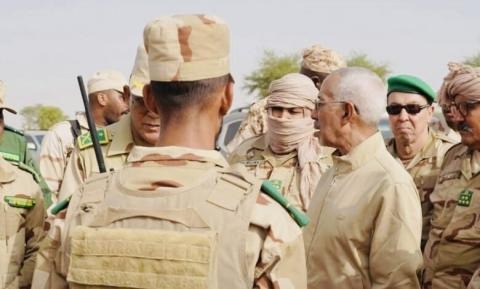
In the official response, President Mohamed Ould Cheikh el-Ghazouani said Mauritania would firmly protect its borders, stressing that armed forces are deployed along the frontier and securing it fully using all necessary means.
Speaking to party leaders and political representatives on March 27, 2026, he added that Mauritania would not be drawn into what he described as “provocations.”
El-Ghazouani also pointed to the broader context, noting that neighboring Mali is going through a period of instability marked by the presence of armed groups, and recalled that authorities had previously warned citizens against entering Malian territory or venturing into high-risk areas.
He made clear that escalation is not the answer, saying that any suggestion of a military confrontation with Mali would only make the situation more complex rather than resolve it.
In contrast to the president’s measured tone, the foreign ministry adopted a sharper stance, expressing “deep concern and strong condemnation” over what it described as serious security developments on Malian territory near the border that led to the deaths of Mauritanian citizens.
In a statement issued on March 28, the ministry said Mauritania firmly condemns these unacceptable acts, stressing that the protection of its citizens is a red line.
It called on Malian authorities to put an end to these repeated violations targeting Mauritanians in Mali over the past four years, urging them to take full responsibility by launching prompt, transparent, and credible investigations to identify those responsible and ensure the protection of civilians.
The statement warned that continued violations could entail international responsibility for the authorities involved, adding that Mauritania reserves the right to take all appropriate measures under international law.
While reaffirming its commitment to dialogue, regional cooperation, and stability, the ministry made clear that the security of its citizens remains a non-negotiable priority.
It also urged citizens, particularly in border areas, to exercise extreme caution and avoid entering Malian territory.
A Tragic Incident
Mauritanian journalist and activist al-Mustafa Ouldlellou described the killings as a blatant challenge to basic moral standards, norms, and laws.
Speaking to local media, he voiced frustration over the repeated incidents in recent months, saying they have escalated to what feels like open provocation.
He argued that the pattern points to underlying tension between the leaderships of the two countries, particularly as many of the incidents appear to involve Malian forces.
Ouldlellou also highlighted the complexity of the border, noting that it is not clearly demarcated, with Mauritanian villages inside Mali and Malian villages inside Mauritania, creating overlapping realities on the ground.
He added that dense social and commercial ties between communities on both sides further complicate the situation, especially in border areas where movement is constant, making enforcement and civilian protection extremely difficult, particularly given Mali’s deteriorating security conditions.
Sahel analyst Hammadi Jallou said the incident points to a wider pattern of violence by the Malian army that has increasingly affected Mauritanian nationals.
In an interview on March 27, 2026, he said that Mauritanian victims are reported almost monthly, raising questions over whether this is a matter of intent or coincidence, adding that it remains difficult to reach a definitive conclusion.
Jallou noted that victims’ negligence cannot be ruled out but stressed that those killed are often nomadic herders who are unlikely to be aware of formal border rules or warnings.
He argued that over the past five years the Malian army may have been provoking its Mauritanian counterpart to draw it into conflict, project strength, or relieve internal pressure, adding that all of these scenarios remain plausible.
At the same time, he warned that any escalation into direct military confrontation would be devastating for Mauritania, particularly since Mali, given its current instability, has little to lose.
Even so, he said a full-scale war between the two sides remains unlikely despite the growing frequency and intensity of deadly incidents along the border.

A Repeating Cycle
These deadly incidents are not isolated. Just a week earlier, on March 20, 2026, two young Mauritanians were killed and their bodies burned in a border area, triggering public outrage and growing political calls for a transparent investigation and accountability.
At the time, the Malian government announced it had opened an inquiry into the killing of Mauritanian citizens near the shared border, pledging to identify those responsible and bring them to justice.
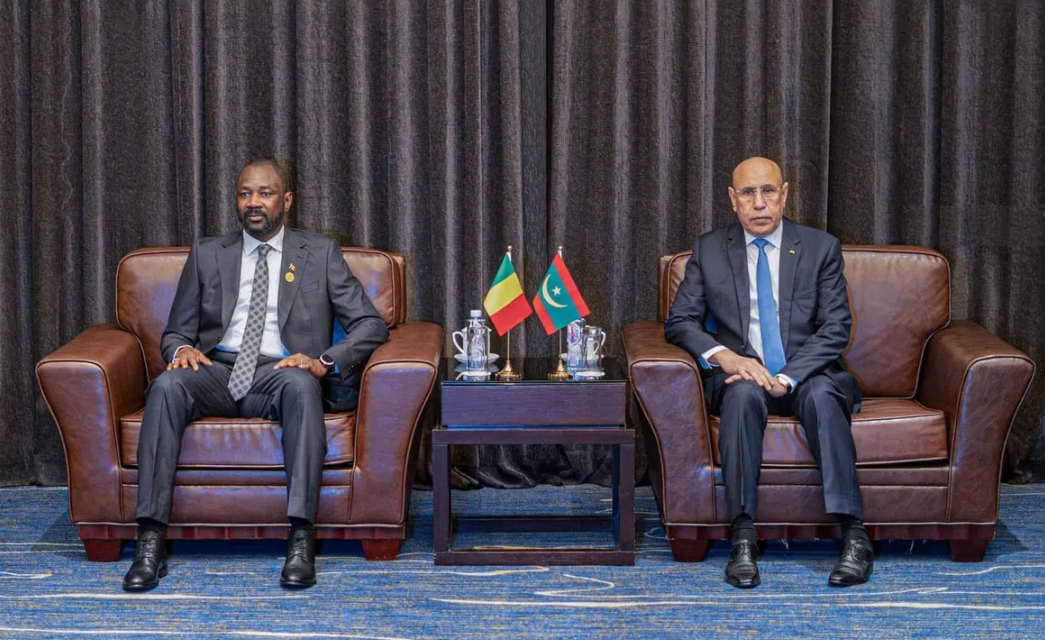
The announcement followed a phone call between Mauritanian President Mohamed Ould Cheikh el-Ghazouani and Mali’s transitional leader Assimi Goita.
Politically, the Movement for Democratic Renewal and Development (PRD) condemned the killing of Mauritanian citizens by Malian army fire near the border, warning that such incidents have become increasingly frequent.
In a March 21 statement, the PRD called for an urgent, transparent investigation to establish what happened and who was responsible, stressing the need to prevent it from happening again.
It also urged stronger security coordination and intensified diplomatic engagement between Mauritania and Mali to preserve regional stability and maintain good neighborly relations.
The National Rally for Reform and Development party, known as Tewassoul, described the killing of unarmed Mauritanian civilians by the Malian army in the Baghdad municipality of Hodh el-Gharbi as a “criminal act and a dangerous escalation.”
In a statement, the party said the incident was a blatant violation of good neighborly relations, international law, and basic humanitarian norms meant to protect innocent lives.
Tewassoul said the “criminal act cannot be justified under any circumstances” and warned it marks a serious escalation requiring a firm, clear response matching the scale of the tragedy.
The party also held the Mauritanian government fully responsible for protecting its citizens and safeguarding their dignity at home and abroad, calling for the necessary diplomatic and legal measures to hold those responsible accountable.
On February 4, 2026, a Malian army patrol carried out a brutal execution of a prominent livestock owner from eastern Mauritania along with nine of his workers in the Nioro area inside Malian territory.
Local reports identified the man as Cheikhna Ould Embiark, whose family currently lives in the Hassi Alak area of the Mabrouk municipality in Djiguenni district.
He was known as one of the leading herders in eastern Mauritania and had been in Mali for weeks tracking livestock he owned that had crossed the border at the end of the 2025 grazing season.
The nearby locality of Torodo is considered one of the more active administrative centers in the Koulikoro region of southwestern Mali, serving as the administrative seat of the Diedougou commune in the Kati district, about 60 kilometers northwest of the capital, Bamako.
57 Incidents
Amid the repeated violence affecting civilians, a report published by Human Rights Watch (HRW) on April 2, 2026 said government forces and their allies in Mali and Burkina Faso have killed more than twice as many civilians as Islamist armed groups have since the start of 2023.
The rights group said state forces and allied militias were responsible for three to four times more civilian deaths than armed groups over the past two years, based on data from the Armed Conflict Location & Event Data Project (ACLED).
Ilaria Allegrozzi, a senior Sahel researcher at HRW, said security forces in Burkina Faso and their allied militias appear more brutal and violent than groups such as Jama’at Nusrat al-Islam wal-Muslimin.
She added that the pattern reflects a regional trend raising concerns about military discipline and its impact on counterinsurgency efforts.
The report, covering January 2023 to August 2025, documented 57 incidents of civilian killings that left at least 1,837 people dead. Of these, 33 were attributed to government forces and their allies, resulting in 1,255 deaths.
In 2025 alone, ACLED data showed that the Malian army, working alongside Russian-linked paramilitary groups such as Wagner and Africa Corps, killed 918 civilians, compared with 232 killed by armed groups.
The data also points to a sharp rise in the use of drones against civilians in Mali since 2022, following increased purchases of unmanned aircraft from foreign suppliers.
ACLED recorded a jump in such incidents from four cases in 2022 to 66 in 2025, which resulted in 155 civilian deaths.
In July 2024, airstrikes on an artisanal gold mining site in Intahaka in northern Mali reportedly killed at least 50 civilians.