From 'a Lion’s Roar' to Silence: How Israeli Occupation Dodged the Question of Victory
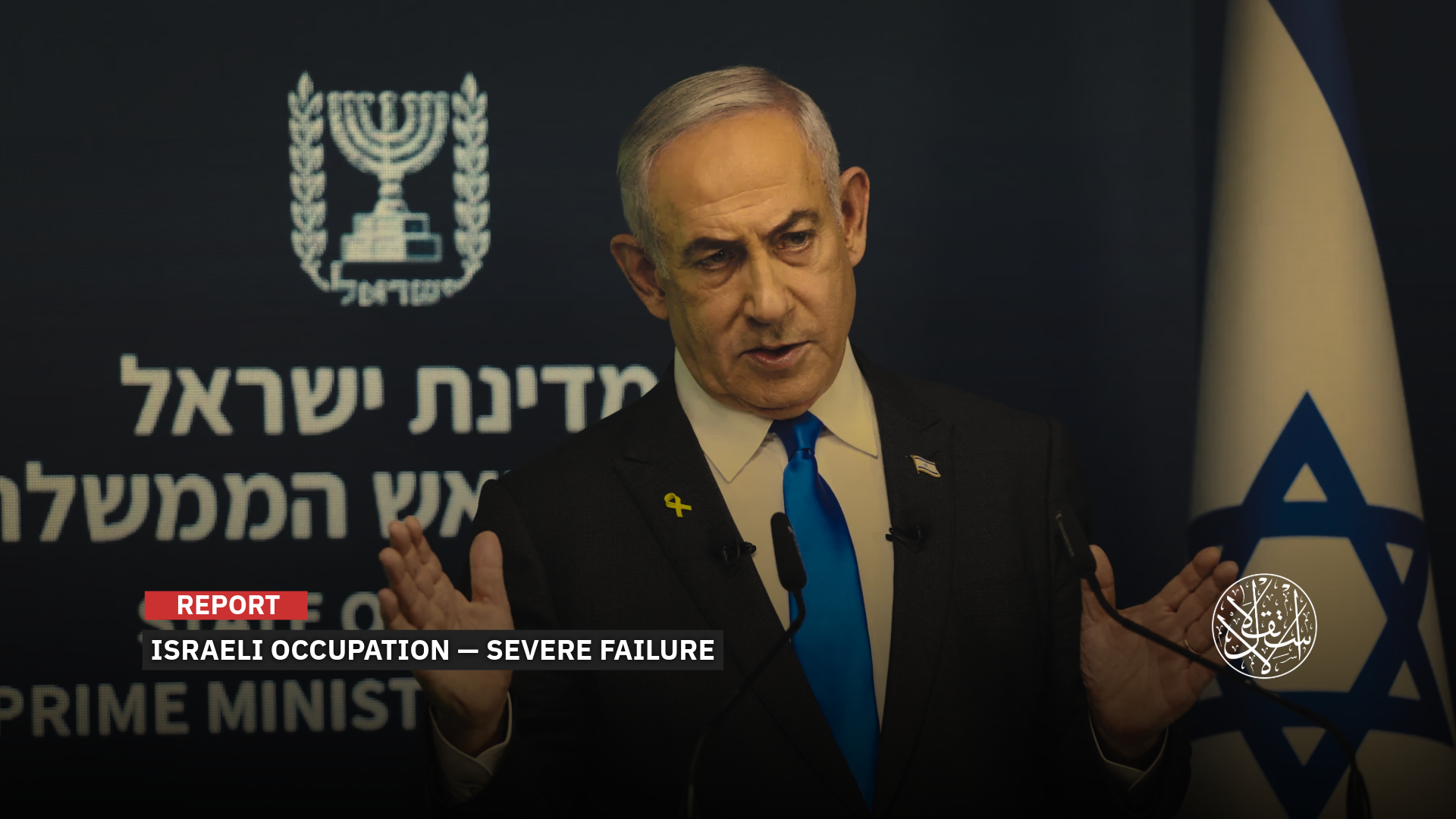
Netanyahu said the war on Lebanon is “completely separate” from the war on Iran.
“Israel’s” stance on the ceasefire agreement between Iran and the United States has raised many questions, not only because of the terms of the deal itself, but also because of the contradictions it revealed in Tel Aviv’s calculations.
On April 8, 2026, Washington reached a two-week ceasefire deal with Tehran under Pakistani mediation on the condition that the Strait of Hormuz be reopened. The Israeli Occupation government subsequently agreed to halt its strikes on Iranian facilities.
Israeli Occupation’s Stance
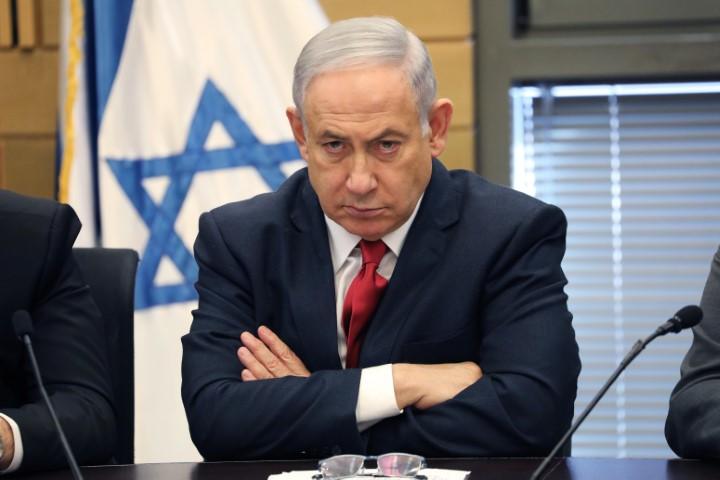
Israeli Prime Minister Benjamin Netanyahu and his government welcomed the ceasefire as a limited achievement that allows “Israel” to maintain operational momentum without incurring additional losses among its forces or the U.S.-led alliance.
In an official statement, the Israeli government supported a “suspension of attacks” on Iran while making clear that the de-escalation does not restrict “Israel’s” freedom of aggression in Lebanon or its strikes against Hezbollah.
Some Israeli ministers framed the agreement as a political and military success, arguing that the war had “destroyed key nuclear and missile capabilities in Iran,” increased internal pressure on the Iranian leadership, and that the United States would continue to impose tough conditions, including the reopening of the Strait of Hormuz and an end to Iranian-backed militia attacks.
The opposition, however, triggered a sharp political dispute. Opposition leader Yair Lapid called the ceasefire a historic political disaster, saying the government had been excluded from the negotiations and had failed to achieve its stated objectives.
He said both the military and the public had demonstrated extraordinary resilience, but Netanyahu had failed politically and strategically, adding that “Israel” had no role in decisions affecting its own national security.
“There has never been a political disaster like this in our entire history. Israel was not even close to the table when decisions were made concerning the core of our national security,” Lapid wrote on X.
“The army carried out everything that was asked of it, and the public showed remarkable resilience, but Netanyahu failed politically, failed strategically, and did not achieve any of the goals he himself set.”
Democratic Party leader Yair Golan described the deal as “one of the most severe strategic failures Israel has ever known,” arguing that Netanyahu had promised decisive victory but ultimately accepted a ceasefire without toppling “the Iranian regime” or dismantling Hezbollah.
Yisrael Beiteinu leader Avigdor Lieberman warned that the truce gives Iran time to regroup, calling for any agreement to include a full halt to uranium enrichment and ballistic missile development.
This political divide shows that consensus on Iran does not eliminate internal rivalry. Netanyahu has used the war to bolster his image as a leader steering “Israel” toward a “secure future,” while his opponents see the ceasefire as evidence that he lacks a clear exit strategy.
Polling by the Israel Institute for National Security Studies (INSS) suggests 78.5% of Israelis supported the war on Iran and 60% were satisfied with the military gains, but only 22% backed continuing the war until leadership change.
That gap helps explain Netanyahu’s effort to portray the ceasefire as a strategic gain rather than a setback, while the opposition has used the same figures to argue that public opinion favors a more measured settlement.
In response to criticism, an Israeli political source told local media that the United States coordinated the temporary ceasefire with “Israel” in advance.
According to a briefing published by Channel 12, the source said the deal effectively secured the reopening of the Strait of Hormuz without Iran obtaining any of its preconditions, including a permanent end to the war, compensation, or relief from sanctions.
The source added that senior figures in the Trump administration had made clear to “Israel” that Washington would push, during negotiations over the coming two weeks, for the removal of nuclear materials, an end to enrichment, and the elimination of the ballistic missile threat—goals shared by both “Israel” and the United States.
Why Was Lebanon Excluded?
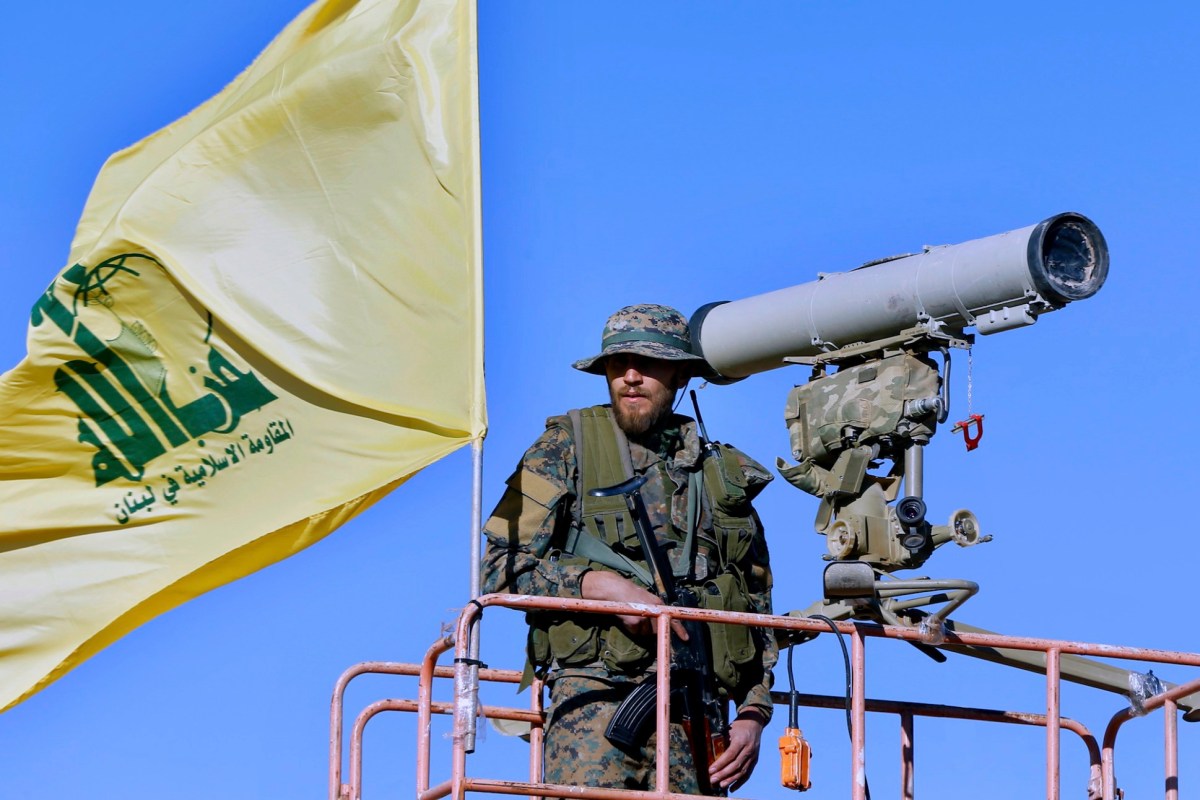
The most striking contradiction in the agreement lies in “Israel’s” exclusion of Lebanon, despite the Pakistani-mediated initiative stating that the ceasefire was meant to cover all fronts.
In practice, Prime Minister Netanyahu’s statement on Beirut on April 8, 2026, was quickly followed by more than 100 airstrikes on Lebanon within just 10 minutes.
Netanyahu told Western media that the war on Lebanon is “completely separate” from the war on Iran, arguing that Hezbollah continues to fire rockets and threaten northern “Israel.”
In another official line, the Israeli Occupation government insisted that the ceasefire does not restrict “Israel’s” right to defend international shipping lanes or target Hezbollah infrastructure.
President Donald Trump also said in an interview with PBS that the U.S.-Iran ceasefire does not include Israeli military operations in Lebanon “because of Hezbollah.” When asked whether he supported “Israel’s” ongoing aggression, Trump said Israeli strikes on Lebanon were “a separate skirmish.”
Meanwhile, a source familiar with the matter told Iran’s Tasnim News Agency, which is close to the Islamic Revolutionary Guard Corps (IRGC), that Tehran would withdraw from the agreement if “Israel” continues to violate the ceasefire by carrying out attacks on Lebanon.
Behind Netanyahu’s approach are layered calculations. “Israel” appears to view the truce with Iran as temporary—one that Tehran could use to rebuild capabilities—while maintaining pressure on Hezbollah to prevent it from preparing for a future round of fighting.
There is also a domestic political dimension. Israeli officials recognize that the war on Iran fell short of the publicly stated objectives—most notably the removal of the Iranian leadership and its nuclear program.
With those goals unmet, continued aggression on Lebanon serves as a visible demonstration of military force, signaling to domestic audiences that the war is still ongoing and that the Israeli government has not abandoned its broader objectives.
This framing also helps Netanyahu manage opposition criticism that he has compromised on outcomes, allowing him to balance military momentum with diplomatic constraints.
The Guardian noted that Netanyahu’s insistence on continuing strikes in southern Lebanon appears a form of overreach, especially given “Israel’s” stated ambition to establish a new security zone that would place its forces in direct confrontation with Hezbollah fighters long known for their battlefield experience on home terrain.
The paper added that “Israel’s” sudden and intense air attack in Lebanon increasingly resembles a punitive effort to displace populations after setbacks in Iran.
Key Assessments
After the ceasefire, Israeli media was filled with a wave of sharply divided opinion pieces and analyses. Maariv ran a commentary titled “From a Lion’s Roar to a Cat’s Meow,” referencing the name given by Netanyahu’s government to its Iran operation. The paper argued that the war was a “decisive Iranian victory,” noting that the leadership remained in place, the nuclear program continued, and the Strait of Hormuz had effectively become a source of revenue for Tehran. It described the agreement ending the war as a “strategic surrender.”
The Begin–Sadat Center for Strategic Studies (BESA) similarly argued that the war failed to achieve all its objectives, particularly in its inability to spark internal unrest in Iran, while the Strait of Hormuz remained closed and uranium stockpiles were left largely unaffected.
The BESA called for a comprehensive agreement addressing nuclear and chemical weapons, maritime activity, and militias, alongside a robust monitoring mechanism to prevent Iran from rebuilding its capabilities.
Many analysts also turned to polling data to assess public sentiment. INSS surveys showed that 52% of Israelis supported a U.S.-backed security arrangement with Lebanon, while 48% preferred the establishment of a permanent Israeli security zone. The same data pointed to declining trust in leadership, with only 31% expressing strong confidence in the Israeli government and 36% in Netanyahu. Analysts said the figures highlighted a widening gap between official narratives of success and a public sense of an incomplete victory and an uncertain political direction.
The Guardian noted that despite Netanyahu’s usual ability to promote short-term gains, it would be clear to Israelis that instead of removing what he long described as an “existential threat,” the situation on the ground had changed very little.
The paper added that in a war with no clear outcome, the Israeli prime minister risked emerging as the biggest loser after entering a fragile and ambiguous ceasefire with Iran.
It further argued that after years of Netanyahu’s threats against Iran, his appearances at the UN General Assembly, the intelligence dossiers repeatedly presented to global media, and sustained diplomatic pressure on U.S. presidents to back a war on Iran, the conflict ultimately ended in Israeli failure.
The analysis added that U.S. intelligence assessments, which had warned that Israeli expectations of “regime change” were unrealistic, had proven accurate, noting that “Israel’s” projections of a short war—lasting days or, at most, weeks—were far from reality.
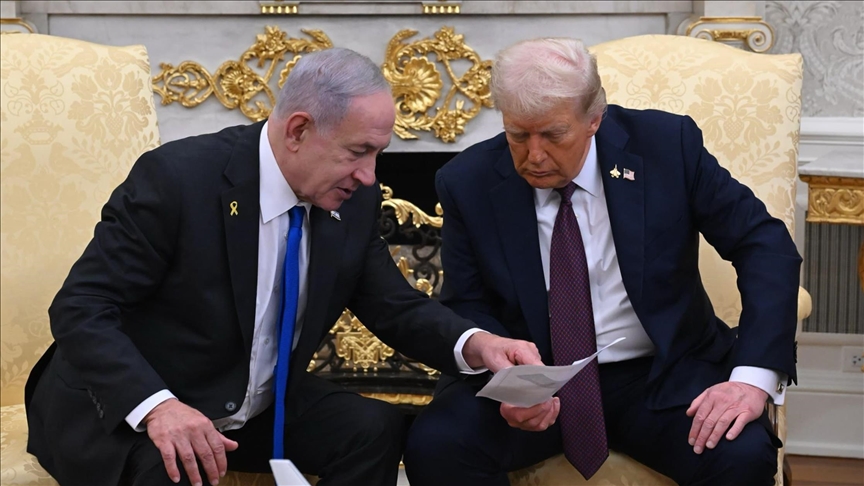
According to Channel 12, Netanyahu had pushed Trump to reject a ceasefire until the final days but was ultimately sidelined as the U.S. president moved ahead without him. Haaretz military correspondent Amos Harel also argued that the failure was embedded in Netanyahu’s war planning.
He said a recurring pattern had emerged across multiple fronts—Gaza, Lebanon, and twice in Iran—marked by a reliance on “wishful thinking, incomplete planning, disregard for expert advice, and pressure tactics to align analysis with political objectives.”
This is the fourth time in a row that claims of total victory and the elimination of existential threats have collapsed, exposing the emptiness of those promises, according to Harel.
Sources
- 'Total failure': Israeli opposition turns on Netanyahu over Iran truce
- Findings of a Flash Survey—Two Weeks into Operation Roaring Lion
- Operation Roaring Lion: Taking Stock and Looking Ahead
- The Epic after the Fury: Analyzing Alternative Futures
- In a war with no winners, Netanyahu looks like the biggest loser
- Ceasefire With an Asterisk: Israel Approves Iran Deal but Excludes Lebanon [Hebrew]
- From a Lion’s Roar to a Cat’s Meow: How Netanyahu and Trump’s Iran Strategy Collapsed [Hebrew]