The U.S. and Israeli Occupation Militaries Under One 'Defense' Law: A Win for Washington or 'Tel Aviv?'
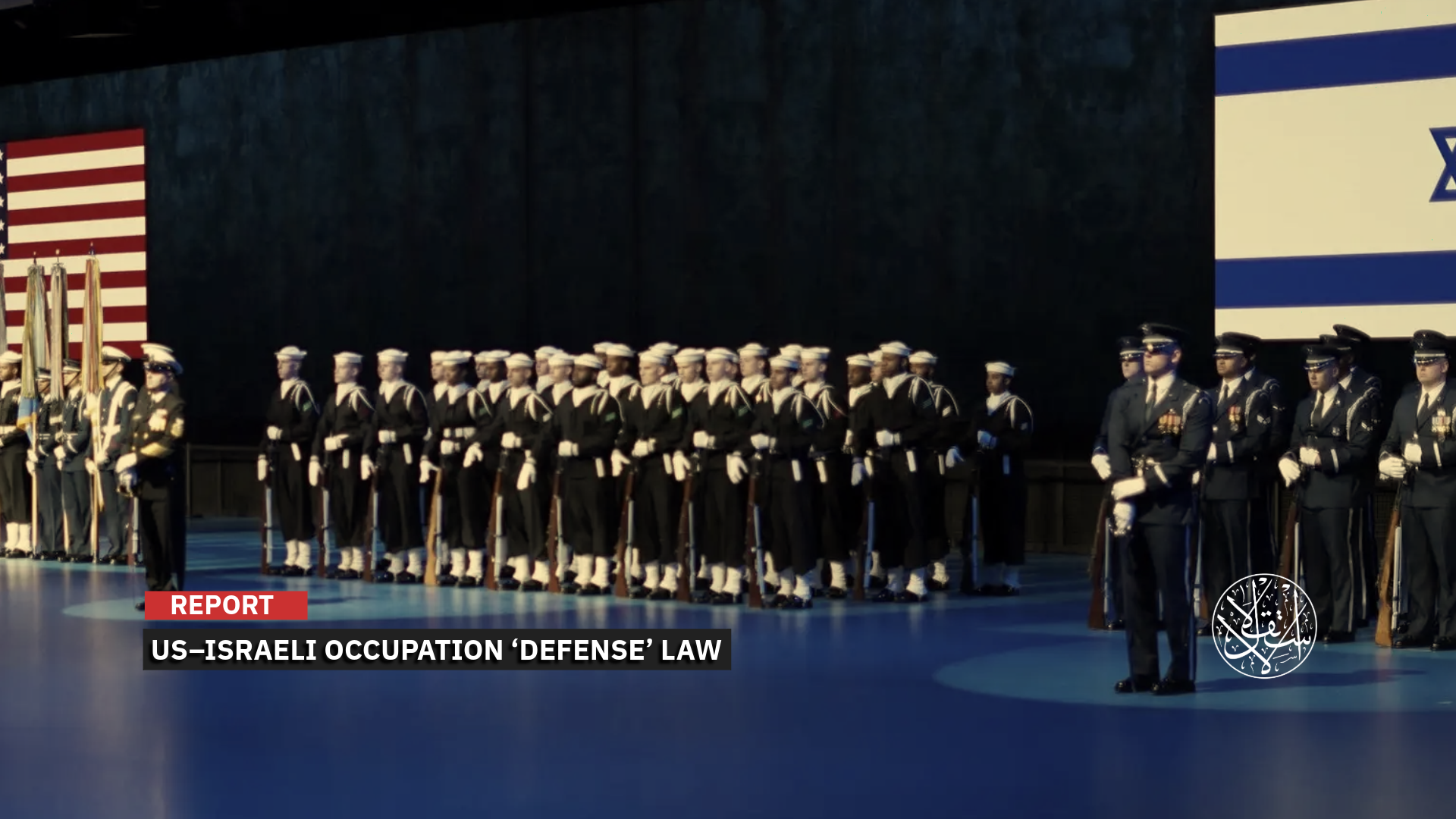
Article 224 has become the subject of growing debate in U.S. political and media circles.
As public support for the Israeli Occupation shows signs of weakening in the United States, according to a number of recent opinion polls, critics of “Israel” are increasingly accusing pro-”Israel” lobbying groups of seeking to entrench their influence within American institutions through legislation and defense partnerships.
They point to efforts to insert new provisions into federal laws aimed at deepening U.S.-”Israel” cooperation, particularly within the military and defense establishment.
Among the most closely watched proposals is Section 224 of the proposed 2027 National Defense Authorization Act (NDAA), the annual legislation that sets U.S. defense policy and spending priorities.
Titled the “United States-Israel Defense Technology Cooperation Initiative,” the provision would expand military and technological collaboration between the two countries across a range of strategic fields, including artificial intelligence, autonomous systems, electronic warfare, biotechnology, cybersecurity, data sharing, and technological integration.
Critics argue that such measures could grant the Israeli Occupation an unprecedented level of access to American military technologies and systems, further strengthening its influence within U.S. defense policymaking circles and deepening its institutional ties to the American security establishment.
The Story Behind Section 224
The 2027 NDAA is the annual legislation that sets U.S. defense policy and authorizes military spending.
In the latest draft approved by the House Armed Services Committee, lawmakers included Section 224, titled the “United States-Israel Defense Technology Cooperation Initiative.”
The provision calls on the Pentagon to expand and accelerate cooperation with “Israel” across a range of sensitive sectors, including missile defense, artificial intelligence, cybersecurity, drones, and electronic warfare. It also promotes greater data sharing and deeper integration of certain technological systems and networks.
The measure goes further by opening the door to joint research and development programs, co-production of military equipment, bilateral defense-industrial projects, and licensing and technology-transfer agreements between American and Israeli war companies.
Supporters describe the initiative as a major step forward in “defense” cooperation between the two countries. Critics, however, argue that it could create an unprecedented level of military and technological interdependence, moving well beyond the traditional framework of military aid and arms sales.
According to the text of the provision, the initiative is not limited to conventional “defense” assistance. It envisions the joint development of advanced systems and broader integration in high-tech military fields, further deepening the defense partnership between Washington and “Tel Aviv.”
Section 224 has not yet become law. Like the rest of the NDAA, it must still pass through the remaining stages of the legislative process in both the House and Senate before receiving final approval.
If ultimately enacted, the measure could mark a significant shift in the nature of the “U.S.-Israel defense relationship” by expanding cooperation across military, industrial, and technological sectors.
The provision also directs the secretary of “defense” to designate a senior executive responsible for coordinating and overseeing the new military and technology cooperation programs between the two countries.

Growing Controversy
Section 224 has sparked growing debate across U.S. political and media circles. Critics argue that the measure goes beyond strengthening cooperation between the American and Israeli Occupation militaries and could significantly expand coordination between the two countries’ “defense” industries and military institutions.
Opponents warn that broader exchanges of data, technology, and “defense” research could lead to a wider sharing of sensitive military capabilities with “Israel,” extending well beyond the traditional framework of military aid and “defense” cooperation that has long defined the relationship.
Supporters, however, contend that the provision is designed to reinforce the technological and military edge of both the United States and “Israel.” They argue that it would accelerate the development of advanced “defense” technologies and enhance cooperation in addressing future security challenges, including cybersecurity threats and the rapid evolution of artificial intelligence.
Some critics further argue that the measure could deepen the institutional ties linking the two countries’ armed forces and “defense” sectors, making certain forms of military cooperation more durable and less susceptible to shifts in the political landscape.
U.S. lawmakers Thomas Massie and Marjorie Taylor Greene have described the provision as encroaching on American decision-making autonomy in certain “defense” matters, with Massie announcing plans to introduce an amendment to strike it down.
Debates and estimates in the United States suggest that, if adopted, the measure could mark an important shift in the nature of the U.S.-Israeli Occupation military relationship by expanding cooperation in “defense” industries, artificial intelligence, electronic warfare, and future weapons systems.
Critics argue that it could grant “Israel” greater influence within the U.S. “defense” industrial ecosystem, while supporters maintain that it remains consistent with the long-standing strategic partnership between the two countries.
The controversy is not limited to military and technological dimensions but also extends to economic and political considerations. The expansion of joint military production projects and the establishment or upgrading of industrial facilities inside the United States could tie American economic interests and jobs to the continuation of this cooperation, potentially strengthening its political support in some circles.
Since 2008, U.S. law has required administrations to maintain “Israel’s qualitative military edge,” ensuring it retains advanced military capabilities compared with other countries in the region.
Under a memorandum of understanding signed during the Barack Obama administration, the United States provides “Israel” with around $3.8 billion in annual military aid through 2028.
The Israeli Occupation has been one of the largest recipients of U.S. aid since 1948, with total assistance—according to various estimates—running into hundreds of billions of dollars, the majority of which is military in nature.

‘Israel’s’ Grip on U.S. Decision-Making
The significance of the controversy surrounding Section 224 of the 2027 U.S. NDAA lies in its potential to expand U.S.-”Israel” military and technological cooperation to unprecedented levels by deepening partnership in weapons research, development, production, and related technologies.
In this context, a report published by Responsible Statecraft on May 29, 2026, warned that Congress is quietly moving toward a broader form of military integration between the two countries through this provision.
The report’s author, Ben Freeman, director of the “Democratizing Foreign Policy” program at the Quincy Institute, argues that Section 224 could make U.S.-”Israel” military cooperation less transparent and more difficult to scrutinize and hold accountable politically.
According to Freeman, this trend could further tie U.S. policy in the Middle East to its military partnership with “Israel,” at a time when criticism of unconditional U.S. military support for the Israeli Occupation is growing domestically.
The report notes that the controversy is intensifying amid rising public opposition in the United States to the scale and nature of military assistance provided to “Israel.” Critics argue that some pro-”Israel” members of Congress are seeking to shift the relationship from traditional military aid toward deeper “defense” and industrial integration.
It also highlights that Section 224 goes beyond conventional models of military cooperation seen with many U.S. allies, extending into joint development projects and integration in future warfare technologies such as artificial intelligence, electronic warfare, and cyber systems.
Opponents of the measure argue that this trajectory could grant “Israel” a greater presence within the U.S. “defense” industrial base, not only through military cooperation but also through economic interests tied to joint projects and job creation within the United States.
According to the report, expanded joint military production across U.S. states could generate economic stakes that encourage more lawmakers to support continued cooperation, thereby strengthening “Israel’s” position within “defense”-related policymaking circles.
The report concludes that the likely outcome could be a more deeply intertwined military relationship, subject to less public oversight than at present.
Freeman also notes that the timing of the proposal raises questions among critics, amid ongoing debates in the United States over the use of American weapons in regional conflicts and growing calls for tighter oversight of foreign military aid.
Recent polling shows a divergence between segments of American public opinion and the positions of some political leaders regarding the nature of U.S. military support for “Israel,” making Section 224 an increasingly contentious issue in political and media circles.
Senator Chris Van Hollen has criticized what he described as automatic and unconditional support for Israeli governments, arguing that certain Israeli policies are raising questions about their alignment with American interests and values.
Former U.S. State Department official Josh Paul has also warned that deepening the interconnection between the U.S. and Israeli “defense” industries could make it harder in the future to reassess or scale back the relationship.
Supporters of the measure, however, argue that it would strengthen shared “defense” capabilities and accelerate the development of advanced military technologies in the context of growing security challenges and global technological competition.
Meanwhile, ongoing debates in the United States, including in Israeli media such as the Jerusalem Post, suggest that the future of the U.S.-Israeli Occupation alliance faces challenges linked to shifting American public opinion, despite sustained high levels of military and security cooperation between the two countries.