The Doctrine of Sacred War: How the ‘Messianic Sign’ Fuels Settler Terrorism in Palestine
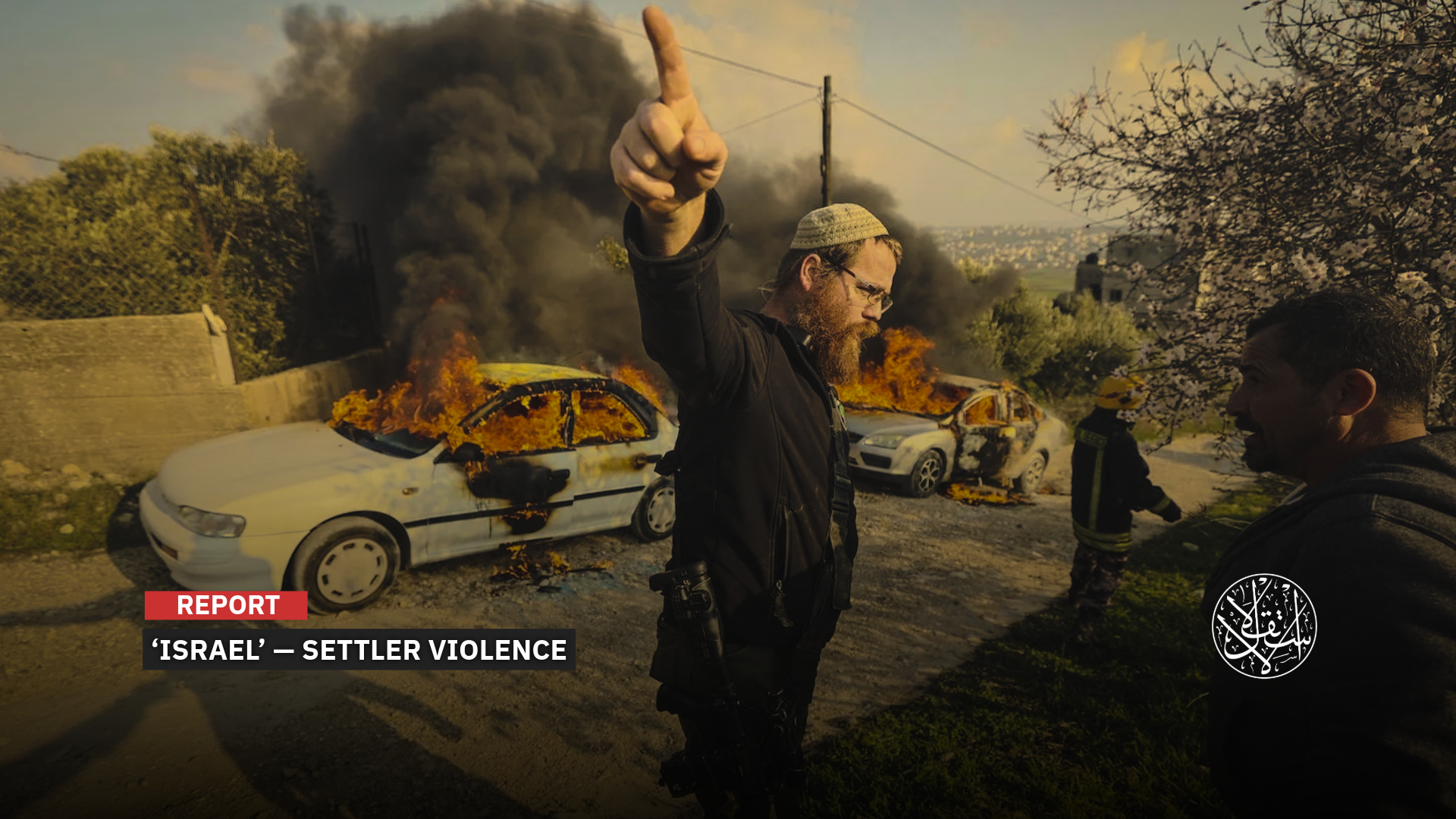
Settlers and soldiers from the Israeli army’s “Netzah Yehuda” unit, with a green light from extremist Jewish religious parties, are waging what is described as a “religious war” against residents of the West Bank, with the aim of displacing them, similar to the crimes that accompanied the first wave of “Israel’s” establishment.
International and Israeli reports describe them as “Jewish terrorists” who wear religious insignia on their military uniforms.
One of these extremists told the media, “All of Judea and Samaria (the West Bank) belongs to the Jews,” in an attempt to justify their actions.
In this context, Israeli writer Gideon Levy described them in the newspaper Haaretz on March 29, 2026, as the “Jewish Ku Klux Klan,” in reference to the “Ku Klux Klan” (KKK), known for its racist history in the United States.
The Ku Klux Klan is an American extremist organization founded in 1865 by white Protestant groups, based on ideas of white supremacy and hostility toward minorities, using violence and intimidation to achieve its goals.
Although this group has historically been known for its hostility toward Jews, reports indicate that Jewish settlers have replicated some of its methods by carrying out repeated attacks on Palestinian villages and shops in the West Bank.
These have included burning homes and land, killing civilians, and stealing property, often under the watch of Israeli Occupation Army Forces.

What is the ‘Ku Klux Klan’ (KKK)?
Because colonization, settlement, and militarization have been goals pursued by the Zionist movement since the establishment of “Israel,” aimed at consolidating its occupation of Palestine and achieving its biblical objective of “from the river to the sea”, Israeli parties have been keen to adopt and promote racist ideas based on uprooting all Palestinians from their land.
The participation of the “Religious Zionism” party, led by Finance Minister Bezalel Smotrich, and “Otzma Yehudit,” led by National Security Minister Itamar Ben-Gvir, in the government of Prime Minister Benjamin Netanyahu, who embraces similar religious ideas regarding the biblical right to the land of Palestine, has given momentum to the “national Haredi” religious currents.
These currents are largely represented by the “Hilltop Youth” movement, whose members carry out daily attacks on residents of the West Bank, burning and looting their homes and crops, stealing livestock, and poisoning water wells.
The “Hilltop Youth” took their name from a call made by former Israeli Prime Minister Ariel Sharon in a speech before the Likud party in 1998, urging settlers to “run and seize the hilltops” in the West Bank, after which the establishment of unauthorized settlement outposts began.
From these circles also emerged the “Hasmonean Brigade,” or Brigade 613, an infantry unit of the Israel Defense Forces composed of Haredi soldiers, within which the “Netzah Yehuda” battalion, meaning “Eternal Judea”, appeared, also including extremist Haredi Jewish soldiers.
Because Religious Zionism and national Haredism are considered the most extreme currents in the Israeli political arena, and have been central to settlement expansion in the West Bank, the two sides have formed an alliance, settlers from the Hilltop Youth and others, together with occupation soldiers from the Hasmonean Brigade and the Netzah Yehuda battalion, who serve in the West Bank to carry out the most violent campaign of terror in parallel with the government’s expansion of settlement plans.
Due to the similarity of their actions to those of the American Protestant Ku Klux Klan, such as burning, killing, destruction, and looting of property, they have been labeled the “Jewish Ku Klux Klan,” and they receive support and encouragement from Israeli governments, as their objective is the same.

‘Messiah Patch’: What Is Its Story?
Since Operation al-Aqsa Flood in October 2023, a phenomenon has spread among Jewish extremists in “Israel”, involving the wearing of a patch or insignia known as the “Messiah patch” on the military uniforms of some occupation soldiers.
The practice of soldiers wearing the “Messiah patch,” or “Mashiach” in Hebrew, symbolizes the “awaited Messiah from the lineage of David,” whom Jews claim will establish the “final Jewish kingdom of God” and defeat Muslims.
This patch is distributed by senior rabbis to soldiers, promising that it will save and grant them victory, and hasten the establishment of the final kingdom of “Israel”, as the return of the “Messiah” is near, and he will restore authority to the Jews and bring all nations under their service.
This is in line with their beliefs that the current war is “religious, redemptive, and apocalyptic,” which encourages further violence, killing of Palestinians, and the destruction of Gaza.
This comes within the framework of the ruling Religious Zionism current in “Israel”, known as the “redemptionist current,” which believes that the end of the world is near and that they must “accelerate the will of God” by engaging in expansionist wars to hasten the establishment of the Temple and the “kingdom of God.”
Israeli Prime Minister Benjamin Netanyahu has spoken several times about biblical prophecies and the “Mashiach,” the awaited Messiah from the lineage of David, and how Israel will prevail, framing the war in a Jewish religious context, stating that “the time of the Mashiach will come.”
Redemptionist Zionist movements are currently preparing for the arrival of the “Mashiach,” the awaited Messiah from the lineage of the Prophet David, through biblical rituals, including raising red heifers to be sacrificed and purifying Jews with their ashes, as well as preparing priests and the necessary Temple instruments.
Extremism among some radical Jews has gone as far as imagining that Netanyahu himself could be the “Mashiach,” or that the Messiah will come after him as the last Israeli leader, according to the rabbi and Netanyahu’s religious advisor Menachem Mendel Schneerson, as reported by the Israeli website “By Faith” on June 15, 2024.
Supporters of this current, which has come to be described as the “Jewish Ku Klux Klan,” believe that war and settlement will expand control over all of occupied Palestine and accelerate the return of the Messiah, from the lineage of the Prophet David, not Jesus Christ.

Washington Is Concerned!
On March 27, 2026, during a press conference from Paris, reported by the U.S. State Department, Secretary of State Marco Rubio expressed Washington’s “concern” over the escalating violence of settlers in the West Bank, claiming that “Israel” would take measures to curb this phenomenon, which recurs almost daily.
In response to journalists’ questions, Rubio said, “We are concerned about that,” noting that U.S. President Donald Trump had previously expressed his opposition to “any change in the status quo in the West Bank.”
In September 2025, Trump confirmed that he would not allow the annexation of the West Bank, amid moves within Prime Minister Benjamin Netanyahu’s coalition to push for this option.
However, according to observers, the paradox is that the U.S. secretary did not explicitly condemn settler violence or the support they receive from ministers in Netanyahu’s government, limiting himself to saying that “the Israeli government is dealing with the issue seriously,” while estimating that some of these settlers also attack Israeli security forces.
Amid the escalation of these attacks, reports have indicated that the Israeli army redeployed a battalion that had been assigned to the Lebanese front to the West Bank, at a time when accounts suggest that some soldiers, especially from the “Netzah Yehuda” battalion, align themselves with settlers in their crimes against Palestinians.
The paradox deepens, according to media reports, with the continued U.S. support for settlement projects, as The Times of Israel reported on March 27, 2026, that millions of dollars have been funneled into outpost projects, despite some of them turning into hubs of violence against Palestinians.
In this context, criticism has intensified within “Israel” itself, as journalist Gideon Levy described extremist settlers in the newspaper Haaretz as the “Jewish Ku Klux Klan,” drawing a comparison to the Ku Klux Klan, known for its violent and racist history.
Levy also criticized Rubio’s statements, questioning the usefulness of American “concern” in light of what he described as Israeli government support for settlers, saying that the government “does not worry about their violence, but rather benefits from it,” in his words.
He added that this violence, in his view, enjoys official and popular tolerance, estimating that settlers involved in it are, in some circles, seen as “heroes” rather than outlaws.
He also pointed to reports speaking of the involvement of some soldiers in violations, and the appearance of religious symbols such as the “Messiah patch” on their military uniforms, indicating, according to critics, a growing ideological dimension in the behavior of some of these groups.
He concluded by saying that merely expressing concern without taking concrete measures contributes to the continuation of this phenomenon and raises questions about the seriousness of the international stance in addressing it.
Jewish Terrorist Crimes
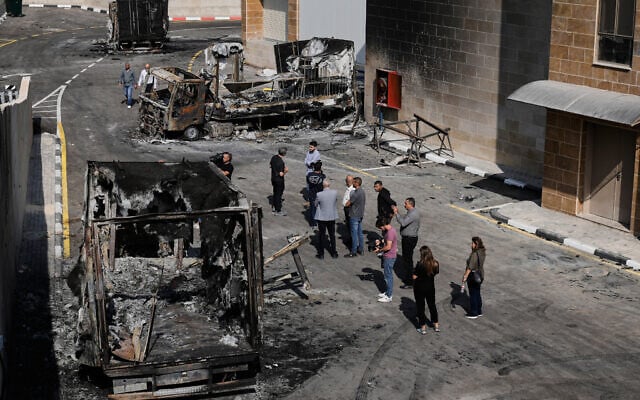
The crimes committed by these settlers and occupation soldiers from what is described as the “Jewish Ku Klux Klan” have included burning and assaulting Palestinians, including elderly individuals such as Abdullah Daraghmeh (75 years old), as well as burning their cars, homes, shops, and olive trees, and stealing livestock, with the aim of forcing them off their land.
The Israeli human rights organization “Yesh Din” documented 305 incidents of settler violence since the start of the war with Iran on March 28, 2026, an average of more than 10 incidents per day.
These included assaults, property destruction, land seizures, and the forced displacement of entire Palestinian communities.
These attacks were documented across 139 different locations and resulted in the injury of at least 215 Palestinians. Settlers also established new outposts during this period, including in Area A, which falls under the civil and security control of the Palestinian Authority.
Soldiers from the “Netzah Yehuda” battalion have previously been involved in documented incidents of violence, including the case of the death of elderly Palestinian Omar Asad (80 years old), who held U.S. citizenship, after being detained and left in harsh conditions, an incident that sparked widespread criticism and calls to disband the battalion.
An investigation published by +972 Magazine on April 2, 2026, indicated that condemnations issued by ministers, army leaders, and right-wing commentators regarding the crimes of these settlers are merely a smokescreen, intended to conceal the reality that settler violence is a state policy.
It explained that these condemnations came under external pressure and following statements by U.S. Secretary of State Marco Rubio, who implicitly told Israelis that he expected “the Israeli government to take action regarding this (violence),” while U.S. officials conveyed similar demands to Netanyahu.
The Israeli site pointed to “close ties between settlers and the army, as in regional defense battalions and reserve units, many settlers serve in the areas where they live, and almost daily, Palestinians are expelled from their land with the assistance of soldiers or settlers wearing military uniforms.”
Following a documented assault on a CNN crew on April 2, 2026, the Israeli army was forced to suspend the activities of the “Netzah Yehuda” battalion, while keeping it in reserve service in an attempt to contain the repercussions of the incident on “Israel’s” image globally.
This came amid rising international accusations regarding the conduct of the army and crimes committed by its members, yet settler violence, described as part of the “Klan” army, continues.
The investigation into the battalion follows a recurring pattern in which the Israeli army relies on internal investigations into its personnel, aimed at containing international pressure and avoiding external investigations into alleged violations.
A crew from CNN was assaulted by Israeli soldiers while covering the establishment of a settlement outpost near the village of Tayasir in the northeastern West Bank.
The Foreign Press Association said that the soldiers “grabbed the cameraman by the neck, threw him to the ground, and damaged his equipment,” before detaining the team for about two hours and preventing them from doing their work, despite identifying themselves as journalists, confirming that the incident was fully documented.
The army claimed that the force present at the scene acted to “prevent friction,” stating that the soldiers separated journalists and Palestinians and conducted searches before releasing them later, and asserted that allegations of violence are “under review.”
Sources
- Oh No! Rubio Is Concerned About Settler Violence. Now What?
- Secretary of State Marco Rubio Remarks to the Press
- Rubio Says U.S. ‘Concerned’ by Settler Violence, Insists Israel Will Act Against It
- Israeli Leaders Are Condemning Settler Attacks, It’s a Smokescreen
- An Internal Investigation Halts “Netzah Yehuda” After a Documented Assault on Journalists [Arabic]