'Banning Al-Jazeera': How the Campaign Against Qatar’s Network Took Shape and Who Is Behind It?
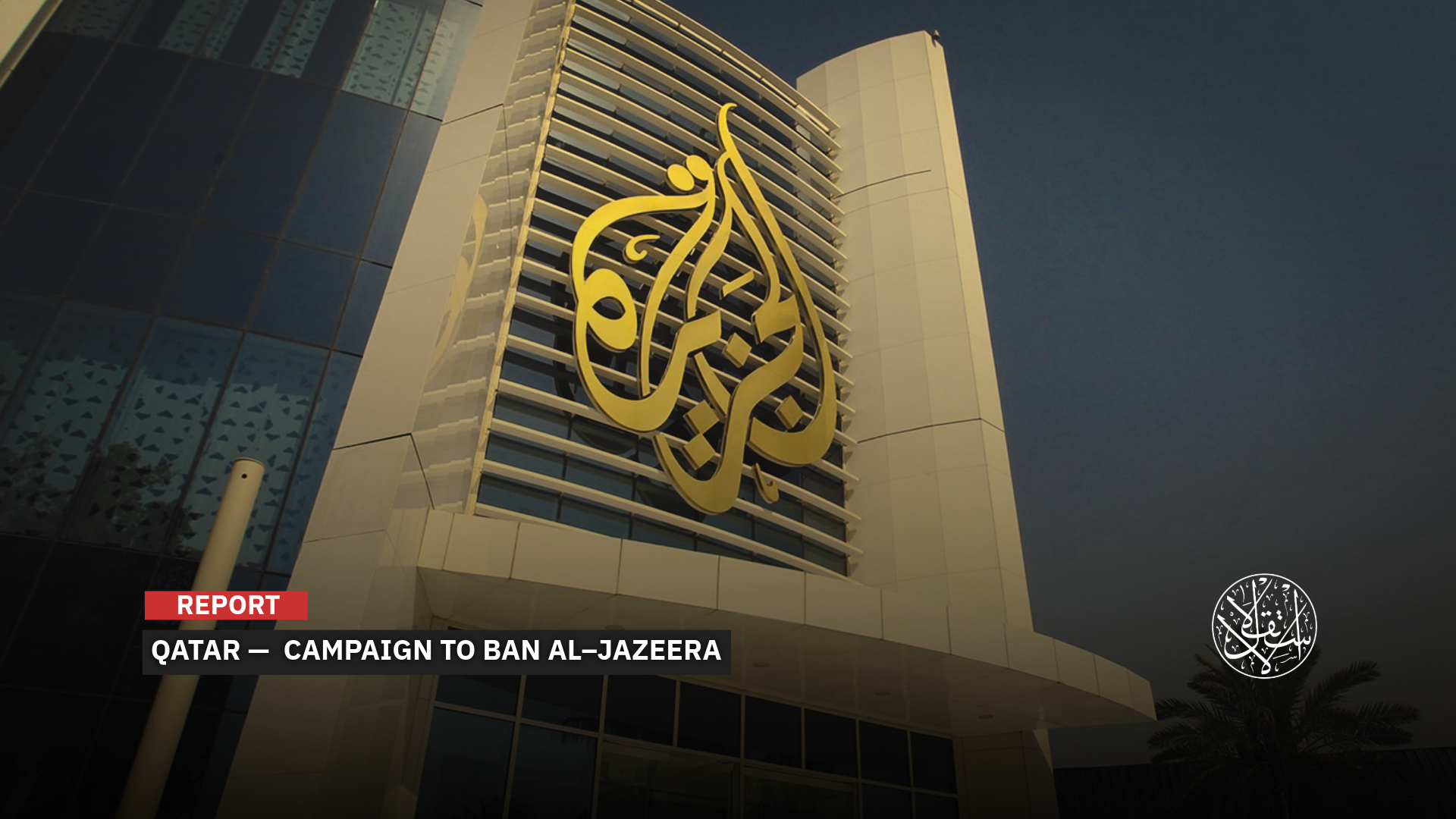
Yigal Carmon is a retired colonel from Israeli military intelligence.
As the war, described by Israeli Prime Minister Benjamin Netanyahu at the United Nations as a seven-front war, spanning Gaza and extending into Lebanon, Iran, the West Bank, and beyond, continues to widen, Al-Jazeera has once again moved to the center of controversy. This time, not only for its coverage of the conflict but as a target in an escalating media battle.
“Why Qatar’s Al-Jazeera Should Be Banned,” published by Gatestone Institute, openly urged Western policymakers to consider classifying the network as a supporter of terrorism. The proposal moves beyond media criticism to explicitly call for political and security action against it.
The report is not just a passing piece of analysis but part of a broader push to undermine the credibility of one of the most prominent Arab networks covering wars, recasting it as a political target within parts of Western conservative discourse.
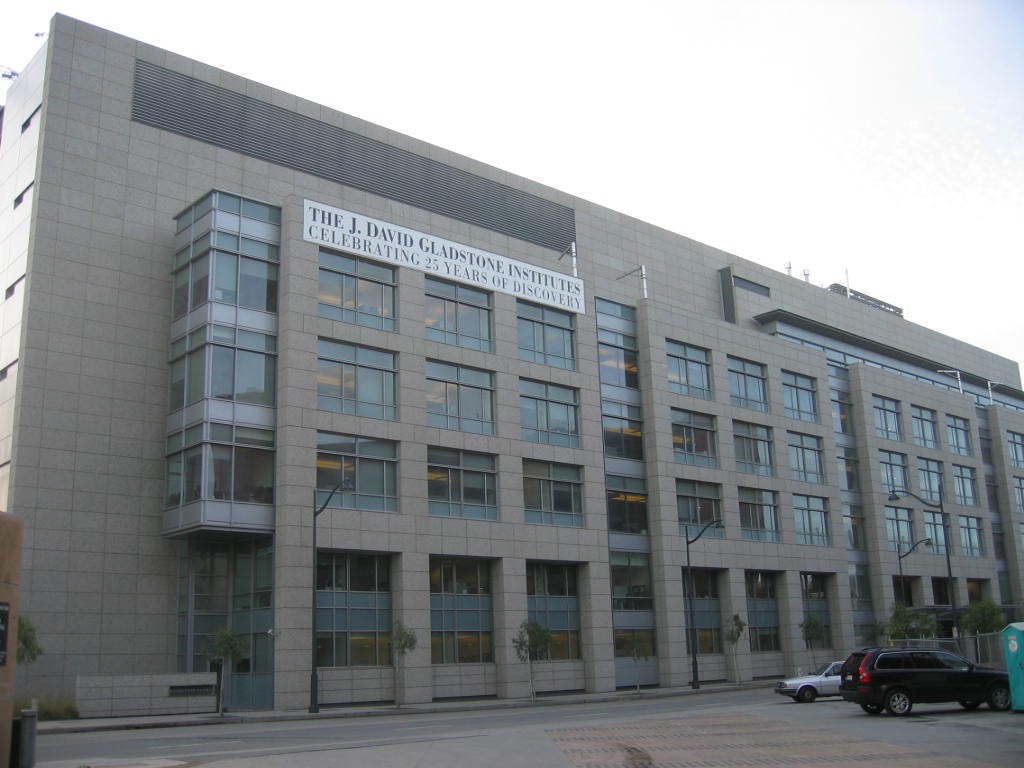
The timing is significant. It comes against the backdrop of “Israel’s” decision in May 2024 to shut down Al-Jazeera’s offices within its occupied territory under a law it said was tied to national security. The network rejected the accusations as “false and dangerous,” warning that such claims put its journalists at risk.
Written by Bassam Tawil, the Gatestone report follows a familiar line of argument. It begins with Israeli allegations against Al-Jazeera journalists, expands into claims that the network functions as a propaganda platform for Hamas, and ends with a call for decisive action against it.
The report also cites several Al-Jazeera journalists killed during the Israeli aggression on Gaza, including Mohammed Wishah, Anas al-Sharif, and Ismail al-Ghoul, presenting them as examples of what it describes as the misuse of journalistic cover.
Critics argue, however, that the report offers little in the way of independently verified evidence. Instead, they say it largely repeats claims originating from Israeli military and security sources before building toward a political conclusion advocating a ban.
Thus, the debate shifts from allegations against individuals to the targeting of an entire media organization in an attempt to move it from the category of “troublesome institutions” to that of “political and security targets.”
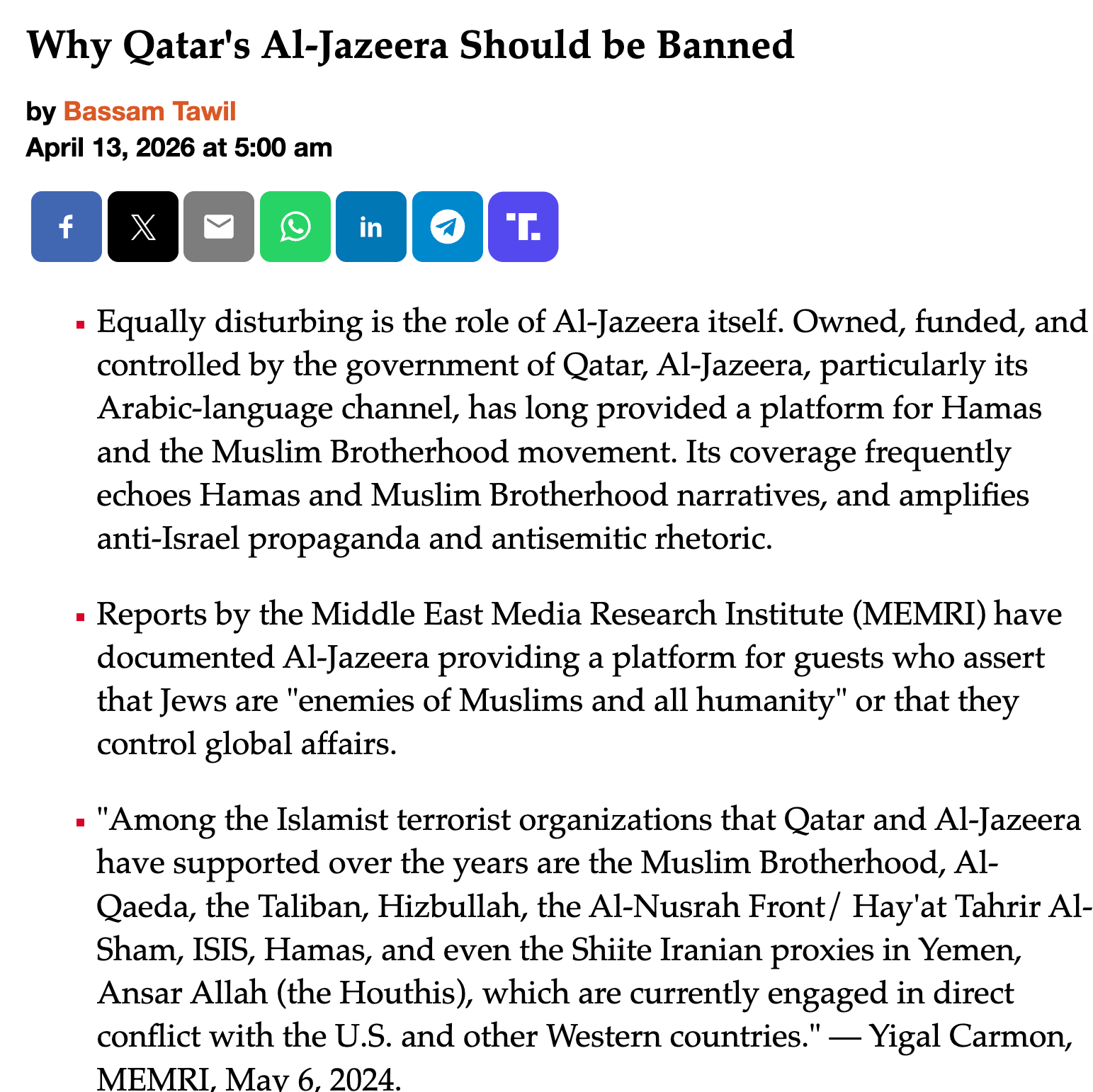
How Was the Report Constructed?
What is most telling is that the report does not conceal its core sources. Instead, it relies heavily on the Middle East Media Research Institute (MEMRI) and places statements by its president, Yigal Carmon, at the center of its analytical framework.
The text repeatedly draws on claims attributed to Carmon, including the assertion that Al-Jazeera has long supported extremist groups and that, since October 7, 2023, it has effectively functioned as a 24-hour propaganda platform for Hamas.
The significance lies in the structure itself. The Gatestone author does not present original field reporting or new documentary evidence. Instead, the piece assembles an accusatory file built on pre-existing quotations and narratives produced by institutions with clearly stated political positions toward Qatar, Al-Jazeera, and Islamic political movements.
In that sense, the report is less a new investigation than a reassembly of recycled material, rearranged and reframed to serve a clear political aim: the call to ban the network.
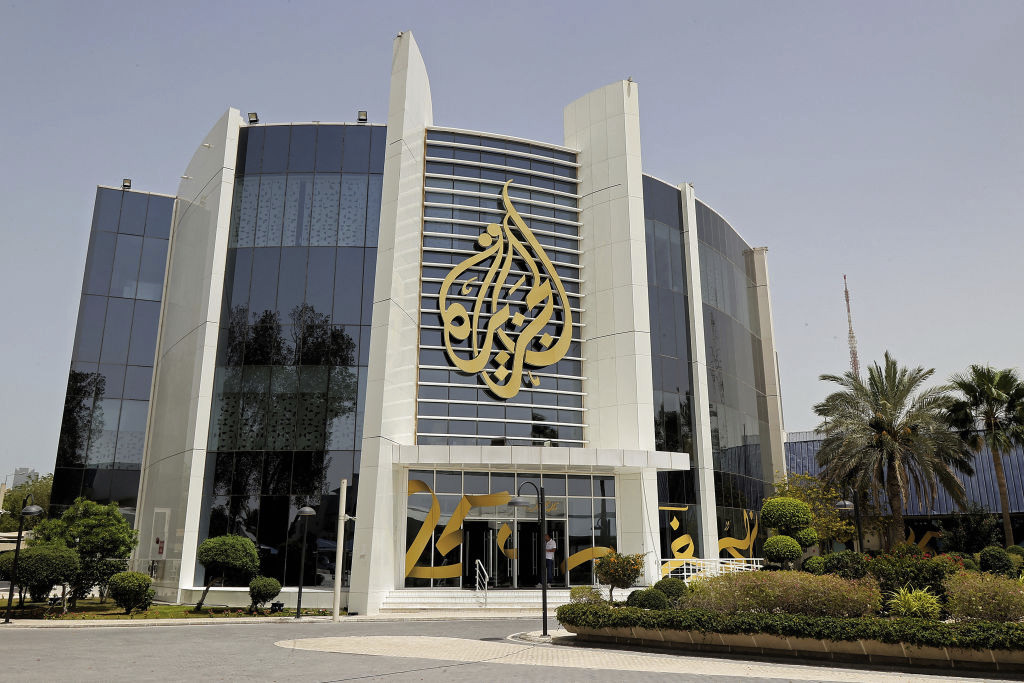
In this context, it highlights a passage that Al-Jazeera’s critics frequently seize on—not just to condemn the network, but also, unintentionally, to underline the scale of its reach.
It notes that, according to its own website, Al-Jazeera runs more than 70 bureaus worldwide and is among the largest and most influential international news networks.
It also points out that between 2004 and 2020, AJ+ videos on Facebook drew over 10 billion views and more than 11 million followers.
The report further cites Pakistani commentator Amna Kausar, who wrote in March 2026 that Al-Jazeera had overtaken CNN and the BBC to become the most-watched international news network, with its Arabic channel reaching around 400 million viewers a week.
The irony is hard to miss. For Al-Jazeera’s opponents, the issue is not only its editorial line but also the scale of its influence, its global reach, and its ability to compete with major Western media outlets in an increasingly intense struggle over narratives and global perception.
Military Targeting
Even so, the Gatestone piece does not appear detached from the broader wartime context; if anything, it aligns closely with it. The Israeli Occupation, which has continued to accuse the network of incitement, is the same actor that has killed a number of Al-Jazeera journalists in Gaza and the West Bank during the war—a claim the network has repeatedly denied, as press freedom groups continue to condemn the lack of accountability for journalists killed in the field.
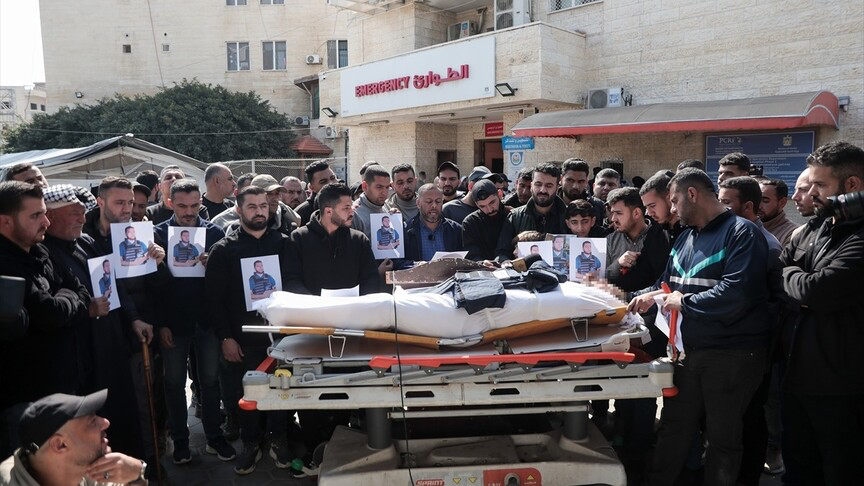
On April 8, 2026, Reuters reported that Al-Jazeera correspondent Mohammed Wishah was killed in an Israeli airstrike, noting that the Israeli military had previously accused him in February 2024 of ties to the Qassam Brigades—an allegation denied at the time by both Hamas and Al-Jazeera. The Committee to Protect Journalists (CPJ) has also documented the killing of numerous journalists since the war began, without any clear accountability in any of these cases.
In that sense, the Gatestone report does not stand apart from events on the ground but rather forms part of a broader political and media environment in which independent journalistic narratives are increasingly treated as a threat to be contained.
When addressing Al-Jazeera journalists killed during the war, the report appears to rely on a two-step framing: first, by casting them as military targets; and then, by reshaping narratives after they were killed in ways that appear to justify their targeting.
In the case of Mohammed Wishah, Israeli sources advanced a security claim linking him to the Qassam Brigades. Reuters, however, noted that the allegation originated from the Israeli Occupation military, while both Hamas and Al-Jazeera denied it, and no immediate comment was issued by the Israeli army at the time of the strike that killed him.
In the same vein, Anas al-Sharif is also drawn into earlier claims suggesting he was linked to the leadership of a Hamas cell—allegations rejected by Al-Jazeera and described by Reuters as unverified Israeli allegations.
Ismail al-Ghoul is also included in the Gatestone report as part of a broader list that appears intended to reinforce a general pattern of suspicion, despite the absence of independent judicial findings and the reliance instead on military narratives from a party directly involved in the war.
The implications are significant, particularly in a context widely documented as highly dangerous for journalists. In its statement following Wishah’s assassination, Al-Jazeera did not treat the incident as isolated but as part of a broader pattern of targeting media workers and silencing field coverage, naming several of its journalists killed in Gaza, including Ismail al-Ghoul and Anas al-Sharif.
The Israeli Occupation, for its part, maintains that it targets militants and military infrastructure, arguing that the presence of journalists in active combat zones inherently places them at risk. Meanwhile, the CPJ said “Israel” has not held anyone accountable for the killing of journalists by its forces.
At its core, the issue is less about the repetition of allegations and more about the narrative constructed after each killing: whether the aim is to investigate the facts or to recast them in a way that strips the victim of their identity as a journalist and reframes them as a legitimate target. In this light, the Gatestone report reads less as an effort to scrutinize such narratives than to reproduce them.
Who Is Behind Gatestone?
To unpack the article’s discourse is also to unpack the platform that published it. The Gatestone Institute presents itself as a U.S.-based nonprofit, but a closer look at its official website places it firmly within a conservative intellectual ecosystem, marked by hardline positions on the Middle East, immigration, and Islam. The organization is led by Nina Rosenwald, who serves as its president.
Notably, the article “Why Qatar’s Al-Jazeera Should Be Banned” was featured prominently on the institute’s homepage, alongside content heavily focused on Iran, Hamas, and migration to Europe from Muslim-majority countries—an editorial mix that reflects the institute’s priorities and broader political orientation.
In this light, Gatestone does not operate as a neutral academic institution grounded in rigorous research standards but rather as an ideologically driven platform seeking to influence policymaking circles and shape public opinion, particularly within conservative audiences in the United States and Europe.
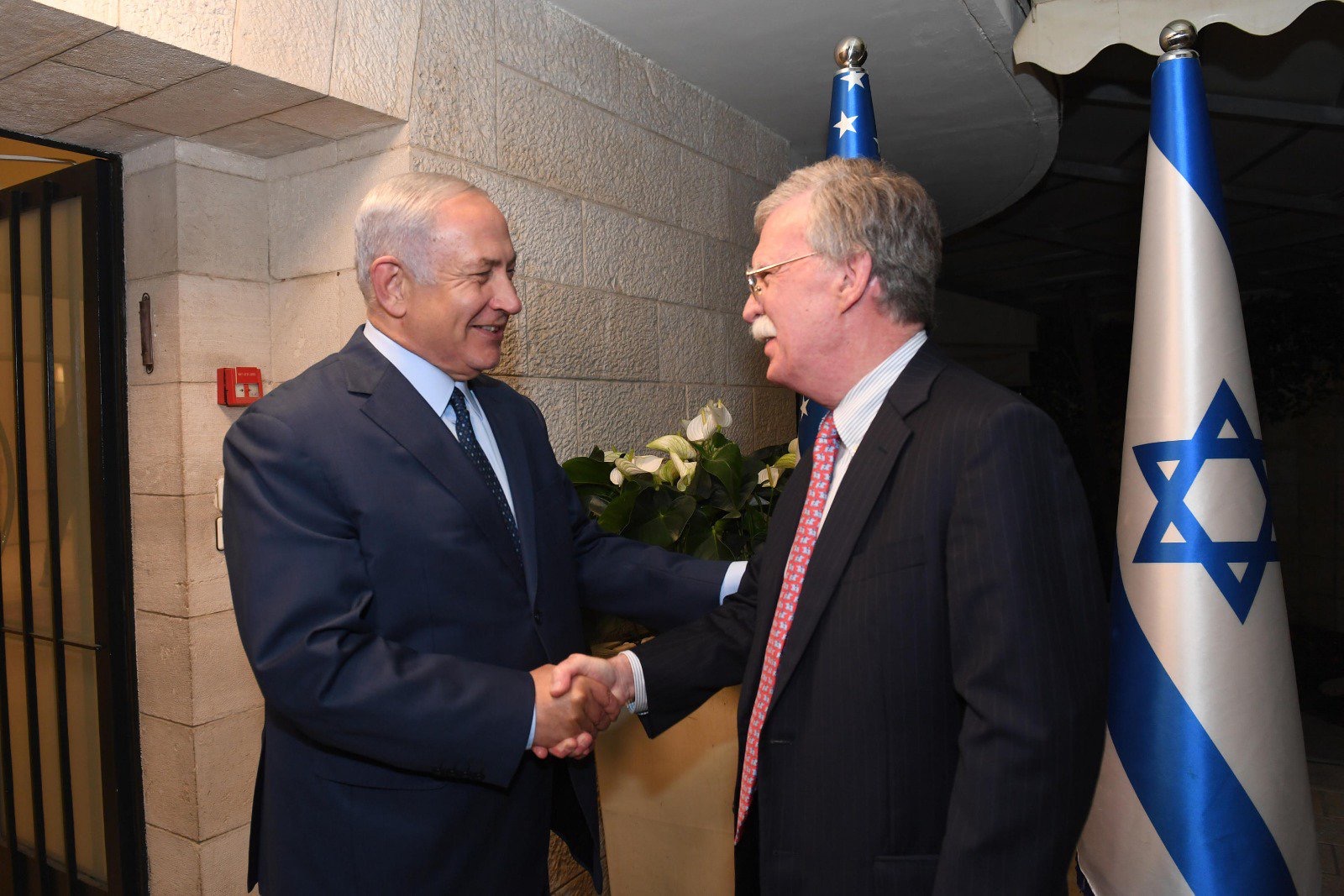
The institute’s own materials also point to the involvement of John Bolton, who previously held a leadership role there. Bolton is widely known as a prominent Republican figure with hawkish views on the Middle East and Iran and a confrontational approach to U.S. foreign policy.
The website further highlights what it describes as one of its key political achievements: supporting the reversal of a United Nations resolution that had equated Zionism with racism—an example that underscores the broader ideological and political framework associated with figures linked to the institute.
According to critics and multiple reports, Gatestone has repeatedly faced accusations of bias against Arabs, Muslims, and migrants. Some researchers place it within a wider current of far-right or anti-Islam discourse in the United States and Europe, particularly in its coverage of immigration and representations of Muslim communities in Western societies.
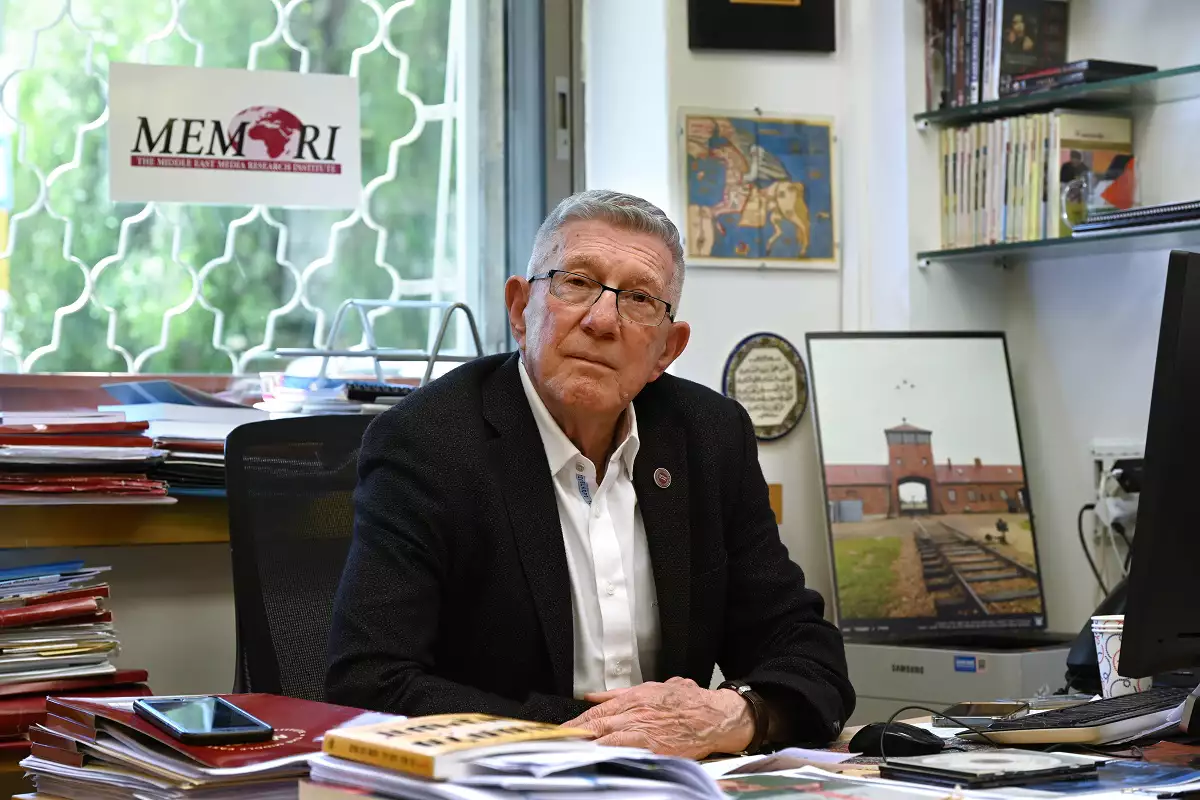
An Israeli Intelligence Officer
At the heart of this campaign lies not just the Gatestone Institute, but also the source it repeatedly draws on: the Middle East Media Research Institute (MEMRI).
Based in Washington, MEMRI describes its mission as bridging the language gap between the Middle East and the West through the translation, monitoring, and analysis of Arabic, Persian, Turkish, and Urdu media.
Yet official biographical material submitted to the U.S. Congress makes clear that its founder and president, Yigal Carmon, is a retired colonel from Israeli Occupation military intelligence.
According to those records, Carmon previously served as a counterterrorism adviser to two Israeli prime ministers and was part of “Israel’s” delegation in negotiations with Syria in Madrid and Washington before founding MEMRI in 1998.
That background raises questions about the role he now plays as a cited “neutral” research source in the Gatestone report. Rather than standing outside the conflict, his perspective is shaped by direct involvement in it.
Carmon is not the only figure of note. MEMRI was also co-founded by Meyrav Wurmser, an Israeli-American researcher who has held positions at conservative think tanks in Washington and previously served as the institute’s executive director.
Over the years, MEMRI has drawn sustained criticism from media and academic circles, with critics arguing that it selectively highlights the most extreme strands of Arab and Islamic discourse, contributing to a narrow and often distorted image of the region for Western audiences.
Several academics and journalists, including The Guardian’s British journalist Brian Whitaker, have noted that the institute relies on selectively highlighting highly extreme texts or stripping them from their context while sidelining more moderate voices, making what is presented as a “linguistic bridge” closer to a one-way ideological channel, filtering content from East to West in a way that serves a specific political narrative.
Seen in this light, the Gatestone report appears less as independent analysis and more as part of a broader ecosystem of aligned institutions and figures. A conservative platform draws on material from a translation and analysis institute founded by a former Israeli intelligence officer and a Washington-based conservative researcher before building toward an explicit political call to ban Al-Jazeera—on the grounds that it has become, in their view, too influential to contain.
Ultimately, the issue extends beyond criticism of Al-Jazeera itself. It touches on a more fundamental question about the role of journalism in times of war: whether it serves as a witness to events or becomes part of the machinery that reshapes and justifies them.
Sources
- Why Qatar's Al-Jazeera Should be Banned
- About Gatestone Institute
- About memri
- Yigal Carmon – President and Founder of the Middle East Media Research Institute (MEMRI)
- Gaza: Funeral of Journalist Mohammed Wishah After He Was Killed in Israeli Airstrike [Arabic]
- Israel Responsible for Killing Two-Thirds of Them: Report Documents Deadliest Year for Journalists [Arabic]