A Sharp Reversal or Political Interests: Why Italy Suspended Defence Pact With 'Israel'
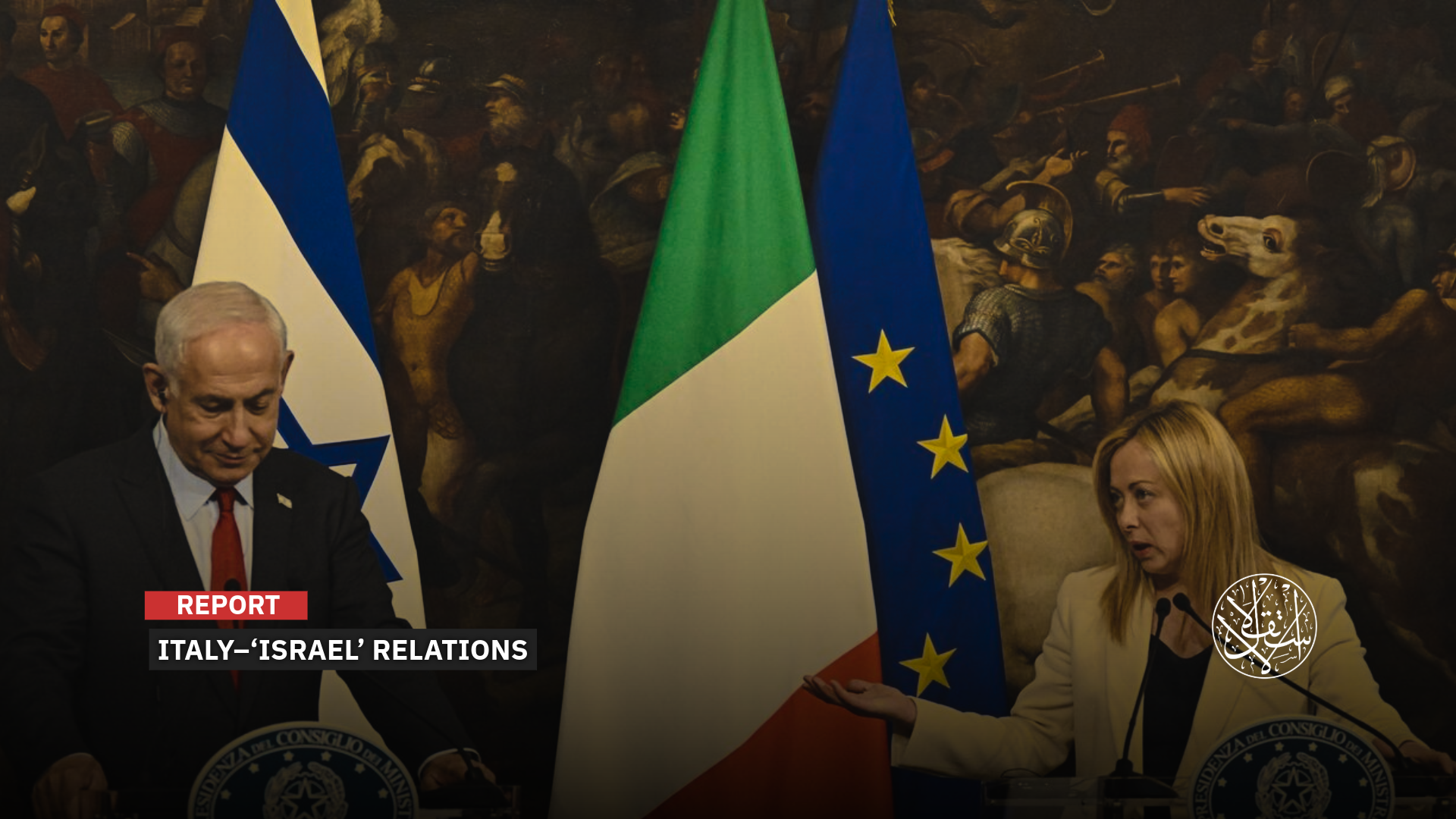
“Until recently, Meloni’s government had been one of Israel’s closest supporters.”
Italian Prime Minister Giorgia Meloni's decision to suspend defense pact with “Israel”, following the aggression against Lebanon and the shooting incident near Italian soldiers, has raised a host of questions about the motives behind this move and its timing.
This unprecedented step comes at a time of escalating human rights pressure and public criticism directed at Rome for its continued support of Tel Aviv despite the crimes and violations committed on multiple battlefields.
The Italian announcement has given a political boost to the opposition within “Israel”, which is attempting to hold Prime Minister Benjamin Netanyahu responsible for the deterioration of foreign relations.
Israeli opposition leader Yair Lapid considered the suspension of the security cooperation deal a new and embarrassing failure for Netanyahu's government, and specifically for Foreign Minister Gideon Sa'ar.
Italy was not the only country to resort to this course of action in dealing with “Israel”, which has broadened the scope of speculation regarding the implications of this relative shift in the European position.
Observers wondered whether the Italian move reflected the beginning of a broader review that could lead to a reduction in the long-standing European defense and political cover for “Israel”, or whether it was merely an attempt to readjust the relationship in a way that safeguards European interests and prevents further risks and repercussions.
Political Embarrassment
In a succinct statement, Italian Prime Minister Giorgia Meloni announced on April 14 the suspension of the automatic renewal of the defense cooperation agreement with “Israel”.
The agreement, a memorandum of understanding for military and security cooperation, was signed in 2003 and officially entered into force in 2005. It is automatically renewed every five years unless one of the parties notifies the other of its intention to terminate it.
It encompasses extensive military cooperation, including the import, export, and transit of military equipment, joint military exercises, industrial procurement, and joint production of weapons and equipment (such as bombs, missiles, tanks, electronic warfare systems, and others).
Relations between Italy and “Israel” have recently become strained following incidents on April 8 and 12 in which the Israeli army fired warning shots at convoys belonging to the United Nations Interim Force in Lebanon (UNIFIL), which includes Italian soldiers.
Following the April 8 incident, Italian Foreign Minister Antonio Tajani summoned Israeli Ambassador to Rome Jonathan Peled to lodge a protest.
Tajani's statements during his visit to Beirut, in which he affirmed his country's solidarity with Lebanon in the face of attacks targeting civilians, also angered “Israel”, which in turn summoned the Italian Ambassador to Tel Aviv, Luca Ferrari.
The repercussions of the Easter incident, in which Israeli police, in an unprecedented move, prevented the Latin Cardinal Pierbattista Pizzaballa from entering the Church of the Holy Sepulchre in Jerusalem, have not subsided in Italy. This caused a major crisis and embarrassment with the Vatican and sparked widespread political outrage in Italy.
According to the Israeli newspaper Yediot Aharonot, the Italian move comes after Meloni's government, until recently considered a relatively close ally of “Israel”, significantly intensified its criticism of the country following mounting political pressure.
Italy has witnessed large-scale public protests against cooperation with “Israel” over the wars in Gaza and Lebanon, with constitutional experts filing legal complaints in May 2025 accusing the government of violating international law.
Opposition parties had put pressure on the government for over a year to suspend the renewal.
Meloni recently faced sharp criticism for not being informed in advance by US President Donald Trump of his intention to launch a war against Iran, despite their seemingly close relationship, causing her considerable political embarrassment.
Two weeks ago, the Italian newspaper Corriere della Sera revealed that Italy had barred the United States from using the massive Sigonella naval base in Sicily, one of the largest and most important US bases in the Mediterranean, primarily used as an operational logistics hub for the US Navy operating in the region.
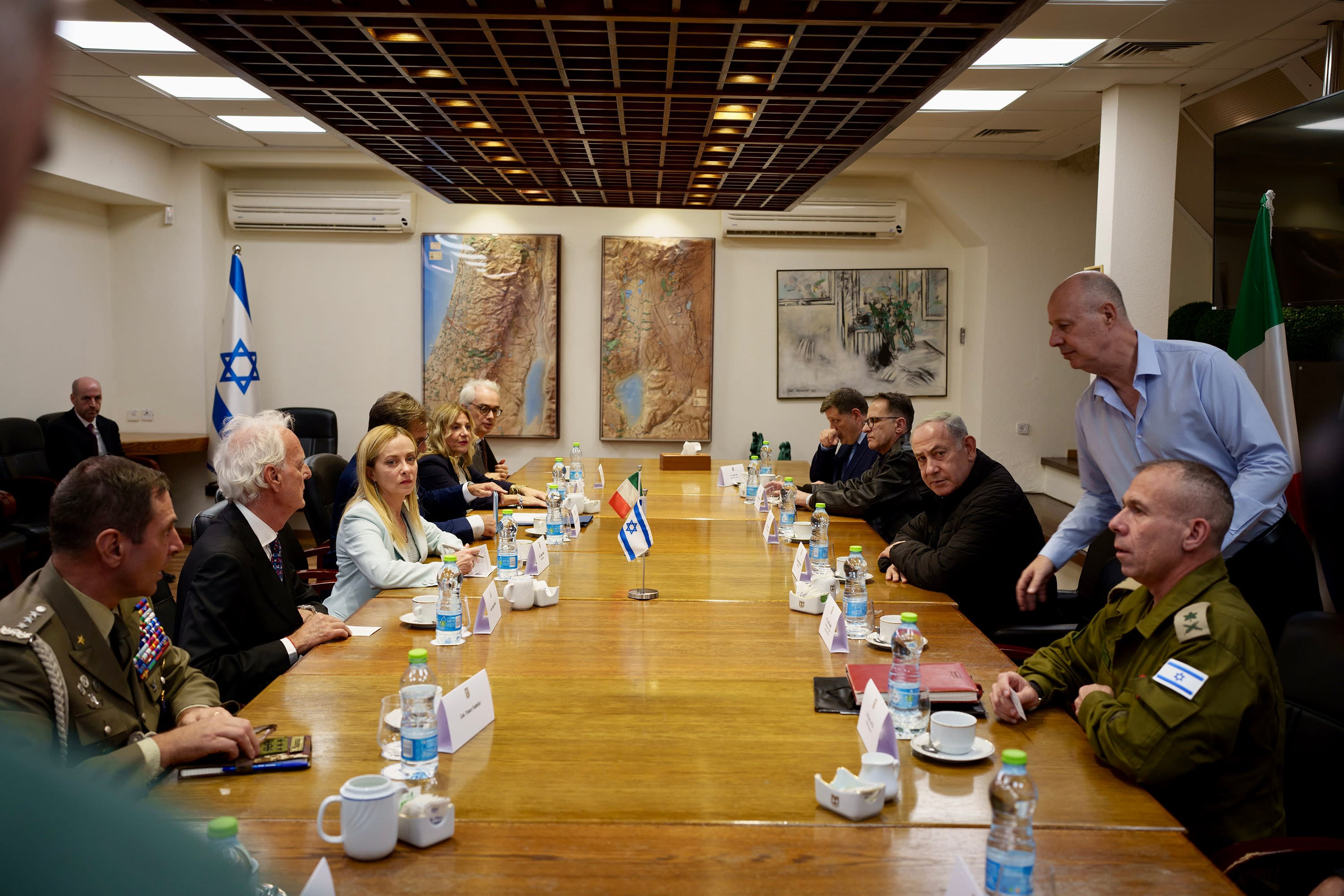
Military-Industrial Conflict
Meloni's announcement did not elicit a dramatic reaction from the Israeli side, particularly from the Israeli security establishment, which considered the move to be driven by internal Italian political considerations, according to the Maariv newspaper.
The newspaper quoted an Israeli security source who clarified that the Italian Prime Minister did not announce the cancellation of the agreement, but rather that its renewal would be subject to a review and approval process each time, and not automatically.
The Israeli Foreign Ministry issued a statement saying, “We do not have a security agreement with Italy. We have a memorandum of understanding that has been in place for many years and has never contained substantive content, and this will not affect Israel's security.”
Israeli sources emphasized that the relationship between the Israeli security services and the Italian Ministry of Defense remains close and strong, noting that the announcement was prompted by elements within the Italian Foreign Ministry.
Italy supplied the Israeli Air Force with the M-346 training aircraft, known in “Israel” as Lavi, an aircraft on which Air Force pilots undergo advanced training.
On the eve of signing the agreement to purchase dozens of aircraft manufactured by the Italian company Aermacchi, a deal that also included maintenance services and spare parts, a broad military procurement package was reached for the Italian army to acquire from Israeli military industries.
These deals, executed with Elbit Systems and Rafael Advanced Defense Systems, encompassed a wide range of products, reflecting Italy's close alliance with Israel.
Italy is the third-biggest arms exporter to Israel, according to figures from the Stockholm International Peace Research Institute (Sipri). But that still only accounts for 1.3% of Israeli arms imports between 2021-2025.
Despite an Italian law dating back to 1990 prohibiting arms exports to countries at war, an analysis by the Italian website Ultra Economia revealed that Rome supplied €5.2 million worth of weapons to Israel last year.
Today's decision to suspend the agreement places it under intense legal and political scrutiny, casting serious doubt on the continuation of such shipments.
On the other hand, the newspaper quoted a source in the Israeli security industry as saying that the tension between “Israel” and Italy is also driven by additional behind-the-scenes factors, including the role of Turkish President Recep Tayyip Erdogan.
The source claimed that the latter's son-in-law manages several Turkish defense companies, including Baykar, the producer of the Bayraktar TB2 drone, a major competitor to drones produced by Israeli companies, such as Elbit.
In this context, the Turkish president is working to advance cooperation and arms deals with Italy, particularly with Leonardo, one of Europe's leading manufacturers of military systems, aircraft, and ships.
Turkiye recently announced its intention to purchase several squadrons of Eurofighter Typhoon aircraft, in whose development Italy is one of the key partners, along with Britain.
Maariv concluded that part of the crisis is inseparable from a broader conflict in the military-industrial complex, where economic interests intersect with political alliances.
A source in the sector believes that what is happening is essentially a defense trade war, reduced to competition for multi-billion dollar deals between countries and major corporations.

Political Implications
Italy was not the only European country to threaten defensive measures against “Israel”. Several European capitals followed similar paths, reflecting the growing discontent within the continent.
In Germany, the second-largest arms supplier to Israel, the suspension of export approvals for weapons that could be used in Gaza was announced in August 2025—a move with political implications that extended beyond its immediate procedural dimension.
In September 2024, the UK decided to suspend 30 export licenses out of 350 granted to “Israel”, following a legal review. It concluded that there was a risk that these exports could be used to commit serious violations of international law.
Although the British judiciary later overturned the decision, the move had a tangible, albeit relative, impact on the nature of the relationship between the two sides.
In the Netherlands, the signals were more pronounced at the judicial level. In February 2024, the Court of Appeal ordered a halt to the export of F-35 fighter jet parts to “Israel”, based on concerns that they could be used in violations of international law during the Gaza war.
Then, in October 2025, the Dutch Supreme Court ordered the government to review its arms export policies to Israel, while maintaining the ban on exporting F-35 parts until the review was completed.
France also called for a halt to arms exports that could be used in Gaza and Lebanon, and barred Israeli companies from participating in the Eurosatory 2024 arms exhibition.
On March 31, Paris refused to allow Israeli aircraft to cross its airspace to transport American weapons to Israel for use in a war against Iran. This logistical measure was directly related to the conflict, but it also carried a political message. Clear.
As for Spain, its position appeared relatively more rigid, given the growing internal pressure to halt military cooperation with Tel Aviv.
Madrid took notable measures, including banning ships and aircraft carrying weapons or military fuel to “Israel” from passing through its ports and airspace. This clearly displeased the United States, prompting Washington to issue sharp criticism of this growing European trend.

Despite the decisions and measures taken by some European countries, which might be interpreted as reflecting escalating tensions in defense cooperation between Europe and “Israel”, this does not necessarily mean a complete break or the end of long-standing relations.
This relationship remains governed by a dense web of shared interests and strategic considerations that make any complete break between the two sides extremely difficult, if not impossible.
This assessment is reinforced by the fact that the very countries that have taken steps that appeared relatively confrontational toward Israel still maintain existing military and defense partnerships with it.
For his part, political analyst Suleiman Bisharat explained to Al-Estiklal that “what happened does not amount to a radical shift, but rather reflects European messages of discontent directed at the Israeli ally.”
“Or it is an attempt to contain internal pressures and maintain some balance in the face of a European public opinion that has become more critical of Israeli policies and more rejecting of their moral and political cost,” he added.
He suggested that “these decisions may fall within the framework of a European attempt to readjust the compass of the relationship with Israel according to a primarily pragmatic approach, one that does not aim to sever ties but rather seeks to redefine their boundaries.”
Sources
- Why has Italy’s Giorgia Meloni suspended a defence pact with Israel?
- The situation in Italy regarding relations with Israel is deteriorating drastically [Hebrew]
- The disturbing details are revealed: Erdogan is stirring up trouble - against Israel [Hebrew]
- Why did Italy deny US bombers access to an Italian airbase?