Orban’s Defeat in Hungary: Why Is It a Setback for Netanyahu, Trump, and the Far-Right Bloc?
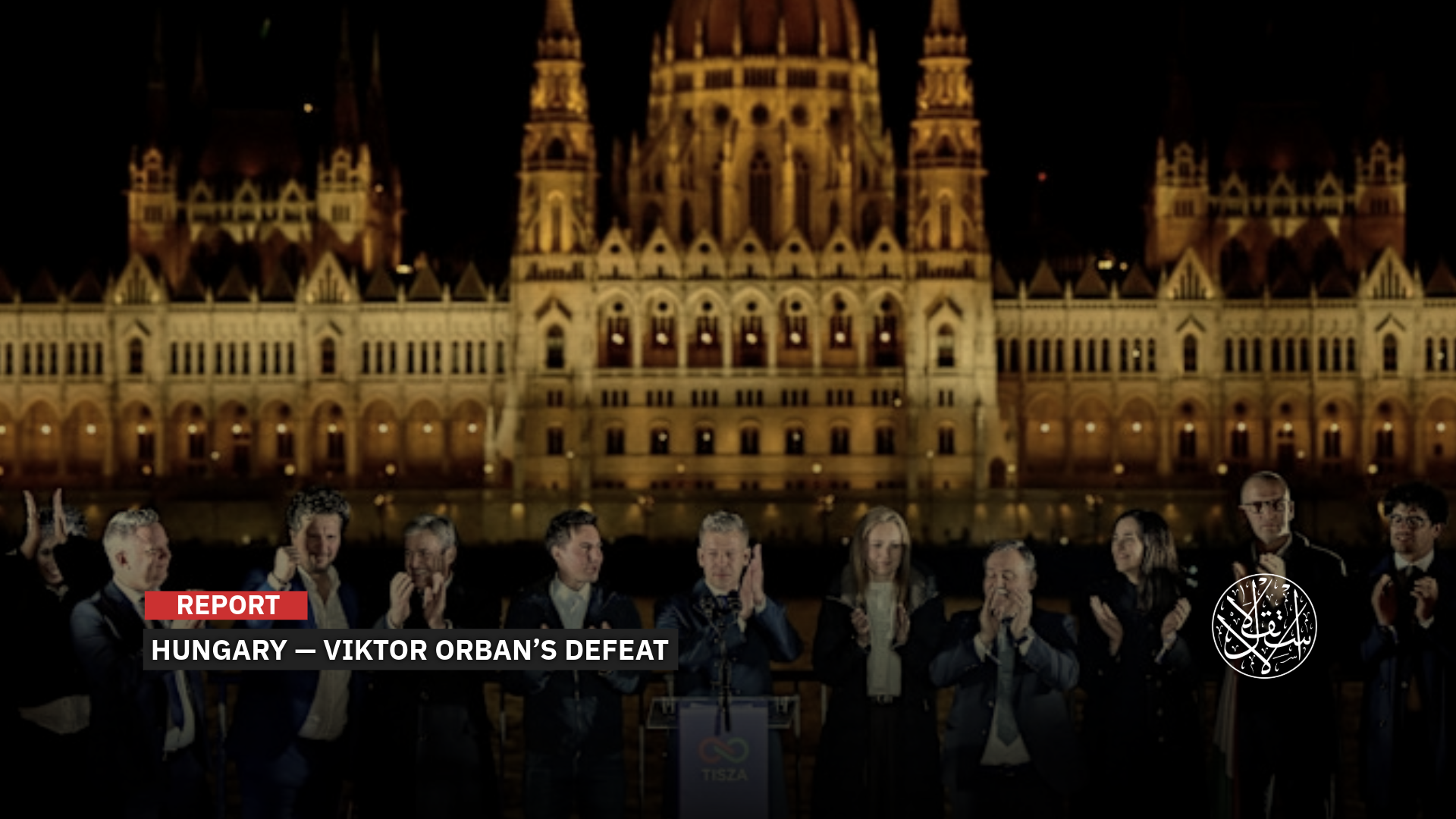
Orban’s defeat is also a defeat for “Israel” and Netanyahu.
The defeat of the racist, far-right, fascist, anti-Islam leader Viktor Orban, who was supported by “Israel”, in Hungary’s elections held on April 12, 2026, was not merely the loss of a fascist leader who ruled for 16 years and obstructed European sanctions against “Israel”.
Rather, it was a defeat for one of the most prominent symbols of populist right-wing politics in Europe, a blow to a broad current of fascists, and an inspiring lesson for anti-fascists around the world who aspire to apply it in other regions to rid themselves of fascists and far-right extremists, such as Benjamin Netanyahu, Prime Minister of “Israel”, and U.S. President Donald Trump, according to the website “Zayto,” April 13, 2026.
For Netanyahu and Trump, Orban was not merely the prime minister of a European country, but rather a strategic partner in a shared right-wing political vision of the world.
Therefore, his defeat has caused a crack in the wall of the global right-wing alliance and will leave a significant gap in this international axis.
Thus, Orban’s defeat is also a defeat for “Israel” and Netanyahu, who had relied on his role (through veto power) in obstructing any punitive decisions by the European Union against “Israel”.
It is also another defeat for Trump, who viewed the Hungarian leader as an American version of himself and relied on him to divide and weaken the European Union.
For this reason, Orban’s loss has been described as a strategic earthquake that will reshape Hungary’s relations with two key axes: “Israel” under the leadership of Benjamin Netanyahu, and the administration of Donald Trump in the United States.
More importantly, it is a defeat for an expansionist project, similar to “Hitler’s Reich,” that the defeated far-right Hungarian prime minister Viktor Orban had envisioned, namely the idea of “Greater Hungary” before World War I, which included parts of Austria, Slovakia, Romania, Croatia, and Ukraine.

A Defeat for the Chief Fascist
All indicators had pointed to the defeat of Viktor Orban and the victory of the Europe-backed opposition leader Peter Magyar by a large margin, due to declining living and economic conditions, as well as the far-right fascist policies that led to growing hostility from Europeans toward Hungary.
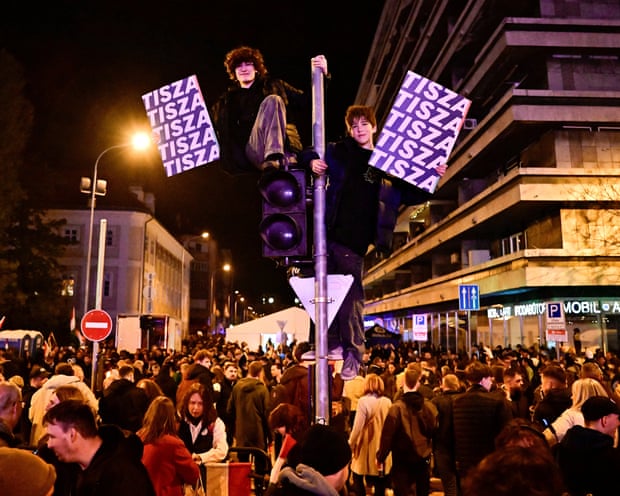
The high voter turnout and record participation, reaching around 80 percent according to the National Election Office, was a clear sign of this loss, following mass mobilization to unseat the outgoing Hungarian prime minister Viktor Orban, and the victory of the opposition party Tisza, led by Peter Magyar, which secured a two-thirds majority of seats in the Hungarian parliament.
The victory of the “Respect and Freedom” Party (Tisza), led by Peter Magyar, was not ordinary; it was a landslide win in the elections.
The party won 138 seats, while Orban’s Fidesz party secured only 57 seats out of 199 in parliament, whereas the far-right Mi Hazank party won six seats.
This result enables the opposition party Tisza to form a government on its own, having surpassed the required threshold (two-thirds majority).
With this sweeping victory, Peter Magyar will secure a broad parliamentary majority that allows him to amend the constitution and dismantle the core pillars of Orban’s “illiberal democracy,” ultimately ending the former prime minister’s control over the judiciary, state-owned companies, and the media.

This two-thirds majority enables the new government to dismantle the structures that keep around 80 percent of the media under the influence of the defeated Fidesz party led by Viktor Orban.
It also allows for the recovery of state assets that had been handed over to institutions and think tanks aligned with Orban, and for rewriting electoral rules that had long been adjusted to make it difficult for any challenger to unseat the ruling party, thereby paving the way for a return to democratic pluralism.
This was reflected in the statement by the victorious opposition leader Peter Magyar, who declared that “the system is over,” and that Hungary would once again be “a strong ally in the European Union and NATO.”
He also called for widespread resignations among senior officials to “cleanse” the state, including the heads of the Supreme Court, the Judicial Council, the State Audit Office, the Competition Authority, and the Media Authority.
More importantly, he also called for the resignation of Hungarian President Tamas Sulyok, who holds the power to veto legislation and return it to parliament, according to Politico, April 12, 2026.
The end of Orban’s era came for several reasons, most of them domestic, reflecting a strong popular desire for change, especially among young people and voters who had grown frustrated with economic stagnation, rising living costs, and corruption allegations surrounding Orban’s system, despite his explicit and strong backing from prominent international right-wing figures, most notably Israeli Prime Minister Benjamin Netanyahu and U.S. President Donald Trump.
However, these external endorsements appear to have failed to shift the internal equation, as economic concerns and the desire to “return to Europe” dominated Hungarian voters, who paid little attention to the shared vision between Orban, Trump, and Netanyahu, centered on defending “national sovereignty” and opposing “liberal intervention” from Brussels.
Thus, the final results amounted to the end of the “illiberal democracy” built by Viktor Orban, opened the door for the European Union to release billions of euros in frozen funds, and dealt a shock to populist right-wing movements in Europe and beyond, including Trump’s camp.

A Fracture, Not a Rupture
Despite this victory, European reports and assessments noted that the opposition leader Peter Magyar adopts many of the positions of the defeated fascist leader Viktor Orban.
He spent more than two decades in Orban’s Fidesz party before breaking away in 2024 over a scandal involving the cover-up of sexual crimes against children.
He then founded his party Tisza, which went on to achieve a sweeping electoral victory. His campaign drew momentum from widespread public anger over government corruption, particularly the misuse of billions of euros in European Union funding, amid concerns about slowing economic growth in Hungary.
Lema, a Palestinian-origin member of the European Parliament who met the opposition leader expected to become Hungary’s new prime minister (from a Palestinian perspective), warned that Magyar represents “a split from within the system, not a break from it,” given his past membership in Orban’s Fidesz party.
She also pointed out that, so far, there is no clear public position from Peter Magyar on the Palestinian issue. He has not been known for notable interventions in the European Parliament regarding Gaza or allegations of genocide, nor has he expressed declared positions on “Israel” or the International Criminal Court. His discourse has primarily focused on domestic issues: corruption, state institutions, and relations with the European Union.
It was also previously noted that the newly elected prime minister appeared wearing a kippah (Jewish skullcap) and participating in prayers inside Jewish synagogues.
For this reason, an analysis published by Politico on April 13, 2026, under the title “Don’t overinterpret Orban’s defeat,” warned against excessive optimism, stressing that the victory of Peter Magyar “is not a rejection of national conservatism (right-wing populism), and is far from being a liberal victory.”
The Toppling of a Fascist Leader
European and American political assessments indicate that what happened in Budapest is not merely an election, but a major political turning point following the removal of one of the world’s most prominent right-wing populist leaders.
For the first time in 16 years, one of Europe’s most prominent symbols of populist right-wing politics, the leader Viktor Orban, has fallen. He ruled his country with a strong grip, presenting himself as a guardian of national identity and a strategic ally of the Zionist project and the global right-wing populist axis led by Donald Trump.
Observers see this as a major blow to right-wing populism in Europe, as Orban had become a symbol of the wave of populist right-wing politics that swept across the continent over the past decade. His downfall is viewed as the beginning of a decline of this trend and a shift in European political sentiment.
It is also considered a direct blow to “Israel” within the European Union, as Orban was its most prominent European ally. He provided political cover that prevented the issuance of condemnation statements or decisions criticizing settlement expansion or war, and he also offered broad political support for occupation-related policies.
Orban challenged international courts and hosted Israeli Prime Minister Benjamin Netanyahu in his country, defying the International Criminal Court warrant that describes Netanyahu as wanted for alleged war crimes and calls on states to arrest him. He also initiated steps toward withdrawing from the court.
His defeat was also described in European and American outlets, including Time magazine on April 14, 2026, as the collapse of Orban’s ideas associated with “illiberal democracy,” through which he sought to redefine Western democracy using an authoritarian approach.
In 2022, the European Parliament stated that Hungary had become a “hybrid regime of electoral authoritarianism,” meaning that although elections were held, respect for democratic standards and rules had been largely absent.

‘Israel’ Loses Its Political Shield
Two days before Orban’s fall, Yedioth Ahronoth published a report dated April 10, 2026, titled, “If Orban falls, Israel could lose its EU firewall,” particularly in relation to Budapest’s use of veto power within the EU.
The headline early on reflected a state of concern within “Israel” over his defeat and the end of the protective role he had provided within the European Union, based on assessments that Orban’s loss could lead to a shift in the European stance toward “Tel Aviv”.
Accordingly, Orban’s departure would deprive Israeli Prime Minister Benjamin Netanyahu of a rare ally who challenged liberal international institutions, potentially deepening “Israel’s” diplomatic isolation in Europe.
Netanyahu had previously described Orban as “like a rock” on several occasions, including video messages and interviews in March 2026, praising his defense of “Judeo-Christian civilization,” his firm stance against “Islamic terrorism,” and his support for “Israel”.
However, Israeli assessments suggest that Hungary under Peter Magyar will not turn into an Ireland or Spain in terms of hostility toward Israeli policies, but it also will not remain the exceptional ally that Orban represented, meaning a loss of “absolute support.”
These assessments argue that Magyar’s victory, as a center-right figure, will not make Hungary hostile to “Israel”, but there are concerns that he may align more closely with other European Union states against “Israel” and end Hungary’s role in blocking EU decisions related to sanctions on settlers, according to Yedioth Ahronoth.
A Rehearsal for Toppling Netanyahu
Israeli media reports indicate that Orban’s defeat also represents a “personal and political blow” to Prime Minister Benjamin Netanyahu, who counted Orban among his closest allies among world leaders.
Netanyahu had reportedly sought to support him during the campaign, and his son, Yair Netanyahu, even delivered a speech in his favor.
An editorial in the left-wing newspaper Haaretz, which opposes Netanyahu, on April 13, 2025, called on Israeli opposition parties to take advantage of the Hungarian situation and learn from the experience that led to Orban’s downfall, in order to adopt a similar path that could eventually remove Netanyahu from power.
The newspaper argued that the Hungarian opposition adopted nationalist messaging and exposed the corruption of the “ruling mafia,” stating that the Israeli opposition should draw lessons from Orban’s defeat to oust Netanyahu in the next elections.
In the same context, the “Idea Institute” affiliated with the “New Israel Fund,” a U.S.-based nonprofit organization supporting the Israeli opposition, sent a delegation consisting of two opposition members of the Knesset, along with constitutional law academics and activists opposing Netanyahu’s government.
According to Channel 12 in “Israel”, the purpose of the visit was to study the possibility of applying a similar model of “political transformation” in “Israel”, which could potentially lead to Netanyahu’s removal in the next elections.

The Trump Axis Is Collapsing
Before the election results were announced, U.S. President Donald Trump pledged to deploy the “full economic power” of the United States to support his ally Orban, and sent his vice president, JD Vance, to Budapest to stand by him and openly call for his re-election.
For Trump, Viktor Orban is a member of the right-wing populist axis he leads, and represents the “ideal model” of governance according to his vision. He encouraged support for Orban’s continued rule, meaning his loss is seen as a symbolic setback for the global nationalist right-wing project promoted by Trump.
Orban was also the strongest supporter of Trump’s “America First” policies within the European Union, and backed his plans regarding migrant deportation and immigration restrictions.
The Hungarian election was closely watched worldwide as a test of the resilience of the “MAGA” movement and the global far right, many of whom have long viewed Orban as a source of inspiration and sought to follow his model, according to The Guardian, April 13, 2026.
Orban’s ideological project (and Trump’s) has undergone a 16-year test and, according to analyses, suffered clear political, economic, and social failures. The defeat of “Orbanism” is seen as an opportunity to reject similar models in other Western democracies, as cited by The Guardian quoting Dalibor Rohac of the American Enterprise Institute.
The Hungarian election represented a setback for the “Make America Great Again” movement, according to Politico, April 13, 2026.
Orban formed part of a triangle supported by Trump alongside Robert Fico in Slovakia and Andrej Babis in the Czech Republic. His departure is expected to break up this bloc, which coordinated positions on migration, the EU budget, and military support for Ukraine, issues closely aligned with Trump’s geopolitical vision.
Thus, Orban’s defeat signals three consecutive setbacks for Trump-aligned politics in Europe: the right in Slovenia lost despite Trump support, the right in French local elections also lost, and now Hungary, raising hopes that the next stage may unfold in the United States itself, where Trump and his political allies could face what is described as an “electoral reckoning” if Democrats gain ground in the November 2026 congressional elections.
Orban was not only supported by Vance; U.S. Secretary of State Marco Rubio also visited Hungary in February 2026 and promised increased economic support if Orban remained in power, according to The New York Times, February 16, 2026.
CNN therefore reported on April 13, 2026, that Orban’s defeat “represents a major blow to U.S. President Donald Trump, who supported the pro-Russian nationalist leader during the campaign.”
An Obstacle to Europe
The defeat of Viktor Orban in the Hungarian elections has generated significant relief in Brussels, as European officials believe his fall could open the door to resolving several long-standing disputes between Hungary and the European Union, particularly regarding policies on support for Ukraine, given Orban’s close ties with Russia.
Following the opposition’s victory, the leader of the Tisza party Peter Magyar described the vote as a choice between “East and West,” warning voters that Orban’s confrontational policies toward Brussels were pushing Hungary away from the European mainstream.
This stance, according to media assessments, reflects the sharp divergence between the former government’s direction and the European Union’s institutional expectations.
Over the past years, Hungary under Orban had been a controversial actor within the European Union, particularly due to his repeated use of veto power to block condemnation statements or sanctions, whether related to Israeli settlement policies or settler violence, earning Hungary the label of “Israel’s” “last line of defense” within EU institutions.
Analysts expect that the political change in Budapest will lead to a redefinition of Hungary’s position inside the European Union, which could also affect how Brussels approaches the Palestinian, Israeli issue after years of Hungary’s clear alignment with “Israel”.
Relations between Orban’s government and the European Union had also become increasingly tense in recent months due to disputes over sanctions on Russia, financial aid to Ukraine, and European accusations that Budapest had leaked sensitive information to Moscow.
In this context, the opposition victory is expected to unlock around $15 billion in frozen EU funds for Hungary, signaling a potential improvement in relations between both sides.
On the issue of international justice, Orban had adopted a confrontational stance toward the International Criminal Court, hosting Israeli officials despite arrest warrants issued against them, and even initiating steps to withdraw from the court in May 2025.
In contrast, the victorious Tisza party has announced it will halt this process, meaning Hungary would once again comply with its international commitments, potentially introducing new legal and political constraints on its dealings with individuals wanted by the court.
Sources
- Orban’s 16-Year Rule Over Hungary Ends in Crushing Election Defeat
- What Viktor Orban’s Landslide Defeat Can Teach Anti-Fascists Across the World
- Hungarian Opposition Ousts Viktor Orban After 16 Years in Power
- Don’t Read Too Much Into Orban’s Defeat
- Hungary Election 2026 Results: Peter Magyar Wins, Trump Ally Viktor Orban Concedes Landmark Defeat
- Rubio Emphasizes Trump’s Support for Leader of Hungary Before Tight Elections
- Hungary Shows That Netanyahu Can Be Defeated – But Only by a United Israeli Opposition