Strategic Area: What Is Behind the Outbreak of Clashes Between Tareq Saleh’s Militia Forces and Tribes in Yemen?
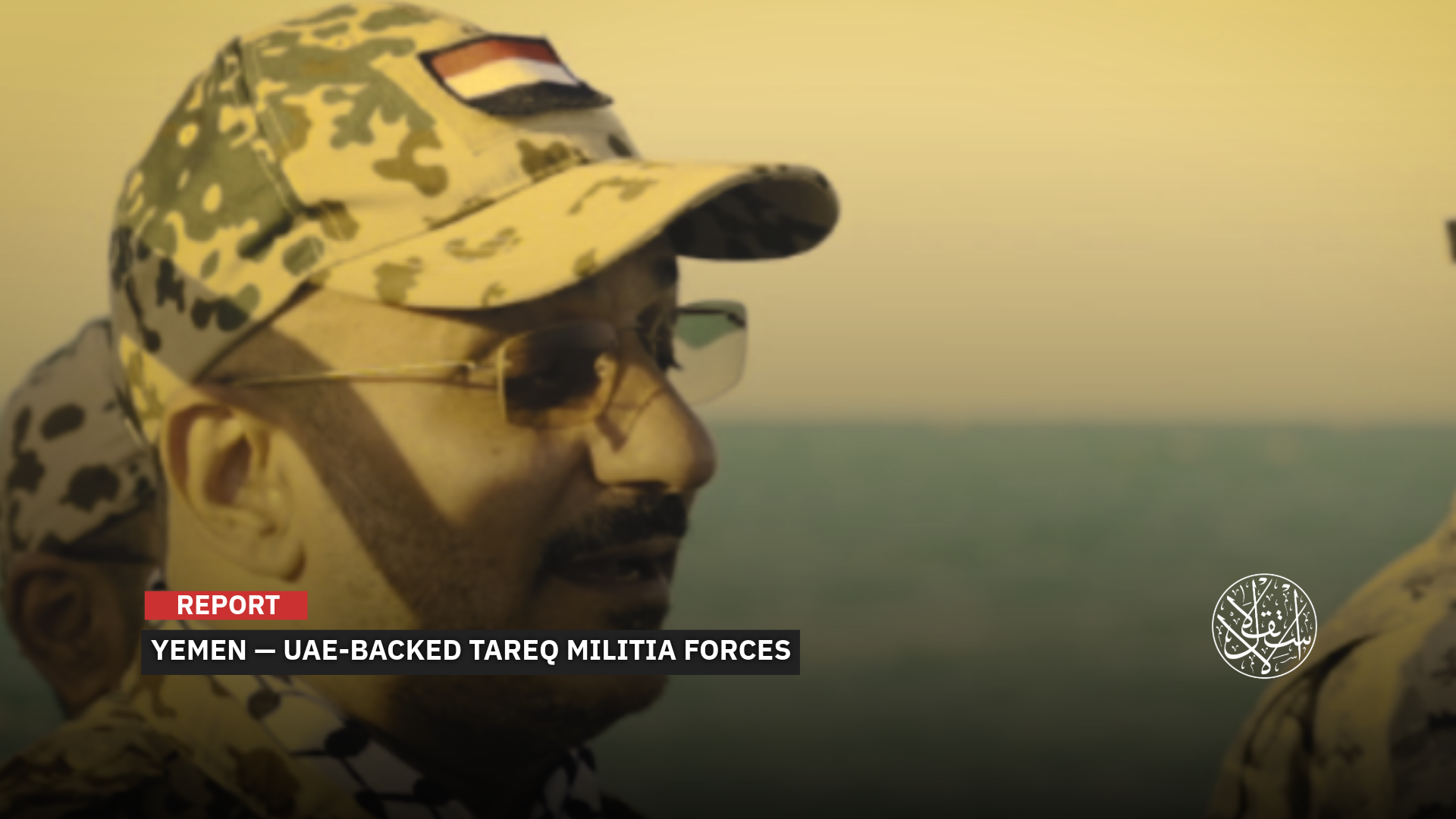
Tareq Saleh launched drone attacks on tribes in al-Wazi’iyah.
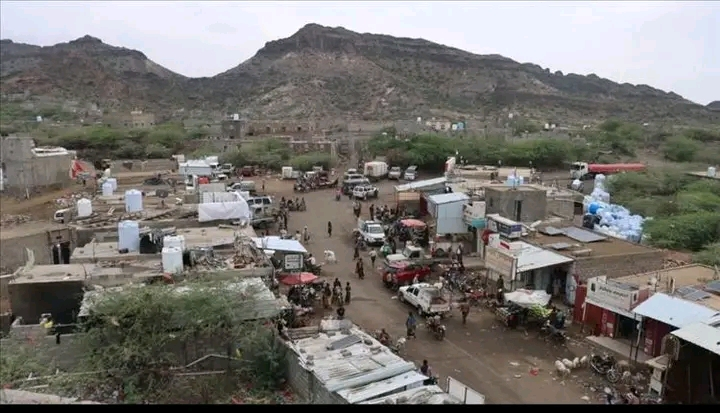
In a new escalation, armed clashes are taking place in several villages of Al-Wazi’iyah District, southwest of Yemen’s Taiz Governorate, between local tribes and the “National Resistance” militia led by Tareq Affash, the nephew of former Yemeni President Ali Abdullah Saleh, who is backed by the United Arab Emirates.
The clashes, which have flared up more than once since early April 2026, have been accompanied by attacks from leaders of Tareq’s militia against the Yemeni Congregation for Reform party, along with threats to target its members, raising questions about the roots of the tension in al-Wazi’iyah District and the UAE’s role in it.
Saudi Deadline
Against the backdrop of the clashes that took place in al-Wazi’iyah, local Yemeni websites said that Tareq Affash received what they called “a new slap” from the tribes on April 12, 2026, as he tries to avoid the obligations of dismantling his forces.
According to the local website Al-Khabar Al-Yemeni, hundreds of armed tribesmen, especially from the al-Subaiha tribe on the western coast, took part in the funeral procession of Burhan Ali Saleh Jaber, one of those killed by Tareq’s militia forces, which was held in al-Wazi’iyah District, the main stronghold of his opponents.
Jaber, the son of the commander of the “Popular Resistance” in Al-Wazi’iyah District and Yemeni Congregation for Reform leader Ali Saleh Jaber, was killed in a drone attack by Tareq’s militia forces on his home in the city.
The funeral procession was seen as a show of strength, especially after tribal mediation succeeded in halting the clashes that had continued for days. The display could complicate Tareq’s efforts to hold on to the western coast as his stronghold, particularly as he escalates against Saudi Arabia.
The website said that Tareq’s men attacked the headquarters of a military committee formed by Saudi Arabia and sent to Mocha to begin dismantling Tareq’s militia forces under the name of integration, and that unknown gunmen opened heavy fire on the committee’s headquarters there.
The attack prompted the committee to give Tareq three days to hand over lists of his fighters so they could be added to the Saudi payroll lists or withdraw.
However, the nephew of the former Yemeni president has refused to hand over the lists, claiming they contain confidential matters that should not be disclosed.
Tariq’s forces — led by the deputy chairman of Yemen’s Presidential Leadership Council — remain the last UAE-backed faction stationed in western Yemen that has not been dismantled, as Al-Islah intensifies pressure to end his influence there.
On April 9, armed clashes resumed in some villages of al-Wazi’iyah District, southwest of Taiz, which in recent days has witnessed unprecedented tension between local tribes and the armed militias led by Tareq Affash.
The tribes gave Tareq’s militia forces 72 hours to hand over those wanted in murder and banditry cases in al-Wazi’iyah District, after a de-escalation committee had announced a halt to the clashes and preparations for a settlement that would ensure the release of detainees held by both sides.
Local sources said that the tribes in al-Wazi’iyah had announced the release of detained soldiers belonging to Tareq’s so-called “Commandos Brigade,” affiliated with the so-called “Guardians of the Republic,” but the detained tribesmen were not released as had been agreed.
This came after Tareq Affash held a meeting with militia leaders in which he ordered the end of a declared three-day truce and instructed them to attack the tribes of al-Wazi’iyah. His militia forces reportedly targeted the al-Shaqira area in the city, west of Taiz, with heavy weapons.
A Destructive Force
This was not the first time tensions erupted in al-Wazi’iyah. Rather, it was the third time clashes have broken out between Tareq’s militia forces and tribal gunmen in the strategically important district that links the mountains to the coast.
Tareq’s militia forces began moving into the area in 2020 and setting up military checkpoints, a move that was rejected by local tribes and sparked the first round of confrontation.
The Popular Resistance Council commented on the latest events by saying they were “an act of aggression and a brutal invasion aimed at breaking the will of the people and dominating them, not security disturbances as some claim,” accusing Tareq Saleh’s militia forces of using “excessive force” and “drones to bomb homes over the heads of their residents.”
In a statement issued on April 9, the council called for the departure of Tareq’s militia forces, saying their presence “has become unwelcome,” while also calling for “all positions and checkpoints to be handed over to resistance fighters and tribal sheikhs in the district,” and rejecting “the policy of subordination and dependence on parties other than the institutions of the legitimate state.”
Journalist Saif al-Hadari, who is close to the Yemeni Congregation for Reform, wrote in a post on Facebook on April 6 that Tareq was nothing more than “a tool of destruction planted in the side of the state, destroying from within what opponents failed to destroy from outside.”
“Throughout his career, Tareq Affash never understood the meaning of political partnership, nor the principles of state management as a structure built on trust and balanced interests. Instead, he fought everyone around Saleh until he turned allies into opponents, partners into enemies, and friends into sources of suspicion and doubt,” he added.
Perhaps the most striking and painful aspect of his history, according to al-Hadari, is the transformation that is difficult for the national memory to comprehend: from being a commander in the Bani Hashish battle against the Houthi militia to becoming a loyal soldier in their ranks.
Hamoud al-Kharam condemned the ongoing events in Al-Wazi’iyah District, describing them as “an explicit rebellion against the state and legitimacy and an unacceptable mutiny.”
The Yemeni website Al-Sahil quoted Al-Kharam on April 9 as saying that what is happening “cannot be separated from attempts to undermine internal stability,” accusing those behind it of “clear coordination with the Houthi enemy.”
The military commander stressed that “loyal national leaders, foremost among them Lieutenant General Tareq Saleh, represent one of the pillars of stability,” emphasizing the need for national unity and rejecting all attempts at soft infiltration.
In contrast, Tareq Affash threatened to “discipline the Brotherhood group”, referring to the Reform Party, in Taiz Governorate. According to the website “26 September,” which is close to the Houthis, he sent large military reinforcements from militia camps in Mocha District to Al-Wazi’iyah District, alongside the deployment of snipers, on April 9.
Emirati Influence
Regarding the escalating events in al-Wazi’iyah, Yemeni writer and political analyst Yaseen al-Tamimi told Al-Estiklal that this area is one of four districts belonging to Taiz Governorate, and that it, along with three others, falls under the military and security influence of Tareq Saleh’s canton.
Al-Tamimi added that “Tareq is based in Mocha District, which is also a district of Taiz, in addition to Dhubab District and Mawza District. He also controls the districts of Hays District and al Khawkhah District. The issue is related to domination and the struggle for influence in this vital area, which is an inseparable part of the Red Sea region.”
He pointed out that “the mountains in al-Wazi’iyah District and Mawza District overlook the Bab al-Mandab Strait, which is why the UAE was keen for Tareq’s group to have security and military influence in these areas so it could control and militarily destabilize the region.”
“But after the UAE’s withdrawal, it cannot be said that its security doctrine has ended. It remains in place, and Tareq still needs to preserve his influence in these areas. Accusations are always directed toward the Reform Party, making it the model enemy and portraying it as the source of unrest and problems,” al-Tamimi added.
“How can we explain these attacks and the violence used by Tareq against al-Wazi’iyah District, which is rooted in a tribal structure that extends into the southern governorates? They are part of the al-Subaiha tribes, which stretch between Taiz and Lahij Governorate, and the mobilization seen in al-Wazi’iyah was primarily tribal.”
The Yemeni expert confirmed that “the resistance in al-Wazi’iyah played a major role in confronting the Houthis, and the Reform Party is present in this district. It happened that the victim killed in Tareq’s drone attack was a young Quran memorizer and the son of the commander of the Popular Resistance in the city, and he belonged to the Yemeni Congregation for Reform.”
Therefore, according to al-Tamimi, Tareq resorts to making such accusations to portray himself as being at war with the Reform Party, while in reality the issue is about imposing influence over the western part of Taiz Governorate.
Al-Tamimi concluded that “there are no longer any Houthis in this area, and naturally the legitimate state institutions should impose their authority and the rule of law and pursue criminals if there are any. But for Tareq’s forces, intelligence services, and prisons to be used to impose domination and influence means that the issue is fundamentally tied to the geopolitical role assigned to him by the UAE, and perhaps also to other regional and international agendas.”
Sources
- Clashes Resume in Al-Wazi’Iyah Amid Exchange of Threats Between Tribes and Tareq Affash [Arabic]
- Al-Kharam: What Is Happening in Al-Wazi’Iyah Is a Rebellion Against Legitimacy and Collusion With the Houthis [Arabic]
- Tareq Loses More Coastal Districts and Escalates Confrontation Against Saudi Arabia [Arabic]
- Reform Party Describes Tareq as a Failure and a Traitor [Arabic]