Feeding on Membership Fees: Why Has Trump’s Peace Council Stumbled So Early?
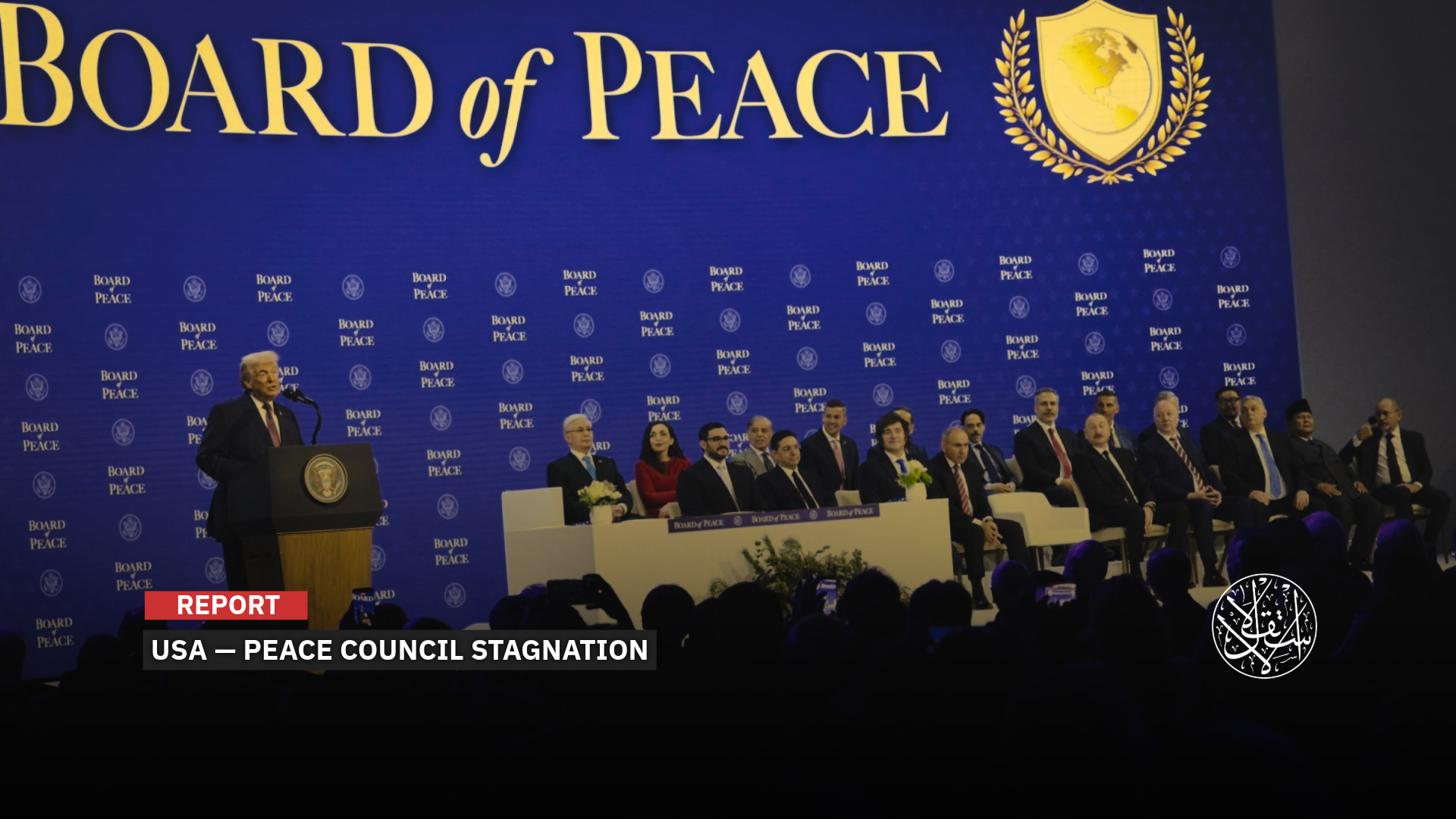
The council did not achieve any practical accomplishments other than sending invitations to countries to join it.
When U.S. President Donald Trump announced in January 2026 the establishment of what he called the “Peace Council,” he promoted the new body as an international platform that would go beyond the United Nations and place him personally at the forefront of managing conflicts.
Since then, the council has not achieved any practical results other than sending invitations to countries to join and pay multibillion-dollar membership fees for acceptance, in addition to forming numerous bodies that have taken no concrete steps.
Where Is the Council?
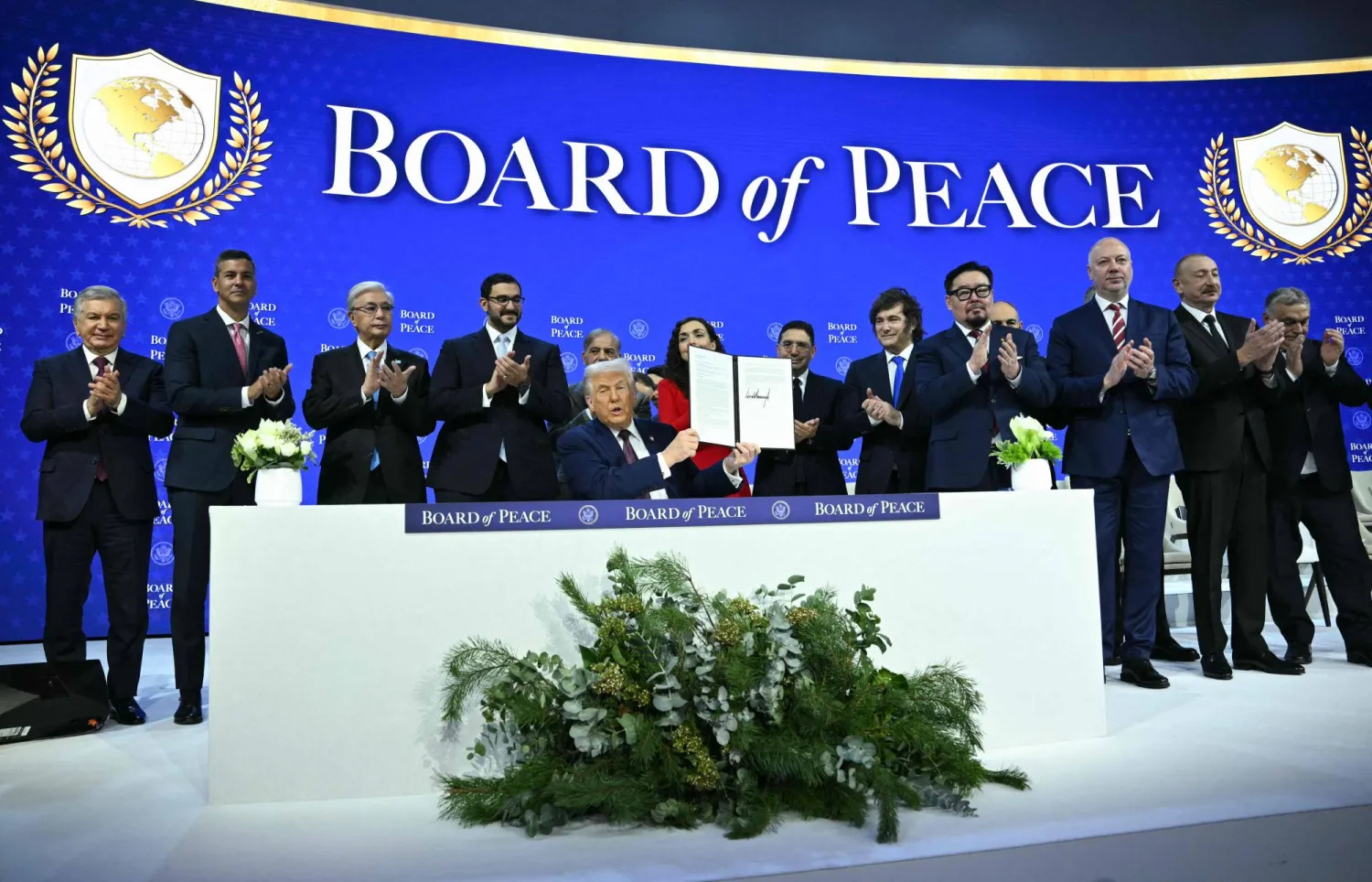
The council was launched in a celebratory atmosphere and held its first meeting in Washington on February 19, 2026. Its formation came as part of the second phase of Trump’s 20-point plan to end the war in Gaza, backed by United Nations Security Council Resolution 2803.
On January 16, 2026, the White House announced the adoption of governance structures for the transitional phase in the Gaza Strip, including the “Peace Council,” the “Gaza Executive Council,” the “National Committee for Gaza Administration,” and the “International Stabilization Force.”
During the inaugural meeting, Trump announced that nine countries had pledged around $7 billion to a Gaza reconstruction fund, and that the United States would contribute $10 billion.
The four Gulf states, Qatar, Saudi Arabia, Kuwait, and the UAE, each pledged $1 billion, while the UAE made a larger commitment of $1.2 billion.
At that moment, the council appeared poised to gather these billions, lead reconstruction efforts, and form an international stabilization force involving thousands of troops. However, within weeks, the image of a functioning international platform began to fade.
A Reuters report on April 10, 2026, stated that less than $1 billion had actually been received by the council so far, and that the only countries to have made payments were the UAE, Morocco, and the United States, while the other Gulf states had not contributed anything. It quoted an informed source as saying, “The war with Iran has affected everything.”
On March 23, Indonesian President Prabowo Subianto announced that his country would not contribute financially to the “Peace Council,” stating, “They said there are two types of membership - if you want to become a permanent or premium member, you are asked to contribute US$1 billion. But I never said we were willing to pay US$1 billion,”
Indonesian authorities, who had pledged to send 8,000 troops, also acknowledged that all discussions with the council had been put on hold because “all attention has shifted to the situation in Iran,” confirming that the regional war had pushed Gaza reconstruction efforts into the background.
Even contacts with Hamas stalled. In mid-March, Reuters revealed that council envoys had held a secret meeting with the group’s leadership in Cairo in an attempt to salvage a faltering ceasefire following the outbreak of war with Iran.
Meanwhile, the council was unable to deploy the Palestinian committee, originally formed to administer Gaza, into the territory, nor could it fulfill its promises to reopen the Rafah crossing under normal conditions.
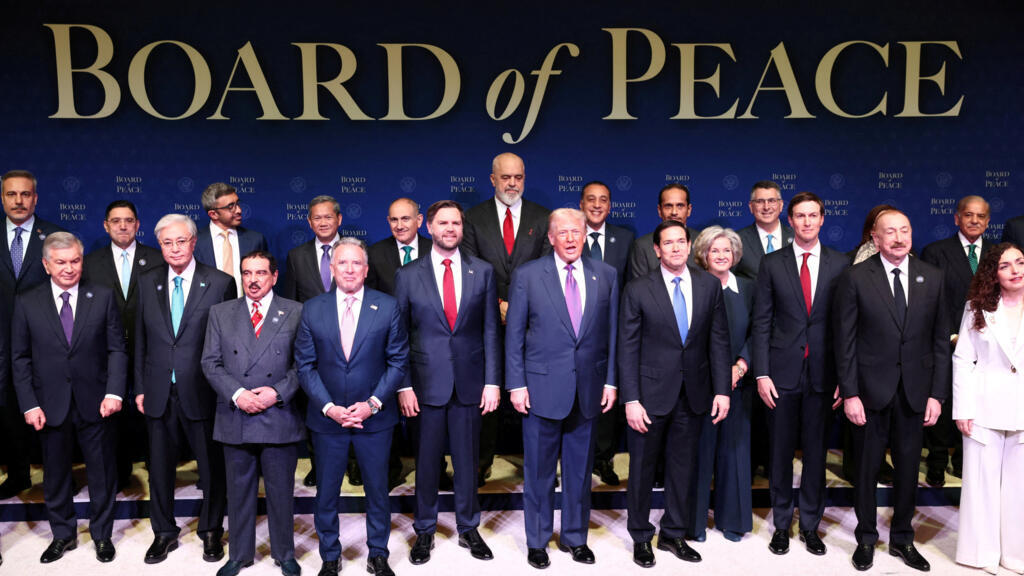
The financial crisis was compounded by a lack of international political support. A report by The Guardian indicated that European Union leaders, as well as the prime ministers of the United Kingdom, Germany, and France, declined Trump’s invitations to participate, while the inaugural meeting was attended by leaders from the Middle East, Asia, and South America.
The newspaper summarized the European position as a rejection of a project with “unclear funding” that would allow Trump to collect donations from authoritarian governments in exchange for permanent seats. With the onset of the war involving Iran, international interest in the council declined, and it became little more than a passing headline.
Why Has the Council Stalled?
The council’s crisis goes beyond a lack of funding; it is structural and political. The first issue lies in its own charter, which grants the U.S. president exclusive authority to invite countries and set the agenda, gives him the power to veto decisions of the executive council and dissolve it, and allows him to remove members or renew their membership.
The charter also states that membership lasts three years, but any country that pays more than $1 billion in the first year is granted permanent membership, a condition that has drawn criticism for turning membership into a financial privilege and undermining claims that the body operates as an equal framework among its members.
In addition, the council lacks transparency and independent oversight. In an analysis by the Carnegie Endowment for International Peace, experts noted that the management of funds remains unclear, as the platform has not specified whether contributions are membership fees or donations for Gaza’s reconstruction.
They also criticized Trump’s decision to appoint himself as permanent chair and to select an executive council that includes his son-in-law Jared Kushner, World Bank President Ajay Banga, and a number of business figures.
The analysis argued that the absence of international oversight mechanisms makes it difficult for donor countries to trust that their funds will not be used for political purposes.
Moreover, many have criticized the clear lack of Palestinian representation. The council established a Palestinian technical committee, but it has remained stuck in Cairo without authority, and its own statements acknowledge that it lacks the resources or mandate to enter Gaza.
A report by the Bretton Woods Project, a London-based civil society monitoring and advocacy platform, also noted that the World Bank’s role is limited to managing a trust fund, while final decisions on how the money is used remain in the hands of the council, meaning that Palestinians remain on the margins of decisions concerning the reconstruction of their own territory.
This arrangement has led civil society organizations to accuse the council of seeking to privatize the reconstruction process and turn it into an investment project.
In addition, regional and political conditions have played a role. Even before the war, donor countries were hesitant to provide funding unless Hamas agreed to disarm or the funds were managed through the United Nations.
A Reuters report on February 4, 2026, cited Western diplomats as saying that “no European or Western country had made a pledge” as of that date, and that some Gulf states preferred the United Nations or the World Bank to oversee the funds.
The United Nations has estimated the cost of rebuilding Gaza at around $70 billion, a figure far exceeding the amount raised so far, making the initial pledges appear largely symbolic.
The structure of the council itself has also raised concerns about undermining the international system. The Guardian quoted diplomats as saying it could allow Trump to bypass the Security Council and use the body as a political platform.
UN Secretary-General Antonio Guterres himself warned that the Security Council resolution endorsing the creation of this international platform applies only to Gaza and does not grant it global authority, meaning that any attempt to expand its influence would fall outside international legitimacy.
Where Is the Council Headed?
With the United States preoccupied with post-war arrangements following the war on Iran, the future of the Peace Council appears uncertain, especially given the weak response from world leaders.
The Associated Press reported, “Not long ago, the U.S.-created and Trump-led Board of Peace kicked off with $7 billion in pledges and sweeping intentions of resolving not only Gaza but other conflicts that emerge around the world. Nine days after the board’s initial meeting, the U.S. and Israel attacked Iran.”
It added, “The Board of Peace has not met again, and it’s still waiting for Hamas to respond to its proposal on disarming, a major concession and perhaps the hardest step. Hamas’ charter calls for destroying Israel.”
An unnamed U.S. official told the agency that Hamas had not been given a specific deadline to respond to the proposal but added that “patience is not unlimited.”
The Associated Press noted that “The lack of a deadline can weaken pressure to act. Meanwhile, diplomacy is busy putting out different flames.”
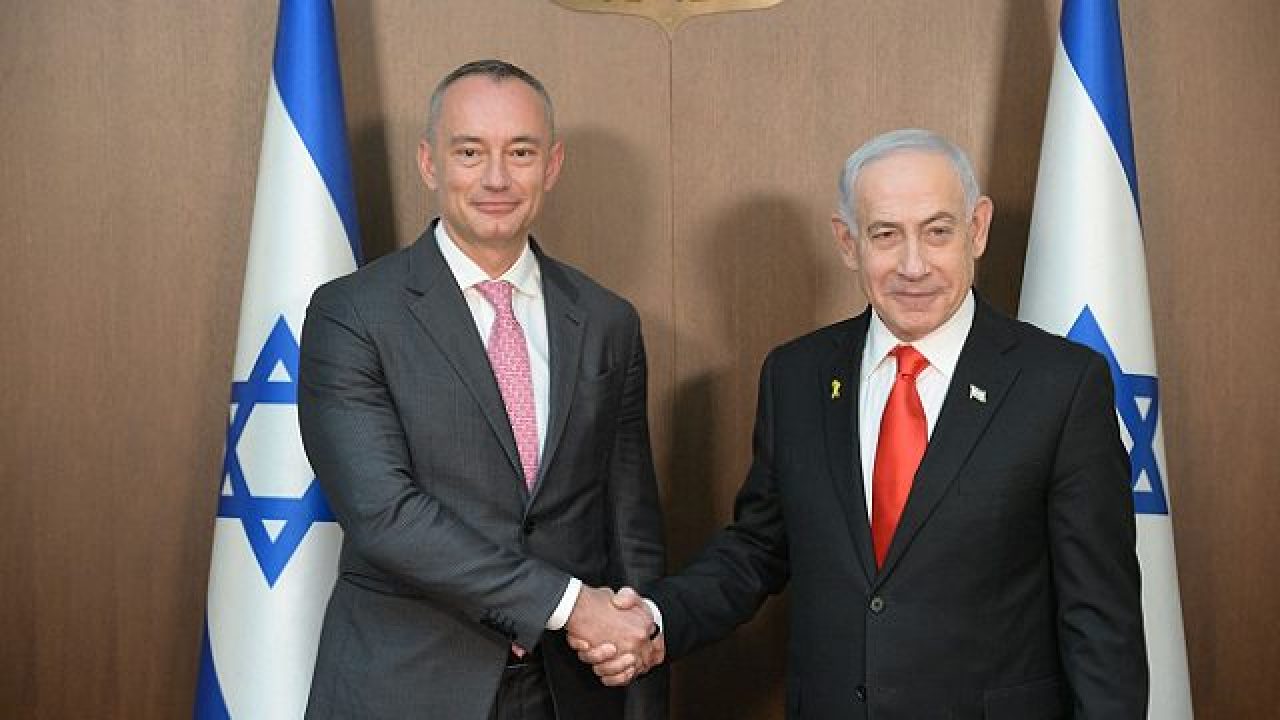
Peace Council envoy Nickolay Mladenov told the United Nations Security Council that the world should not lose sight of Gaza amid the outbreak of a new war.
He added that the choice in Gaza is between “a renewed war or a new beginning; the status quo, or a better future. There is no third option.”
According to Reuters, key Western allies have refrained from joining the council due to doubts about its expanded mandate and concerns that it could rival the United Nations. This suggests that its trajectory was already troubled before the war on Iran, which has only deepened its weakness.
A February 4, 2026, report by Israel’s Institute for National Security Studies (INSS) found that expanding the council into a global mechanism outside the United Nations, combined with the concentration of authority in Trump’s hands, has undermined its legitimacy and led major powers to hesitate or refuse participation.
The institute stated, “This weakness may not immediately derail the implementation of the Gaza plan, but in the medium to long term it could reduce political and financial support, weaken execution capacity, increase the risk of failure or gradual rollback, and even return responsibility for Gaza to Israel, in practice or in international perception.”
A policy assessment by the Arab Center Washington DC on February 19 indicated that the council is “unlikely to survive beyond Trump’s presidency,” as the entire process has been personalized around the president himself. This raises the question of why stakeholders would invest time and political capital in a structure that may not outlast its founder.
Meanwhile, the Washington Institute approaches the issue from a different angle, focusing not on whether the council will persist or disappear, but on the conditions required for its viability.
It stated that everything will depend on a credible approach to Gaza’s disarmament, the deployment of an international stabilization force, and the council’s ability to lead implementation.
It also noted that the success of the Palestinian technocratic committee depends on achieving quick and tangible results, and that its failure would put the entire plan at risk.
Sources
- Trump’s Board of Peace: An Initiative for the Gaza Strip or an Alternative to the UN?
- Gaza Marks 6 Months of a Ceasefire That May Offer Lessons for the Iran War
- Banga’s Decision to Join US-Led Board of Peace Raises Questions About World Bank’s Commitment to Multilateralism
- Getting to Phase 2 in Gaza: Red Lines and Recommendations
- Major European Allies Decline to Join First Meeting of Trump’s Board of Peace
- Explainer: What Is Trump’s 'Board of Peace' and How Have Nations Responded to It?
- Trump's Peace Board Faces Cash Crunch, Stalling Gaza Plan, Sources Say