Between East and West: Can Syria Become a Global Trade Hub?
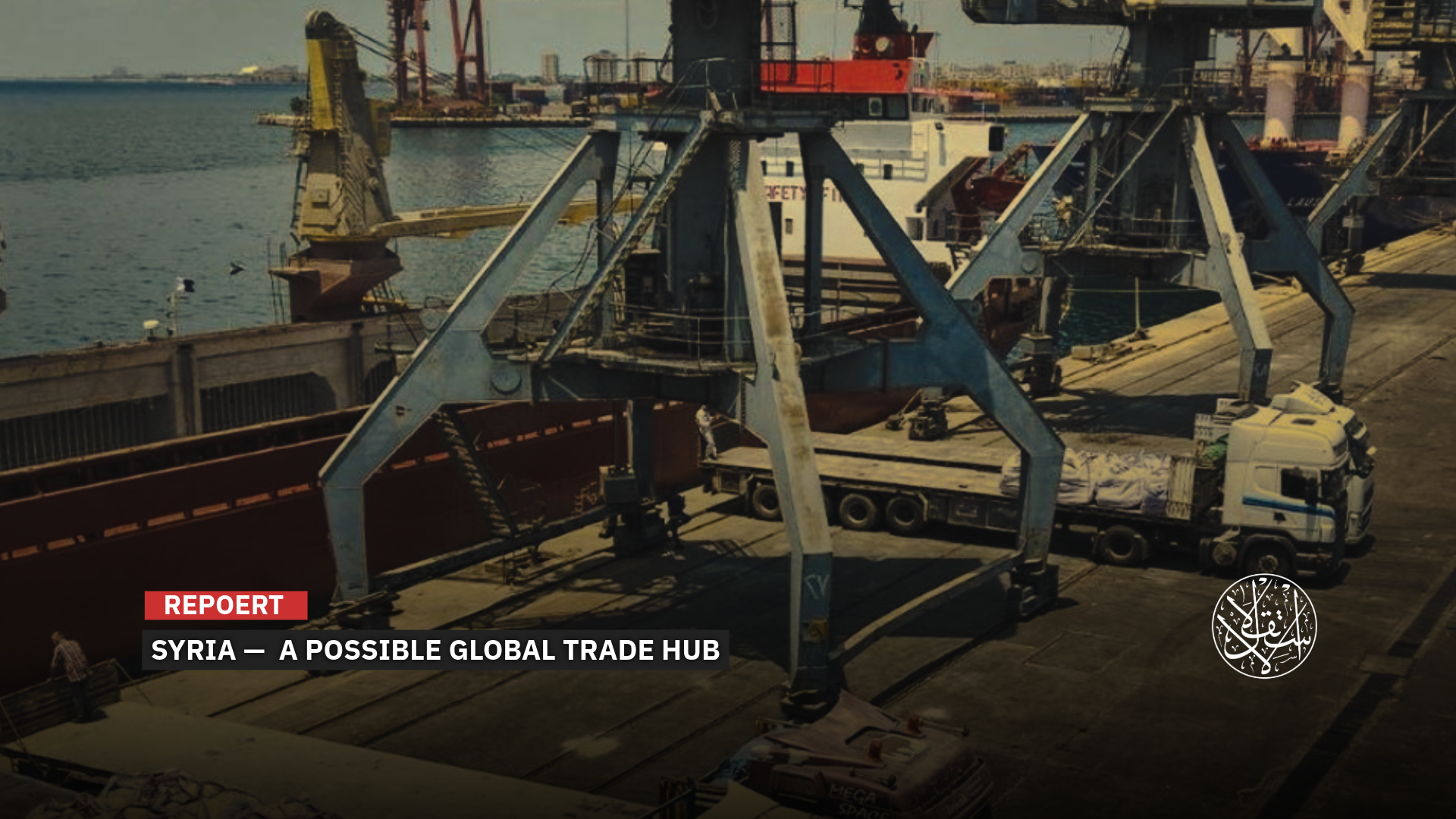
Syria, overlooking the Mediterranean, is very close to Europe’s ports.
At a moment when key global trade and energy routes are growing increasingly fragile, Syria is re-emerging on the regional and international radar not just as a theater of conflict but as a potential player in reshaping supply chains between East and West.
Its strategic geography is now intersecting with Damascus’s ambitions to turn the country into a central logistics hub linking the Gulf to Europe via the Mediterranean, part of a broader vision backed by regional agreements and major infrastructure projects that could take shape if the right political and security conditions fall into place.
Supply Chains
Against that backdrop, Syrian President Ahmed al-Sharaa said during a panel on the sidelines of the Antalya Diplomacy Forum on April 17, 2026, that the scale of challenges facing the region demands exceptional solutions matching their complexity and urgency.
“We are shaping a new chapter for Syria, transforming it from a conduit for conflict into a platform for sustainable investment,” he said, arguing that the country is no longer a “mailbox” for regional disputes but a genuine opportunity for stability and development—and increasingly a focal point in discussions around the security of supply chains between East and West.
Al-Sharaa pointed to Syria’s geography as a key draw for investors at this stage, alongside the accumulated experience of recent years, which he said could support economic recovery. The country, he added, is drawing on its past to shape its future, with the ambition of returning as a prosperous state.
That vision is beginning to intersect with developments on the ground. In mid-April 2026, Jordan and the United Arab Emirates (UAE) signed agreements to move ahead with the Aqaba Port railway, one of Jordan’s largest transport projects in the past quarter-century, aimed at linking the kingdom to neighboring Arab states and connecting Aqaba to Syrian ports and the Mediterranean as part of a broader push for regional economic integration.
The same month, Syria’s transport minister Yarub Badr joined his Jordanian and Turkish counterparts, Nidal Katamine and Abdulkadir Uraloglu, in signing a trilateral memorandum of understanding to boost cooperation and integration in the transport sector.
The agreement aims to develop a coordinated regional transport system to ease the movement of people and goods, strengthen supply chain efficiency, and position the region as a logistics hub linking regional and global markets, according to Jordan News Agency (Petra).
Recent disruptions to vital maritime chokepoints such as the Strait of Hormuz have further underscored the growing importance of overland routes—a shift that could play to Syria’s advantage, given its position as a natural bridge between Asia and Europe and between the Gulf and the Mediterranean.
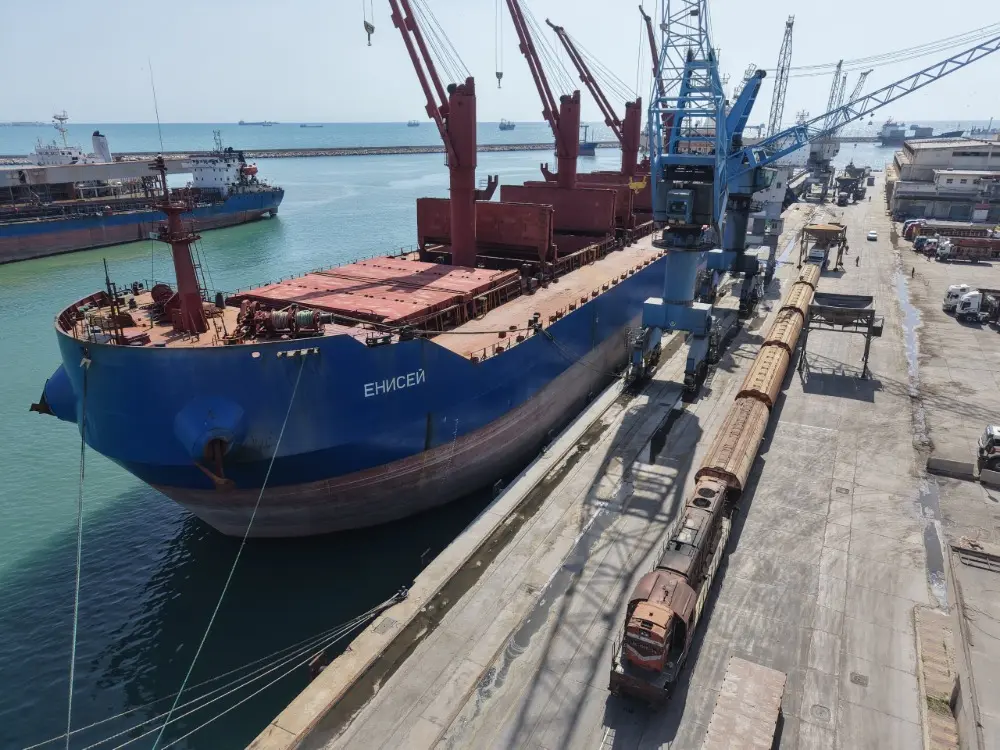
Syria’s Mediterranean ports, particularly Latakia and Tartus, could emerge as key alternative gateways for regional and international trade.
The shift is already visible. After Iraq struggled to export most of its fuel through the Strait of Hormuz amid the U.S.-Israeli War on Iran, launched in late February 2026, Baghdad announced in early April that it had begun transporting oil by tanker trucks across Syrian territory as a step toward alternative export routes.
Under a new agreement between Baghdad and Damascus, Iraqi oil is transported to the Baniyas refinery on Syria’s Mediterranean coast, where part of it is used to supply power stations, while the surplus is exported through Syrian ports.
Engineer Ahmed Qubbaji, deputy CEO of the Syrian Petroleum Company (SPC), said Syria uses the fuel oil it needs to run power plants while exporting the surplus.
Oil sales account for more than 90% of Iraq’s revenues. Before the latest U.S.-Israeli War on Iran, the OPEC member exported around 3.5 million barrels per day, most of it through the southern port of Basra on the Gulf.
But escalating tensions and war have disrupted shipping through key Gulf gateways such as Jebel Ali in Dubai, Abu Dhabi Port, and Dammam in eastern Saudi Arabia, prompting some vessels to reroute toward ports south of the Strait in Oman and the UAE—a shift that may further elevate the strategic value of alternative corridors running through Syria.
A New Infrastructure Push
Any disruption in the Strait of Hormuz, which borders Iran and Oman and carries roughly 20% of the world’s daily oil supply, is felt almost immediately across global markets, triggering price shocks and posing a direct threat to the stability of both producing and consuming economies.
That reality is sharpening the urgency of rethinking trade and energy routes, diversifying them, and developing more flexible and secure land and sea alternatives within the global transport system—reducing reliance on traditional corridors that are highly exposed to geopolitical volatility.
Within that context, any international trade corridor linking Gulf states such as Saudi Arabia, the UAE, and Kuwait to European markets via the Mediterranean would place Syria in a position to serve as a central node in that connection, anchored by its ports along the eastern Mediterranean coast.
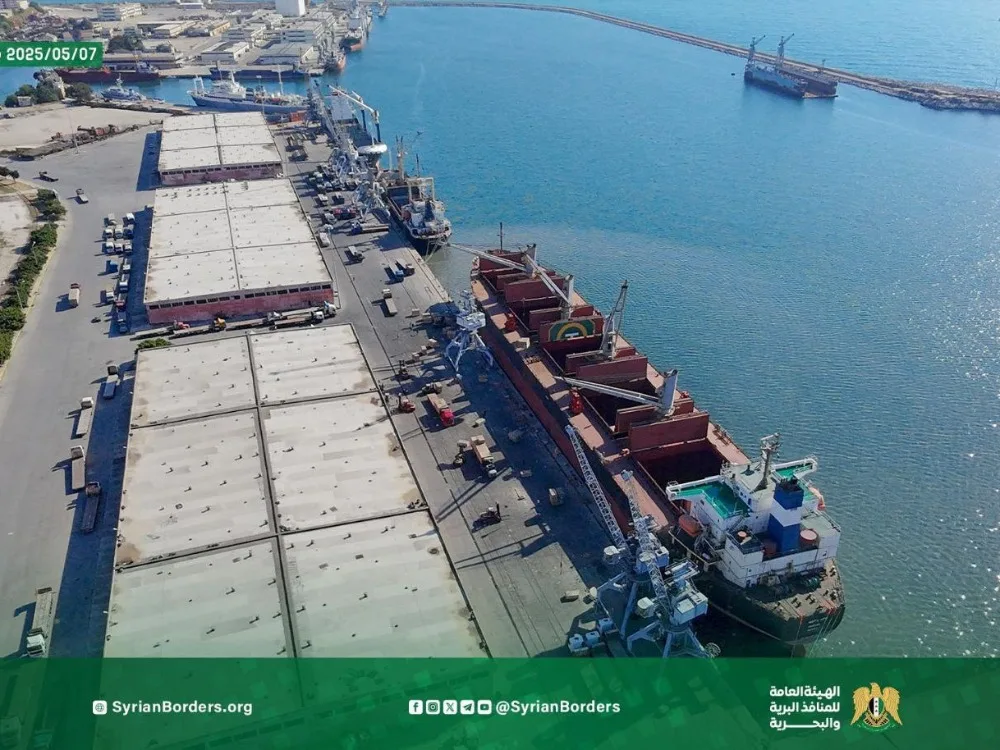
In July 2025, Syria signed an $800 million agreement between its General Authority for Land and Sea Ports and Dubai Ports World in the presence of President Ahmed al-Sharaa.
The country’s land and maritime gateways are now undergoing a phase of administrative and logistical restructuring after years of decline, destruction, and mismanagement under the ousted Bashar al-Assad regime.
Damascus also signed a 30-year contract in May 2025 with France’s CMA CGM to develop and operate the port of Latakia, reflecting a broader push to bring major international operators into port management.
That same month, the Syrian government announced a $7 billion energy deal with a consortium of four international companies as part of wider reconstruction and infrastructure modernization plans.
According to Qutaiba Badawi, head of the General Authority for Land and Sea Ports, the agreement with Dubai Ports World—one of the world’s leading port operators—marks a significant step forward.
He said the first phase includes a $200 million investment to upgrade the Tartus port, covering infrastructure improvements and the acquisition of advanced equipment.
Subsequent phases are expected to bring an additional $600 million in investment, signaling the company’s long-term commitment to expanding its footprint in Syria’s port sector.
Badawi added that Dubai Ports World has already dispatched specialized technical teams to carry out comprehensive field assessments at Tartus ahead of implementation.
He said new equipment is expected to arrive within three months, a move that could cut vessel unloading times from around six days to just one, significantly boosting operational efficiency.
Foundations and Ambitions
Observers say upgrading the international road network running through Syria and investing in it to ensure the smooth flow of goods could help cut transport costs and shipping times, boosting the country’s appeal as a potential regional trade corridor.
But turning that potential into reality will take far more than geography. Economic researcher Radwan al-Dabbas told Al-Estiklal that for Syria to truly become a focal point in securing supply chains between East and West, it will require sustained effort on a broad scale, even if the country already has key advantages working in its favor.
“The first and most fundamental asset is geography,” he said. “Syria holds a strategic position, overlooking the Mediterranean and sitting very close to Europe’s ports. It borders Turkiye to the north and Iraq to the east and lies near Saudi Arabia, with Gulf markets reachable in a short time via Jordan.”
He added that Syria’s relative proximity to the Suez Canal—and by extension Africa—further strengthens its geographic appeal. “But location alone is not enough,” he said.
To play that role, Syria would need a sweeping infrastructure overhaul. At the center of that effort, al-Dabbas argues, is the development of a robust rail network linking east to west and north to south, potentially including the revival of the historic Hejaz Railway to connect Gulf goods through Saudi Arabia and Jordan into Syria and onward to Turkiye or the Mediterranean coast.
Ports, too, are critical. Facilities such as Tartus and Latakia would need to be modernized and expanded with advanced technology to handle high volumes of container traffic efficiently, especially if Syria aims to connect Gulf and Iraqi trade flows to global markets.
The existing rail system, he noted, is largely outdated and in need of comprehensive rehabilitation. One proposed corridor would link Istanbul through Aleppo and Damascus to Jordan, then onward to northern Saudi Arabia and the holy cities of Mecca and Medina. Another could run from Riyadh and eastern Saudi Arabia toward the Jordanian border, eventually connecting into Syria—opening the door for large-scale freight movement from the Gulf by rail.
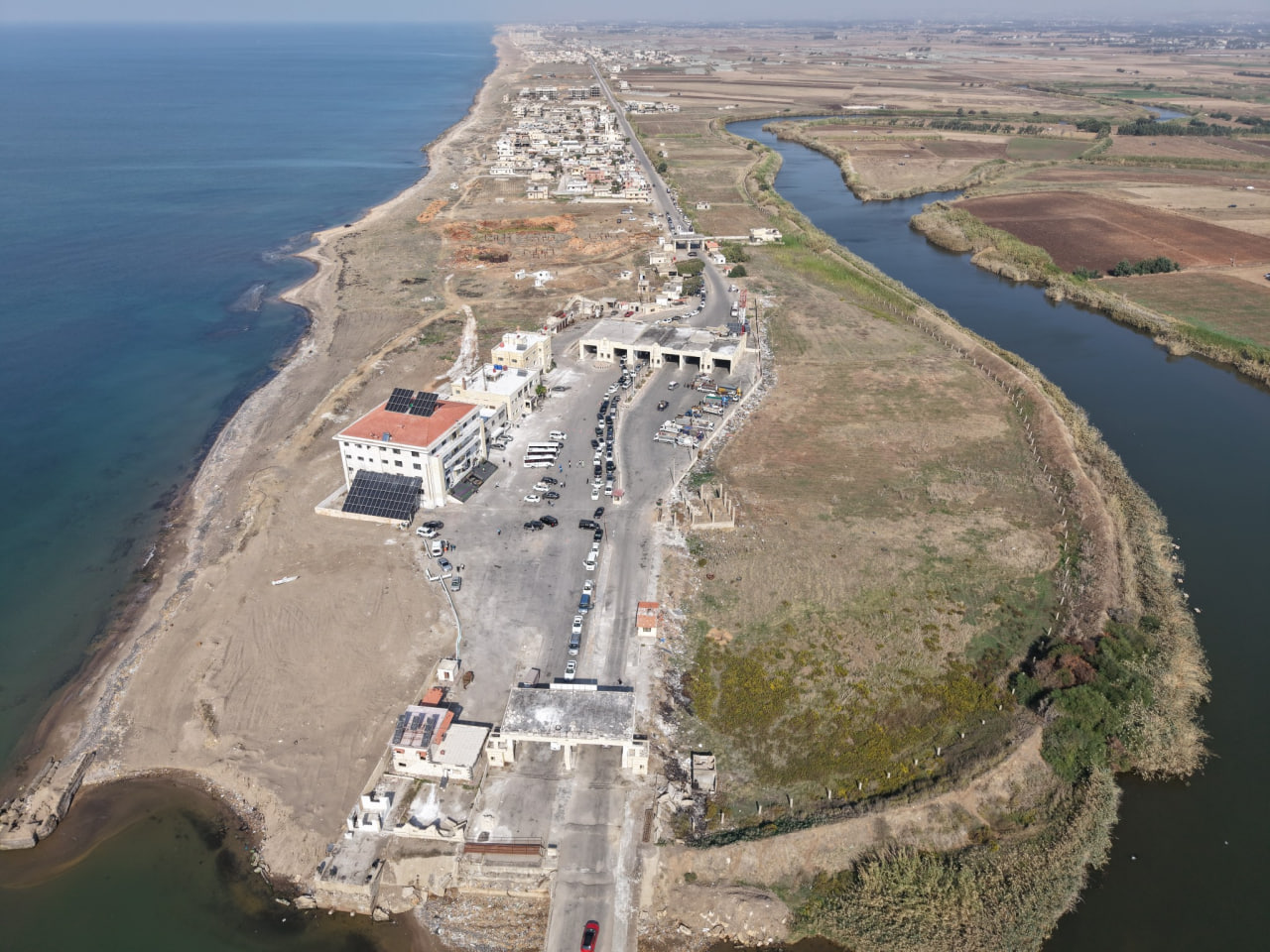
Road transport is no less vital. Truck-based logistics require modern infrastructure capable of handling heavy traffic, something underscored by the recent surge of hundreds of trucks crossing daily from Iraq into Syria. That, al-Dabbas said, calls for upgraded highways, improved entry and exit points, ring roads, and service facilities for drivers, including maintenance, food, and medical care.
None of it works without stability. “Security and political stability are decisive,” he said. “No country or company will rely on Syria as a trade corridor if risks remain. And security stability is directly tied to political stability.”
Air transport also has a role to play. Upgrading airports in Damascus, Aleppo, Latakia, and Deir ez-Zor would be essential to support efficient cargo movement as part of integrated supply chains.
Beyond infrastructure, al-Dabbas stressed the importance of strengthening international ties and integrating into global economic frameworks, including the World Trade Organization (WTO), while building closer relations with the European Union, the African Union, and Gulf states—steps that could ease trade flows, financing, and the movement of goods.
“There is nothing impossible,” he said, “but the scale of work required is enormous. If it is not done properly, Syria will not be able to position itself as a central node in global supply chains.”
If successful, however, Syria could emerge as a partial alternative to key chokepoints such as the Strait of Hormuz, the Bab al-Mandeb Strait, and the Suez Canal by channeling goods from the Gulf through Saudi Arabia and Jordan to Syrian ports on the Mediterranean.
“It’s not an easy goal,” he concluded. “It requires major investment and sustained effort. But if achieved, it could place Syria at the heart of global trade for decades to come.”
Sources
- President al-Sharaa outlines Syria’s regional role, diplomatic vision at Antalya Forum
- Head of Land and Sea Ports Authority Unveils Investments and Plans to Upgrade Ports and Crossings [Arabic]
- “A Hub Linking Syrian Ports”: Jordan and the UAE Sign Aqaba Port Railway Project [Arabic]
- Syria Signs $800 Million Agreement with Dubai Ports World [Arabic]