Who Holds Power in Eastern Libya: Khalifa Haftar or His Sons
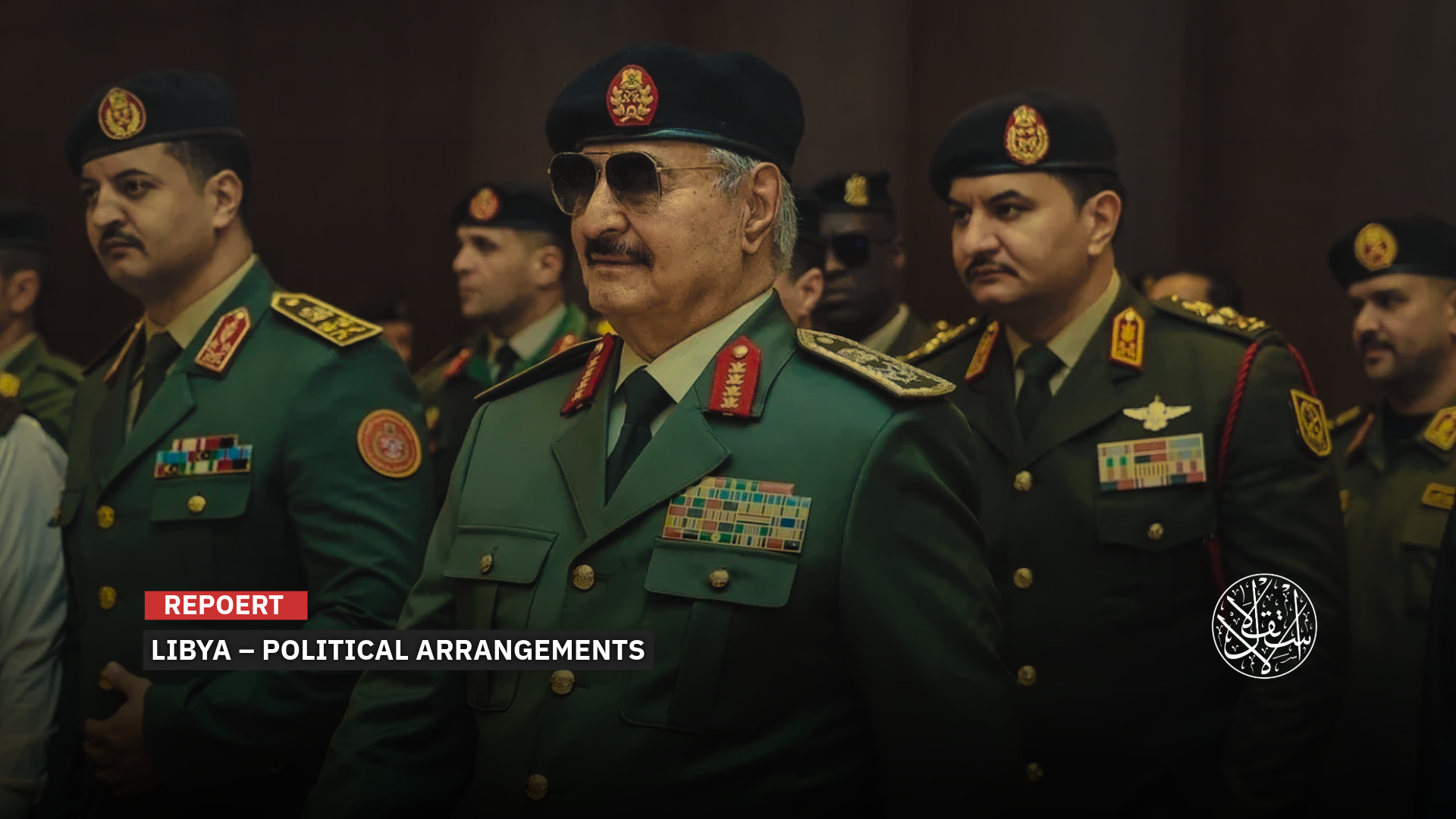
“Saddam Haftar’s announcement was a clear message of defiance to his brothers.”
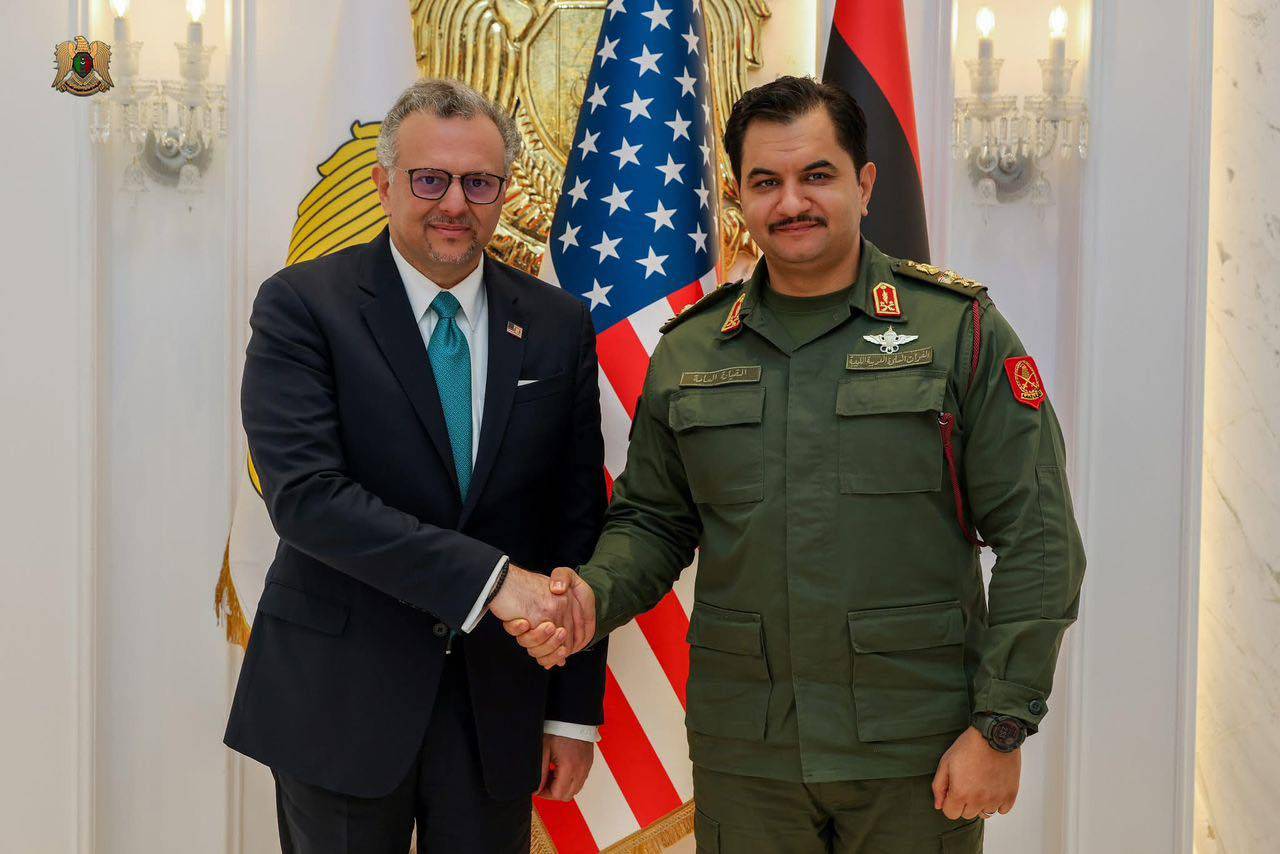
The post by Haftar’s deputy commander, Saddam Haftar, on April 9, in which he announced receiving a call from Massad Boulos, the US President’s advisor on Arab and African affairs, was not merely a routine protocol item falling within the realm of military coordination or standard diplomatic contact.
The message conveyed by that announcement appeared broader and more significant. In his address to Washington, Saddam presented himself as the most qualified representative of the eastern Libyan camp in any negotiation process, and as a partner capable of engaging in a US-led approach aimed at unifying the national budget, strengthening military coordination between eastern and western Libya, and paving the way for broader political arrangements.
In the same context, Boulos indicated in a post on his account that he discussed with Saddam what he described as the ongoing progress toward preparing a unified national budget, in addition to the important role Libya could play in hosting part of the Flintlock 26 exercise.
Later, Reuters confirmed that military units from the rival administrations in the east and west had indeed participated on April 14 in Sirte in the first joint military exercise of its kind, conducted under the supervision of the US Africa Command (AFRICOM).
But what made Saddam Haftar's call to Boulos pivotal was not only its content, but also the response that followed from within Haftar's own inner circle.
Khaled Haftar, Chief of Staff of Haftar's forces, appeared in televised statements rejecting what he described as political arrangements backed by foreign agendas, asserting that the proposed solutions were no different from previous approaches that entrenched corruption and prolonged the crisis.
This objection did not come from a political opponent in Tripoli, but from Saddam's brother—that is, from the center of the regime that for years presented itself as a solid bloc led by Khalifa Haftar with an iron fist.
Multiple Libyan reports directly linked Khaled's statements to Boulos's initiative and to the understandings brokered by Washington between representatives of the east and west.
These reports indicated that Saddam's announcement was a message of internal defiance, especially when he spoke of progress in unifying the budget and the preparations related to the military exercise in Sirte.
At this point, the conflict could no longer be concealed. Washington was engaging with Saddam, who was acting as a political and military figurehead, while Khalid was responding publicly, and Belqasim was moving from his economic position in a direction that reflected objection to the same course of action.
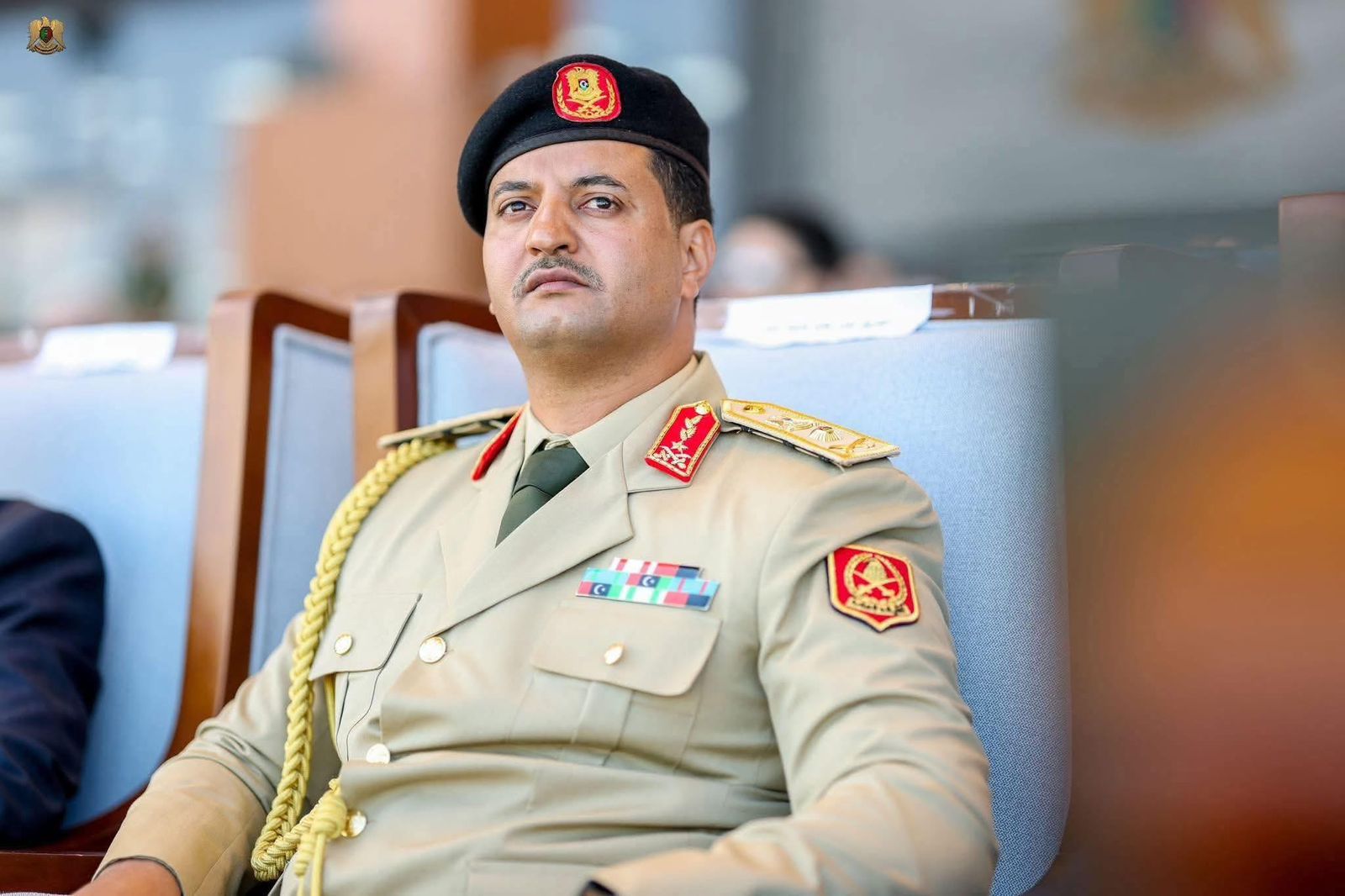
New Roles
For months, it has been clear that Khalifa Haftar has begun orchestrating a transfer of power within his family, rather than within a cohesive national institution.
An analysis published by the Atlantic Council on September 8, 2025, clearly outlined this scenario, noting that all of Haftar's sons now occupy prominent positions in eastern Libya, both militarily and economically, and that Saddam Haftar is seen as the "likely heir" or crown prince within the power structure built by his father.
This characterization was not an analytical exaggeration, as Saddam emerged in late August 2025 as a key figure in high-level foreign military communications, including meetings with Turkish officials.
Observers interpreted this as a practical inauguration of his new role as his father's deputy and a primary channel of external communication.
In September 2025, Crisis Watch, a division of the International Crisis Group, also noted the simultaneous foreign tours undertaken by Haftar's sons, suggesting they reflected their rise as direct players in shaping the eastern camp's foreign relations.
According to Crisis Watch, the problem with this family structure lies not only in the distribution of positions but also in the distribution of the sources of power themselves: money, weapons, and external legitimacy, all under the assumption that everyone remains within a single hierarchy led by the father.
In this context, Saddam seized control of the military, international relations, and ground forces, cultivating an image as the preferred partner of external actors, particularly Washington, Ankara, and several regional capitals.
As for Khaled, he positioned himself at the General Staff, a key position within the formal military establishment, granting him considerable influence and the ability to object to any restructuring of the military without going through him.
Meanwhile, Belqasim consolidated his power through the Development and Reconstruction Fund, which, over the past two years, has become the most important economic arm within the eastern regime.
This is especially true after the House of Representatives in the east approved a three-year budget of 69 billion Libyan dinars for the Fund on June 3, 2015.
With the Fund's expanding role in contracts and projects, Belqasim is no longer merely the son of the leader; he now wields a source of influence parallel to military power, based on public funds, reconstruction, and contracts.

Influence and Caution
It was precisely at this point that the infighting began to spill from the family sphere into the public arena.
Saddam wanted a unified budget and direct arrangements with Tripoli and Washington, as this would grant him national legitimacy and reduce his need for intermediaries within his camp.
In contrast, Belqasim saw this path as a direct threat to the influence of his economic fund.
Therefore, at the end of March 2026, the fund declared that the results of the Tunis meeting were not binding on it—a stance that appeared more like a political objection voiced by an economic institution.
As for Khaled, his rejection of externally supported arrangements cannot be separated from clear fears that the American initiative would become a platform granting his brother Saddam a monopoly on military representation before the West.
Thus, the dispute appears to be not merely a difference of vision regarding Libya's future, but a struggle over who will monopolize the title of the top man the day after their father's absence or withdrawal.
This is where the American role emerges as a decisive element in reshaping the landscape, by pushing for rapprochement between eastern and western Libya through a unified budget, joint military exercises, and understandings that could pave the way for a unified political authority.
On April 11, Reuters confirmed the signing of Libya's first unified budget since 2013, valued at 190 billion dinars, following an agreement between the House of Representatives in the east and the High Council of State in the west.
The US Embassy welcomed the move, considering its progress toward financial stability and strengthening national unity.
However, details reveal that Washington is not operating in an institutional vacuum, but rather through specific individuals.
Reports since the fall of 2025 indicate that Musad Boulos held a series of meetings with Saddam Haftar, along with Ibrahim Dbeibah, in Rome, Paris, and Tunis, as part of a direct negotiation process between the most influential power centers in the two camps.
This practically means that the Americans are dealing with Saddam not only as a military officer, but also as a political and security decision-maker in the east.
Because US policy in Libya has tended toward pragmatism for years, it does not seem bothered by the growing influence of the Haftar family within the eastern institutions, as long as it facilitates reaching implementable agreements.
On March 25 and 26, US Chargé d'Affaires Jeremy Brent visited Benghazi and met with several eastern leaders to discuss unifying institutions and strengthening trade and security cooperation, according to the official Libyan news agency and other local reports.
On April 4, Boulos publicly stressed the need for a unified Libyan budget to protect the dinar and the purchasing power of citizens.
Then came Flintlock 2026, adding a clear military dimension through a joint exercise between two forces that were until recently on opposing sides of the conflict.
These are precisely the points that worry factions within Haftar's camp; they believe that whoever sits with the Americans today, like Saddam Hussein, may reap the sole benefits of legitimacy tomorrow.
New Splits
In a statement to Al-Estiklal, Libyan politician Omar Al-Hassi said that “the danger of the ongoing conflict between Khalifa Haftar's sons lies not only in its familial nature, but also in the fact that it is taking place within a camp founded primarily on personal connections and individual loyalties, rather than on state institutions or clear rules for the transfer of power. This makes any internal dispute liable to quickly escalate into chaos within the military, financial, and security decision-making centers.”
He added that available information indicates that the conflict is no longer confined to Saddam, Khaled, and Belqasim, but has extended to less visible fronts, including the tension between Saddam and his brother Salah, who is affiliated with the Madkhali Salafist movement and oversees formations that manage prisons and security sites in the east.
He pointed out that the steps taken by Saddam to restructure this issue reflect an attempt to redistribute influence within the security apparatus.
He explained that this internal erosion cannot be separated from a broader context, given the continued strengthening of the eastern camp's military capabilities outside institutional frameworks.
International reports have also revealed the existence of financial networks linked to the Haftar family that contribute to funding arms deals and expanding influence.
According to Al-Hassi, this reflects a power structure based on familial balances and networks of vested interests, making conflict between the sons a natural consequence of the proliferation of power centers within the system itself.
This could later lead to the outbreak of wider internal conflicts in a country already divided into two main camps.
Sources
- Growing power struggle among Haftar's sons: What is the future of the eastern Libyan camp? [Arabic]
- Haftar's family is divided over Paul's initiative, both implicitly and explicitly [Arabic]
- Haftar’s long game: Dynastic power and diplomatic leverage in Libya
- Division within Haftar camp over Boulos initiative