The Controversy Over Presidential Terms in Mauritania Sparks a National Dialogue: What’s the Story?
The President of the Republic must be honest with the citizens.
The issue of presidential terms has sparked widespread controversy in Mauritania’s political scene, amid warnings that it could affect the success of the upcoming national dialogue between the state and political parties.
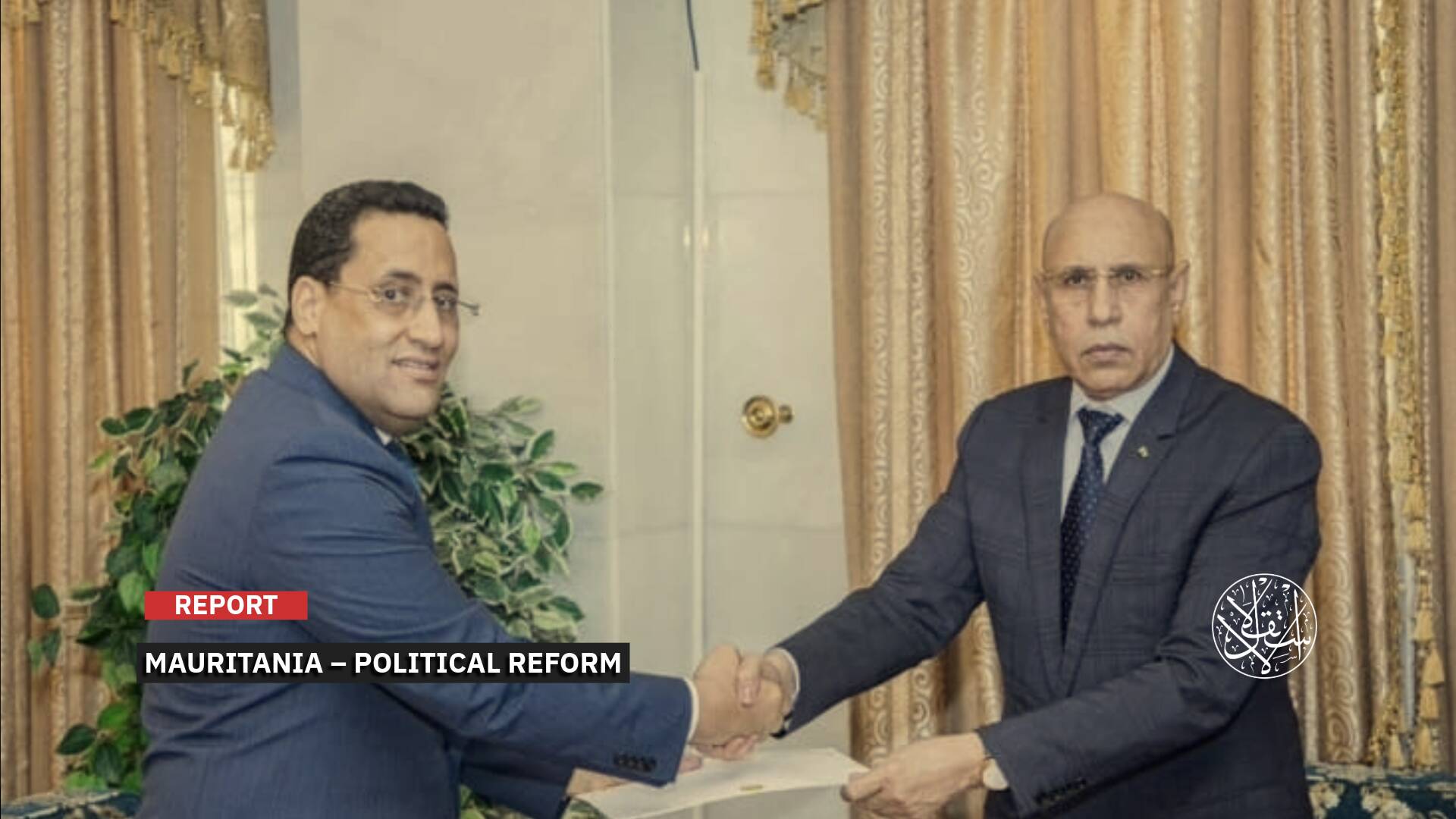
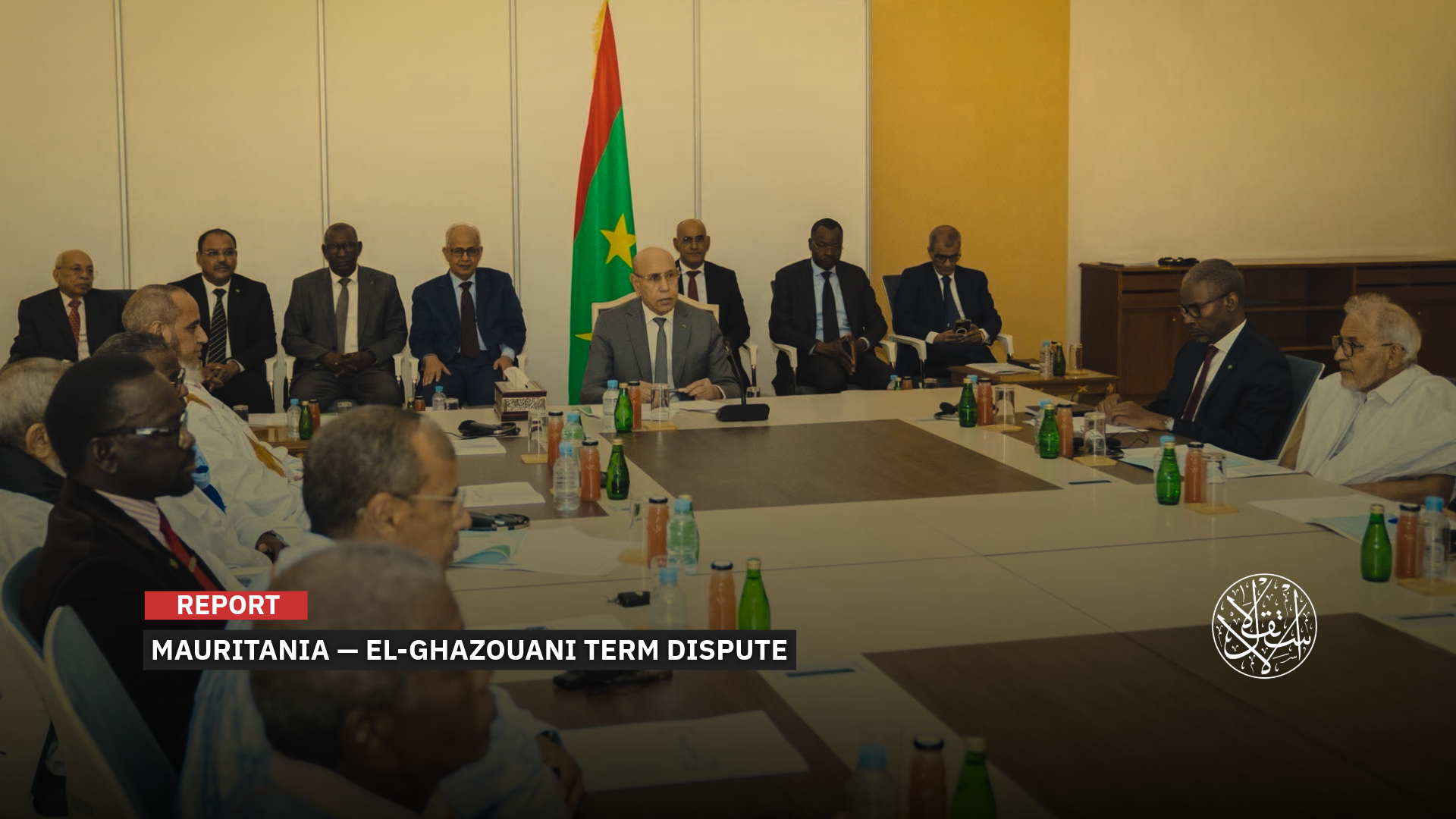
Parties within the presidential majority have called for including the issue of presidential mandates in the agenda of the national dialogue, which has been interpreted as a move paving the way for President Mohamed Ould Cheikh el Ghazouani to run for a third term, in violation of the constitution.
Undermining Hard-Won Achievements
In this context, opposition lawmakers called on the opposition to suspend its participation in the upcoming political dialogue, following a proposal by the ruling majority parties.
In a joint statement on March 26, 2026, the lawmakers said that including this item constitutes a “fundamental red line” for opposition forces, which had previously expressed readiness to participate in the dialogue.
They warned that discussing presidential terms could undermine constitutional gains, particularly those related to mechanisms for peaceful transfers of power.
The signatories called on opposition parties, across all their factions, to suspend their participation and withdraw from the dialogue until the executive branch issues an official position excluding discussion of presidential terms.
They stressed that such a move would be a “proof of good faith” and a guarantee that the dialogue would not be used to undermine democratic gains.
The statement also held ruling majority parties and the government “historically responsible” for any consequences that could affect the country’s security and stability as a result of this proposal, while calling on the public and its “vibrant forces” to remain vigilant and ready to defend democratic achievements.
The lawmakers also expressed surprise that the issue was being raised amid the current economic and social conditions, pointing to rising prices, supply crises, as well as broader economic and security challenges facing the country.
The statement was signed by lawmakers Mohamed Lemine Sidi Maouloud, Khali Jalo, Yahya Loud, and Mohamed Bouy Cheikh Mohamed Fadel.
In early April 2026, the first preparatory sessions of the dialogue were held before being suspended after the ruling party's insistence on including presidential term limits on the agenda, which the opposition rejected.
The opposition argued that limiting presidential mandates to two terms is a constitutionally protected provision that cannot be debated, as it serves as a safeguard for peaceful political alternation of power.

Party Rejection
At the party level, the Reform and Development Party (Tawassoul) expressed concerns that the upcoming dialogue could be manipulated or derailed before it even begins.
The party, through its parliamentary group leader Yahya Ould Aboubakar in an interview with the local channel Sahel on March 31, 2026, stressed that there are “serious red lines that must be taken into account before the start of the dialogue, otherwise it will lose all meaning.”
He explained that one of these issues is presidential terms, which should not be altered or reopened for discussion, as the constitution clearly limits the presidency to two terms.
Ould Aboubakar added that the current debate over the national dialogue is essentially centered on term extension or a third mandate, which he described as forbidden and unacceptable for discussion within the dialogue framework.
On April 4, 2026, the Mauritania Forward party announced the suspension of its participation in the dialogue agenda meetings, following the inclusion of presidential term limits among its discussion points.
The party leader, Noureddine Ould Mohamedou, said they had not received reassuring answers from President Mohamed Ould Cheikh el-Ghazouani regarding the issue of presidential mandates.
In a press conference on April 8, 2026, opposition MP and leader of the “Initiative for the Resurgence of the Abolitionist Movement” (IRA), Biram Dah Abeid, accused the government of President Mohamed Ould Cheikh el-Ghazouani of “circumventing the dialogue and entrenching corruption.”
Dah Abeid said the president failed to value the opposition’s participation in the national dialogue and is using his parliamentary majority to push through controversial issues, foremost among them the question of a third presidential term.
He added that the president had not respected opposition forces that responded to his call for dialogue, stressing that the opposition had demonstrated patriotism and made significant efforts to ensure the process succeeded, despite its prior belief that government promises would not be fulfilled.
The MP also made direct accusations against the president’s family circle, alleging “suspicious links” with the company “Adax,” which controls fuel imports in the country.
He further claimed that what he called the president’s “inner circle” is involved in plundering mineral resources and facilitating the takeover of fishing sector contracts by corrupt businessmen, describing this as a depletion of Mauritania’s national wealth.
Dah Abeid also expressed solidarity with the national press following what he described as “repression” by security forces during coverage of protests against fuel price hikes on March 29, 2026.
Majority Justification
Facing opposition concerns, a member of the standing committee of the ruling Insaf party, Didi Ould Bouna, said that discussion of presidential terms is “premature,” stressing that expressing an opinion on the issue before the start of the dialogue “has no meaning.”
According to Nouakchott Live on March 30, 2026, Ould Bouna said the party’s positions “will be expressed within the dialogue sessions themselves.”
He noted that the current discussion is focused on the roadmap presented by dialogue coordinator Moussa Fall, adding that this roadmap “has been responded to by all parties,” and that the party has “clear positions contained in a document submitted by the party leader, who also serves as coordinator of the majority.”
Ould Bouna stated that the party’s orientation has already been expressed, stressing that they can only reiterate what President Mohamed Ould Cheikh Ghazouani said during meetings with political actors and in his regional visits, that the dialogue is inclusive, does not exclude anyone, and does not exclude any topic.
He called for avoiding premature judgments, saying that “the political class and the national press should facilitate the process and play a positive role.”
Regarding the upcoming meeting, he said they are still in a preparatory phase aimed at agreeing on a roadmap and topics.
He emphasized that “it is not possible to talk about the outcomes of the dialogue before it begins,” noting that the agenda includes aligning views on a shared roadmap, and that the dialogue should be “inclusive and democratic, addressing the country’s situation, political and economic systems, governance, and the electoral system.”
He concluded that there are national issues everyone agrees should be discussed, each from their own perspective, adding that they are heading into the dialogue with a responsible and open mindset and should avoid jumping to conclusions.
Common Ground
Amid rising political tension in Mauritania over the issue of presidential terms, the leader of the Citizenship and Justice Front party, Mohamed Jemil Mansour, said the dispute can be resolved through a consensual approach between all parties.
According to Sahara Media on April 4, 2026, Mansour noted that the ruling majority insists its document did not include a call to discuss presidential terms, while the opposition conditions its participation on a commitment not to raise the issue.
He pointed out that the summary document of responses referenced presidential terms based on an interpretation of a paragraph in the majority’s proposal.
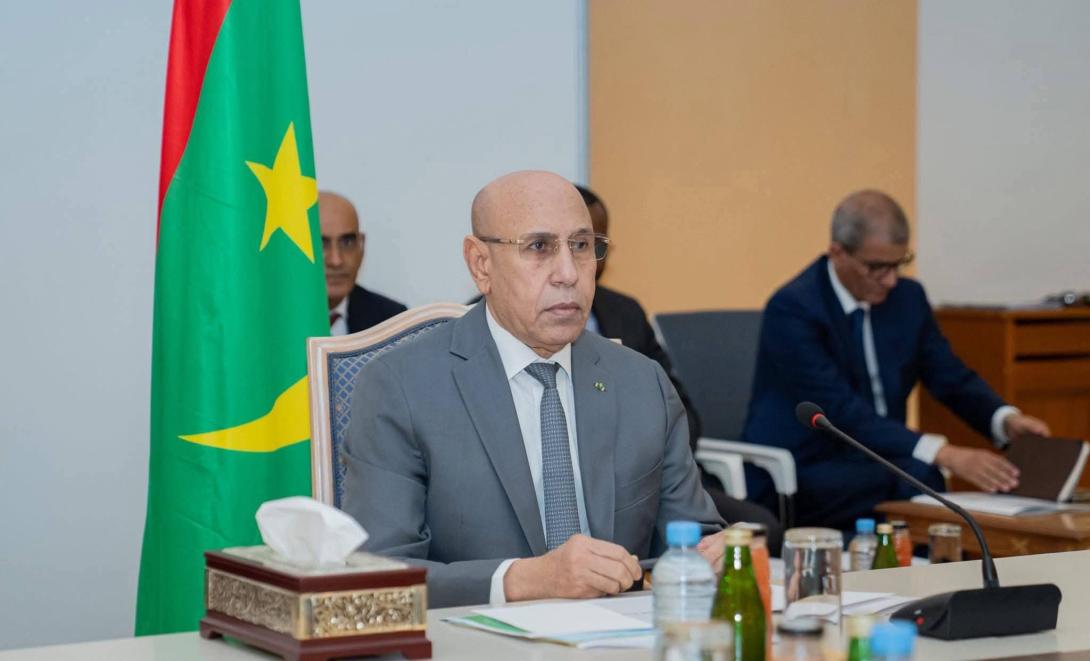
Mansour added that President Mohamed Ould Cheikh el-Ghazouani had previously stated he is neither seeking nor demanding a third term, arguing that this point should not obstruct the launch of the dialogue or delay it.
He said the issue could be overcome if both sides adjust their positions, with the majority withdrawing references that led to constitutional reform interpretations, and the opposition dropping its condition on term limits if it is no longer justified.
He also called for empowering the dialogue coordinator to define agreed topics and formulations, with the outcomes then submitted to the president to set a launch date for the dialogue, aiming to strengthen national unity, good governance, and political reform.
Political Analysis
In his reading of the ongoing debate, the leader of the Renewal of the Democratic Movement party, Yacoub Ould Ahmed Lemrabott, said his party has closely followed statements attributed to the president that he is not interested in discussing presidential term limits.
According to Lemrabott in an interview with Al-Estiklal, the idea of debating term limits was introduced in a draft or proposals from ruling-party factions, which he described as unacceptable.
He stressed that the president is the constitutional guarantor under Mauritanian law and therefore should not allow any opening that could undermine the constitution, especially after taking an oath to uphold it.
He added that this requires the president to reject any proposal to amend or reopen the issue of presidential terms and to instruct his supporters to oppose any constitutional changes in this regard.
Lemrabott emphasized that his party will not accept any change to constitutional term limits and will not engage in or accept such a debate.
He also held President Mohamed Ould Cheikh el-Ghazouani responsible for the current situation, noting that after recent regional visits, statements from ruling-party figures calling for changes in term limits were observed.
He argued that such actors would not make such statements without authorization or consultation with the presidency, meaning the president must be clear with citizens on this issue.
In any case, he said, rising poverty, fragility, corruption, and poor governance make it more urgent to end the current term rather than consider a third one, which would only prolong national mismanagement.
He stressed that real dialogue should focus on major issues related to political and democratic development and freedoms, rather than becoming a platform for violating the constitution.
He concluded by calling for an end to “personality cults and inflated egos” and a shift toward political work that respects the constitution and supports democratic transition in the country.