Morocco Erupts After Justice Minister Criticizes Quranic Verse on Women: What’s the Story?
“O God, this is a grave wrong that we do not accept and will not tolerate, nor do all Moroccans accept or tolerate it.”
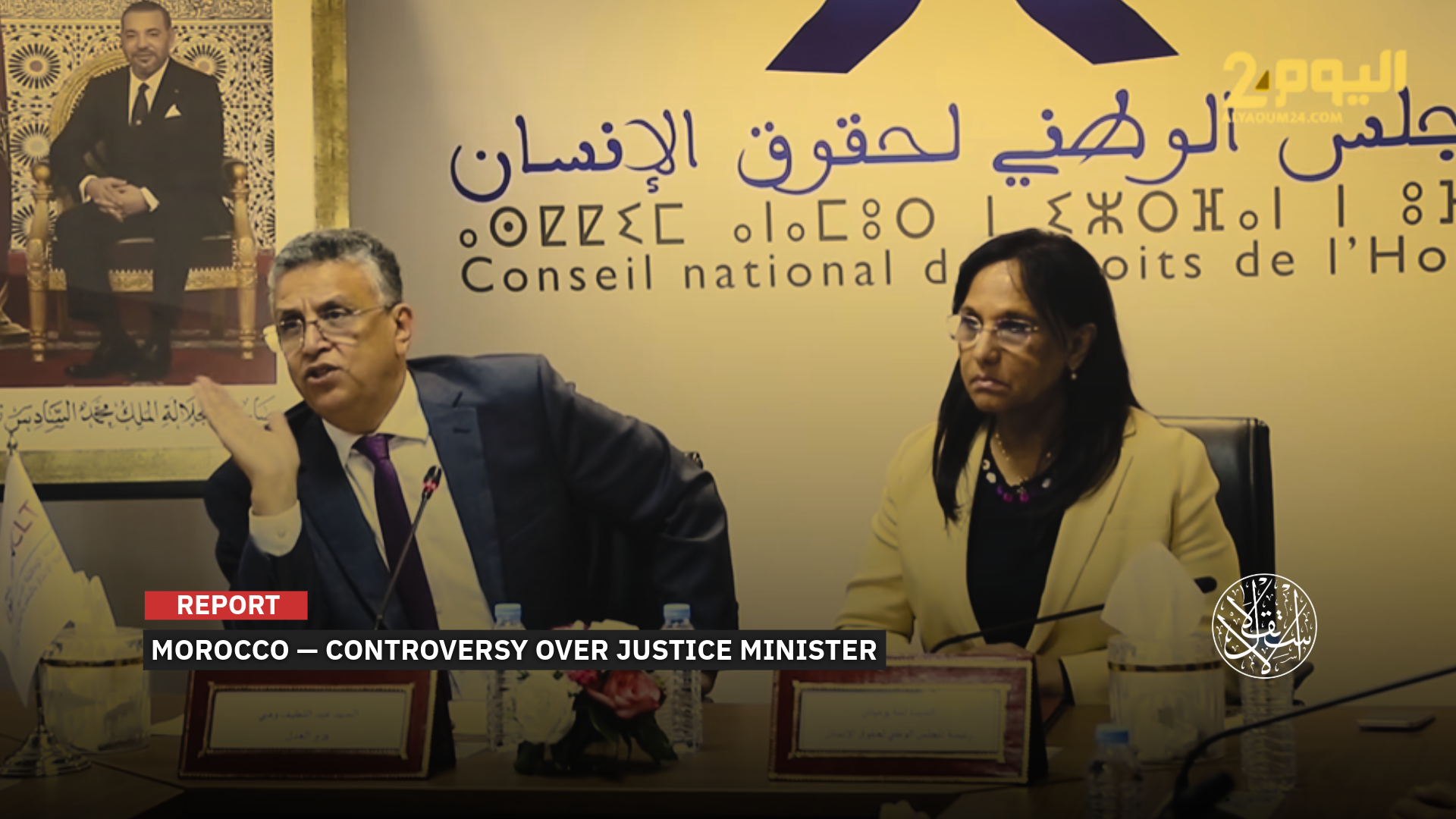
Morocco’s Justice Minister Abdellatif Ouahbi is once again at the center of a growing storm, as his remarks on Islamic principles continue to draw sharp backlash from across the country.
In his latest comments, Ouahbi took aim at the notion that the testimony of two women equals that of one man, dismissing it as “a relic of the Middle Ages.”
The remarks came during a meeting on April 22, 2026, with Amina Bouayach, head of the National Human Rights Council, where the discussion was meant to focus on efforts to combat human trafficking but quickly spilled into a far more contentious debate.
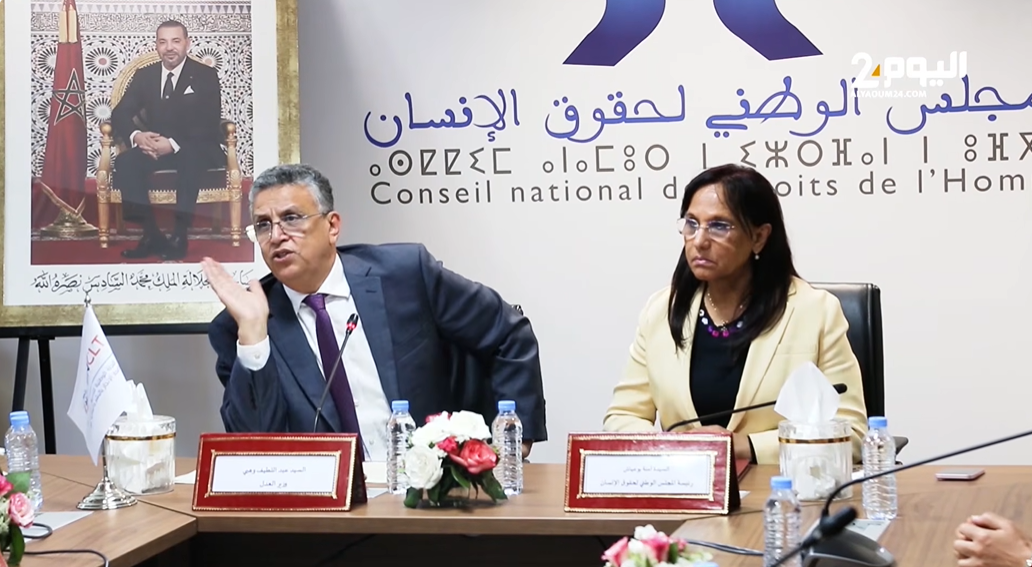
The controversy unfolds within a legal framework where Morocco’s family code draws on provisions rooted in Islamic law.
A verse in the Quran, from Surah al-Baqarah, states, “[...] Call upon two male witnesses; and if two men are not available, then one man and two women, so that if one of them errs, the other can remind her [...].”
Against that backdrop, Ouahbi argued that “it cannot be said that one man is equivalent to two women” in testimony, adding that preventing a single woman from testifying in certain contracts could open the door to legal challenges, especially if the judge is a woman who might rule those contracts invalid from the outset.
Contrary to Islamic Law
Ouahbi’s remarks have drawn a wave of criticism, particularly from religious scholars and conservative voices. Among them, Islamic law professor Rachyd bin Kyran argued that the justice minister’s comments directly contradict a clear Quranic text, reframing it as a flaw to be corrected.
In a Facebook post on April 23, he said that the minister appeared to view the text as out of step with the times and unfit for a country hosting the World Cup.
“What audacity is this against the word of God? Is this not a clear Quranic text, definitive in both transmission and meaning? A true Muslim has no choice but to say, ‘We hear and we obey.’ Is objecting to such a divine ruling not a form of permitting what is forbidden, forbidding what is permitted, distorting God’s words, and igniting discord?” he added.
“By the minister’s own logic, would the verse, ‘For the male, a portion equal to that of two females,’ also be deemed unfit for a country hosting the World Cup?” Bin Kyran concluded by asking the minister, “Did your Lord forget when He made the testimony of two women equal to that of one man?”
Hassan Ben Ali al-Kettani, head of the Association of Arab Maghreb Scholars, said Justice Minister Abdellatif Ouahbi had gone too far in what he described as dismissing not only Islamic law but the Quran itself.
In a Facebook post on April 24, al-Kettani wrote, “O God, this is a grave wrong that we do not accept and will not tolerate, nor do all Moroccans accept or tolerate it.”
A Facebook account known as “al-Maghribi al-Amin” also weighed in, calling for precision on what it described as a sensitive issue. “This matter is serious and not open to interpretation,” the post read, arguing that mocking religion includes belittling its rulings or ridiculing anything brought by the Prophet. “So what does it mean when someone describes a Quranic ruling as belonging to the ‘Middle Ages’?”
The account went on to present two possibilities: either the minister is unaware that the ruling comes from God and His Messenger, which it described as clear ignorance, or he knows and still labels it backward, which it framed as a direct affront to divine law.
It also questioned the silence of Morocco’s top religious bodies, including the Higher Council of Ulema and the Mohammadia League of Scholars, asking whether their lack of response amounts to tacit encouragement.
The post concluded with a stark warning, describing the situation as a betrayal of religion before the nation, and arguing that failing to defend sacred boundaries in the name of modernization places one outside the faith.
A String of Disgraceful Remarks
Howiya Press argued in an April 24 analysis that Ouahbi’s remarks were not new. What stands out now, it said, is his apparent insistence on turning long-standing religious debates, traditionally framed within Islamic scholarship, into material for populist political sparring.
The site criticized what it described as the portrayal of clear religious rulings as relics of the “Middle Ages” that should be discarded. It added that Ouahbi’s comments should not be read as a slip of the tongue, but as part of a broader, recurring discourse he has advanced for years, one that seeks to impose views seen as outside mainstream societal norms.
At the heart of the backlash, the analysis argued, is what critics see as an unusual boldness in challenging the sacred, particularly by labeling a Quranic ruling as outdated.
It also accused the minister of using provocative language while overlooking a key reality: that Morocco’s constitutional and institutional framework recognizes Islamic law as one of the foundations of legislation, and that the country’s family code itself rests on a careful balance between religious reference and modern demands.
More broadly, the outlet suggested these remarks fit into a pattern that has shaped Ouahbi’s public image as a politician willing to confront religious and social constants head-on.
It pointed to earlier controversies, including his statement in May 2023 that he and his party, the Authenticity and Modernity Party, had come “to change the history of the Moroccan nation,” as well as remarks in July 2023 describing Homosexual groups as a powerful political and economic force that is difficult to challenge.
Ouahbi also drew criticism after warning hotels against requiring marriage certificates for couples sharing rooms, arguing in May 2024 that such practices violate the law. Legal experts, however, countered that allowing unmarried couples to share rooms could expose hotel owners to criminal charges, including facilitating prostitution.
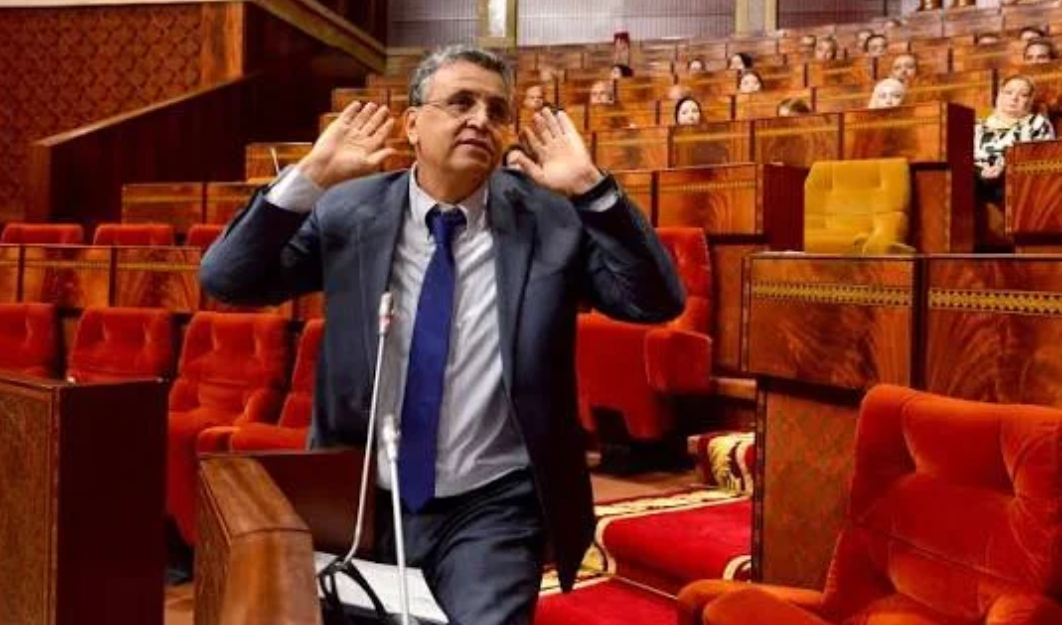
Justice as the Foundation of Rule
In response to the controversy, former state secretary for higher education and scientific research Khalid Samadi said the justice minister’s challenge to a clear Quranic text on women’s testimony reflects a flawed and isolated understanding of the Islamic system of evidence and witnessing.
Speaking to Al-Estiklal, Samadi said the system is part of a broader, integrated framework designed to safeguard rights, as developed and explained by scholars across different contexts and circumstances.
He suggested the remarks cannot be separated from the political context, describing them as an angry reaction to the decision to remove the family code reform file from the minister’s hands and assign it instead to a committee of scholars, sociologists, and experts.
Samadi pointed to a long-standing Moroccan tradition in which the justice ministry was historically led by scholars trained in Islamic jurisprudence, arguing that this helped prevent what he described as erratic or controversial positions, in line with the principle that justice underpins the stability of the state.
He also pushed back on the minister’s reference to the “Middle Ages,” arguing that the term is often misused to imply backwardness. In the Islamic world, he said, that period marked a high point of intellectual and scientific achievement, from major centers of learning in Fez, Baghdad, Cordoba, and Cairo to the work of leading philosophers and scientists such as al-Farabi, Ibn Sina, Ibn Rushd, and Ibn Khaldun.
By contrast, he noted, the same period is often associated in Europe with war, disease, and social collapse, shaping a negative historical memory that some continue to project onto Islamic history.
In that context, Samadi argued, some critics have adopted the term uncritically, using it to describe stagnation without recognizing its different historical meaning. He attributed this to ideological influence or a lack of deeper understanding.
He concluded by saying that, for many, the Islamic Middle Ages remain a source of pride, representing a period of intellectual leadership and civilizational strength that stands in contrast to today’s moral and political turmoil.