Egypt’s Booming Private Security Industry: What Happens After Sabri Nakhnoukh’s Arrest?
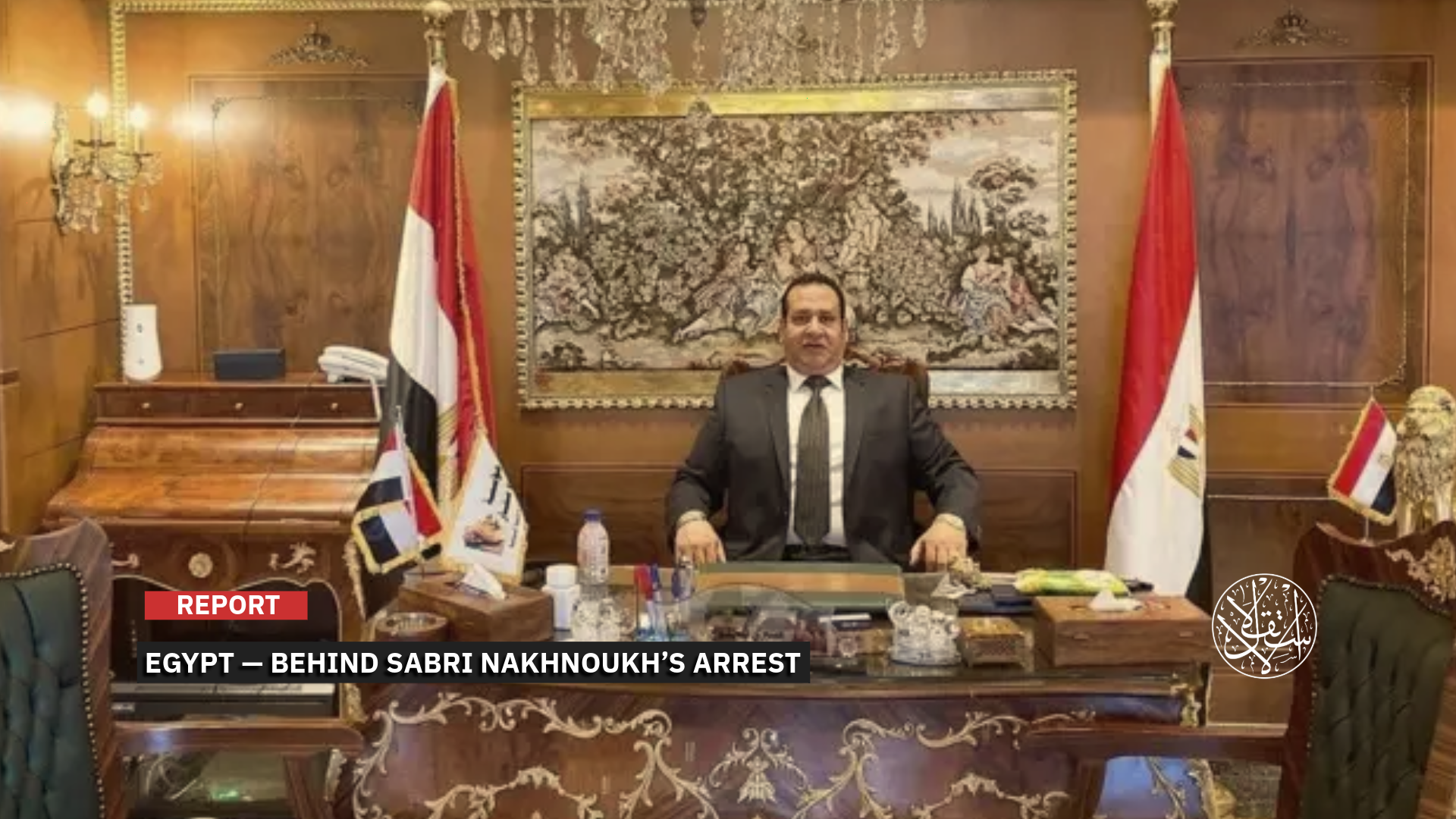
Egypt’s Interior Ministry arrested Sabri Nakhnoukh, the other face of the regime’s internal militia.
Less than three years after one of Egypt’s most famous thug bosses, Sabri Nakhnoukh, took over as chairman of Falcon Group for Security and Guarding Services—the country’s largest private security company, controlling roughly 67% of the sector—he was arrested and detained first for four days and then for 15 more. While the case ostensibly centers on thuggery, many believe it carries deeper political implications.
Throughout the history of Egypt’s modern state, successive governments did not rely on militias in the conventional sense, instead depending almost entirely on the security and military establishments to support the ruling authority and the president.
Under the head of the Egyptian regime, Abdel Fattah el-Sisi, however, the role of tribal militias expanded through figures such as Ibrahim al-Arjani in Sinai, alongside security networks operating through private guard companies run by former thugs to support the regime, all under a legal framework introduced in 2015. Some observers suggest that entities such as Falcon and Nakhnoukh eventually exceeded the role assigned to them and that the altercation case was used as a pretext to rein in the “big boss of the thugs.”
Earlier, the Union of Arab Tribes (UAT) led by Ibrahim al-Arjani had exposed tensions within Egypt’s ruling regime after emerging as a potential rival to the military, drawing comparisons to the Sudanese militia led by Hemedti. Al-Arjani was later partially sidelined in a move that observers viewed as a blow by the military establishment against influential political and security figures.
Since then, al-Arjani’s public profile has largely faded from the media, although he returned to the spotlight in May 2026 when he appeared in a massive motorcade that some observers described as larger than that of a head of state.
Against this backdrop, when Egypt’s Interior Ministry arrested Sabri Nakhnoukh—the other face of the regime’s internal militia and head of the intelligence-linked Falcon security company—on May 3, 2026, following an altercation with businessmen close to the authorities, observers speculated that security agencies were responding to the military establishment as part of an ongoing struggle for influence between state institutions.
But the question that quickly gained traction after Nakhnoukh, along with five relatives and associates, was remanded in custody—and pro-regime newspapers rushed to highlight his violations, including roughly 50 accusations related to intimidation and thuggery, as well as the search of his home and the seizure of his phone—was this: What is the fate of the Falcon company and private security companies in general after the expansion of private security activities and the increasing manifestations of thuggery and reliance on muscle-bound men in the public scene?
Why Arrested and Exposed?
Because most Egyptian media outlets are either state-owned or closely aligned with the regime, what they choose to publish—or ignore—is widely viewed in media circles as a reflection of the official line.
For that reason, the relentless coverage by both state and private media of Sabri Nakhnoukh’s arrest, detention, and transfer to prison on charges of thuggery was seen as a sign that the case went far beyond an ordinary altercation and was instead a politically charged affair whose deeper dimensions may become clearer over time.
Media platforms and pro-regime voices, including the security agencies-aligned television host Ahmed Mussa, heavily promoted news of Nakhnoukh’s arrest and portrayed it as a major achievement for the interior ministry. The enthusiasm raised eyebrows, however, given that many of the same figures had previously praised el-Sisi’s decision to pardon Nakhnoukh and secure his release on medical grounds in 2018. The sharp reversal fueled speculation that something more significant was at play behind the scenes.
How quickly security forces were deployed to arrest Nakhnoukh, along with five of his relatives and bodyguards, despite the official charge relating to a dispute over the remaining payment for a 50 million pound villa, suggests to some that the decision to rein in his influence had been premeditated—or that he was lured into a trap.
Others see it as a sign of a deeper dispute, possibly between security agencies or between rival money thugs linked to them, implying that the case goes far beyond the reported altercation.
The rapid decision by the public prosecution to detain him for four days, later extended by 15 days, despite the presence of a large legal team that included two former officers and unusually tight security inside the Fifth Settlement court, was seen as another indication that the regime—which once granted a man with a criminal record a license to run a private security company—may have concluded that his influence had grown beyond its control and that he had begun operating at the level of the “big players.”
The other party in the dispute was identified as businessman Hisham al-Imam, a car and real estate trader who previously gained prominence during the 2024 Sobhi Kaber restaurant dispute, when the owner alleged that “powerful figures” defrauded him of 200 million pounds, forcing him to relinquish the restaurant, later renamed al-Akaber, amid questions over links to influential circles.
Alongside him was businessman Ahmed al-Haddad, who has been the subject of speculation over his alleged purchase of properties belonging to actor and former military contractor Mohamed Ali, who fled to Spain after exposing what he described as corruption involving the el-Sisi family and army generals; he is also currently detained.
Beyond his notoriety in the world of thuggery, bodyguard services, and private security for celebrities and businessmen, Nakhnoukh has long been associated with security agencies and has been linked to networks of electoral intimidation and counter-mobilization against the 2011 revolution.
When he was first arrested in 2012 during the presidency of Mohamed Morsi, on charges including weapons and ammunition possession, he was sentenced to life imprisonment before being released under a medical pardon issued by el-Sisi in 2018, after which he returned to head one of the country’s largest private security firms.
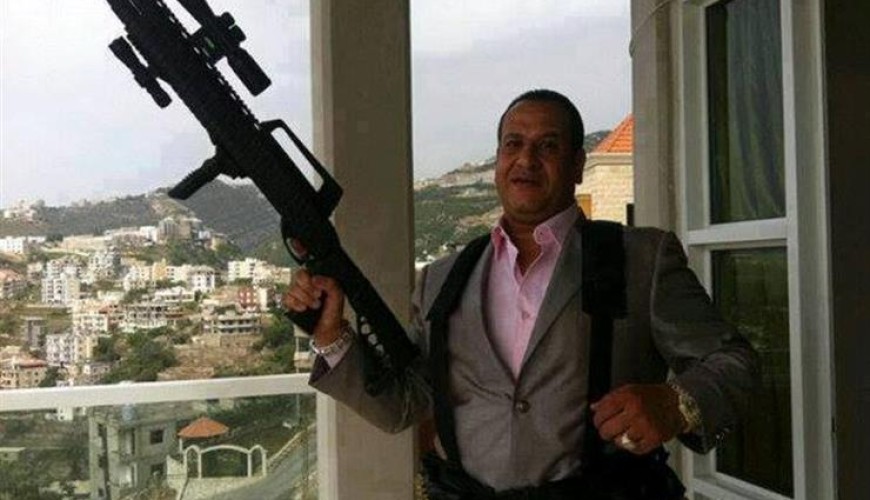
Nakhnoukh became widely known for displays of brute force, often seen holding an assault rifle. He was arrested by the Interior Ministry during President Mohamed Morsi’s rule and described by al-Masry Al-Youm on August 24, 2012, as “one of the godfathers of thuggery,” found in possession of weapons, drugs, and five lions.”
On March 24, 2013, Abou Elela Mady, head of the al-Wasat Party, said that President Mohamed Morsi had told him that “the intelligence services had created a network of 300,000 thugs that appears periodically, including 80,000 in Cairo alone.”
He added that this network had previously been under the Criminal Investigations Department before being transferred to State Security (now National Security) prior to the 2011 revolution.
According to him, this same network appeared during the clashes outside al-Ittihadiya Palace, when President Mohamed Morsi was in office, noting that its members were armed with bladed weapons and stressing that “those who mobilize them are known.”
Former MP Mohamed Elbeltagy, who has been sentenced to death, was among the first to speak about Sabri Nakhnoukh, saying that “the map of thuggery in Egypt is managed by security and political agencies, and each actor is deployed at the appropriate time.”
The prosecution’s decision to seize Sabri Nakhnoukh’s phone also sparked speculation about other secrets he may be involved in, especially as he had previously acknowledged that Egyptian authorities had found international communication devices at his home during his 2012 arrest.
At the time, journalist Saber Shawkat, managing editor of the state-owned Akhbar Elyom newspaper, presented information and evidence to the court during Nakhnoukh’s trial, claiming they confirmed his involvement in work on behalf of foreign intelligence services.
“Military intelligence informed me in October 2011 that Sabri Nakhnoukh was working for foreign intelligence agencies, including Mossad, and that he carried out certain dirty operations, such as the bombing of the Saints Church in 2010, the Maspero and Mohamed Mahmoud events, attacks on the Imbaba and Atfih churches, and an attempt to burn down the Sakr military factory,” he said.
Legal experts suggest that Nakhnoukh could face a prison sentence if the circulating accusations are proven, including storming a car showroom using weapons, causing physical or material harm, and unlawfully seizing funds belonging to a businessman.
Article 375 bis of the Penal Code stipulates that anyone who displays force, threatens violence, or uses intimidation shall be punished with imprisonment ranging from one to two years, while Article 375 bis (a) imposes harsher penalties that can extend to aggravated imprisonment in several cases, including when the offense involves the use of weapons or sharp tools.
A Struggle Between Security Agencies?
Major General Khyrat Shokry, a retired officer and security expert who previously served as deputy head of the state security apparatus, published an analysis on his Facebook page that many observers described as both precise and realistic regarding Sabri Nakhnoukh, often dubbed Egypt’s “President of the Republic of Thuggery.”
He said the altercation is not the real story but merely its surface, placing the incident within a broader web of politics and influence and stressing that “the real story lies in the background, where interests, relationships, and balances of power intersect.”
He explained that Nakhnoukh’s name has been associated with Falcon Security Services, a company that has played prominent roles in sensitive fields, arguing that the incident reflects a shift in the man’s standing or in the network of relationships that surrounded him for years.
He noted that Nakhnoukh typically operated through a wide network of aides, bodyguards, and close associates, and was not the type to engage directly in everyday disputes or physical confrontations.
For this reason, Shokry believes what is unfolding reflects “a reconfiguration of power balances, where some players no longer enjoy the same status they once held in earlier phases.”
Analysts echoed the same view, arguing that the arrest of Sabri Nakhnoukh cannot be seen as a routine security measure stemming from a “fight” or a “dispute over an apartment,” as the official narrative suggests, because the case involves a figure whose name has long been linked to state institutions, who was released under an exceptional presidential pardon, and later granted wide influence through private security and guarding companies.
Some went further, suggesting that what is unfolding may amount to “settling scores within circles of influence” or a reflection of a “struggle between agencies and power centers that suddenly decided to withdraw protection from a man who had long been shielded and recycled through the system.”
In contrast, an analysis published by Radio Monte Carlo on June 3, 2026, suggested that the arrest of Nakhnoukh may serve other purposes. It quoted observers of Egypt’s political scene as saying the case could be used “to distract public opinion with media noise that masks other crises and files,” offering a pressure valve amid rising economic strain.
The analysis also pointed to the possibility that the case is an implicit warning to other powerful figures who may have crossed certain red lines, carrying the message, “If we put Nakhnoukh in prison, you could be next.”
The world of private security companies and informal strongman networks is not limited to Sabri Nakhnoukh alone. Reports point to a network of four prominent associates who frequently appear alongside him: Shendy Yehia, Yahya el-Saidi, Badr Ayad, and Esmaeel Doller.
There are also recurring accounts suggesting that some of these figures maintain ties and dealings with the Nation’s Future Party, widely viewed as the political force closest to the Egyptian regime.

Falcon at a Crossroads
Notably, the Egyptian Public Prosecution’s statement issued on June 6, 2026, regarding the charges against Egypt’s most notorious thug, Sabri Nakhnoukh, included direct references to his company, Falcon, without explicitly naming it, opening the door to speculation that legal measures could eventually extend to the company itself, following the conclusion of the case and a verdict against its owner.
The prosecution stated that “it was proven that the accused and others led a criminal group aimed at imposing control, practicing thuggery through force and threats, and disrupting public order, using a security and guarding company as a cover for their activities, and employing money and weapons to facilitate them,” in what is widely believed to refer to Falcon Security Services, whose fate remains uncertain.
A review of Nakhnoukh’s mobile phones, according to the prosecution, revealed serious crimes including kidnapping accompanied by sexual assault, unlawful detention involving torture, possession of firearms and live ammunition, and the seizure of 10 historical artifacts, in addition to unlicensed communication devices—charges that carry penalties reaching aggravated imprisonment under Egyptian law.
The Public Prosecution also issued a separate statement on June 6, 2026, regarding what it described as “parallel financial investigations,” reinforcing expectations of possible future decisions to freeze assets and seize property amid suspicions of money laundering through the company referenced as a “cover” for criminal activity.
These parallel financial investigations, as outlined in the prosecution’s statement, refer—under Egypt’s anti-money laundering law and prosecutorial guidelines—to inquiries that extend beyond the criminal charges themselves, encompassing scrutiny of suspects’ sources of income, wealth, and financial obligations, as well as tracking money flows and related assets.
They also include determining when the criminal activities began and whether they predate the most recent arrest, in order to identify all proceeds derived from such activities and take legal action, including potential asset freezes or confiscation if links to criminal conduct are established.
On June 7, 2026, the Egyptian Public Prosecution ordered the freezing of Nakhnoukh’s assets, the owner of Falcon Security Services, after he and others were accused in a case involving assault, intimidation, and thuggery in Cairo.
The prosecution said the decision followed “what the parallel financial investigations revealed regarding the tracking of criminal proceeds and findings from investigative authorities that Sabri Nakhnoukh and others resorted to money laundering through multiple methods aimed at concealing the nature of those funds and disconnecting them from their illegal source.”
It added that the order includes the freezing of all assets, including movable and immovable property, shares, bonds, securities, safes, deposits, electronic wallets, and real estate, as well as a ban on disposal of assets pending the outcome of the case.
Sisi’s Pardon
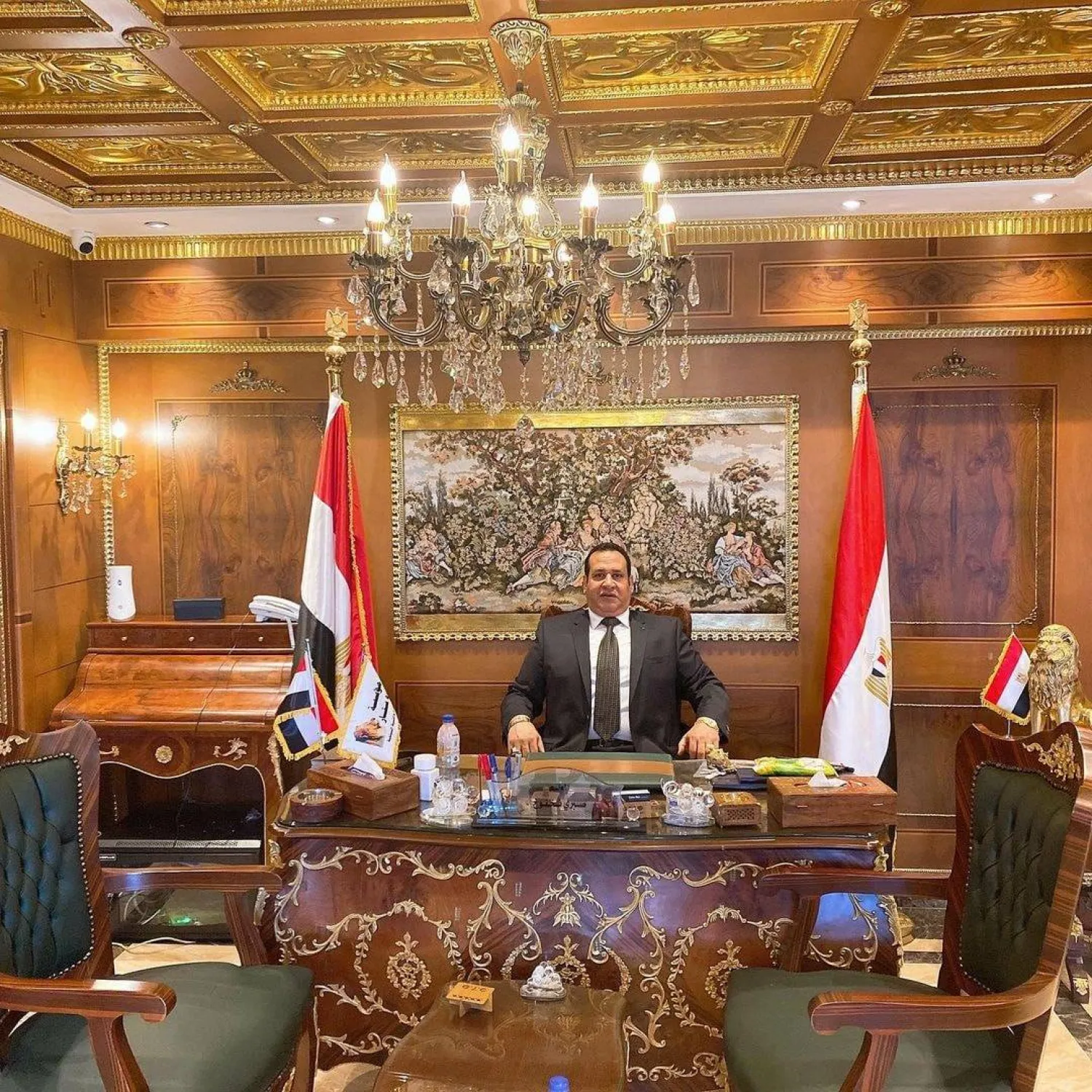
After being pardoned by el-Sisi, Nakhnoukh rebranded himself as a businessman. On September 26, 2023, he was announced as the owner of Falcon Security Group, one of Egypt’s largest private security firms, which had previously been owned by CIB Bank and was a key contractor for securing major official events.
Prior to acquiring the company, Nakhnoukh publicly declared his support for el-Sisi’s bid for “a third presidential term.”
Following his arrest, many Egyptians began linking the fate of the company to that of Nakhnoukh himself, as its current owner, despite the fact that it formally handles most security and protection operations in coordination with Egyptian authorities.
The company employs around 20,000 staff, a large share of whom work as personal security guards and bodyguards. It also provides security for 3,500 sites, including banks, universities, and institutions, and serves around 2,000 clients. According to its own data, it controls roughly 67% of the private security market in Egypt.
Before acquiring and heading the company, questions were already raised about whether Nakhnoukh could legally run a security firm given his prior criminal conviction, as reported by the private newspaper Shorouk News on September 28, 2023.
Law No. 86 of 2015 on private security and cash transport companies sets several conditions for founders, board members, and senior managers.
These include that the person must be Egyptian by nationality with Egyptian parents; of good reputation and character; and must not have previously been convicted of a felony or misdemeanor involving a custodial sentence or a crime affecting honor or integrity, unless rehabilitation has been granted.
The law also requires that the company’s director have experience in security services or have completed specialized training in the field.
This provision was expected to block Nakhnoukh from heading a security and cash transport company given a final ruling issued against him by the Court of Cassation in November 2014. However, this did not prevent his later rise to become one of the most prominent security contractors linked to the regime.
It was argued in justification that the final life sentence issued against him in 2012 had effectively been nullified after a ruling by the Supreme Constitutional Court declaring unconstitutional Law No. 6 of 2012, which had imposed harsher penalties for weapons and ammunition possession—the law under which he was originally sentenced.
In April 2017, the case was referred to a criminal court in Alexandria for retrial, but proceedings were never completed and no new verdict was issued. In May 2018, a presidential pardon was granted while he was still in pretrial detention, not as a convicted prisoner.
Some reports also said he later applied for rehabilitation to clear his legal record, a move interpreted as an attempt to resolve legal obstacles to heading the company, though he denied making such requests.
Speaking on condition of anonymity, a security expert told Al-Estiklal that there are so far no official indications that Falcon or other security firms linked to Nakhnoukh will be affected legally or administratively by his arrest and detention.
He explained that the current case, based on available information, relates to accusations stemming from a dispute and a financial altercation and is not connected to the company’s operations or licensing.
He added that this assessment could change if other undisclosed dimensions of the case emerge—whether political or security-related—which could potentially affect the company, possibly leading to Nakhnoukh’s resignation, the appointment of a close associate to lead it, its sale, or its transfer.
He noted that, in practical and legal terms, major security firms like Falcon Group do not depend on a single individual but operate through a board of directors and a fully structured administrative and executive system, in addition to licenses issued under the relevant law and oversight by competent authorities.
Therefore, the pretrial detention of a company owner or major shareholder does not automatically lead to the suspension of its operations or the revocation of its licenses, unless charges directly linked to the company itself emerge or a court ruling affects its ownership and management structure.
Four Possible Scenarios
In this context, estimates point to four possible scenarios regarding the future of Sabri Nakhnoukh’s company, particularly if he is referred to trial and imprisoned again.
The first: the continuation of normal operations, especially if the case remains confined to its personal criminal dimension. In this scenario, the companies are expected to keep operating without major structural changes.
The second: a managerial reshuffle, with a deputy stepping in to handle day-to-day operations, particularly if legal proceedings are prolonged, transferring some executive powers to partners or other managers within the group.
The third: operational disruption if investigations expand to include financial or administrative files related to the companies themselves, which could have broader consequences for their activity.
The fourth: a scenario linked to the possibility that what is unfolding represents a political or security settlement with Nakhnoukh and his influence and, by extension, his companies, as part of a broader restructuring of the apparatus behind him.
In this case, the company could be dissolved, transferred to other entities, or returned to individuals close to intelligence services, as has happened with other private companies, media outlets, and newspapers.
Beyond Nakhnoukh’s fate, what matters more is that Egypt’s private security market—now a vast security industry—has in recent years expanded into a wide sector comprising dozens of firms involved in guarding and facility protection.
Although the sector is legally regulated, it has also seen the spread of practices associated with thuggery among some bodyguards and security personnel, which has weakened the perceived authority of the state security apparatus and raised the possibility of tighter regulation and restructuring.
In the past, the “thuggery system” was said to operate in support of the deep state against its opponents. After the coup in 2013, however, some of its actors began competing among themselves—and even with official security agencies.
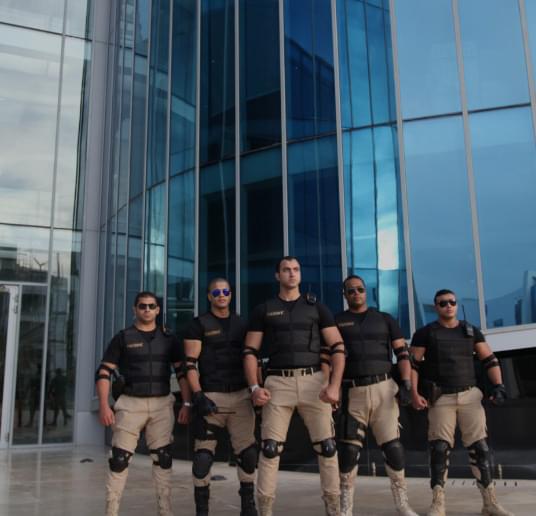
The most sensitive power granted to Falcon is the authorization to deploy “rapid intervention forces” as a private security service, a license approved by the General Security Sector of the Interior Ministry and at the recommendation of el-Sisi.
This service includes deploying armed units equipped with the necessary gear and weapons, along with vehicles and motorcycles, at designated operational points, including areas related to counterterrorism operations.
These special forces are managed through a centralized operations room, in coordination with the Ministry of Interior, and rely on advanced tracking and surveillance systems.
Falcon previously released a documentary film showcasing the launch of its “Support and Rapid Intervention Sector,” highlighting its ability to respond to various forms of security unrest and riots, while emphasizing its integration with the role of police forces.
Sources
- Law No. 86 of 2015 Regulating Facility Guarding and Cash Transportation Companies [Arabic]
- Egypt: Falcon Security Executive Sabri Nakhnoukh Arrested Following Fight at Car Showroom [Arabic]
- Sabri Nakhnoukh’s Phones Seized and Home Searched Ahead of Investigation [Arabic]
- After Sabri Nakhnouh’s Arrest: What Is the Story Behind Falcon's Story, and Can a Convicted Man Run It? [Arabic]
- Why Is Sabry Nakhnoukh, Egypt’s ‘President of Thuggery,’ in Custody? [Arabic]
- Nakhnoukh’ Arrested: Thuggery Figure Found with Weapons, Drugs, and Five Lions [Arabic]