After 60 Days of Calm, Why Are Missiles Flying Again Between Tehran and Tel Aviv?
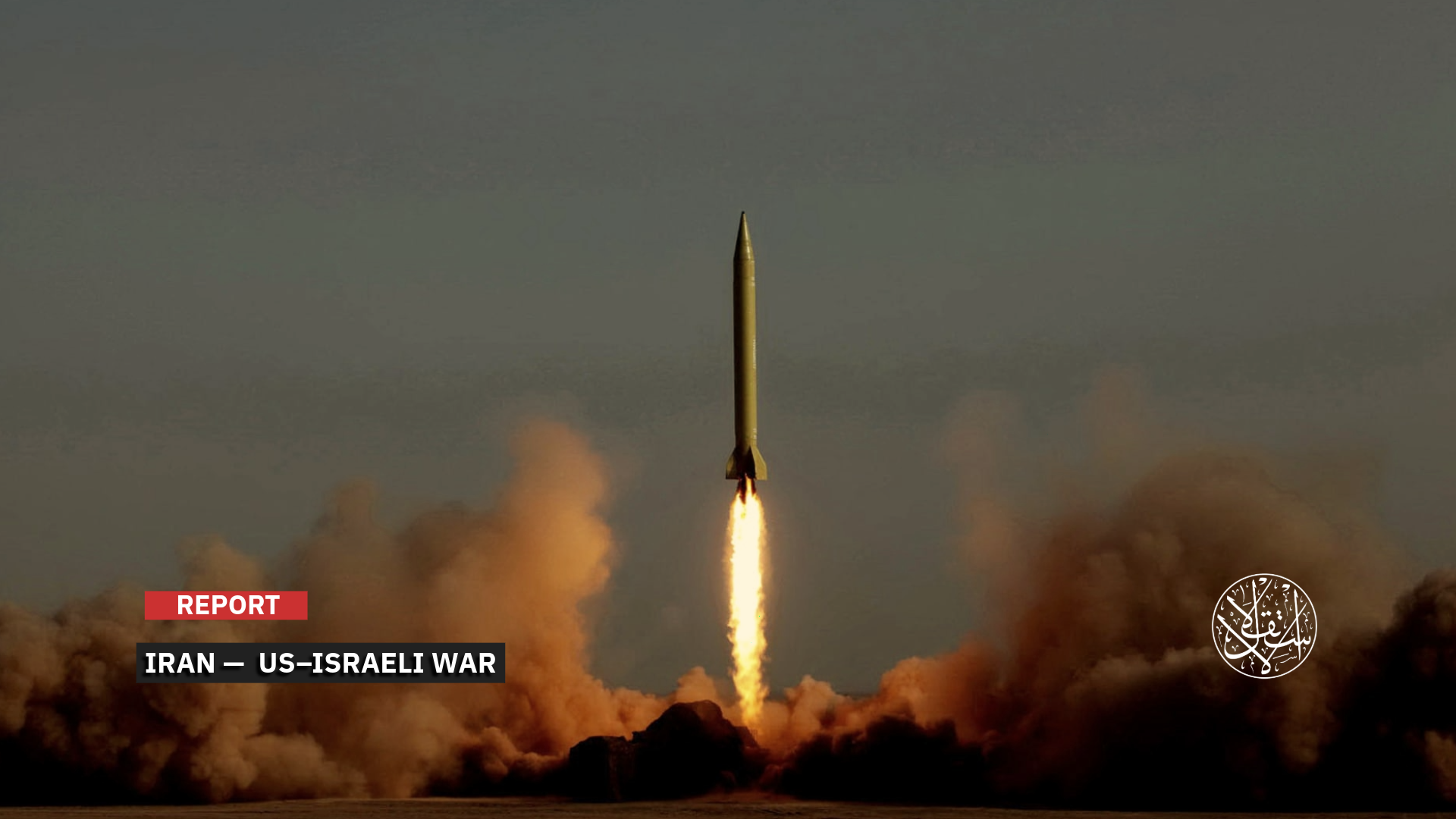
Trump said he had pressured Netanyahu to end the war on Iran.
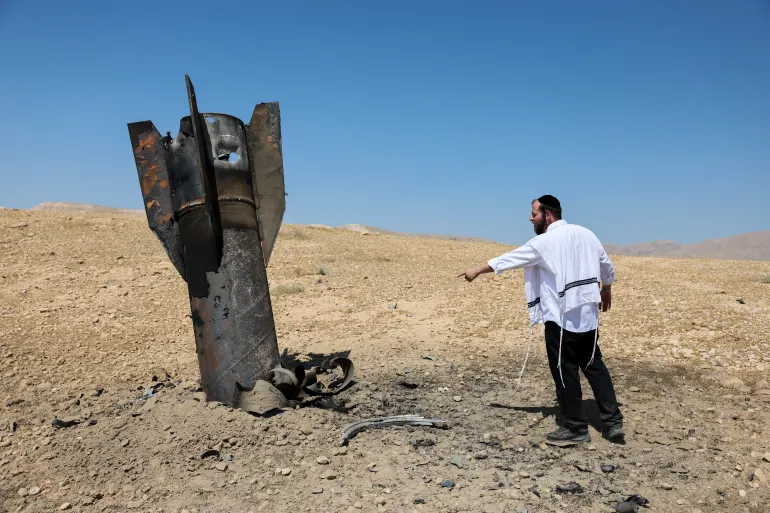
Just 60 days after a ceasefire took effect, Iran and the Israeli Occupation returned to exchanging military strikes in a brief but consequential confrontation that lasted roughly 14 hours, once again raising questions about the fragility of the truce and its ability to contain the long-running war on Iran.
The latest escalation, which erupted on June 7, 2026, featured Iranian missile attacks and Israeli airstrikes, with most of the targets linked to military infrastructure. The exchange ended before spiraling into a broader conflict, largely due to U.S. pressure aimed at containing the crisis.
Although Washington played a central role in brokering the understandings that led to the ceasefire, it remained outside this latest round of fighting. Instead, President Donald Trump focused on de-escalation efforts, pressing both sides to return to stalled negotiations in hopes of reviving a potential agreement with Tehran.
The confrontation may have ended quickly, but it reopened larger questions about the future of the ceasefire. Was the exchange an isolated flare-up, or does it signal the emergence of a new pattern of controlled confrontation—one that could recur whenever tensions rise across regional flashpoints, particularly in Lebanon?
‘A New Equation’
Following the end of the exchange of strikes between Tehran and “Tel Aviv,” Israeli Prime Minister Benjamin Netanyahu declared that “Israel” had successfully neutralized what he described as Iran’s nuclear “threat.”
“Had we not acted in time and with force, we would not be here today,” he said. “And I pledge, and pledge again, Iran will not have nuclear weapons.”
In a video statement released on June 8, Netanyahu said that Iran and Hezbollah had attempted over the previous 24 hours to impose what he called “a new and unacceptable equation” on “Israel.”
“That did not happen, and it will not happen,” he added. “Israel has every right to self-defense.”
The Iranian strike came in response to an Israeli airstrike on Beirut’s southern suburbs, an attack Tehran viewed as a blatant violation of its “red lines” and a direct blow to efforts aimed at reaching a ceasefire agreement with Washington.
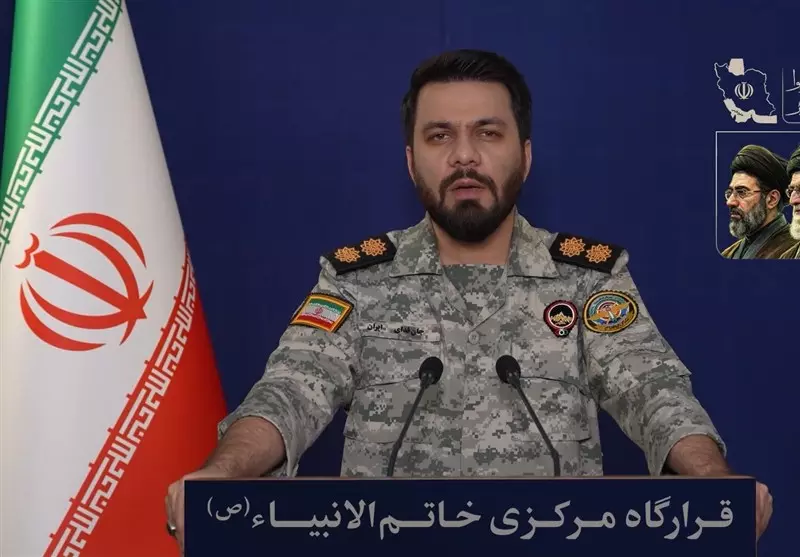
As the exchange of strikes intensified, Iran’s Khatam al-Anbiya Central Headquarters announced on June 8 that it was suspending operations against “Israel,” while warning that any further attacks—particularly in southern Lebanon—would trigger a far more forceful response.
Brig. Gen. Ebrahim Zolfaghari, the headquarters’ spokesperson, said Iranian armed forces had successfully struck what he described as sensitive and strategically important targets inside the Israeli Occupation through “precise, intelligent, and heavy” operations, adding that the enemy had suffered significant and painful losses.
The statement said the response should serve as a lesson to the “Zionist entity” and its supporters. While announcing a halt to military operations, it warned that any continuation of Israeli aggression and atrocities, including in southern Lebanon, would be met with harsher and more devastating measures.
On the Israeli side, de-escalation quickly acquired a political dimension. “Israel’s” Channel 12 reported that the government had agreed to halt further strikes on Iran following a direct request from President Donald Trump.
Citing an unnamed source, the Hebrew broadcaster added that “Israel” would nevertheless continue to strike Beirut’s southern suburbs aggressively if Hezbollah attacks persisted.
The New York Times reported on June 8, citing Israeli military officials, that Prime Minister Benjamin Netanyahu had instructed the military to suspend preparations for another planned attack on Iran.
Speaking to reporters the same day, Trump said Iran and “Israel” had agreed to a mutual ceasefire following the most serious escalation between the two sides since the truce took effect on April 8.
Trump said he did not blame Netanyahu for responding to the Iranian attack and revealed that the two had held what he described as a “great call” after Netanyahu ordered retaliatory strikes despite Trump’s request that he refrain from responding to Iranian missiles. According to Trump, he had warned Netanyahu that he could find himself “fighting Iran alone.”
“He hit back and I can’t blame him for that,” he added. “Now they’ve called it quits, so they’re going to just leave each other alone for another week or something.”
The U.S. president also said Washington was in the final stages of what he called a “good deal” with Tehran, adding that an agreement could be signed within days. According to Trump, the deal would prevent Iran from obtaining a nuclear weapon and would lead to the immediate reopening of the Strait of Hormuz.
American Tactics
Commenting on Iran’s rush to respond to Israeli aggression on Beirut’s southern suburbs, Middle East researcher Iyad Thabet said Hezbollah’s rejection of a U.S.-sponsored ceasefire agreement between Lebanon and “Israel” prompted Washington to give the green light for escalation in the southern suburbs.
“The genocide in Gaza following Operation al-Aqsa Flood had demonstrated that Israeli crimes were consistently carried out with American backing, coordination, and approval,” he told Al-Estiklal.
“Israel and the United States are partners in an attempt to reshape what is often described as a ‘new Middle East,’ in which Israel holds the upper hand.”
“Israel’s escalation in Beirut’s southern suburbs placed Iran in an unenviable position, leaving it little choice but to respond,” Thabet added.
In his assessment, however, the move was part of an American tactical approach designed to pressure Iran into accepting a subsequent agreement, particularly as Washington positioned itself as the main driver of de-escalation.
Thabet also argued that the Iranian response did not lead “Israel” to halt or reduce its aggression on Lebanon or the southern suburbs, which he said also occurred under American approval. This, he suggested, was intended to increase pressure on Iran and Hezbollah to accept a deal aligned with U.S. and Israeli terms.
On the other hand, Iranian political analyst Hasan Ahmadian described the June 2026 Iranian strike as a round that consolidated a new reality, arguing that the era of “strategic patience” had ended irreversibly.
In a post on X on June 8, Ahmadian said Iran and its allies were determined to impose and solidify new rules of engagement against their adversaries, adding that he saw no sign of retreat.
“For retreat in the face of those who practice genocide will only unleash annihilation across the length and breadth of the region. Resistance, on the other hand, is the only civilized response that holds any meaning against them,” he said.
Iranian government spokesperson Fatemeh Mohajerani said Tehran intends to integrate diplomatic efforts with its defensive capabilities as part of a broader strategy to safeguard the rights of the Iranian people.
Responding to journalists’ questions on June 9, Mohajerani emphasized that relations between Iran and Lebanon are not based on proxy dynamics or dependency, stressing that “neither country is fighting on behalf of the other.”
She added that Tehran and Beirut face a “common enemy,” seeking to destroy Lebanon, fragment Iran, and weaken both states. This, she said, necessitates coordinated positions and closer cooperation between the two countries in confronting “hostile schemes.”
Leveraging the War
Iran affairs researcher Firas Elias argued that one of the key reasons behind Tehran’s decision to respond to President Trump’s request and halt escalation with “Israel” was not purely military calculations, but an attempt to convert limited battlefield gains into greater political returns.
In a post on X on June 8, Elias said Tehran understands that prolonging an open confrontation would give Prime Minister Benjamin Netanyahu an opportunity to reunify the Israeli front and push toward widening the war, whereas a ceasefire would allow the conflict to shift from the battlefield back into the political arena.
He noted that Iran is also aware that the Trump administration appears more focused on preventing a broader regional explosion and preserving the negotiating track. For that reason, he argued, Tehran sought to present itself as the party that responded to American mediation, while portraying Netanyahu as the actor more inclined toward escalation.
In doing so, Iran is attempting to deepen the gap between Washington’s priorities and those of “Tel Aviv,” particularly in light of reports that Trump had pressured Netanyahu to contain military responses and give diplomacy another chance, according to the researcher.
More importantly, Elias said Iran does not want to be seen as the side that derails any potential postwar settlement. Instead, it is working to repair its negotiating image in the international arena and demonstrate that it remains committed to diplomacy despite military confrontation, since any future agreement with Washington would require a narrative in which Tehran accepted de-escalation once a diplomatic window opened.
On this basis, Elias interprets Iran’s announcement of a suspension of military operations not as an end to the conflict but as a calculated move to reposition itself politically—preserving deterrence while keeping negotiations with the Trump administration open.
In broader strategic terms, the researcher argues that Iran is attempting to move from managing the war to leveraging it—using the outcomes of the confrontation to strengthen its bargaining position and keep U.S.-Israeli divergences alive rather than allowing its adversaries to close ranks. In his view, this may be Tehran’s most important political objective at this stage.
According to Axios, Trump succeeded in pulling “Israel” and Iran back from the brink of a wider confrontation, though it remains unclear how long that restraint will last. One hundred days after the outbreak of the U.S.-Israeli War on Iran, the U.S. president is still unable to secure an agreement to bring the conflict to an end.
In a report published on June 9, the outlet said Trump found himself facing a dilemma: on one hand, he understood that it would be difficult for Israeli Prime Minister Benjamin Netanyahu to ignore a direct Iranian missile attack; on the other, he feared that an exchange of strikes could spiral into a full-scale war.
In a phone interview with Axios, Trump said he had warned Netanyahu that if he returned to war with Iran, he could find himself “fighting alone.”
Sources
- Fatemeh Mohajerani: Iran–Lebanon ties are not based on proxy relations [Arabic]
- After a night of fighting, Iran and Israel declare an end to mutual strikes [Arabic]
- Hebrew channel says Israel will stop attacks on Iran following Trump’s request [Arabic]
- Trump Says Iran Deal Could Come Within Days, Says He Doesn’t Blame Netanyahu [Arabic]
- Netanyahu: Iran and Hezbollah Will Not Impose a New Equation on Israel [Arabic]