Popular Protests in Aden and Hadramout: Will the Southern Transitional Council Gain Ground or Further Erode Its Remaining Support?
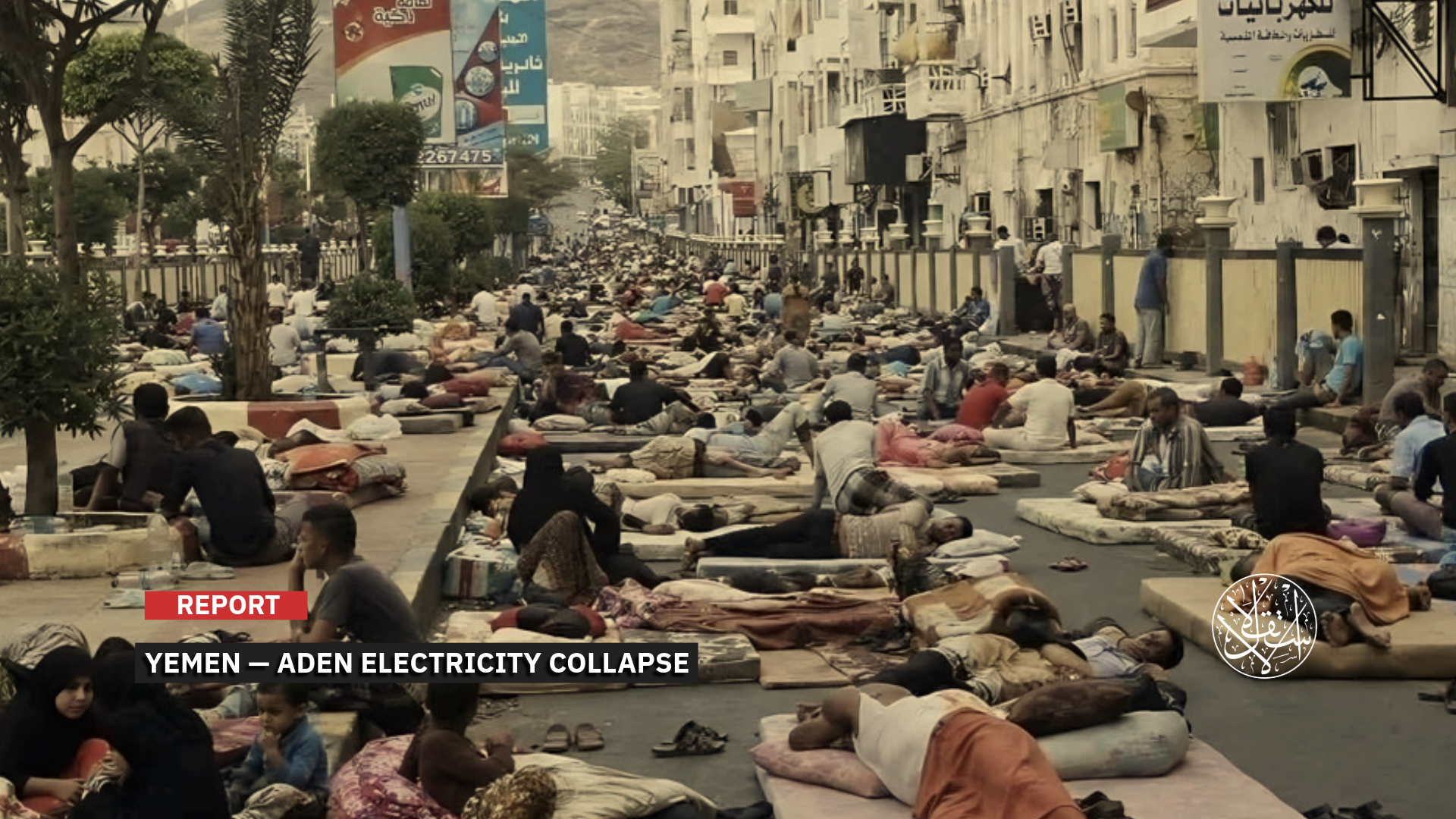
The electricity crisis in Aden is no longer a mere temporary power outage, but has become a harsh reality that directly threatens the lives of residents.
The city of Aden, Yemen’s temporary capital, is experiencing an unprecedented service and living crisis that has pushed thousands of residents to the brink of popular explosion.
With temperatures and humidity rising to record levels during the summer, the city has been plunged into near-total darkness due to the ongoing collapse of the electricity system, transforming it from a city once known as the first to introduce electricity in the Arabian Peninsula into a symbol of a worsening crisis.
Long hours of power cuts, combined with deteriorating basic services and a worsening economic situation, have sparked widespread night-time protests and growing calls for civil disobedience, reflecting the scale of popular anger toward the governing authorities.
Amid these developments, the Southern Transitional Council is seeking to capitalize on the growing anger to reposition itself politically, intensifying its attacks on the legitimate government while attempting to present itself as the actor capable of managing the crisis and filling the expanding vacuum in the city.

Tragic Situation
The electricity crisis in Aden is no longer a temporary power outage, but a harsh reality that directly threatens residents’ lives.
According to the General Electricity Corporation in Aden, “actual energy demand exceeds 630 megawatts at peak summer times, while current generation capacity does not exceed 191 megawatts at night and 257 megawatts during the day, meaning a generation deficit of 70% in summer.”
This numerical deficit has translated into an unprecedented humanitarian and health disaster, as “medical sources confirm a rise in cases of heat stress and fainting among the elderly and children, as well as recorded cases of skin diseases and breathing difficulties due to humidity and lack of cooling, in addition to the fact that hospitals, dialysis centers, and neonatal incubators are on the verge of collapse and threatened with shutdown.”
In a firsthand account that summarizes this living hardship, journalist Bushra Nasir says that “electricity has become a daily dream for families, and streets and commercial centers have turned into family refuges in search of some cool air, after homes have become catastrophic heat traps by all standards.”
Al-Farshan Revolution
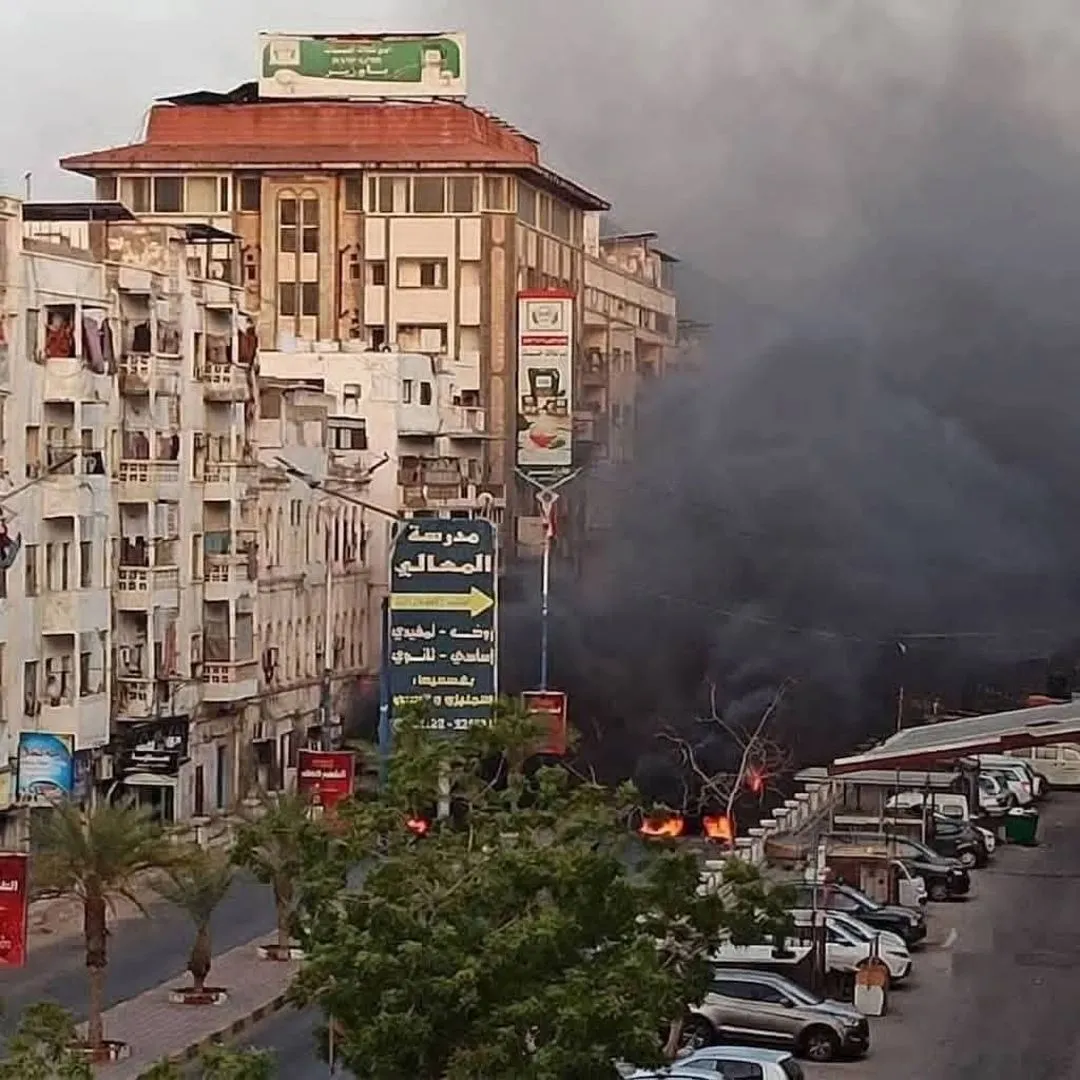
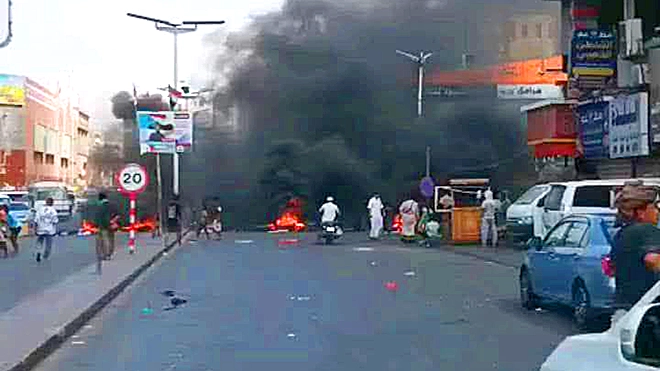
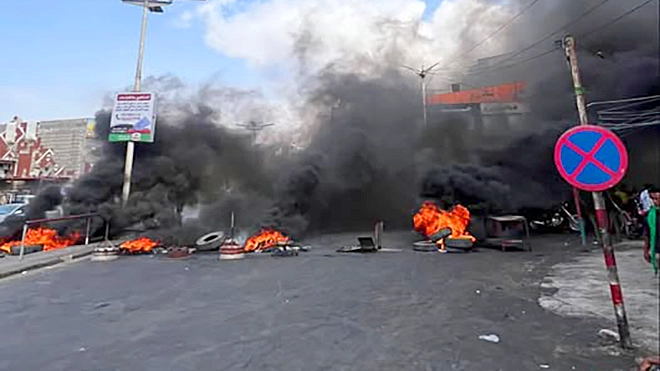
In the face of this severe deterioration, a wave of angry protests erupted in Aden and nearby governorates such as Hadramout, which activists have called the “Al-Farshan Revolution.” Dozens of citizens laid down in the main streets, burned tires, blocked key roads, and demonstrated in front of the main gate of the Maashiq Palace, the seat of the government.
A statement issued by popular movement activists said, “The peaceful popular escalation is ongoing and open-ended, and our protest steps will expand and evolve until they reach the highest levels of popular and legal pressure to lift the suffering from the people of Aden.”
The anger was not limited to demonstrations, as local reports indicated that “popular groups in Wadi Hadramout launched widespread calls to suspend work in various public and private institutions and to close shops, in implementation of a comprehensive peaceful civil disobedience.”
Security forces reportedly responded to these protests with notable escalation, as observers and journalists indicated that some units “opened live fire to disperse protesters and carried out arrest campaigns targeting a number of participants.”
Official and parliamentary reports reveal that the root of the crisis in Aden is not a shortage of resources, but rather systemic corruption and financial mismanagement.
A parliamentary inquiry committee described the electricity sector as “the black hole that swallows public funds, and an unprecedented machine of corruption and massive misuse that successive governments have never witnessed.”
According to the same report, “the scale of corruption and waste in this sector has exceeded 1.8 trillion rials due to poor management, questionable power-purchase deals, and the monopoly over fuel imports through private commercial companies.”
Consistent technical and economic sources confirmed that “the cost of purchased electricity and the accompanying financial corruption has exceeded 8 billion dollars over the past ten years, all of which went to influential actors, a cost that could have been sufficient to build three major state-owned power plants.”
In addition, the phenomenon of “hotlines” has emerged, which the Director of Media at the Ministry of Electricity, Mohammed al-Masbahy, described as having “created a clear disparity between officials who receive uninterrupted electricity and citizens who live most of their day in darkness, representing a technical disaster and a strain on the grid.”
Exploitation of the Crisis
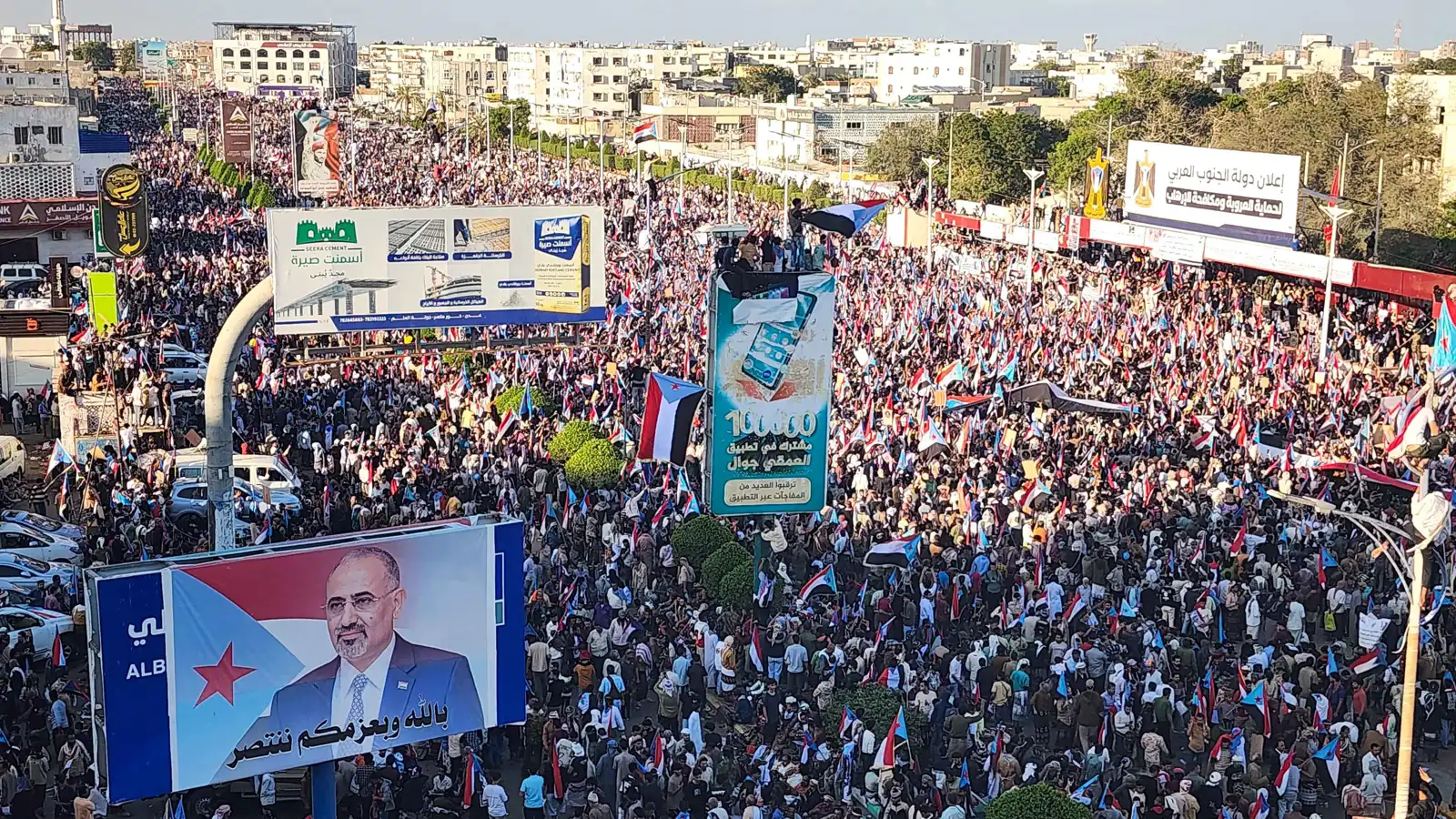
Amid this rising public anger and widespread corruption, the Southern Transitional Council is seeking to exploit the service crisis and economic decline to achieve political objectives and redirect purely service-related demands.
Despite official reports accusing figures within the Southern Transitional Council itself of “monopolizing fuel supplies, controlling import contracts through questionable deals, and imposing illegal levies estimated at 10 rials per liter of imported diesel,” the council quickly adopted a protest-oriented rhetoric to steer public anger toward the legitimate government and the Presidential Leadership Council.
In a clear attempt to capitalize on the unrest, the Southern Transitional Council issued a political statement saying, “The cause of the southern people is not merely a matter of salaries, electricity, or services, but the cause of a people demanding the restoration of their state and their right to self-determination,” calling on its supporters to “demonstrate and protest by exploiting the wave of public anger over electricity outages,” in an effort to shift the crisis into its own political arena and distance itself from the legacy of administrative and service failures it has contributed to over the years of its control over the city.
Political analysts view this move as a “political oxygen” for the council, which is attempting to “regain an initiative role and mobilize its supporters to participate in protests against the government,” especially after being militarily pushed out of Hadramout and al-Mahra and facing increasing pressure in Aden.
The council aims, through this exploitation, to “highlight the failure of the government and the Presidential Leadership Council to provide tangible solutions to people’s daily lives,” in an attempt to win public sympathy in the south and compensate for its declining field influence.
In response, political factions and security committees have warned against such politicization, with the Aden Security Committee stressing “the necessity of not politicizing protests or exploiting them to serve special agendas unrelated to legitimate popular demands.”
Saudi Funding
Under the weight of mounting public and political pressure, the Ministry of Electricity and Energy signed an urgent agreement with the Saudi Development and Reconstruction Program for Yemen. The ministry stated that it “signed an agreement to supply petroleum derivatives, including diesel and mazut, worth 150 million dollars to support the operation of power generation plants.”
Based on this, the ministry announced the “start of implementing an urgent plan to gradually improve power generation efficiency, affirming its full understanding of the scale of suffering, and considering the electricity sector a top priority in the government’s agenda.”
Despite these emergency promises and announcements, the situation in Aden remains one of deep public skepticism, with many in the streets insisting that stopgap solutions are no longer effective, and that ending the suffering requires dismantling the so-called “energy mafia” and holding corrupt actors accountable in a real and sustainable way.
Regarding the prospects of the popular movement and whether it could evolve into a “mass uprising” capable of toppling the government, a realistic reading of the situation indicates that the level of tension in Aden and Hadramout has reached unprecedented levels, extending beyond electricity outages or poor services to a direct threat to people’s lives and livelihoods.
The crisis has also spilled over into the health sector, which local estimates say is on the brink of collapse and at risk of shutting down, amid continued long power outages and worsening economic and service conditions.
This has further fueled public anger and expanded the scope of protests, which some activists have called the “al-Farshan Revolution.”
However, transforming this popular surge into a broad uprising capable of toppling the legitimate government and the Presidential Leadership Council faces several structural constraints, foremost among them the security and military situation.
Field indicators suggest that the ground is not fully open to protesters, as security forces are responding firmly to these movements, including reported use of live ammunition to disperse demonstrators, in addition to arrest and pursuit campaigns, which limits the movement’s ability to expand or evolve into a coordinated political force with decisive impact.
Another major obstacle is the absence of a unified popular leadership. Although “peaceful popular escalation remains ongoing and open-ended,” as reported by Yemen Monitor and Here Aden, the lack of a unified and independent leadership framework leaves the protests vulnerable to fragmentation or political infiltration.
Moreover, overthrowing the government in the absence of a viable economic alternative would not resolve the underlying structural imbalance in electricity supply, where actual demand exceeds 630 megawatts while generation does not exceed 191 megawatts.
In addition to internal factors, the regional role emerges as a key restraining element through rapid intervention via emergency agreements, such as the “150 million dollar fuel supply deal financed by Saudi Arabia,” which acts as a crisis stabilizer and a financial and political lifeline that prevents a full collapse of the legitimate government by absorbing public anger at critical moments.
The current protests represent more of a serious threat to government stability than a guaranteed opportunity for the Southern Transitional Council.
They are capable of weakening and destabilizing authority, but in their current form they are not an organized revolution capable of toppling it, nor do they provide the council with a reliable path to restoring its former influence and powers.
Instead, if they continue and expand, they could evolve into a broader wave of anger directed at all political actors dominating the southern landscape, not only the government.
Will the Southern Transitional Council Regain Its Role?
The question of the Southern Transitional Council’s ability to restore its role, popularity, and influence amid the current wave of public unrest raises major doubts about its recent political maneuvers.
The council is attempting to circumvent the worsening living crisis and distance itself from administrative and service-related responsibility by adopting the language of the street, preemptively issuing a statement linking the electricity crisis to the broader “cause of a people demanding the restoration of their state and their right to self-determination.”
However, this attempt to capitalize on the popular uprising faces significant structural challenges, foremost among them a deep crisis of trust and corruption allegations within the local population.
Reports indicate that the service failure is not solely governmental, as figures within the Southern Transitional Council itself are accused of “monopolizing fuel supplies, controlling import contracts through questionable deals, and imposing illegal levies estimated at 10 rials per liter of imported diesel.”
This direct involvement in what is described as the “energy mafia” leads ordinary citizens to view the council’s attempts to ride the wave of public anger with clear skepticism.
This distrust is reflected in a growing local awareness of the need to separate service and livelihood issues from political and partisan rivalries.
This position was explicitly reflected in a warning issued by the Aden Security Committee against “politicizing protests or exploiting them to serve special agendas unrelated to legitimate popular demands,” which significantly limits the council’s ability to mobilize the public under its political slogans without delivering tangible and realistic solutions to the electricity crisis and basic services.
What further complicates the council’s position is its contradictory status as a “power-sharing partner”; on one hand, it exercises military and security control on the ground in the temporary capital Aden, while on the other it constitutes a key component of the Presidential Leadership Council and the government.
Therefore, its call on supporters to “demonstrate and protest by exploiting the wave of public anger” may backfire.
For residents of Aden, the council is seen as a de facto authority morally and operationally responsible for the collapse, which could turn any large-scale uprising into a tool for weakening its influence and popularity rather than strengthening it, unless it undertakes serious internal reforms and confronts corruption within its own ranks.
Ultimately, the protests in Aden and Hadramout appear as an existential “cry of anger” against an unbearable living reality, while the likelihood of them turning into a revolution capable of toppling the system remains limited due to emergency regional interventions and ongoing security repression.
The Southern Transitional Council’s gamble on harnessing this unrest thus remains a risky political calculation, especially as protesters’ chants against the “black hole that swallows public funds” are increasingly directed at all parties without exception, in an enraged street that no longer accepts political promises or vague slogans in the absence of even the most basic living necessities.
Sources
- The Black Hole.. How Aden Electricity Swallowed $8 Billion Over the Past Decade While the City Is Plunged into Darkness [Arabic]
- Escalating Popular Protests in Aden Condemn Electricity and Service Deterioration [Arabic]
- Angry Protests Paralyze Movement in Seiyun and Tarim Over Hadramout Electricity Crisis [Arabic]
- Aden Security Committee Reaffirms Support for Legitimate Demands and Warns Against Attempts to Divert Protests from Their Peaceful Course [Arabic]
- “Al-Farshan Revolution” Announces Escalation of Protests and Peaceful Sit-Ins, Rejecting Chaos [Arabic]
- Continued Protests in Yemen.. Security Escalation in Aden [Arabic]
- Aden and Hadramout Protests.. A Political Oxygen for the Southern Transitional Council [Arabic]
- Aden Residents Occupy Streets.. Power Cuts Turn Homes into a Living Hell [Arabic]
- STC Calls on Its Supporters to Protest, Exploiting Wave of Public Anger Over Electricity Outages [Arabic]
- Ministry of Electricity Signs Agreement with Saudi Development Program to Supply Power Plants Fuel Worth $150 Million [Arabic]