The Settlement Economy: How Israeli Occupation Conceals Product Origins Before Export
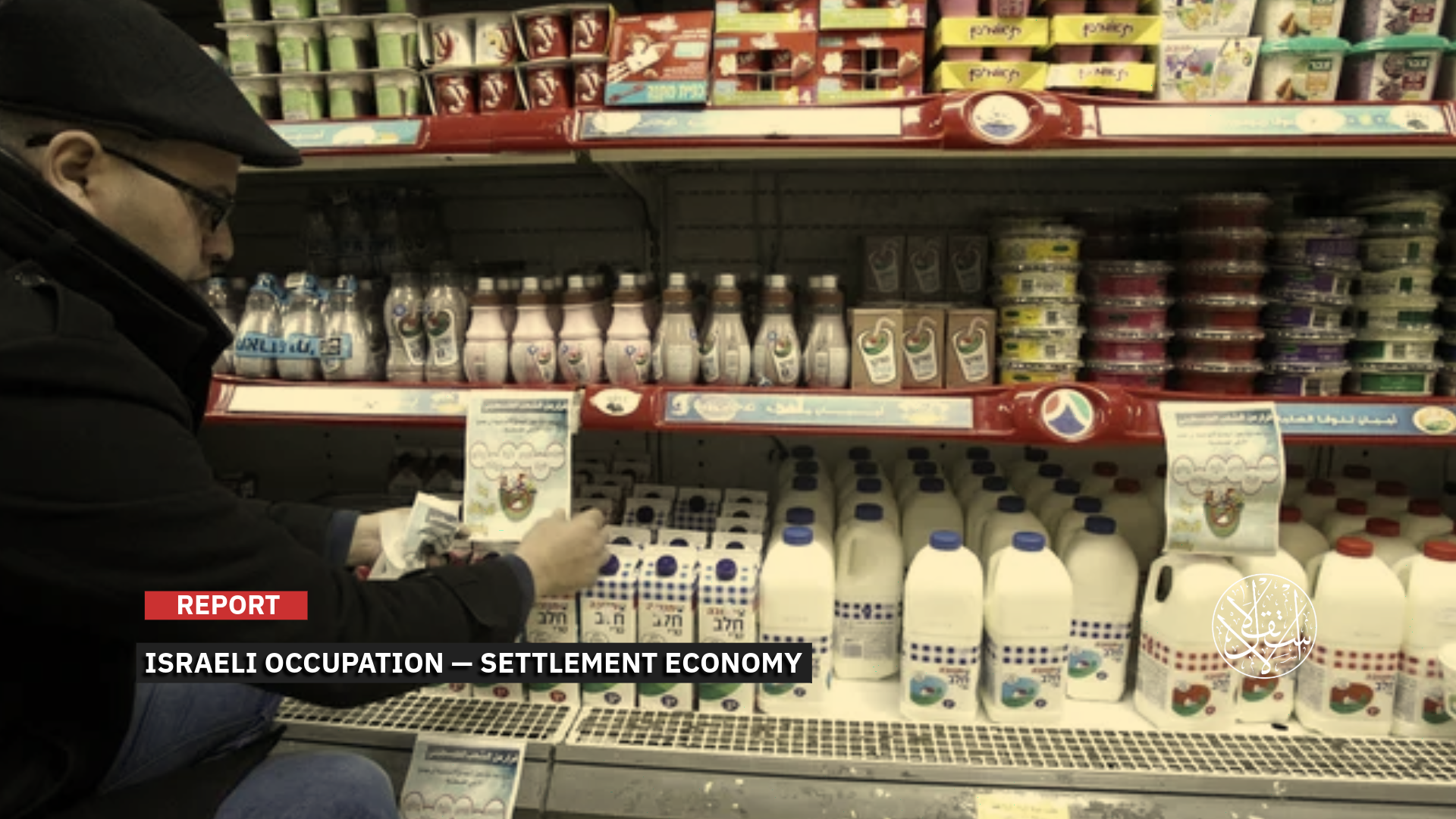
“Israel” and businesses operating within this economy work to obscure any trace of the word “settlement.”
A new wave of opposition to goods produced in Israeli settlements in the occupied West Bank is gaining momentum across Europe, marking a shift from years of efforts focused primarily on labeling such products rather than banning them outright.
In May 2026, Ireland’s government introduced legislation that would prohibit the import of settlement goods, with supporters hoping it will be passed by July. The move followed similar actions elsewhere across Europe.
Slovenia banned imports from Israeli Occupation settlements in August 2025, while Spain moved to prohibit settlement products and require retailers to clearly identify their origin. Belgium has announced plans for similar measures, and the Netherlands has spent several years examining restrictions on trade in goods and services linked to Israeli settlements.
The push extends beyond trade policy. In November 2019, the Court of Justice of the European Union ruled that products originating from occupied territories must be labeled accordingly and identified as coming from an Israeli settlement when that is their source.
The debate advanced further in July 2024 when the International Court of Justice (ICJ), in an advisory opinion, linked the continuation of the occupation and settlement expansion to states’ obligations not to assist in maintaining that situation.
These developments strike at the heart of the settlements’ political economy. For the Israeli Occupation, settlements are not simply instruments of territorial theft of Palestinian land; they are also integrated agricultural, industrial, and commercial hubs embedded in wider networks of production, export, and distribution. As scrutiny intensifies, efforts to obscure the origins of settlement goods and navigate around growing restrictions have become an increasingly important part of that system.
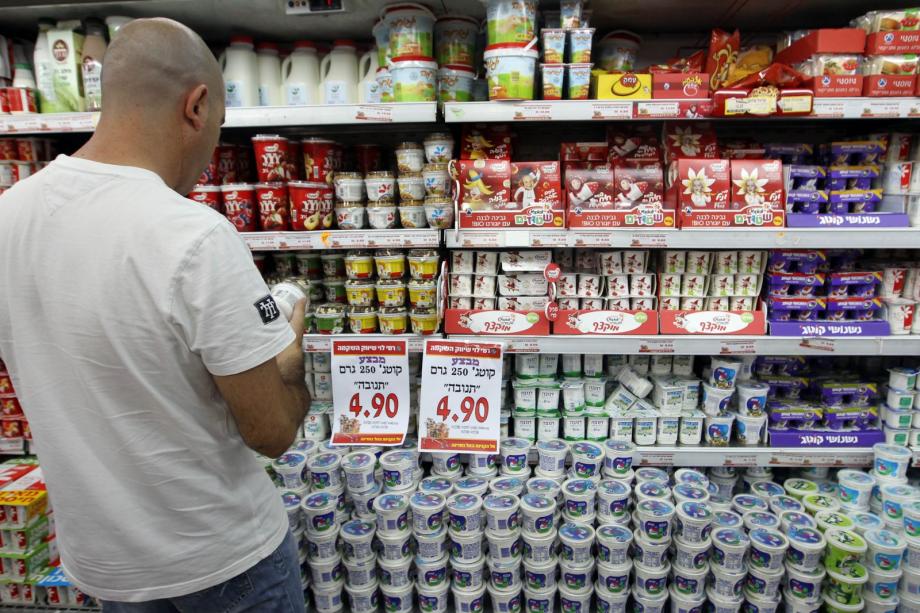
The Settlement Economy
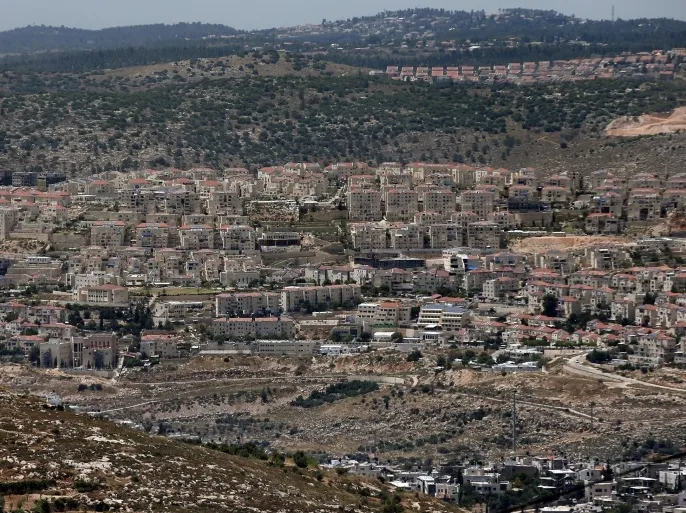
The production map begins in the Jordan Valley, the eastern strip of the occupied West Bank stretching along the Jordan River and the Dead Sea. There, “Israel’s” control over land and water is transformed into a vast agricultural economy.
According to the Israeli human rights organization B’Tselem, Palestinians are barred from accessing roughly 85 percent of the Jordan Valley’s land, while settlements benefit from extensive access to land, water resources, roads, and agricultural infrastructure.
Within this agricultural belt, settlements produce dates, grapes, vegetables, herbs, citrus fruits, and avocados. Settlements such as Ro’i, Mehola, Argaman, and Na’ama in the northern Jordan Valley appear throughout packaging and export supply chains.
In April 2022, Who Profits, an Israeli research center that monitors the involvement of Israeli and international companies in the occupation and settlement economy, documented nine packing facilities operated by Carmel Agrexco inside four Jordan Valley settlements. Those facilities process herbs, grapes, flowers, and fish for domestic and international markets.
The date industry offers another example. The Israeli cooperative Hadiklaim operates a major packing facility in the settlement of Beit HaArava near the Dead Sea, within the Megilot Regional Council. According to Who Profits, part of the company’s date production originates from settlements across the Jordan Valley and Dead Sea region.
The settlement economy extends far beyond agriculture. In Barkan, near Salfit in the northern West Bank, one of the largest settlement industrial zones has become a major manufacturing hub.
Covering roughly 728 dunams of occupied land, the Barkan Industrial Zone hosts more than 160 factories and businesses. Further east, in occupied East Jerusalem, the Atarot Industrial Zone operates between Beit Hanina and the Qalandia checkpoint, forming another key center of settlement-based production.
A report by the Palestinian human rights organization al-Haq describes Atarot as a settlement industrial zone administered by “the Jerusalem Development Authority,” a joint body linked to both the Israeli government and the occupied Jerusalem municipality.
According to the report, the area is home to approximately 160 companies and factories, including G1 Secure Solutions, Abadi Bakery, the Israel Electric Corporation, the Central Bottling Company—which holds the franchise for Coca-Cola products in “Israel”—and Readymix Industries, a major producer of concrete and construction materials.
Another industrial center lies in “Mishor Adumim,” the industrial zone attached to the settlement of “Ma’ale Adumim” between occupied Jerusalem and Jericho. Further north, near “Salfit,” the industrial zone of Ariel is promoted in Israeli sources as part of the country’s economic core rather than as a settlement enterprise.
According to the Ariel Corporation, the zone spans nearly 850 dunams and hosts more than 40 factories and businesses operating in food processing, textiles, steel, aluminum, metalworks, printing, and archiving services.
In September 2025, Israel Hayom reported that Ariel’s municipal authorities approved an expansion project adding 1,000 dunams for a new industrial complex featuring high-tech towers alongside commercial and industrial facilities.
Near Tulkarm, the “Nitzanei Shalom” industrial zone illustrates another side of the settlement economy. The area hosts a concentration of chemical factories whose waste has been accused of contaminating soil and water resources while releasing pollutants into the air. Residents of nearby Palestinian communities have long complained of rising rates of respiratory illnesses, eye diseases, and cancer, concerns that environmental and rights groups continue to monitor.
The Commercial Journey
The journey begins after production. Israeli Occupation settlement goods typically pass through sorting, packing, and processing facilities before moving to Israeli export companies and from there to ports, airports, and distribution networks abroad.
In agriculture, the process often starts on a farm in the Jordan Valley, a vineyard, or an herb plantation. Documentation by Who Profits shows that packing facilities play a critical role in transforming a crop grown in a settlement into a commercial product ready for international markets under a recognized brand.
The date industry provides a clear example. Hadiklaim, one of “Israel’s” largest date-marketing cooperatives, sells products under brands such as King Solomon and Jordan River in global markets.
According to Who Profits, however, part of the company’s date supply originates from settlements in the Jordan Valley and Dead Sea area of the occupied West Bank, while one of its major packing facilities operates in the settlement of “Beit HaArava.” By the time the product reaches consumers, the settlement’s name is absent, replaced by a brand label or a broader geographic reference such as the Dead Sea or the Jordan Valley.
Larger agricultural exporters operate in a similar way. Who Profits identifies Mehadrin as one of “Israel’s” leading producers and exporters of citrus fruits, avocados, dates, and vegetables, marketing its products worldwide through the well-known Jaffa brand and retail networks across Europe and Asia.
The organization’s research highlights how major companies can combine products from multiple locations into a single export stream, making it more difficult to distinguish between goods produced inside the Israeli Occupation and those originating in settlements.
The same dynamic exists in industry. Goods manufactured in industrial zones such as Barkan, Atarot, Ariel, and Mishor Adumim enter the Israeli Occupation market before moving abroad when destined for export.
Once production, packaging, and processing are complete, the goods become part of a commercial and customs system. If the exporting company is registered as an Israeli business and the shipment leaves through an Israeli port or distributor, tracing its precise origin becomes significantly more challenging.
Several years ago, a French trade union documented cases in which agricultural products originating from settlements entered European markets using misleading paperwork that enabled them to benefit from preferential customs treatment.
By the time these products reach store shelves, consumers often encounter a finished item that reveals little about its journey. A food product may display the barcode prefix 729, which is associated with “Israel’s” GS1 registration system, but that code does not establish where the product was manufactured or grown.
In October 2025, Euronews published a fact-check explaining that the 729 prefix does not necessarily mean a product was made in “Israel.” Rather, it identifies the organization that registered the barcode, while GS1 itself notes that company prefixes do not automatically indicate a product’s country of origin.
This is the core of the controversy. Settlement goods rarely leave settlements as distinct products. Instead, they enter a broader Israeli network of packaging facilities, certifications, trademarks, transportation systems, and distribution channels, causing the line between an “Israeli product” and a “settlement product” to blur long before the item reaches the marketplace.
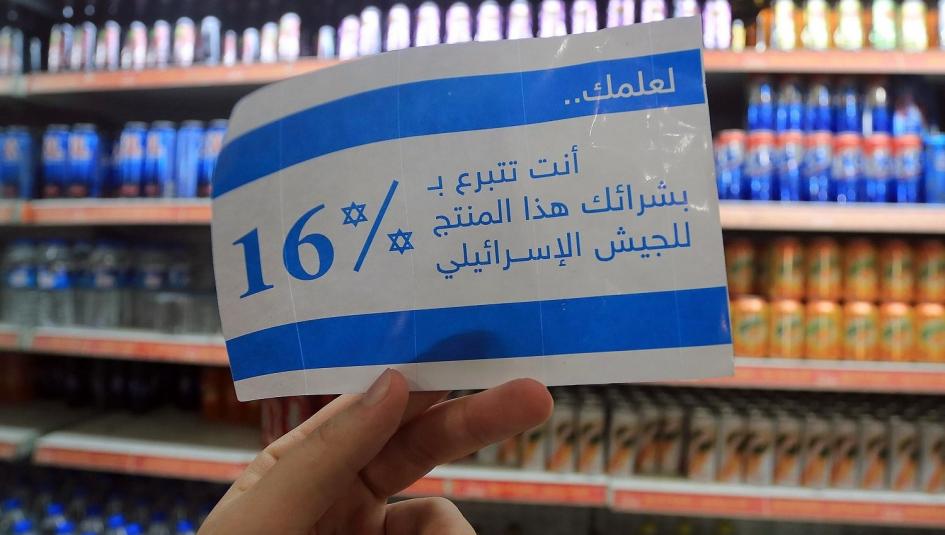
Erasure and Commerce
The Israeli Occupation and companies operating within this economy work to obscure any trace of the word “settlement” at every stage of the market. The first tool of this concealment lies in corporate registration.
A company may be formally registered inside “Israel” or list an administrative address within the territories occupied in 1948, while its factory, packing house, or part of its production is located in a settlement in the occupied territories of 1967. In this way, the official address appears in documents, while the actual geography of production disappears.
The second tool is mixing at packing facilities. When dates, herbs, or vegetables from settlements enter a single packing house alongside products from inside the Israeli Occupation or other sources, the final shipment loses a clear trace of origin.
A product that began in a settlement becomes part of a larger box carrying a corporate name or brand, rather than the land from which it came.
The third tool is commercial language. Companies and distributors use terms such as the Jordan Valley, the Dead Sea, the West Bank, or “Israel.”
To consumers, these appear as geographic descriptors, but they do not clarify whether the product comes from an occupied Palestinian farm (within the 1967 territories that the world recognizes as Palestinian), or from inside the Israeli Occupation (the Palestinian territories occupied in 1948), or from a settlement located on occupied land.
For this reason, the Court of Justice of the European Union ruled in 2019 that simply labeling a product as originating in the “West Bank” is not sufficient when it comes from an Israeli settlement there.
The fourth tool is weak customs enforcement. The European Union legally distinguishes between Israeli products and settlement goods and does not grant the latter the same preferential treatment under its association agreement. But enforcement relies heavily on paperwork, invoices, and declarations, creating significant room for circumvention.
Spain, for example, has sought to use lists of settlement towns and postal codes to prevent origin from being reduced to a general exporter’s declaration.
Israeli sources themselves highlight the sensitivity of this issue. A report cited by Haaretz found that only around 10 percent of settlement wine exported to Europe was correctly labeled, illustrating the gap between legal requirements and implementation on the ground.
As a result, the Israeli Occupation has consistently resisted labeling and import restrictions, describing them as discriminatory, political, or linked to boycott campaigns, while also attempting to bypass them by obscuring origin and blending settlement products with those from inside “Israel.”
On the other side, the European Union (EU) continues to introduce additional measures to improve transparency around settlement goods, while the United Nations maintains and regularly updates its database of companies involved in settlement-related activities.
In September 2025, the UN updated its list to include 158 companies from 11 countries linked to settlement activities, after adding 68 new companies and removing seven that were no longer involved.
Sources
- With new trade restrictions, Spain looks to trigger EU cascade against Israel
- Israeli Settlements in the Occupied Palestinian Territory (Prohibition of Importation of Goods) Bill 2026
- Slovenia introduces ban on imports from Israeli-occupied territories
- Israel’s Policy in the Jordan Valley and Northern Dead Sea
- Tracking the Trade Trail of Settlement Products
- Israeli settlements exporter Carmel-Agrexco defrauds French customs