What Are the Dimensions of the New Rapprochement Between Egypt and Iran?

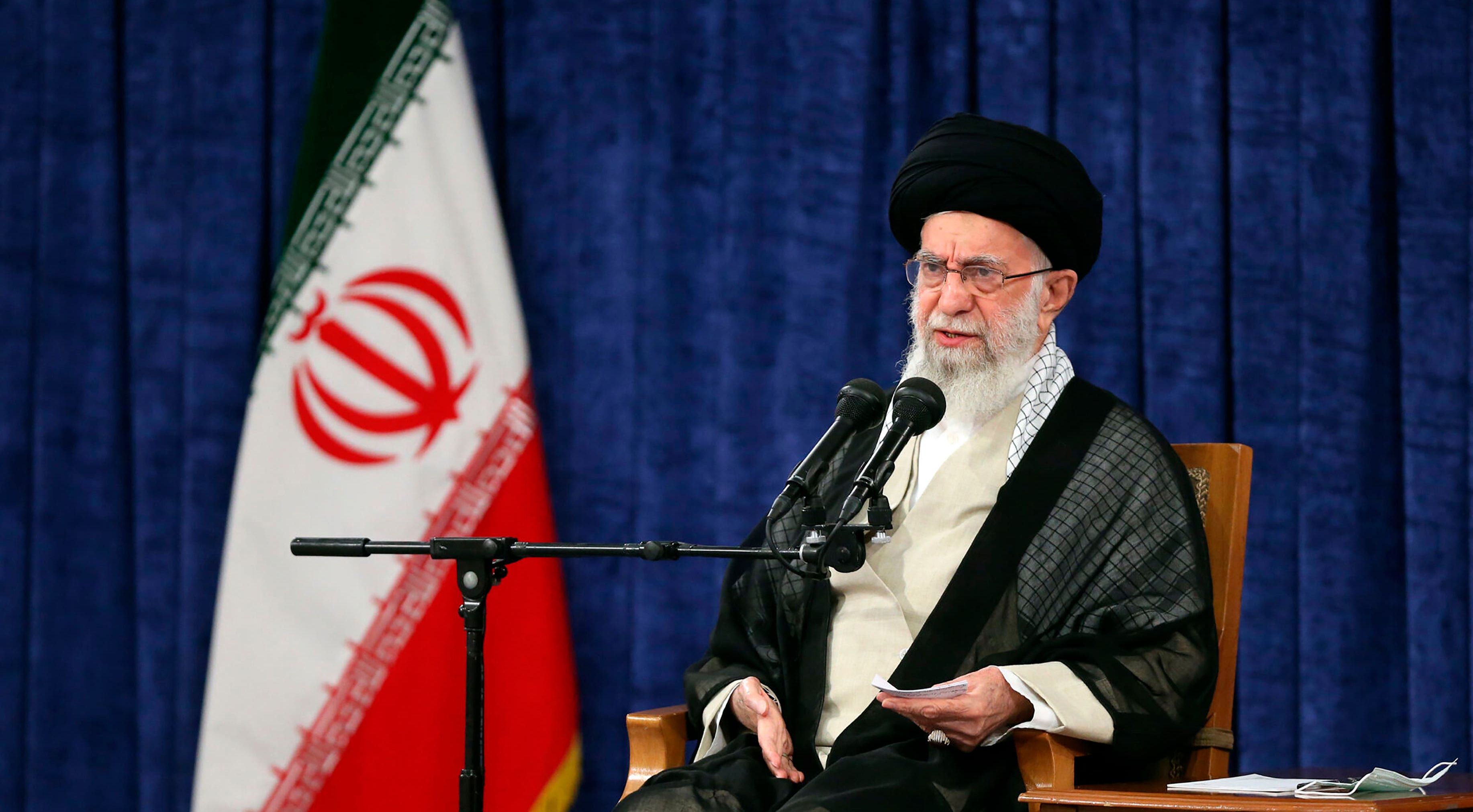
Iran’s supreme leader, Ayatollah Ali Khamenei, said last month that he welcomed the improvement of diplomatic relations with Egypt, a rare gesture of outreach to a regional rival that has long been at odds with Tehran over its nuclear ambitions and regional influence.
The ayatollah’s remarks, made during a meeting with Oman’s Sultan Haitham bin Tariq Al Said in Tehran, came amid a series of moves by Middle Eastern countries, including Egypt, to ease tensions and seek dialogue after years of confrontation and proxy wars.
Khamenei added that Iran and Egypt, as two major Islamic countries with a long history and culture, had “many commonalities and points of cooperation.”
Broken Ties
Egypt and Iran had not had formal diplomatic ties since 1979, when Cairo granted asylum to the deposed shah of Iran after the Islamic Revolution.
The two countries have also been on opposite sides of regional conflicts, such as the civil wars in Syria and Yemen, where Iran has backed Shiite militias and Egypt has supported Sunni governments.
But since early 2019, there have been signs of a gradual thaw in Egyptian–Iranian relations, marked by diplomatic meetings, press statements, and participation in international conferences.
Most notably, both countries have responded positively to mediation efforts by Iraq and Oman, two neutral actors in the region.
In May, Iraqi sources revealed that Egyptian and Iranian representatives had met in Baghdad with the facilitation of Prime Minister Mustafa al-Kadhimi’s government, which had also hosted several rounds of talks between Saudi Arabia and Iran.
Al-Kadhimi visited Cairo to discuss regional issues with its President, Abdel Fattah el-Sisi.
Abbas Golroo, head of the Foreign Relations Committee in Iran’s Parliament, said earlier this month that the comprehensive development of cooperation between Iran and Egypt would serve the interests of the region.
He made the comments during a meeting with Haitham Jalal, head of Egypt’s interest section in Tehran, according to Mehr Iranian News Agency.
Nevertheless, the ayatollah’s statement was the highest-level expression of Iran’s interest in improving ties with Egypt so far. However, the Egyptian leadership has not publicly commented on the Iranian overtures.
According to an Egyptian diplomat who spoke on condition of anonymity to NoonPost, Cairo is “more open to mediation attempts by Iraq and Oman” but still in a stage of “testing Tehran’s seriousness” and its willingness to de-escalate tensions with its neighbors.
The diplomat described Egypt’s current stance as a “cautious response,” indicating that it was not ready to engage in extensive talks with Iran or to exchange ambassadors anytime soon.
New Possibilities
The recent agreement between Saudi Arabia and Iran to resume diplomatic relations and ease regional tensions has opened new possibilities for improving ties between Iran and Egypt, two countries that have had strained and incomplete relations for decades.
Egyptian Foreign Minister Sameh Shoukry said that the rapprochement between Riyadh and Tehran “doubles this time the chances for improvement in relations and their development,” according to the Egyptian state-run Al-Ahram newspaper.
But the dynamics of Egyptian–Iranian relations are complex and differ from those of Saudi–Iranian relations, analysts say. Iran severed ties with Egypt in 1979 after Cairo signed the Camp David Accords with Israel and hosted the exiled Shah of Iran.
Egypt maintains a strategic partnership with the United States and a peace treaty with Israel, which constrain its dealings with Iran.
Egypt also has other interests that may push it to seek closer relations with Iran, such as maintaining calm in the Gaza Strip, where Tehran has ties with armed Palestinian factions; ensuring maritime security in the Red Sea and Bab al-Mandab Strait, which are threatened by Iran-backed Houthis in Yemen; and balancing its dependence on Saudi Arabia’s economic aid.
Iran’s new president, Ibrahim Raisi, has also signaled a desire to improve relations with neighboring countries, Islamic countries, and countries in the East.
Establishing ties with Egypt would enhance Iran’s influence in the Arab world and its relations with the Arab League, which is based in Cairo.
However, some hardliners in Iran oppose any rapprochement with Egypt, seeing it as a betrayal of the Palestinian cause and an acceptance of the Camp David Accords.
They also demand that Egypt change the name of a street in Cairo honoring Khalid al-Islambouli, the assassin of President Anwar Sadat, and remove the flag of the former Iranian monarchy from Shah’s tomb at Al-Rifai Mosque.
Economic ‘Catalyst’
Iran and Egypt, two regional powers that have been estranged for more than four decades, are seeking to mend their relations amid economic woes and geopolitical shifts.
The two countries have exchanged diplomatic gestures and trade delegations in recent months, signaling a thaw in their long-standing rivalry.
The rapprochement comes as Iran faces a deepening economic crisis, exacerbated by the U.S. withdrawal from the 2015 nuclear deal and the reimposition of sanctions in 2018.
Anas Rashad, a researcher in a Turkey-based think tank, said that the Iranian currency has plummeted by 14 times since then, and inflation has soared to around 50%. Egypt, meanwhile, is grappling with a massive debt burden of $392 billion by the end of the 2020/2021 fiscal year.
In his interview with Al-Estiklal, Rashad noted that the trade between the two countries remains modest but has shown signs of growth.
According to Iranian statistics, Iran’s exports to Egypt reached about $6.92 million and $5.08 million in 2021 and 2022 respectively, while Egypt’s exports to Iran amounted to about $994 thousand and $1.42 million in the same period.
“Iran is keen to circumvent the U.S. sanctions by expanding its exports to neighboring countries, especially in consumer goods. Egypt offers a lucrative market for such products, as well as a potential source of tourism revenue,” Rashad said.
“But the warming ties are not driven by economic interests alone. Iran and Egypt also share common concerns over the regional security situation, especially after the normalization of relations between Israel and some Arab Gulf states last year,” he added.
Iran views Egypt as a key player in maintaining peace in the Middle East and hopes to contain the strategic repercussions of the Israeli–Arab accords, according to Rashad.
“Egypt, on the other hand, values Iran’s influence in Iraq and among the armed groups there, which could ensure the security of Egyptian companies operating in Iraq under a tripartite partnership with Jordan,” he mentioned.
Egypt also supports Syria’s return to the Arab League, a move that Cairo advocates and that would enhance the feasibility of transferring Egyptian gas to Lebanon via Syria.
After a reduction of regional tensions between Turkiye and Qatar on one side, and Bahrain, Saudi Arabia, UAE, and Iran on the other, Cairo and Tehran seem ready to start a new chapter in their relations, despite the difficult legacy of confrontation and competition, Rashad concluded.